
IoT for Critical Infrastructure (KRITIS)
In critical infrastructure such as energy and water supply or transport, IoT monitors distributed assets remotely. Sensors detect damage, temperature deviations and faults early, before supply fails, and provide the evidence needed for audits and risk management. This page lists more than 80 implemented examples, most of them from energy and environment.
IoT solution examples: Critical Infrastructure (KRITIS)
89 solution examples from our network, newest first.
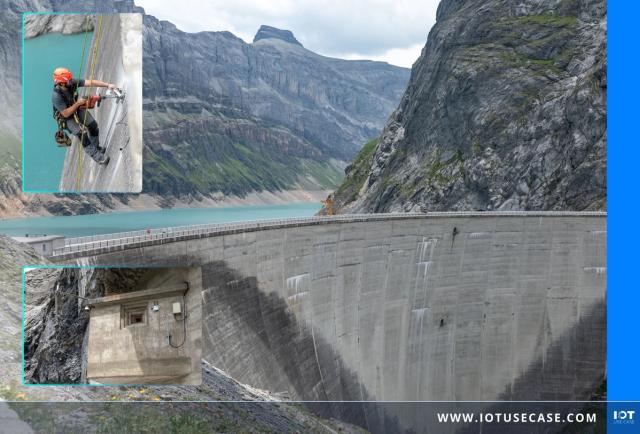



Monitoring critical infrastructure in the Alps wire-free via LoRaWAN
Axpo monitors the 146-metre Limmernsee dam in the Swiss Alps with battery-powered LoRaWAN sensors. Readings on solar radiation, wind and temperature flow via akenza straight into finite-element simulations of how the concrete ages.
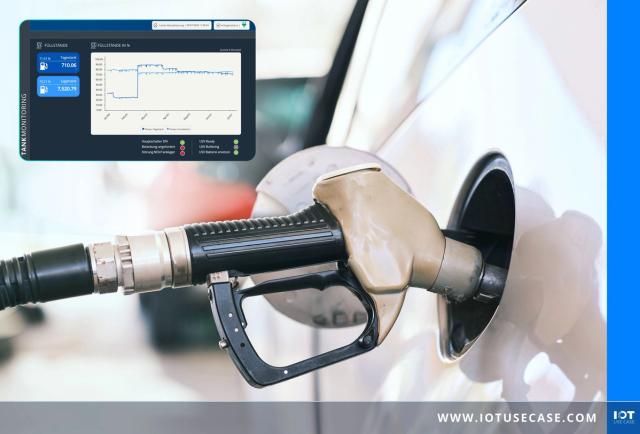






Monitoring tank fill levels via MQTT to safeguard operational readiness
The German state of Hesse records fuel tank levels at 48 critical infrastructure sites via ultrasonic sensors and MQTT on the VISUALYS platform. Manual inspection trips are no longer needed, saving one to three hours per site each week.
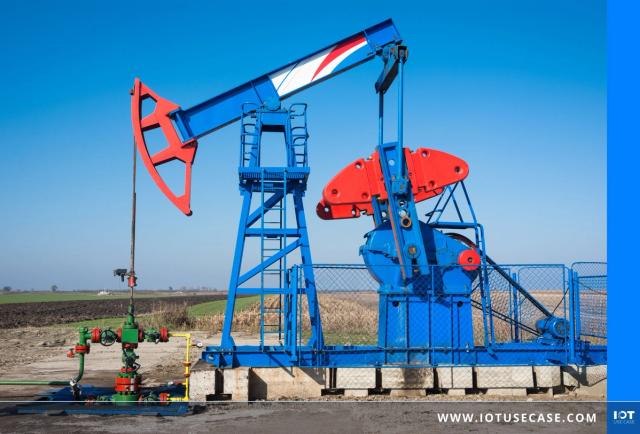



Proving well integrity continuously via LoRaWAN without site visits
WIKA captures annulus and tubing pressure at oil and gas wells via LoRaWAN®, without laying a cable. The wireless sensor reports anomalies within minutes and site inspections drop by over 75 percent.
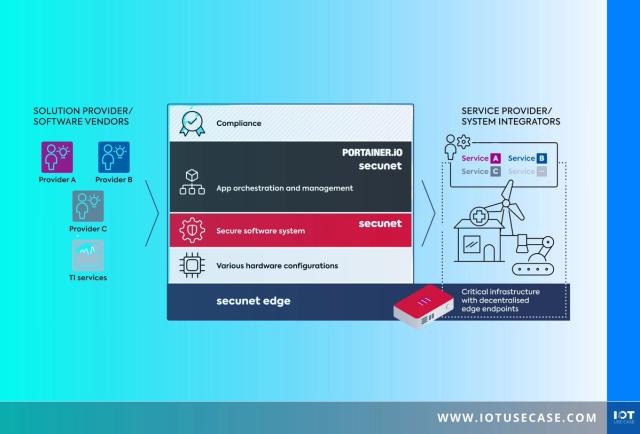






Operating distributed systems securely: with containers and edge platform
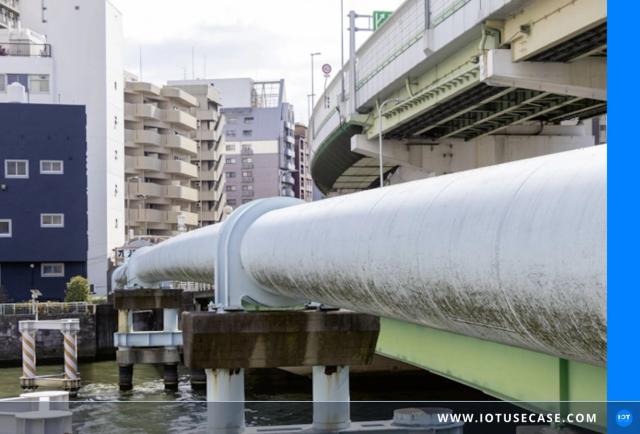

Maintain district heating networks via IIoT pressure monitoring
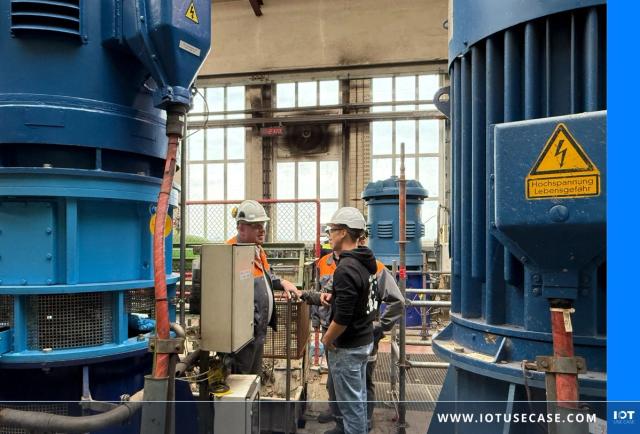



Vibration analysis with LoRaWAN reduces failures in water pumps
At CHEMPARK, CURRENTA monitors river water pumps with battery-powered LoRaWAN vibration sensors and AI-supported analysis. Predictive maintenance cuts downtime by 70% and extends service life by 30%.
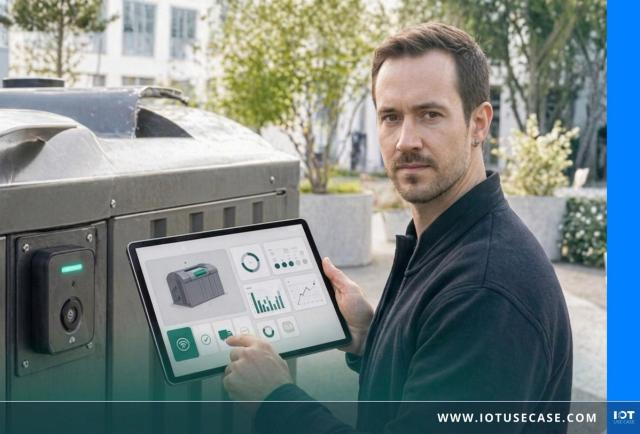


Usage-based billing with digital twins — demonstrated in waste management
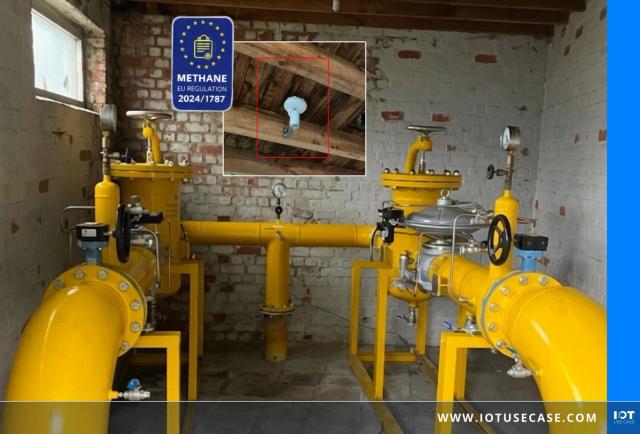


Detect gas leaks with continuous methane monitoring using IoT sensors
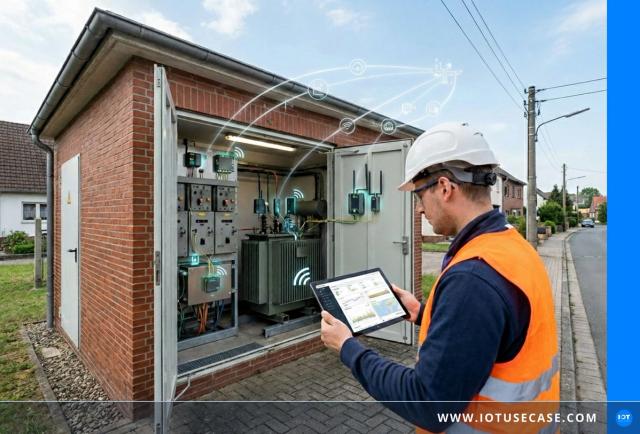




Digital grid monitoring for low-voltage networks through an IoT platform





IoT energy monitoring creates cross-site transparency
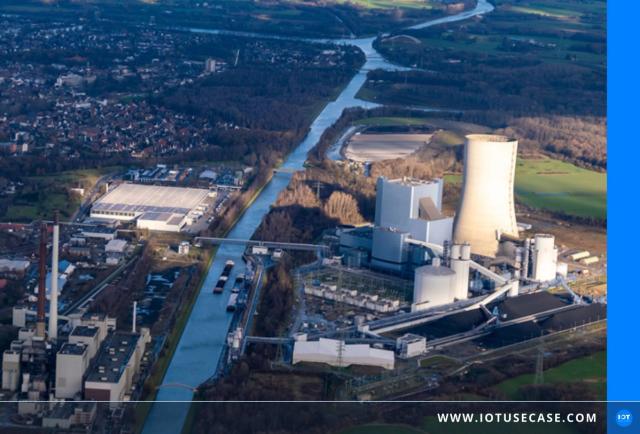
Filter monitoring in coal plants: manual to LoRaWAN diff-pressure sensor
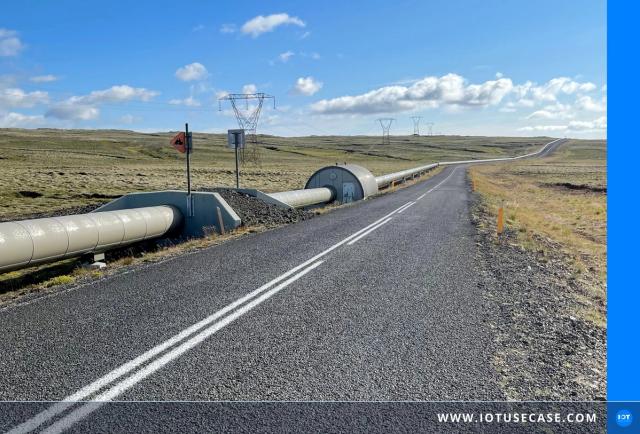

Remote Pressure Monitoring in Geothermal Infrastructure
- Scaling distributed environmental sensor networks with MQTT
- Secure OT networks with risk and vulnerability assessment
- Resilient Emergency Communication for South Tyrol with mioty
- Remote monitoring in water management: district digitises irrigation
- Automated PKI certificate management for secure energy infrastructure
- IoT monitoring with AI to reduce security costs on construction sites
- IoT-based energy monitoring for efficient fault management
- IoT system for pressure monitoring of mobile concrete pumps
- Real-time monitoring – a Plug&Play retrofit for water networks
- Automated Energy Consumption Measurements in Residential Buildings
- Ensuring plant availability at a manufacturer and operator of smart grid edge devices
- MQTT broker for utilities and smart transport infrastructures
- Safe bulk material conveying with energy chains and sensors in bucket wheel excavator
- Reducing energy consumption in the data centre with AI & automation
- Charging and energy management: intelligent load distribution for a stable power supply
- Retrofit hydropower plant – from proprietary control to open IoT platform
- Connected water infrastructure – using real-time data to combat leaks and theft
- Remote monitoring delivers cost savings and compliance benefits for a medical equipment manufacturer
- OT security in energy supply: defense-in-depth for critical infrastructure
- Predictive maintenance for wind turbines
- Together for the waste management of the future
- Network-independent emergency assistance: IoT-based solution for fast and precise supply
- Optimising Industry 4.0: efficient software container management as the key to peak production
- Goodbye 3G: future-proof remote monitoring for the Würzburg dewatering company
- Vibration analysis and real-time monitoring: condition monitoring in hydropower plants
- Renewable energies: cloud power for efficient battery storage
- Predictive maintenance of rotating machinery
- Smart monitoring of municipal and industrial water applications
- Condition-based maintenance in the energy industry
- Performance monitoring for modern waste-to-energy solutions
- Building automation cybersecurity for Leipzig Data Center Campus
- Bird protection in wind turbines
- Increased plant safety through intelligent monitoring of gas-insulated switchgear
- How medicine benefits from industrial automation solutions
- A modular solution for the future of wastewater treatment
- Smart water treatment with local data processing
- Securing IEC-61850 infrastructures in accordance with the IT Security Act
- Advancing photovoltaic expansion together
- Optimal balance between planning and buffer in passenger transportation
- Precise power consumption forecasts
- Rhätische Bahn tracks freight wagons with Rail Insight from A1 Digital
- KRITIS sector health – how to accelerate laboratory logistics
- Remotely controlled energy assets: attack detection at the edge for wind farm cybersecurity
- Strategies for data-driven digital transformation in production
- Azure Marketplace: Rockwell Automation Industrial IoT platform
- Azure Marketplace: Cognite Data Fusion
- Energy suppliers brace themselves against cyberattacks on smart meters
- Custom hardware – individually developed for connected applications
- Recording of all sensor data on a port data platform in Antwerp
- Predictive maintenance of train washing stations
- A mechanical mole, digitally enhanced
- The energy transition as a driver of intelligent storage systems
- Rhebo and Bosch Rexroth – the perfect combination for cyber security and stability
- Distributed energy storage: attack detection and OT security for industrial networks and IIoT
- Demand-driven night marking for wind turbines – an IoT solution for Lanthan Safe Sky GmbH
- Predictive maintenance for offshore wind turbines reduces logistics costs
- Drinking water supply – vibration analysis of the plants saves maintenance costs
- Continuous control of water levels in inland waters using robust sensors via LoRaWAN and web services
- Using the industrial IoT to combat thick air in the city
- The world's largest machines enhanced with 5G monitoring
- Intelligent container services for cleaning facilities in Hamburg
- Smart products based on intelligent data use
- IoT traffic lights optimise traffic flow
- Avoid downtimes in shredding machines
- Real-time sonar object recognition for an autonomous examination robot
- Telematics in rail freight transport: optimising operational processes and efficiently connecting wagon fleets even without power supply
- Secure connection of road equipment and traffic control technology
- Complete log and legally compliant database of all accesses
- Flexible charging solutions with data exchange via the industrial IoT
- Remote monitoring for groundwater lowering units on construction sites
- Digital maintenance log for logging and legal security
- How IoT measurement technology improves the maintenance of railroad components
- Remote monitoring for wastewater treatment plants reduces maintenance costs
- Digital measurement: performance recording in road construction
- Condition monitoring for power generation plants
- Building drying: condition monitoring for heat engineering and plant service
- Asset tracking on the construction site
Podcast episodes: Critical Infrastructure (KRITIS)
40 episodes of the IoT Use Case Podcast on this functional area, newest first.



23 Episodes Condensed: What Really Worked and What Didn't


Retrofit Utility Networks: Wireless Condition Data, Not Inspection Trips




180km Steam Network: Wireless Condition Monitoring with LoRaWAN



Direct Air Capture: From Pilot to Autonomous Industrial Scale

Earlier flood detection with radar and NB-IoT


Passive OT Monitoring: Detect attacks before they become critical
IoT use cases: Critical Infrastructure (KRITIS)
50 use cases already implemented in this functional area, sorted by number of implementations.
With modern sensor technology and smart data analysis, damage can be detected before it escalates. Whether leaks in water pipes, overheating in electrical systems or mechanical wear – continuous monitoring makes problems visible early. In condition monitoring and predictive maintenance this leaves time for targeted maintenance, in corrective maintenance affected components are located quickly, and in loss prevention it protects assets and infrastructure in the long term.










Centralized collection of distributed measurement and status data. Remote reading enables the automated retrieval of operational, status and consumption data from systems and infrastructure without manual on-site reading. The data feeds into condition monitoring and energy monitoring and is documented digitally without gaps at the same time.







Digital temperature monitoring, even for extreme conditions. In our network, IoT-based temperature measurements are implemented for steam pipes, for example – using LoRaWAN or mioty® sensors that operate maintenance-free for over 10 years. In condition monitoring and predictive maintenance the data reveals trends and anomalies early; in corrective maintenance it helps locate hotspots and repair defective components in a targeted way.




Automated creation of reports and logs for audits and compliance requirements. Digital systems enable seamless traceability and ensure efficiency in audit processes.




Don’t rely on spreadsheets or isolated data sources – modern IoT platforms connect and analyze data from various systems in real time. This context-aware information makes it possible to assess risks precisely and act proactively instead of reacting to problems. This not only strengthens operational security but also minimizes downtime.




Production data, maintenance logs, and operating manuals are stored centrally in digital archives. This simplifies access and management for employees in production and management.

- Billing Automation
- Real-time damage prevention
- Consumption Data Collection and Visualization
- Object Localization in the Industrial IoT
- Tracking, visualizing, and analyzing energy consumption per unit
- Vibration Monitoring
- Correlation of Production Parameters
- IoT-Based Energy Management System
- Leak Detection
- Level and Distance Measurement
- Usage Monitoring
- Audit-Reporting in Traceability
- Digital Production Logs and Manufacturing Documents
- Immediate emergency communication
- Protection against counterfeiting and fraud
- Route Optimization and Route Planning
- Smart Metering in Energy Monitoring
- Acoustic Monitoring
- Battery Storage and Emergency Power Scenarios
- Cable and Chain Monitoring
- Emissions Management
- Groundwater Level Measurement
- Moisture Measurement
- Smart Charging – Charging Management
- Tension/Thrust Monitoring
- Demand Forecasting and Production Planning
- Digital tracking of products and processes
- Emissions Monitoring (Gas / Fluids)
- Energy Efficiency Analysis
- Filter Monitoring
- Flow measurement, e.g., of air or water
- Gas and Hazardous Substance Detection
- GDPR-Compliant Video Surveillance
- Hazard detection
- Item tracking throughout the supply and manufacturing chain
- Knowledge Retention
- Peak Load Management
- PV Yield Management and Self-Consumption Optimization
- Resource Efficiency (Water Management)
- Shift or Location Comparison
- Submetering in Energy Monitoring
- Track cycle times, utilization, and throughput
- Waste Management
- Water Quality and Purity Levels
Industries using IoT in this functional area
Number of solution examples per entry. The number leads to exactly these examples.
- Energy + Environment51
- Transportation and Logistics15
- Mechanical and Plant Engineering8
- Economy, Politics, Government, Leisure, and Society7
- Technology and Telecommunications6
- Chemicals + Raw Materials5
- Construction Industry5
- Metal and Electronics4
- Pharmaceuticals and Healthcare3
- Agricultural sector2
- Retail and Wholesale2
- Automation1
- Automotive1
- Consumer Goods1
Connected assets: Critical Infrastructure (KRITIS)
87 assets from the solution examples in this functional area, sorted by number of implementations.
- Pump, 8 solution examples
- Wind turbine, 6 solution examples
- Piping network, 4 solution examples
- Pumping station, 4 solution examples
- Water meter, 4 solution examples
- Air conditioning system, 3 solution examples
- Battery storage, 3 solution examples
- Blower, 3 solution examples
- Charging station, 3 solution examples
- Electricity meter, 3 solution examples
- Filter, 3 solution examples
- Hydropower plant, 3 solution examples
- Wastewater treatment plant, 3 solution examples
- Cleaning system, 2 solution examples
- Collection container, 2 solution examples
- Compressor, 2 solution examples
- Distribution substation, 2 solution examples
- District heating network, 2 solution examples
- Drilling rig
- Drinking water
- Energy chain
- Excavator
- Freight wagon
- Fuel tank
- Generator
- Groundwater
- Heating system
- Photovoltaic system
- Power distribution grid
- Refrigeration system
- Substation
- Track infrastructure
- Wastewater
- Water reservoir
- 3D printer
- Axle counter
- Bicycle
- Bogie
- Borehole
- Building dryer
- Bus
- Car
- Combined heat and power unit
- Commercial vehicle
- Concrete mixing plant
- Concrete pump
- Cooling water
- Crane
- Delivery vehicle
- Emergency call button
- Emergency vehicle
- Filtration plant
- Gas distribution network
- Gas pressure regulating station
- Gearbox
- Groundwater lowering system
- Inspection robot
- Insulating gas SF₆
- Irrigation water
- Lifebuoy
- Lighting
- Medical device
- Medical sample
- Municipal vehicle
- Packaging machine
- Process water
- Rail vehicle
- Road milling machine
- Rolling bearing
- Size reduction machine
- Spring
- Stacker reclaimer
- Storage tank
- Stormwater overflow basin
- Surface water
- Switchgear
- Traffic signal system
- Transport container
- Turbine
- Ventilation system
- Vials and single-use syringes
- Wash water
- Waste incineration plant
- Water distribution network
- Water treatment plant
- Well
- Well system
These challenges shape IoT projects in critical infrastructures
High regulation from NIS2, BSI-KRITIS, and the IT Security Act
EU-NIS2, BSI-KritisV, and the IT Security Act place high demands on operators of critical infrastructure: risk analyses, reporting obligations, minimum security standards, and documentation requirements. IoT systems must fit within this regulatory framework – and operators need tools that automatically generate compliance evidence.
Cyber threats and physical attacks on KRITIS facilities
KRITIS infrastructure is a primary target for state and criminal cyber attacks. IoT sensors and gateways in such environments must be hardened against physical manipulation and cyber attacks. Network segmentation, encrypted communication, air-gap concepts, and automatic anomaly detection are mandatory, not optional.
Outdated legacy systems and missing IT/OT integration
Water treatment plants, substations, sewage treatment plants: many KRITIS facilities were built decades ago and are equipped with proprietary SCADA systems, outdated PLCs, and non-patchable control software. IoT solutions must be integrated passively and non-invasively – without jeopardising ongoing operations.
Lack of early warning capabilities for disruptions and incidents
Pressure drop in the water network, temperature deviations in the power grid, unexpected level changes in sewage plants: early warning systems based on IoT sensors detect anomalies before they become critical incidents. This reduces response times, prevents failures, and delivers the data for regulatory situation reports.
Decentralised infrastructure and monitoring without network access
Critical facilities are often distributed across large geographical areas: transformer stations, pump stations, metering stations. IoT remote monitoring supervises decentralised facilities centrally – without costly on-site inspections. Solutions must work even without stable network coverage (NB-IoT, LoRaWAN, satellite) and meet the highest availability requirements.
Physical security and access control at KRITIS facilities
In addition to external attacks, unauthorised internal access is also a threat. Access controls at critical plant components, movement logs in protected zones, and automatic alarms on unauthorised entry – IoT-supported physical security solutions are just as relevant for KRITIS operators as cyber security.
Critical infrastructures – energy, water, wastewater, transport, health, telecommunications – are the arteries of modern societies. Their failure is not a business question but a matter of public safety. At the same time, many of these facilities are older, more heterogeneous, and less digitalised than industrial standards – and are under increasing regulatory pressure from BSI-KritisV, EU-NIS2, and the IT Security Act.
IoT plays a dual role in KRITIS: as a technology for monitoring and optimising operations – and as a potential attack surface that must be secured. Operating sensor networks in drinking water infrastructure, substations, or control centres requires different security requirements than in a manufacturing operation.
On this page you will find verified real-world examples from the IoT Use Case network – for operators and solution providers planning, implementing, or securing KRITIS-compliant IoT projects.
Critical Infrastructure: What Actually Works with IoT in KRITIS Facilities
KRITIS IoT is not a normal industrial project. Security requirements, regulatory specifications, and the criticality of the infrastructure demand concepts that differ significantly from typical Industry 4.0 projects. At the same time, the potential is enormous: better monitoring, early disruption detection, and fewer manual on-site inspections.
Typical Application Areas
Remote Monitoring of Decentralised Facilities
Pump stations, transformer stations, metering stations, and switching systems spread over large areas are too costly for regular on-site inspections. IoT sensors remotely monitor operational parameters such as pressure, flow, voltage, temperature, and fill level. Anomalies are immediately reported. NB-IoT and LoRaWAN work even in areas without broadband coverage.
Early Warning and Situational Management Systems
IoT sensor networks in water distribution detect pressure drops or leaks early. In power grids, voltage deviations and feed-in fluctuations are sensorically captured. Intelligent situational systems aggregate measurement data from hundreds of measuring points and automatically generate situation reports for control centres and authorities.
OT Security and Network Segmentation
Passive network monitoring instantly detects new, unknown devices in the OT network. Anomaly detection based on baseline profiles of communication behaviour identifies attacks early. Network segmentation according to IEC 62443 isolates critical subsystems. All of this works without intervening in existing SCADA systems.
Physical Security and Perimeter Protection
Motion detectors, fence monitoring with AI video systems, biometric access control, vibration sensors at protected zones: physical security solutions for KRITIS facilities must work without internet dependency, be tamper-resistant, and log without gaps.
NIS2 Compliance and Automated Reporting
NIS2 requires demonstrable security measures, risk analyses, reporting obligations, and regular reviews. IoT platforms that continuously monitor and log automatically deliver the data basis for these proofs – without manual documentation.
What Sets IoT in KRITIS Apart from Other Areas
KRITIS IoT is primarily a security and availability project, not an efficiency project. This has direct implications for technology selection, integration strategy, and operating model: redundancy, air gap, fail-safe behaviour, and minimal attack surface take absolute priority. Selected solutions must be explicitly approved or certified for KRITIS requirements.
Real-World Examples from the IoT Use Case Network
In our network you will find concrete, verified solution examples for IoT in critical infrastructures – from remote monitoring for water supply networks and OT security solutions for energy suppliers to physical security systems for substations and NIS2 compliance platforms. Every example shows which technologies were used and what was concretely achieved in the end.
No marketing fluff. Only practice.
Frequently asked questions about IoT in critical infrastructure
What is critical infrastructure (KRITIS)?
Critical infrastructures are facilities whose failure would cause significant supply shortages or threats to public safety. In Germany, their operators are subject to specific obligations for IT security and the protection of their facilities, which are being extended to further companies as the European NIS2 directive is implemented.
What are examples of critical infrastructure?
Under the German BSI Critical Infrastructure Ordinance, the sectors include energy, water, food, information technology and telecommunications, health, finance and insurance, transport and traffic, and municipal waste disposal. Typical assets are substations, waterworks, pumping stations, pipeline and cable networks, data centres, hospitals and transport hubs.
What is IoT used for in critical infrastructure?
In our examples most often for early damage detection and remote reading in condition monitoring, for temperature measurement, for audits and reporting, and for effective risk management. Because the assets are often widely distributed and hard to reach, remote monitoring replaces many inspection trips.
Is IoT secure in critical infrastructure?
That depends on the architecture. Common practices are strict separation of control and monitoring networks, sensors that only read and do not intervene in control, encrypted transmission and a traceable authorisation concept. Operators must additionally meet the requirements of the German BSI and, in future, of the NIS2 implementation.
Which industries do the examples come from?
Most of our critical infrastructure examples come from energy and environment, meaning electricity, gas and water supply, followed by transport and logistics, mechanical and plant engineering as equipment suppliers, and public institutions. The overview by industry on this page leads directly to the matching examples.
What is a smart grid?
A smart grid is a power grid in which generation, storage, consumers and grid equipment are connected via communication technology. Instead of just distributing electricity, the grid continuously measures and controls, for example to absorb load peaks from wall boxes and heat pumps or to buffer solar power. In our examples, grid operators use it to monitor their low-voltage networks, charging power for electric vehicles is distributed and distributed battery storage is protected against attacks.
Implementing IoT in critical infrastructures – we can help
Do you operate KRITIS facilities and plan IoT projects, or do you want to become more visible as a solution provider in the KRITIS environment? We help you find the right partners and present regulatory-compliant solutions.
Get in touch