
Energy + Environment
IoT in energy makes plants, grids and meters visible from afar. Sensors and gateways report voltage, pressure, vibration, consumption and emissions to a platform in real time. Grid operators spot overloads in substations, wind farm operators plan maintenance based on condition, and water utilities find leaks before damage occurs.
IoT solution examples: Energy + Environment
86 solution examples from our network, newest first.


Detecting energy anomalies in buildings with AI to cut consumption
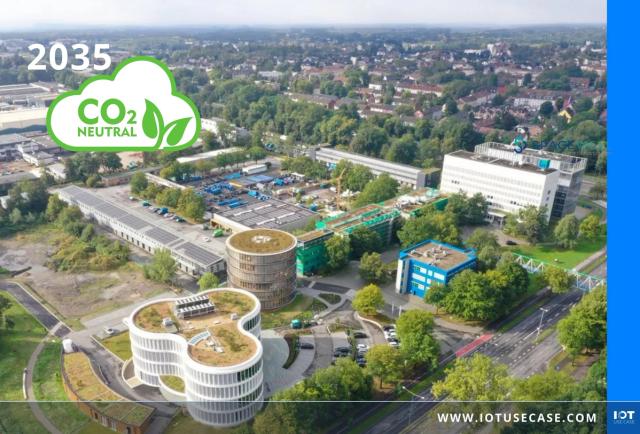
Gelsenwasser captures electricity, gas and water use in its own buildings automatically. The AI tools Optimise and Detect flag anomalies and show where energy can be saved.




Monetizing IoT services: from machine connectivity to revenue models
Connected machines alone do not generate revenue. At ZEISS Microscopy and EWE Go, doubleSlash shows how machine data turns into recurring revenue: Connect, Make Smart, Monetize.
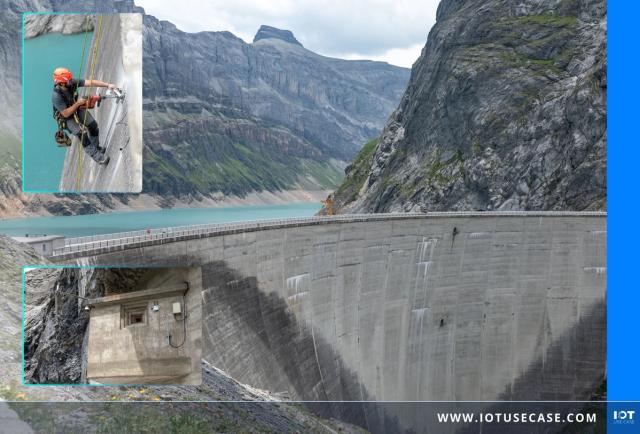


Monitoring critical infrastructure in the Alps wire-free via LoRaWAN
Axpo monitors the 146-metre Limmernsee dam in the Swiss Alps with battery-powered LoRaWAN sensors. Readings on solar radiation, wind and temperature flow via akenza straight into finite-element simulations of how the concrete ages.
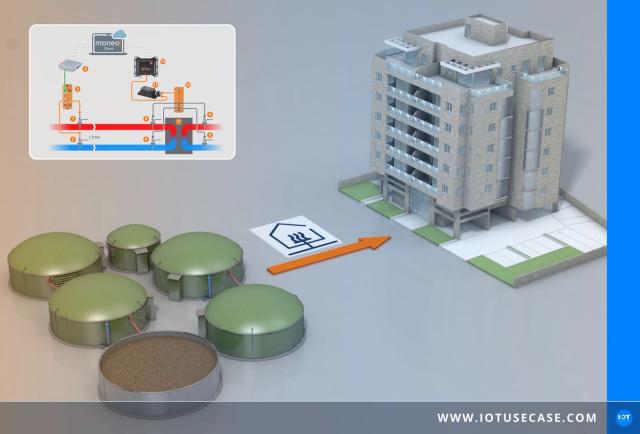


Remote heating network monitoring via mobile IoT gateway
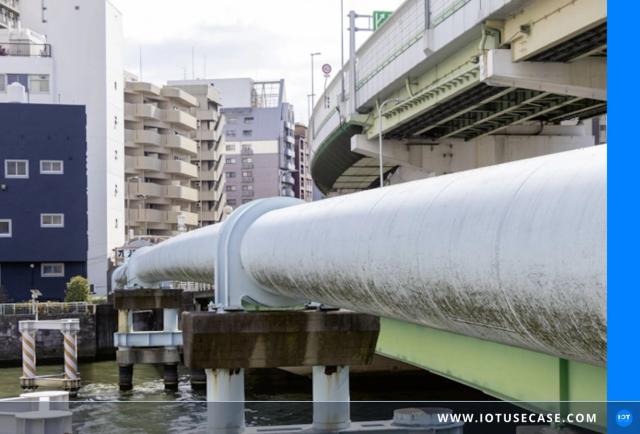


Maintain district heating networks via IIoT pressure monitoring
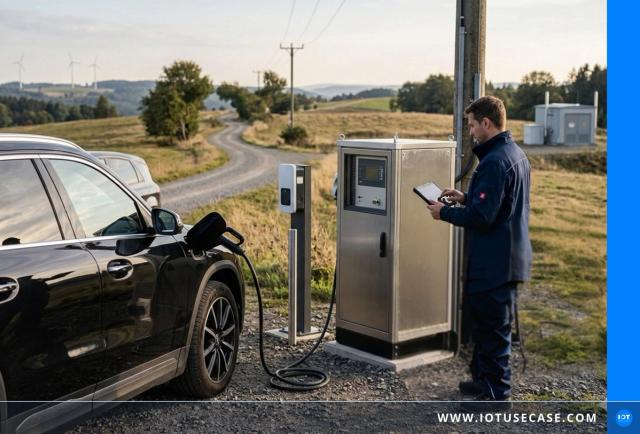


IoT platform accelerates EV fast-charging market launch
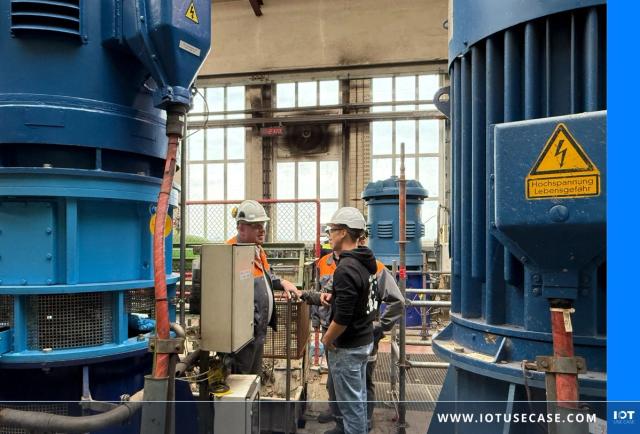

Vibration analysis with LoRaWAN reduces failures in water pumps
At CHEMPARK, CURRENTA monitors river water pumps with battery-powered LoRaWAN vibration sensors and AI-supported analysis. Predictive maintenance cuts downtime by 70% and extends service life by 30%.
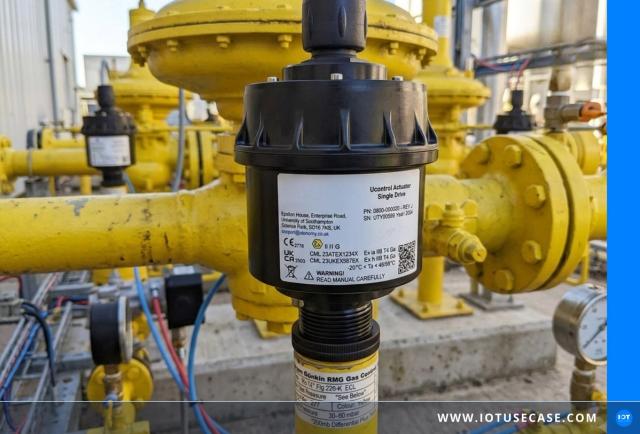
Move a PoC into secure operations: IoT platform over in-house build
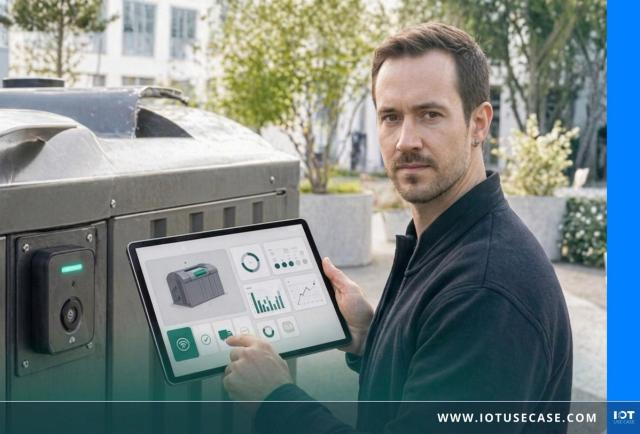

Usage-based billing with digital twins — demonstrated in waste management
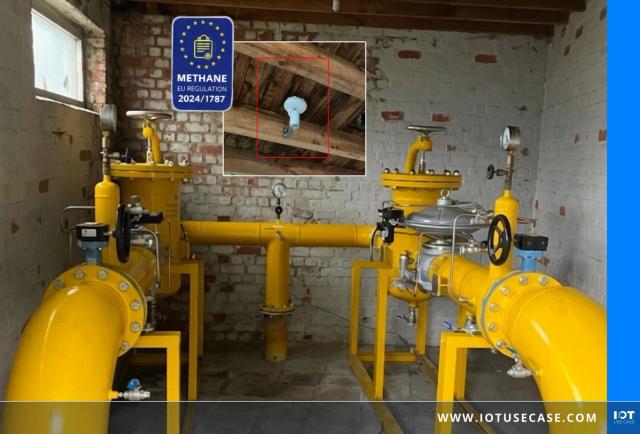


Detect gas leaks with continuous methane monitoring using IoT sensors
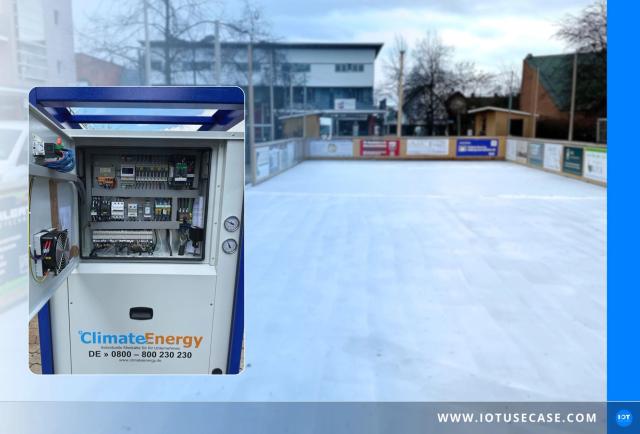




Retrofit cooling systems digitally and monitor them in real time
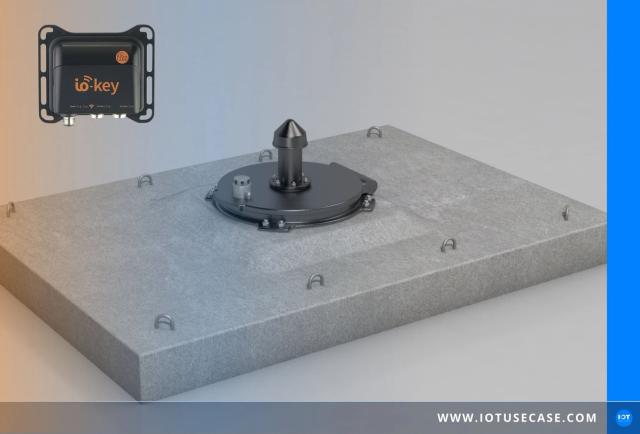
Water well level monitoring via IO-Link and cellular remotely
- Digital grid monitoring for low-voltage networks through an IoT platform
- Filter monitoring in coal plants: manual to LoRaWAN diff-pressure sensor
- Remote Pressure Monitoring in Geothermal Infrastructure
- Scaling distributed environmental sensor networks with MQTT
- Energy monitoring as a digital service for municipal utilities
- Smart Heating with LoRaWAN®: Reduce heating energy by up to 30%
- Managed Service: Self-service access to hydrogeological data
- Secure OT networks with risk and vulnerability assessment
- Automated PKI certificate management for secure energy infrastructure
- IoT monitoring with AI to reduce security costs on construction sites
- IoT-based energy monitoring for efficient fault management
- Real-time monitoring – a Plug&Play retrofit for water networks
- Automated Energy Consumption Measurements in Residential Buildings
- Smart Metering: Embedded Connectivity for sustainable metering solutions
- Ensuring plant availability at a manufacturer and operator of smart grid edge devices
- Vibrations that cost money: drift detection for conveying and separation technology
- Saving energy with IoT compressed air monitoring in production
- MQTT broker for utilities and smart transport infrastructures
- Safe bulk material conveying with energy chains and sensors in bucket wheel excavator
- From smart device to scalable service – using pest monitoring as an example
- Fragmented data stops innovation – buy-and-build strategy for sustainable asset management
- Scalable HSE (Health Safety Environment) – through central IoT monitoring instead of additional personnel
- Spare parts management with MyUNTHA: identify with 3D support and order easily
- Digital maintenance manager MyUNTHA optimises shredders with smart sensors
- IoT scaling for sustainable energy projects with Cumulocity
- Retrofit hydropower plant – from proprietary control to open IoT platform
- IoT-based service app and real-time monitoring optimise mobile energy systems
- Optimised precision through the ifm moneo Cloud and IO-Link technology
- Connected water infrastructure – using real-time data to combat leaks and theft
- OT security in energy supply: defense-in-depth for critical infrastructure
- IoT, BI & Smart Buildings: how Enloc uses office space more efficiently
- Predictive maintenance for wind turbines
- AI-supported energy management for municipalities and companies
- Together for the waste management of the future
- Energy-efficient building management with LoRaWAN submetering
- Goodbye 3G: future-proof remote monitoring for the Würzburg dewatering company
- Vibration analysis and real-time monitoring: condition monitoring in hydropower plants
- Renewable energies: cloud power for efficient battery storage
- Smart monitoring of municipal and industrial water applications
- Condition-based maintenance in the energy industry
- Performance monitoring for modern waste-to-energy solutions
- Automatic over-the-air configuration of distributed industrial systems
- Bird protection in wind turbines
- Increased plant safety through intelligent monitoring of gas-insulated switchgear
- Intelligent room climate – complete solutions for heating and cooling
- A modular solution for the future of wastewater treatment
- Smart water treatment with local data processing
- Securing IEC-61850 infrastructures in accordance with the IT Security Act
- Advancing photovoltaic expansion together
- Precise power consumption forecasts
- Remotely controlled energy assets: attack detection at the edge for wind farm cybersecurity
- Strategies for data-driven digital transformation in production
- KROHNE Messtechnik GmbH: innovative IIoT platform for data analytics solutions
- Energy suppliers brace themselves against cyberattacks on smart meters
- Combined expertise for operational optimisation for pump operators
- The energy transition as a driver of intelligent storage systems
- Distributed energy storage: attack detection and OT security for industrial networks and IIoT
- Demand-driven night marking for wind turbines – an IoT solution for Lanthan Safe Sky GmbH
- When the ventilation starts to ring: IoT platform from ZIEHL-ABEGG monitors devices via Azure
- Environmental and energy efficiency in the elevator shaft thanks to IoT
- Predictive maintenance for offshore wind turbines reduces logistics costs
- Drinking water supply – vibration analysis of the plants saves maintenance costs
- Continuous control of water levels in inland waters using robust sensors via LoRaWAN and web services
- Using the industrial IoT to combat thick air in the city
- IoT-enabled pneumatics and electrics reduce production downtime
- Smart meter gateways: connectivity and control via mobile communications
- Heterogeneous shop floor networking in practice
- Avoid downtimes in shredding machines
- Proactive customer service with mobile app
- Flexible charging solutions with data exchange via the industrial IoT
- Energy management solution for small commercial enterprises
- Remote monitoring for groundwater lowering units on construction sites
- Remote monitoring for wastewater treatment plants reduces maintenance costs
- Building drying: condition monitoring for heat engineering and plant service
Podcast episodes: Energy + Environment
38 episodes of the IoT Use Case Podcast on this industry, newest first.



Data Harmonisation with AIoT: What Do AI Agents Need for the Mapping?


Retrofit Utility Networks: Wireless Condition Data, Not Inspection Trips


180km Steam Network: Wireless Condition Monitoring with LoRaWAN



Direct Air Capture: From Pilot to Autonomous Industrial Scale



No laptop at the control cabinet: scaling device & application management in OT

Earlier flood detection with radar and NB-IoT
IoT use cases: Energy + Environment
50 use cases already implemented in this industry, sorted by number of implementations.
With modern sensor technology and smart data analysis, damage can be detected before it escalates. Whether leaks in water pipes, overheating in electrical systems or mechanical wear – continuous monitoring makes problems visible early. In condition monitoring and predictive maintenance this leaves time for targeted maintenance, in corrective maintenance affected components are located quickly, and in loss prevention it protects assets and infrastructure in the long term.











Centralized collection of distributed measurement and status data. Remote reading enables the automated retrieval of operational, status and consumption data from systems and infrastructure without manual on-site reading. The data feeds into condition monitoring and energy monitoring and is documented digitally without gaps at the same time.








Digital temperature monitoring, even for extreme conditions. In our network, IoT-based temperature measurements are implemented for steam pipes, for example – using LoRaWAN or mioty® sensors that operate maintenance-free for over 10 years. In condition monitoring and predictive maintenance the data reveals trends and anomalies early; in corrective maintenance it helps locate hotspots and repair defective components in a targeted way.




Automated creation of reports and logs for audits and compliance requirements. Digital systems enable seamless traceability and ensure efficiency in audit processes.




Consumption data capture continuously collects measured values for energy and media consumption and presents them centrally in a visualized form. Consumption trends and statuses are clearly prepared and made traceable over defined time periods.


Don’t rely on spreadsheets or isolated data sources – modern IoT platforms connect and analyze data from various systems in real time. This context-aware information makes it possible to assess risks precisely and act proactively instead of reacting to problems. This not only strengthens operational security but also minimizes downtime.

- Tracking, visualizing, and analyzing energy consumption per unit
- Leak Detection
- Structured access to files and documents
- Correlation of Production Parameters
- Smart Metering in Energy Monitoring
- IoT-Based Energy Management System
- Real-time damage prevention
- Vibration Monitoring
- Billing Automation
- Level and Distance Measurement
- Moisture Measurement
- Audit-Reporting in Traceability
- Emissions Management
- Energy Efficiency Analysis
- Knowledge Retention
- Peak Load Management
- Resource Efficiency (Water Management)
- Submetering in Energy Monitoring
- Battery Storage and Emergency Power Scenarios
- Flow measurement, e.g., of air or water
- Hazard detection
- Protection against counterfeiting and fraud
- Route Optimization and Route Planning
- Shift or Location Comparison
- Track cycle times, utilization, and throughput
- Automatic Spare Parts Ordering
- Cable and Chain Monitoring
- Demand Forecasting and Production Planning
- Digital tracking of products and processes
- Emissions Monitoring (Gas / Fluids)
- Filter Monitoring
- Gas and Hazardous Substance Detection
- GDPR-Compliant Video Surveillance
- Groundwater Level Measurement
- HVAC – Suspended Ceilings, Heating, Cooling
- Inventory Management
- Inventory Management and Reorders
- Product Carbon Footprint in Sustainability (ESG)
- PV Yield Management and Self-Consumption Optimization
- Smart Charging – Charging Management
- Tension/Thrust Monitoring
- Usage Monitoring
- Waste Management
- Water Quality and Purity Levels
Functional areas in this industry
Number of solution examples per entry. The number leads to exactly these examples.
Connected assets: Energy + Environment
74 assets from the solution examples in this industry, sorted by number of implementations.
- Pump, 7 solution examples
- Electricity meter, 5 solution examples
- Water meter, 5 solution examples
- Wind turbine, 5 solution examples
- District heating network, 4 solution examples
- Drinking water, 4 solution examples
- Battery storage, 3 solution examples
- Blower, 3 solution examples
- Charging station, 3 solution examples
- Collection container, 3 solution examples
- Compressor, 3 solution examples
- Filter, 3 solution examples
- Groundwater, 3 solution examples
- Hydropower plant, 3 solution examples
- Pumping station, 3 solution examples
- Size reduction machine, 3 solution examples
- Wastewater treatment plant, 3 solution examples
- Distribution substation, 2 solution examples
- Electric motor
- Gas distribution network
- Indoor air
- Photovoltaic system
- Piping network
- Power distribution grid
- Substation
- Wastewater
- Water distribution network
- Water reservoir
- Well
- Air conditioning system
- Building dryer
- Car
- Combined heat and power unit
- Compressed air
- Cooling water
- Crane
- Emergency generator
- Energy chain
- Fan
- Filtration plant
- Fuel tank
- Gas pressure regulating station
- Gearbox
- Generator
- Groundwater lowering system
- Heat exchanger
- Heat meter
- Heating system
- Injection moulding machine
- Insulating gas SF₆
- Laser system
- Microscope
- Milling machine
- Municipal vehicle
- Pest trap
- Plastic lid
- Process water
- Radiator
- Refrigeration system
- Screening machine
- Service water
- Spindle
- Stacker reclaimer
- Steam boiler
- Storage tank
- Stormwater overflow basin
- Surface water
- Switchgear
- Ventilation system
- Vibrating conveyor
- Waste incineration plant
- Water treatment plant
- Welding system
- Well system
These challenges are driving IoT projects in the energy and environment sector
Availability and predictive maintenance of renewable energy assets
Wind turbines, solar plants, and hydropower stations are often located in remote regions. Unplanned failures are costly and logistically complex. Sensor-based condition monitoring and predictive maintenance maximize availability and significantly reduce maintenance costs.
Grid stability and load management in the smart grid
Volatile renewable energy sources make grid control more complex. Real-time monitoring of feed-in, consumption, and grid parameters is a prerequisite for stable operation, automated load management, and the integration of decentralized generators.
Emissions monitoring and environmental compliance
Power plants, industrial facilities, and wastewater treatment plants are subject to strict emission limits. Continuous measurement, automatic reporting, and tamper-proof data storage are regulatory requirements and protect against liability risks.
Smart metering and consumption transparency
Conventional meters provide no real-time consumption data. Smart meters enable demand-based billing, detect load peaks early, and create the data foundation for demand response programmes and energy efficiency consulting.
Remote monitoring of distributed infrastructure
Pipelines, pumping stations, wastewater treatment plants, and monitoring stations are spread across vast areas. Without remote monitoring, regular on-site inspections are necessary – costly, time-consuming, and too slow in the event of disruptions.
CO₂ accounting and ESG reporting
Regulatory requirements and buyer specifications demand measurable, documented sustainability data. Sensor-based energy and emissions monitoring provides the data foundation for Scope 1, Scope 2, and Scope 3 reports – automated and audit-ready.
Wind farms, substations, pumping stations, treatment plants and district heating pipelines are widely distributed, usually unstaffed and sometimes without power or network access. If you only learn their condition on the next site visit, you react late and drive out too often. IoT sensors and gateways report voltage, pressure, vibration, consumption and emissions automatically, over cellular, LoRaWAN or satellite. Here you will find more than 80 solution examples from municipal utilities, grid operators, water utilities and renewable energy operators, each with user, technology and implementation partner.
IoT in Energy: What Connected Plants, Grids and Meters Deliver Today
IoT in the energy sector means that wind turbines, secondary substations, meters, pumping stations and pipelines report their own condition, instead of a technician reading it on the next site visit. Digitalization in utilities therefore almost always starts with transparency: how heavily is the grid loaded, how much is consumed where, and which asset is going to fail next?
Unlike in a factory, the equipment is not in one building. It is spread across hundreds of square kilometers, at sea, under the road or in valve houses without a power supply, and it is critical infrastructure. The solution examples on this page show how municipal utilities, grid operators, water utilities and renewable energy operators have solved this.
What Is IoT-Based Energy Monitoring?
IoT-based energy monitoring automatically captures electricity, gas, water and heat at meters and assets and sends the readings continuously to a platform. There, consumption is compared, load peaks become visible and deviations trigger alerts, such as a badly adjusted ventilation system or a burst pipe. Unlike an annual meter reading, it delivers values every 15 minutes or every hour, and it provides the data foundation for energy management under ISO 50001. More in the use case energy monitoring.
Typical IoT Applications in Energy, Water and the Environment
Grid Monitoring and Smart Grid in the Distribution Network
With heat pumps, wall boxes and rooftop solar, the low-voltage grid is becoming a bottleneck, and that is exactly where measurements used to be missing. German grid operator Regionetz fitted its substations with sensors for voltage, current and temperature. The data flows via MQTT into an IoT platform and builds a digital twin of the grid that shows overloads early and forms the basis for load management under Section 14a of the German Energy Industry Act (EnWG). The example digital grid monitoring for low-voltage networks describes the project from workshop to live operation.
Smart Metering and Smart Meter Gateways
Smart metering systems consist of a digital meter and a smart meter gateway that transmits the readings in encrypted form. Metering service provider co.met manages around four million metering points and connects the gateways with a global SIM that switches automatically between mobile networks (smart meter gateways via cellular). Water works the same way: Heitland's ultrasonic meters join Deutsche Telekom's NB-IoT network as soon as they are installed, and Gelsenwasser is rolling out around 200,000 digital water meters. More in the use case smart metering.
Predictive Maintenance for Wind Turbines
Every unnecessary trip to an offshore turbine costs money and depends on weather and sea state. Woodward Kempen has equipped around 18,000 wind turbines with its frequency converters. Materna sends their power and sensor data via cellular, cable or satellite to the cloud, where a machine learning model detects patterns that point to faults (predictive maintenance for offshore wind turbines). ZF monitors its wind turbine gearboxes the same way and knows in advance which part needs replacing (predictive maintenance for wind turbines). More in the use case predictive maintenance.
Condition Monitoring in Hydropower and Solar
Italian energy company CVA operates 32 hydropower plants across around 3,200 square kilometers in the Aosta Valley. Retrofitted sensors on turbines and generators measure vibration, temperature, pressure and flow, so maintenance knows the condition of each plant without driving out to it (condition monitoring in hydropower plants). On the roof of a REWE logistics center in northern Germany, EHA remotely controls and monitors a 1,377 kWp solar plant whose power is consumed entirely on site (solar expansion with remote access).
Energy Monitoring and Energy Management for Municipalities and Businesses
Many municipal utilities turn their metering infrastructure into a service. Stadtwerke Krefeld offers business customers energy management on an IoT platform and uses the same platform to monitor its district heating network with 1,500 meters and groundwater levels with 450 sensors (energy monitoring for municipal utilities). Gelsenwasser offers municipalities and companies an energy monitor that detects anomalies with AI. Its first analyses uncovered excess consumption in schools caused by a badly adjusted ventilation system (AI-supported energy management). More in the use case IoT-based energy management system.
Remote Monitoring and Telemetry in Water and Wastewater
Pumping stations, stormwater tanks and treatment plants sit outside town and run around the clock. The Würzburg wastewater utility monitors 70 stormwater pumping stations from its control center. When the 3G network was switched off, FleX Automation replaced the old modems with edge gateways that communicate over VPN using the DNP3 telemetry protocol and keep the existing controllers in use (remote monitoring after the 3G shutdown). At the Bad Pyrmont-Lügde treatment plant, blowers and compressors account for 60 to 70 percent of energy costs. Remote monitoring with condition monitoring and energy management saves site visits and flags worn parts before they waste power (remote monitoring for wastewater treatment plants).
District Heating and Geothermal Energy
Heating networks run under the street, and every manual pressure reading means opening a manhole, securing it and climbing down. IIoT pressure monitoring turns this into a value on a dashboard (pressure monitoring for district heating networks). In Iceland, grid operator Veitur monitors the pressure along an almost 30 kilometer hot water pipeline, including valve houses with no power and no communication link (pressure monitoring of geothermal infrastructure).
Environmental Monitoring and Emissions
The EU methane regulation requires operators to measure and report methane emissions at all sites. Hamburg alone has more than 600 gas pressure regulating and metering stations that used to be inspected by hand. Stationary methane sensors now monitor them continuously (continuous methane monitoring). In Stuttgart, connected Filter Cubes from MANN+HUMMEL remove more than 80 percent of particulate matter and nitrogen dioxide from roadside air and only run when the readings call for it (IoT against urban air pollution). More in the use case emissions management.
Cybersecurity: Energy Assets Are Critical Infrastructure
Every remote access point to a wind farm or substation is also a potential attack path. BayWa r.e. maintains most of its solar and wind farms remotely and therefore installed intrusion detection directly on its existing energy gateway, purely as software and without extra hardware in the field. It analyzes communication passively and reports attacks and fault conditions in real time (attack detection at the edge of a wind farm). Anyone planning IoT in energy supply should build in certificate management, encrypted transmission and central updates from day one.
Which Connectivity Fits Energy and Water Utilities
For meters and measuring points in basements or manholes, NB-IoT and LTE-M work well because they penetrate walls and run on battery for years. LoRaWAN covers an entire city with a few gateways and is widely used by municipal utilities for water and heat meters. Pumping stations, substations and generation assets are usually connected to the control system over 4G or 5G with VPN, and offshore sites add cable or satellite. Telemetry protocols such as DNP3, IEC 60870-5-104, IEC 61850 or Modbus TCP run on top.
How to Start an IoT Project in the Energy Sector
Start with a place where someone drives out today to read a value, or where a failure is expensive: a substation at its load limit, a remote pumping station, a gearbox with a history of damage. Regionetz had no IoT experience, began with a two-day workshop and tested the technology in a one-year proof of concept before moving to live operation. Clarify early which system the data flows into, such as the control system, SCADA, ERP or a customer portal, and who operates the gateways.
Find IoT Providers with References in Energy and Environment
Every solution example on this page names the implementation partner, the technology used and usually the user, including Regionetz, Stadtwerke Krefeld, Gelsenwasser, BayWa r.e., CVA, ZF and the Würzburg wastewater utility. This shows you who has already delivered a comparable project. If you briefly describe your project via the contact form, we will connect you with suitable providers.
Frequently asked questions: implementing IoT in energy and utilities
How do I start an IoT project in the energy sector?
Start where someone drives out today to read a value or where a failure is expensive, and run a pilot there. A distribution grid operator with no IoT experience started with a two-day workshop and tested the technology in a one-year proof of concept before moving to live operation. Clarify early which system the data flows into and who operates the gateways.
How can a municipal utility digitalise its grids and meters with IoT?
Step by step, starting with assets that someone has to drive out to today: electricity, water and heat meters, secondary substations, district heating pipes and pumping stations. A shared radio network and one platform then support many applications. Many utilities also sell the data as a service: one runs energy management for business customers, 1,500 district heating meters and 450 groundwater sensors on its IoT platform.
How do I prepare my low-voltage grid for Section 14a EnWG?
By measuring the load at your secondary substations before you dim controllable loads such as heat pumps and wall boxes. Retrofitted sensors provide voltage, current and temperature in real time without replacing the substation. One distribution grid operator uses this data to build a digital twin of its grid that shows overloads early and feeds the load management systems required under Section 14a.
How do I implement energy monitoring for ISO 50001 with IoT?
Retrofit meters and major consumers with sensors or pulse readers that send electricity, gas, water and heat readings automatically to a platform. It shows consumption every 15 minutes, detects load peaks and reports deviations such as a badly adjusted ventilation system. This gives you the measurement data that energy management under ISO 50001 needs. One water utility also uses AI to detect anomalies in its buildings and cut consumption in a targeted way.
What if remote telemetry still runs over 3G?
Replace the old modems; the controllers behind them can usually stay. A municipal wastewater utility installed 4G edge gateways at 70 pumping stations whose radio module can later be swapped for 5G. The gateways speak DNP3 and OPC UA, so the existing controllers and SCADA system stay in operation. This lets you modernise your telemetry without rebuilding the control system.
Which connectivity is suitable for energy and water assets?
For meters in basements and manholes, NB-IoT and LTE-M work well because they penetrate walls and run on battery for years. LoRaWAN covers a whole city with a few gateways. Pumping stations, substations and generation assets are usually connected to the control system via 4G or 5G with VPN, and offshore sites add cable or satellite.
How can IoT help me meet the measurement requirements of the EU methane regulation?
With stationary methane sensors at gas pressure regulating stations and other sites that measure continuously and report leaks immediately. The readings are sent by radio, for example LoRaWAN, to a platform that provides time series and evidence for reporting. This saves inspection rounds and reveals leaks earlier than any spot check. You can use the same technology for water levels, groundwater and air quality if you need to capture other environmental data.
How do I connect energy assets securely and in line with NIS2?
With an architecture that has security built in from the start: encrypted transmission, automated certificate management, centrally managed updates and intrusion detection in the OT network. These building blocks also provide the evidence that NIS2 requires from energy suppliers. One wind farm operator installed intrusion detection as software on its existing gateways, without additional hardware in the field.
How do I find a provider for an IoT project in the energy sector?
The fastest way is through projects that are already up and running. The solution examples on this page name the implementation partner, the technology used and in most cases the user, from municipal utilities and grid operators to wind and hydropower. If you briefly describe your project via the contact form, we will put you in touch with providers who have already delivered a comparable project in the energy or water sector.
Implementing IoT in the energy and environment sector – we can help
Are you planning an IoT project in the energy or environment sector, or do you want to become visible as a solution provider in this area? We help you find the right partners, present solutions in a practical way, and reach real users.
Get in touch