
Water distribution network
Reducing non-revenue water starts with IoT sensors that record flow, level, pressure and temperature across the water distribution network. Utilities detect losses and leaks faster and generate mandatory abstraction reports automatically instead of after long inspection drives.
Water distribution network at a glance
Most frequent in the solution examples on this page
Use cases
Industries
Technologies
Users in these examples

Solution examples featuring Water distribution network






Non-revenue water: detect losses in the water distribution network
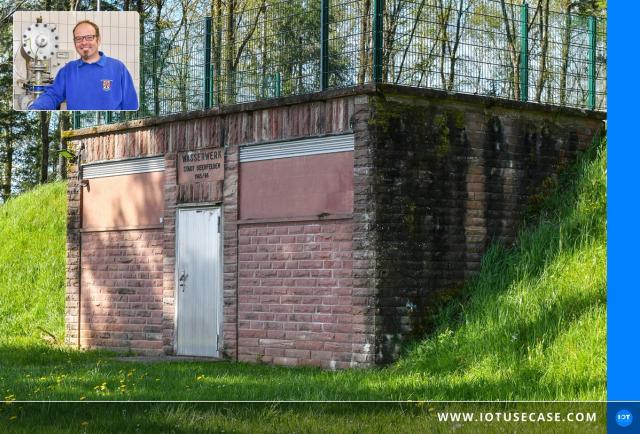
In Oberzent in the Odenwald region, Endress+Hauser and WAGO connect the measuring devices to the Netilion IIoT ecosystem via a LoRaWAN network operated by the local energy supplier Entega. Netilion Network Insights displays tank levels and flows in dashboards and in the formats required by the authorities, while status messages show which measuring point needs maintenance. The WAGO gateway processes signals from Modbus to HART or IO-Link. KROHNE and inovex connect devices measuring flow, temperature and pressure to edge gateways that send data via the cellular network and MQTT to an IIoT platform on Microsoft Azure. There, machine learning detects anomalies and automatically notifies the water utility.
Both examples come from water management, as leak detection, remote reading and audit reporting. The Oberzent water supply has connected 19 stations; previously, four water supervisors drove to each site and entered the readings from 35 flow, 17 level and seven pressure meters into lists by hand. KROHNE is launching its IIoT platform with flow monitoring in water distribution networks that detects water loss and thus avoids non-revenue water. Podcast episode 217 adds how municipal utilities retrofit existing networks with battery-powered wireless sensors instead of reading analogue pressure gauges in manholes up to six metres deep.
Podcast episodes featuring Water distribution network
Non-revenue water: frequently asked questions
How does water utility leak detection work in supply networks?
IoT detects leaks in the pipe network by continuously measuring flow and pressure and reporting deviations. In the solution from KROHNE and inovex, edge gateways send the readings via MQTT to a platform that triggers alarms when values rise above or fall below limits. Machine learning also detects anomalies and notifies the utility automatically. This means leaks in the fresh water supply are found faster and earlier.
Why should utilities invest in water loss management?
Water loss management pays off because it brings economic and environmental benefits. Economically, it avoids non-revenue water, meaning water that is produced but never billed. Environmentally, it protects limited water resources when leaks in the fresh water supply are noticed earlier. According to the solution examples, more and more regions face water shortages due to climate change, and more and more countries require utilities to record abstraction and consumption.
How can water network management read remote sites without mobile coverage?
Without mobile coverage, elevated tanks and wells are connected via a LoRaWAN network. In Oberzent, most sites simply have no reception, says water supervisor Thomas Pirk, who is responsible for 18 elevated tanks together with three colleagues. Since the energy supplier Entega has been operating a LoRaWAN network there, the measuring points send their levels and flows by radio to Netilion. The water supervisors see the entire process on a monitor or tablet.
Which devices provide the data for water distribution monitoring?
Data in a water distribution network comes mainly from flow, level and pressure meters. In Oberzent, there are 35 flow, 17 level and seven pressure meters at springs, deep wells and elevated tanks. The WAGO gateway accepts signals from flow meters to door contacts via Ethernet/IP, Modbus, HART or IO-Link. At KROHNE, the connected devices measure water flow, temperature and pressure, among other values.
More assets in “Components & Devices”

Filter
Filter monitoring with IoT measures the differential pressure across a filter and shows how dirty it is. Operators change filters when it is actually necessary, avoid clogged filters and downtime, and save energy and material.

Energy chain
An energy chain with IoT sensors continuously reports the condition of the cable management on moving machinery. Operators learn about overload, blockages or chain breakage before the machine stops, and plan chain replacement according to actual use.

Lighting
Commercial lighting control with IoT adjusts the lighting in offices, halls, shops and advertising installations according to occupancy, brightness and schedules, and monitors every luminaire remotely. Operators cut electricity consumption and learn about failures immediately.

Electricity meter
Automatic meter reading means that electricity meter readings reach a platform via radio, cellular network or pulse adapter, with no on-site reading. Operators bill more accurately and see where energy is consumed in a building or in production.

Charging station
Commercial EV charging relies on load management that distributes the available power across all charging stations at a site and monitors them remotely. Operators avoid overloading the grid connection, integrate photovoltaics and storage, and bill sessions automatically.

Power tool
Connected tools bring rivet tools, screwdrivers and cordless power tools into the networked factory. Every work step is documented, failed attempts are detected, and the data feeds into quality assurance and production control.
IIoT Use Case user group
What no solution example tells you
What did the project cost? Which sensor didn't survive in the field? How did you get maintenance on board? 300+ industrial users discuss questions like these with each other every month, openly and without vendors in the room.
Frequent topics in these examples, bring your questions:
- Condition Monitoring
- Asset Management
- Corrective maintenance
Online every month
Alternating tech and business focus
Users only
No sales pitches, exchange under NDA
300+ members
OT, IT and IIoT leads from industry