MQTT Technology Solutions
- 22 verified partners
- 46 solution examples online
- More in our database
- 14 industries
People with MQTT experience in the network
Users and contacts at our partners who have used this technology in their projects. Open a profile to get in touch directly.









What MQTT is used for in industry
Lightweight pub/sub protocol for thousands of IoT devices
Devices publish their data once to a broker, and any number of consumers subscribe to it. New sensors or applications can be added without touching existing connections.
Resource-efficient for edge devices
Protocol overhead is only a few bytes per message. MQTT therefore runs on microcontrollers, gateways and narrowband cellular links without slowing the hardware down.
The standard for sensor-to-cloud transmission
AWS IoT Core, Azure IoT Hub and almost every IoT platform speak MQTT natively. Providing data via MQTT keeps you flexible in your choice of cloud.
What is MQTT?
MQTT (Message Queuing Telemetry Transport) is a lightweight messaging protocol based on publish/subscribe. Devices do not send their data to a specific recipient; they publish it under a topic, such as plant1/hall3/press7/temperature, to a central broker. Every application subscribed to that topic receives the message. MQTT runs over TCP/IP, has been an OASIS standard since 2014 and, in version 3.1.1, is standardised as ISO/IEC 20922. The current version, MQTT 5, adds better error reporting and message metadata, among other things.
How MQTT is used in the IIoT
In industry, MQTT is primarily the transport between shop floor and IT: gateways and edge devices collect values from machines, sensors and controllers and send them via MQTT to a cloud platform, dashboard or database. Because publishers and subscribers do not need to know each other, an MQTT architecture scales easily. Three quality-of-service levels (QoS 0, 1 and 2), retained messages and the last-will message on disconnect make the protocol robust on unreliable networks such as cellular links. MQTT is also the backbone of most Unified Namespace architectures.
MQTT or OPC UA?
The two standards compete less than is often claimed. OPC UA describes machine data semantically, with data types, units and standardised information models, and is widespread in controllers and machines. MQTT moves data efficiently and at scale but does not define how a message is structured. In practice, a gateway reads data from the machine via OPC UA and distributes it via MQTT. If you want structure in the MQTT payload as well, use Sparkplug B or OPC UA PubSub over MQTT.
What an MQTT architecture looks like in practice
It usually starts with an edge gateway at the machine or in the control cabinet. It reads values via OPC UA, Modbus or IO-Link, converts them into MQTT messages and publishes them to a broker in the plant. There, dashboards, time-series databases and the MES subscribe to the topics they need. A bridge or a second broker in the cloud takes over selected data for cross-site analysis. If the external connection fails, the local level keeps running.
What to consider when choosing
The most important decision is the broker. Eclipse Mosquitto is lean and open source and sufficient for many single sites. For multiple sites, high availability and tens of thousands of connections, clustered brokers such as HiveMQ or EMQX or the cloud providers' MQTT services are the usual choice. Decide early on topic naming and payload format, because renaming later is expensive. And no broker belongs on a production network without TLS encryption and per-device authentication.
Solution examples
66 online · more in the databaseFunctional area
Industry





Monitoring tank fill levels via MQTT to safeguard operational readiness






Reconfiguring production lines flexibly with the asset administration shell
At the Bosch Rexroth model factory, the Asset Administration Shell connects machines in a standardised way. XITASO adds brownfield machines with a function block.






Putting existing IO-Link data to use for condition monitoring
IO-Link devices deliver more than switching signals. nass magnet and in.hub carry diagnostic data from the valve into IT as a basis for condition monitoring.
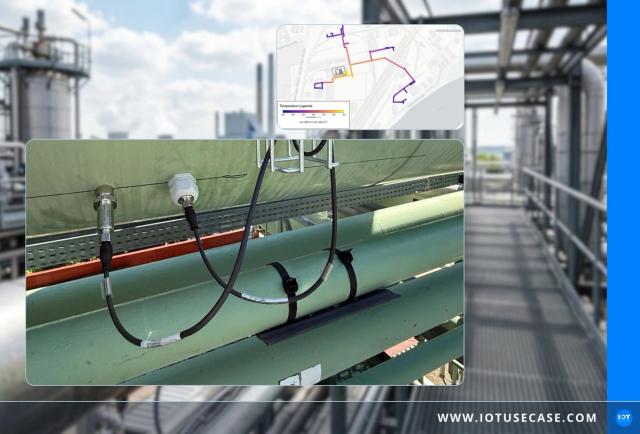




Digital twin for steam pipe monitoring: automated burner optimization
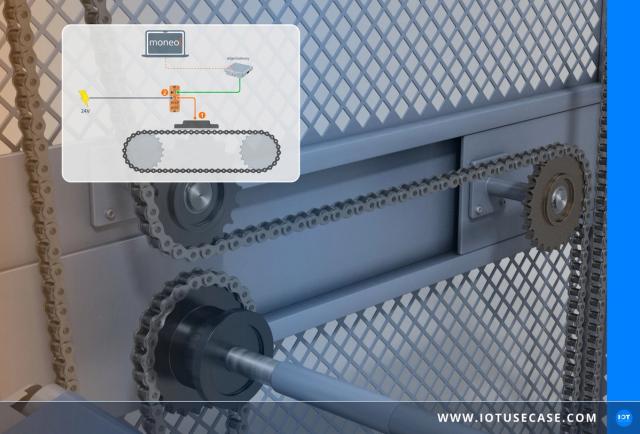


Roller chain monitoring via IO-Link to prevent downtime
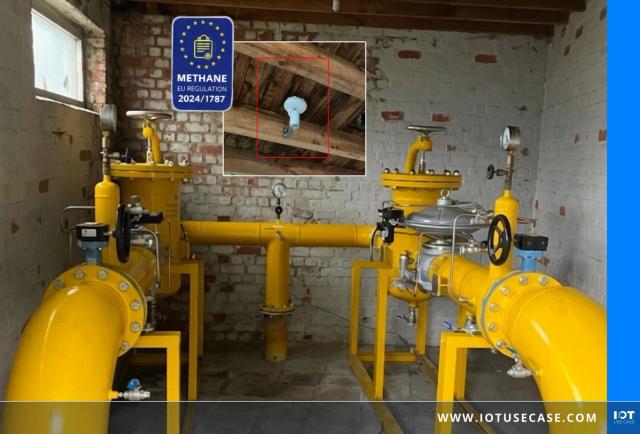


Detect gas leaks with continuous methane monitoring using IoT sensors






Digital grid monitoring for low-voltage networks through an IoT platform




Scaling distributed environmental sensor networks with MQTT





Digital service portal as a white-label solution
User Group
MQTT is a topic in the Tech Round (OT/IT/IIoT decision-makers)
300+ practitioners discuss specific questions from their projects every month, including about MQTT. No vendors in the room, honest exchange under NDA. Personal introductory call before admission.
Join the waiting list →Use cases implemented with MQTT
Structured access to files and documents
24 solution examples →
Track cycle times, utilization, and throughput
14 solution examples →
Early Detection of Damage in Condition Monitoring
12 solution examples →
Temperature Measurement in Condition Monitoring
12 solution examples →
Audits and Reportings
10 solution examples →
Digital tracking of products and processes
8 solution examples →
Tracking, visualizing, and analyzing energy consumption per unit
8 solution examples →
Early Detection of Damage in Corrective Maintenance
7 solution examples →
Correlation of Production Parameters
6 solution examples →
Companies implementing MQTT
22 verifiedVendors and integrators whose MQTT projects you can find in our solution examples.

Perinet GmbH
9 solution examples

ifm-Unternehmensgruppe
6 solution examples

EMQ GmbH
4 solution examples

Portainer.io
4 solution examples

autosen
2 solution examples

Exor International SpA
2 solution examples

IXON
2 solution examples

soffico GmbH
2 solution examples

symmedia GmbH
2 solution examples

WAGO GmbH & Co. KG
2 solution examples

b.telligent
1 solution example

Cumulocity GmbH
1 solution example

Currenta Conneqtive
1 solution example

Cybus
1 solution example

Honeywell
1 solution example

in.hub GmbH
1 solution example

Innomat-Automation AG
1 solution example

it-novum GmbH
1 solution example

OPC Foundation
1 solution example

Schaeffler Digital Solutions GmbH
1 solution example

Visualys GmbH
1 solution example

XITASO GmbH
1 solution example
Podcast episodes on MQTT
31 episodesFrom the IoT Use Case Podcast, newest first. Each episode opens its own page with audio, summary and transcript.
- #223IO-Link to MQTT: Connecting Sensor Data Without Touching the ControllerTURCK GmbH · 39 min · Sep 2, 2026To the episode
- #218Asset Administration Shell in the Model Factory: Reconfiguring Production Lines FlexiblyXITASO GmbH · Bosch Rexroth AG · 36 min · Jul 15, 2026To the episode
- #217Retrofit Utility Networks: Wireless Condition Data, Not Inspection TripsWIKA Alexander Wiegand SE & Co. KG · 31 min · Jul 8, 2026To the episode
- #208IO-Link in Manufacturing: Condition Monitoring and Digital Servicesin.hub GmbH · nass magnet · 29 min · Mar 4, 2026To the episode
- #196Implementing IoT Successfully: Use Cases, Impact, PartnershipsIIoT Use Case GmbH · GMN Paul Müller Industrie GmbH & Co. KG · 40 min · Nov 28, 2025To the episode
More technologies: Messaging/Transport
All Technology Solutions →Messaging systems reliably move measurements and events between devices, edge and cloud. Following the publish/subscribe principle, a message reaches every system that needs it without fixed point-to-point connections.