

Get in touch with Dennis Jansen
Tell us briefly what it is about – we will pass your message on and make the introduction personally.
Solution Examples



Podcast Episodes
No Cables, No PLC, No IT Project: Simply Connecting Decentralized Assets
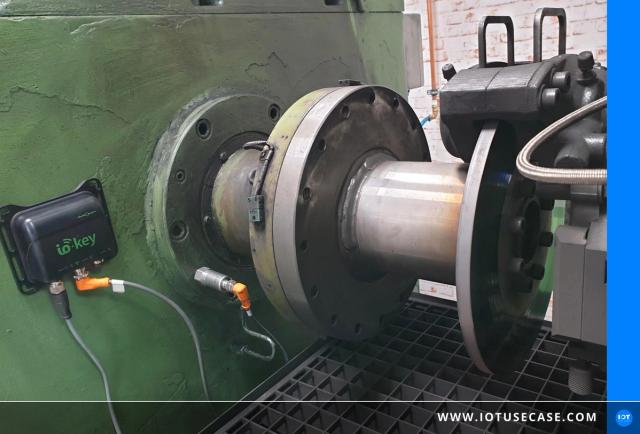
autosen's answer is the minion: a modular sensor system with an integrated cellular gateway and battery that works without any existing infrastructure. The underlying approach is deliberately radically simple — control systems are left untouched; instead, critical points in the field are monitored. From unboxing to the first data in the cloud: 30 minutes at most. Dennis Jansen explains why autosen relies on LTE-M and NB-IoT rather than 5G — energy efficiency beats bandwidth when a battery needs to last two years. And he makes clear who the system is designed for: not the end user themselves, but system manufacturers who want to offer their customers standalone IoT services — for example with industrial fans, level monitoring, or access control. Key takeaways Plug & play in the IIoT is possible if you leave control systems aside and deploy standalone devices for critical points LTE-M and NB-IoT beat 5G for battery-powered sensors, because energy efficiency comes before bandwidth The minion system targets system manufacturers as an enabler — not end customers directly
All About Automation (LIVE) | IoT news at the trade show and current lighthouse projects from the field
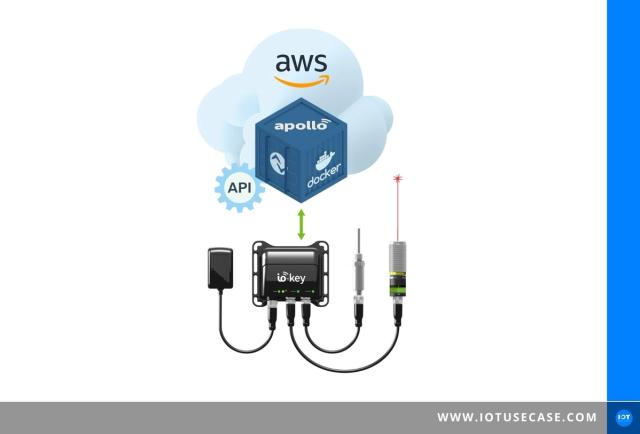
Monday morning 11:00 a.m. in a bread factory: Suddenly the packaging line breaks down. The reason: a small component defect that results in a long downtime and high repair costs. The annoying part: The plant was not connected to the Internet: A small investment in digitization and networking would have been enough for the plant to warn the operator of the defect via the Internet of Things. An example use case that was identified early on by GHD Georg Hartmann Maschinenbau together with igus and implemented through a smart condition monitoring project. It is practical examples like this that show us the relevance and potential of the IIoT topic. And that’s exactly what Madeleine Mickeleit, Christoph Müller and Jörg Wolf do in this live podcast episode. For example, with this use case from A1 Digital: The company Hiller manufactures decanter centrifuges and complete systems for solid-liquid separation for the food industry and other sectors. Wherever substances need to be separated from each other, their centrifuges come into play. Such a centrifuge has a weight of 2 to 6 tons and rotates at thousands of revolutions per minute. When A1 Digital became involved, Hiller had already implemented an IoT platform, through which they should actually be able to collect the data relevant to them, such as engine speed, power consumption or vibrations. However, the performance in reality looked different and was not satisfactory for the centrifuge manufacturer. That’s why they took the step of approaching A1 Digital. How they overcame the challenge of accessing the data and what Hiller had planned with the data – key words: customer loyalty, after-sales, predictive maintenance – A1 Digital tells us directly from the field. autosen is an expert in all aspects of hardware and data acquisition with its nearly 21,000 different sensors and the io-key IoT gateway. “There is a sensor for every use case,” says Müller of autosen. For example, he reports on a use case from agriculture or livestock farming: horses are prone to colic. Therefore, there are laser distance sensors above the feeders. Through them it is detected how often the horse eats. Every time the horse puts its head in, the distance of the laser sensor changes. You know exactly when the horse has not eaten or eaten too much and whether there is a need for action in this regard. A great added value for the welfare of the animals, among other things. No automation engineer is needed to install the equipment. autosen explains in the podcast how quick and easy it is to get started. Many more exciting practical examples and lighthouse projects can be found in episode 91 of the IoT Use Case Podcast.