
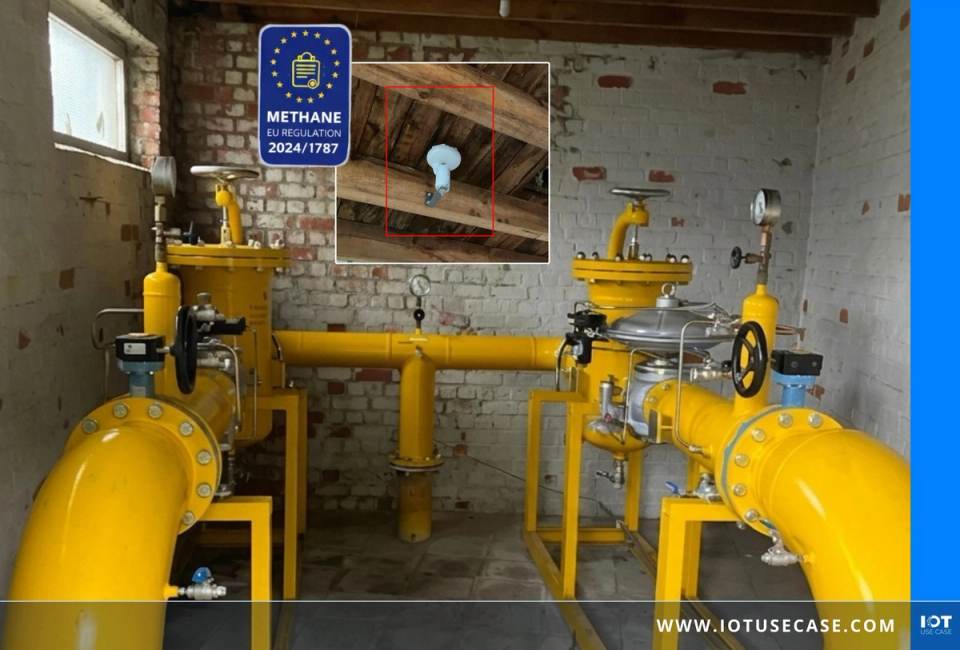



Methane emissions from gas distribution networks are receiving increased attention from municipal utilities. One reason is new EU-level regulatory requirements that call for emissions to be systematically monitored and assessed. As a result, there is a growing need for solutions that enable continuous methane monitoring and early leak detection. One such solution is the Honeywell Versatilis Signal Scout fixed methane sensor, which is permanently installed at gas pressure regulating and metering stations and enables continuous methane monitoring.
The challenge: complex gas networks and methane emissions with a significant climate impact
Municipal utilities often operate extensive gas distribution networks including gas pressure regulating and metering stations, pipelines and valves. In major cities such as Hamburg, Germany, there are more than 600 such stations where leaks can occur.
Methane is a key component of natural gas. It is a colorless, odorless and highly flammable gas that also contributes to climate change. Although it does not remain in the atmosphere permanently, over a 20-year period it has a global warming potential more than 80 times greater than that of CO₂.
Continuous monitoring instead of periodic inspections
To detect leaks as early as possible, municipal utilities have traditionally relied on manual inspections of their gas networks. However, this approach captures only isolated points in time that are often widely spaced. In addition, manual inspections are resource-intensive and difficult to scale because they require significant personnel.
This challenge extends beyond municipal utilities. Methane emissions also occur in the oil and gas industry, chemical plants and wastewater operations. Even abandoned mines can release gas. Across all these sectors, emissions must be detected reliably and documented.
Regulatory pressure from the European Methane Regulation
In addition, the new European Methane Regulation is increasing the pressure on operators. It requires methane emissions to be measured at all operating sites and reported in a structured manner. The overall goal is to reduce methane emissions by 30 percent by 2030 compared with 2020 levels. The regulation also defines different categories of emissions with fixed thresholds, increasing the number of required inspections.
The EU regulation uses the term leak detection and repair (LDAR) and distinguishes between two categories of inspections:
- LDAR Type 1 targets larger leaks, with a detection threshold of 7,000 ppm (parts per million) or 17 grams per hour.
- LDAR Type 2 covers smaller leaks from around 500 ppm or 1 gram per hour.
The regulation also defines specific repair timelines. For leaks above the defined threshold, a first repair attempt must be made within five days of detection. Full repair must be completed within 30 days of detection. Meeting these requirements calls for a new approach: not occasional manual checks, but continuous monitoring.
Key challenges at a glance
- •High number of potential leak points across gas networks
- •Time gaps between manual inspections
- •Strict thresholds and repair deadlines under EU regulation
- •Detecting low-level methane emissions is challenging
The solution: fixed methane detectors for continuous methane monitoring
For continuous methane monitoring, a fixed methane sensor is permanently installed at each observed site or gas regulating station. Honeywell has developed the Versatilis Signal Scout methane gas detector for this purpose. It measures the methane concentration in ambient air and also captures temperature, pressure and humidity. The device is battery-powered, requires no cabling and can be installed easily. These features enable the rapid rollout of large numbers of sensors across sites.
Precise detection with new measurement technology
Honeywell IoT sensors respond to changes in the thermodynamic properties of the air. Methane emissions alter the behavior of the air-gas mixture. This change is detected and converted into a concentration reading. As a result, methane concentration changes can be detected from and above 50 ppm, depending on installation conditions and environmental influences.
The additional ambient parameters captured, such as temperature, humidity and pressure, help to assess dilution effects and environmental influences. Honeywell devices are robust and suitable for use in hazardous areas. They operate continuously and provide readings at short intervals. This allows emissions to be analyzed quantitatively over a longer period of time.
Efficient data transmission with LoRaWAN
A key component of the solution is wireless, encrypted communication via LoRaWAN® (Long Range Wide Area Network). The technology is characterized by very low power consumption, allowing batteries to power sensors for many years. This makes it particularly well suited to hard-to-access measurement points or locations intended to operate over long periods. At the same time, the infrastructure is cost-efficient to deploy and operate—even large networks can be run economically. In rural areas, ranges of up to 15 kilometers are possible; in urban environments, several kilometers are typical. In large buildings and extensive facilities, the strong building penetration of the radio signals is a key advantage.
LoRaWAN® is especially well suited to the regular transmission of small data volumes, which is precisely how the Honeywell IoT sensors operate. They transmit data via a LoRaWAN gateway and the MQTT protocol to a software platform, which processes it in real time. On this basis, leaks can be localized and their emission rate calculated. As soon as defined thresholds are exceeded, the system automatically generates a notification by email or via other channels. This allows responsible personnel to respond quickly and initiate targeted action.
Practical example: Methane monitoring in a gas pressure regulating station
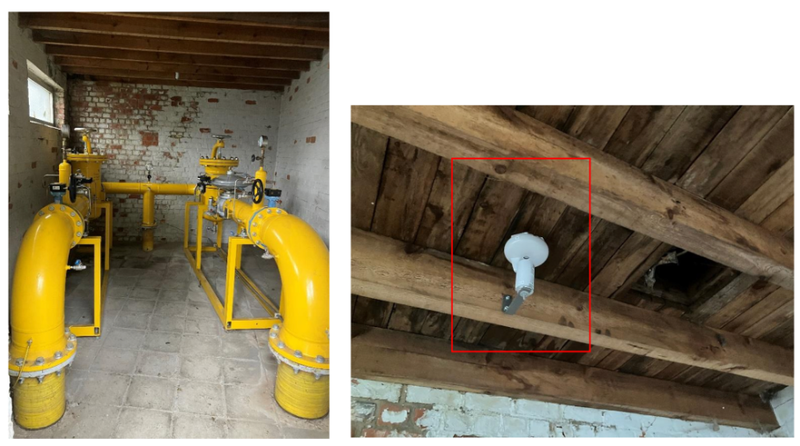
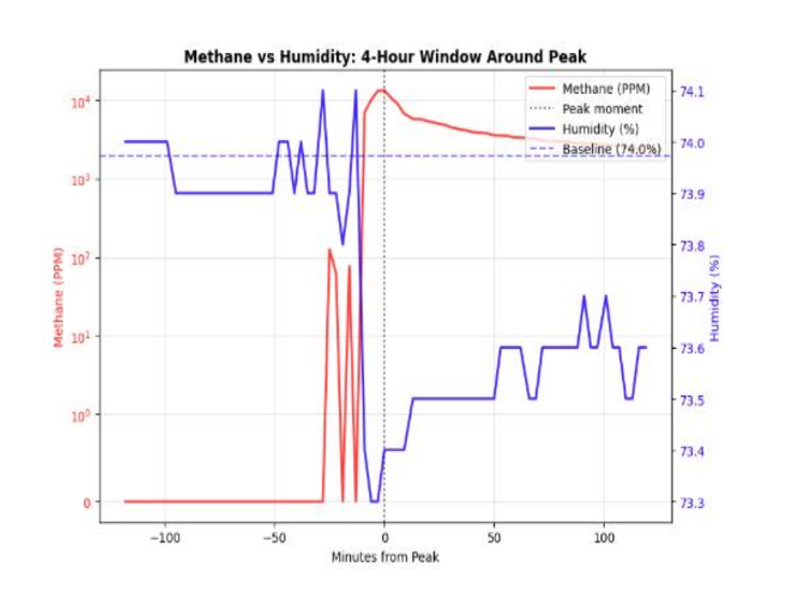
During maintenance work in the enclosed space of a gas pressure regulating station, sensors detected a sudden methane leak. Shortly after maintenance began, the methane concentration rose sharply within less than half an hour, reaching a peak of over 13,000 ppm. A brief opening of the station door caused a rapid drop in concentration. After the door was closed, a slow decline followed. Overall, it took more than seven hours for the concentration to return to a non-critical level.
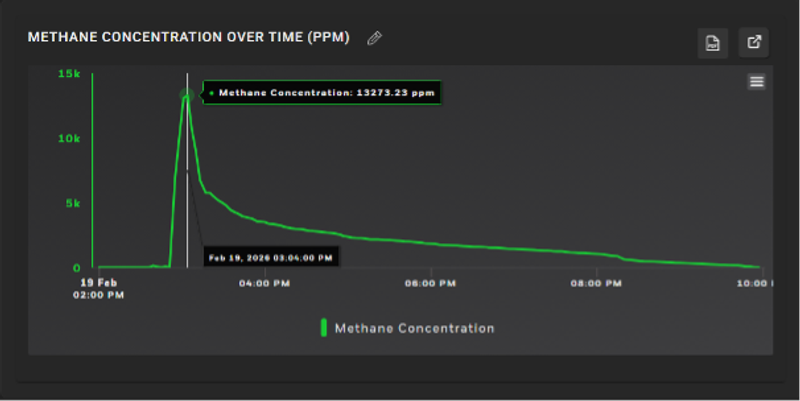
The progression of this event demonstrates the capability of the Honeywell solution. Continuous measurement of methane concentration alongside additional ambient parameters such as temperature and humidity captures such dynamic progressions in full. This makes the entire process visible - from the initial rise to the gradual decline - and illustrates the relationship between ventilation and gas concentration. In addition, the total amount of methane released can be calculated; in this case, approximately 145 grams.
The additional parameters also show how the room responded to the leak. As the methane concentration rose, ambient humidity fell with it: from a baseline of around 74 percent down to roughly 73.3 percent at peak concentration, a drop of about 0.1 percent for every 1,000 ppm of methane. The reason lies in the gas itself. Methane is lighter than air and displaces the more humid ambient air, and the dry source gas further lowers the moisture in the room. Temperature was also recorded throughout the event and stood at around 6 °C at peak concentration, but showed no comparable correlation to the leak. Together, these parameters place a methane event in its environmental context and help separate a real leak from normal fluctuation.
The Honeywell solution goes beyond pure leak detection. It enables accurate quantification and documentation of emissions in accordance with regulatory requirements. This gives operators a reliable basis for rapid response and targeted maintenance measures.
The result: earlier detection and optimized processes
Honeywell’s automated methane monitoring solution enables earlier leak detection and reduces time to repair. It also changes the workload profile. Municipal utilities can deploy personnel more efficiently and respond more quickly to specific issues. In addition, EU regulatory requirements are easier to meet, as the system provides a reliable data basis.
Over the long term, this approach opens up further opportunities. The methane monitoring data collected also reveals patterns and trends. For example, certain sites may show leaks more frequently than others. This can provide valuable input for maintenance planning, allowing municipal utilities to target measures more effectively. In short, fixed detectors combined with Industrial IoT enable continuous monitoring while reducing operational effort.
Key results at a glance
- •Earlier leak identification
- •Reduced personnel and inspection effort
- •Faster response times in the event of disruptions
- •Stronger data foundation for maintenance and compliance reports