

Construction Industry
Digitalisation in construction mainly means that machines, equipment and installations on site report their location and condition to a platform over the cellular network. This shows where each device is, warns of failures and documents work automatically. At the construction group Acciona, a layout robot marked floor plans six times faster than by hand.
IoT solution examples: Construction Industry
16 solution examples from our network, newest first.





Software container rollout for quality control at a building materials manufacturer
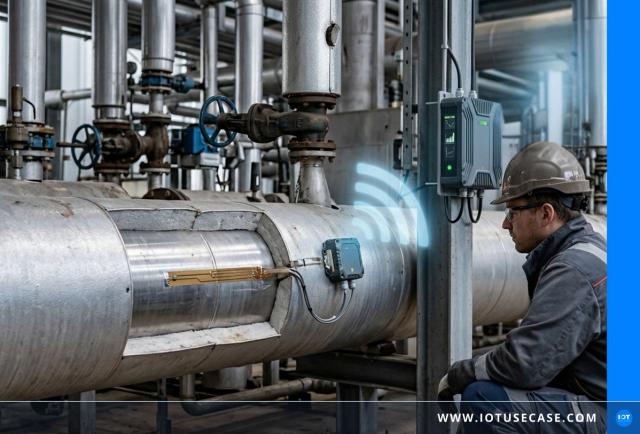




Detecting corrosion under insulation early with IoT monitoring
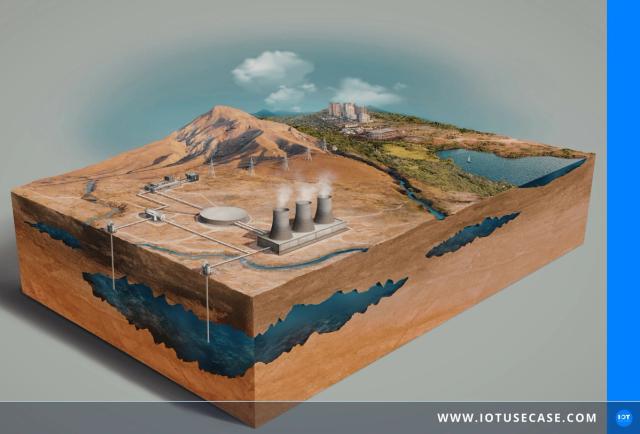




Managed Service: Self-service access to hydrogeological data
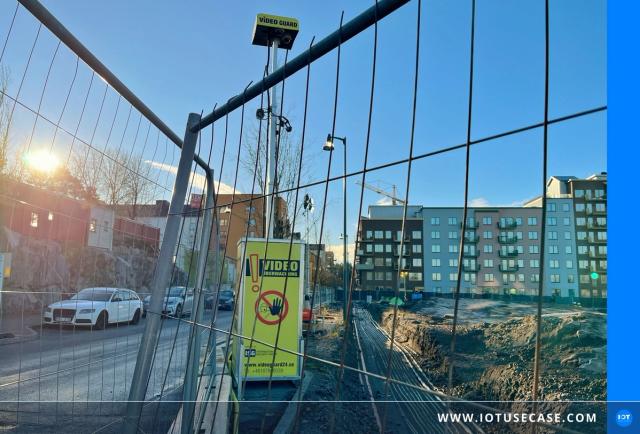




IoT monitoring with AI to reduce security costs on construction sites
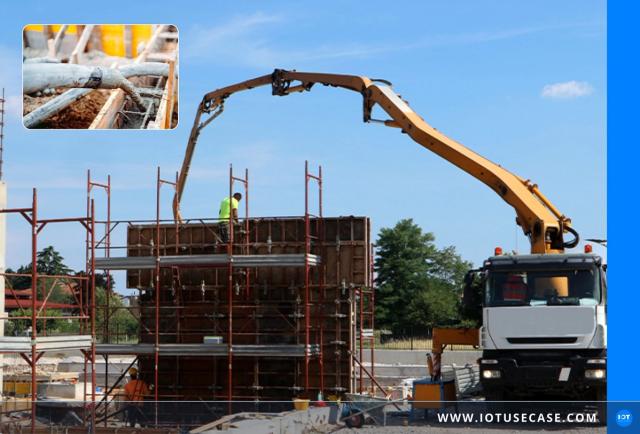






IoT system for pressure monitoring of mobile concrete pumps
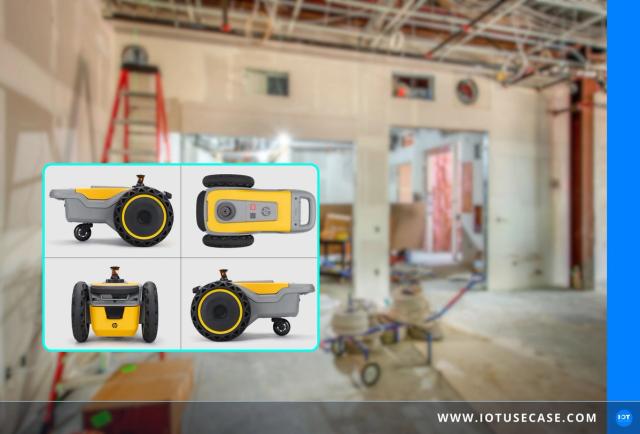

Autonomous printing robot automates layout markings – on construction sites, at trade fairs and more
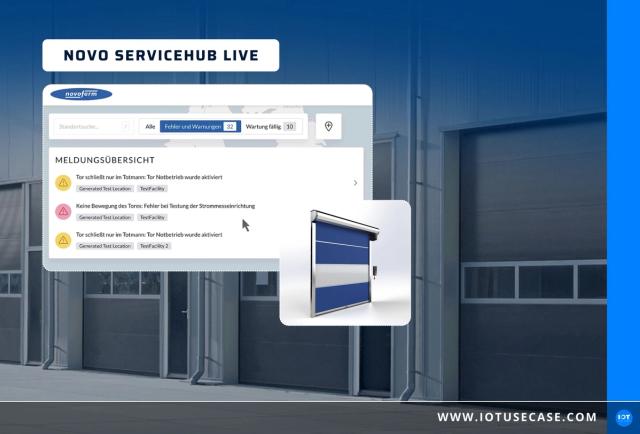





Cloud-based maintenance solutions for automated door systems
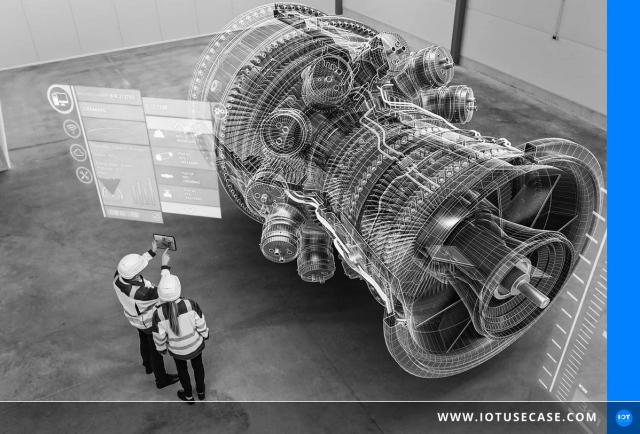


Digital products for mobile working machines




Optimised machine tracking with industrial IoT
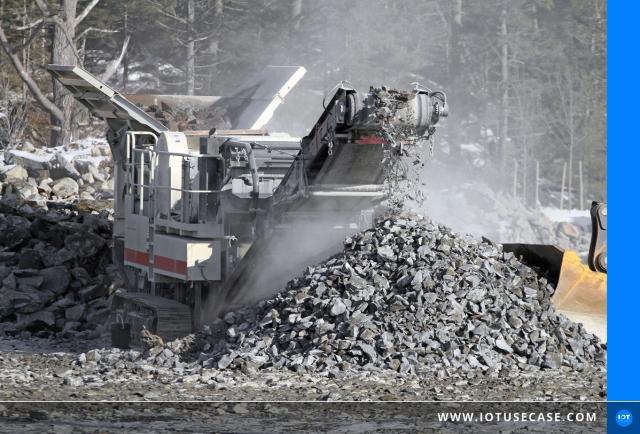



Cement industry: proactively preventing failures
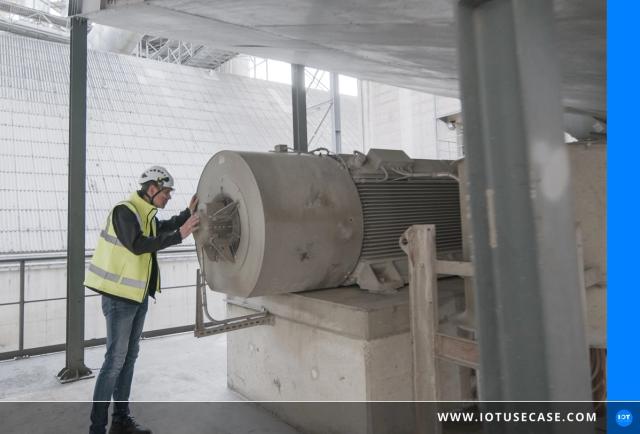


Maximum availability of drive systems in cement production
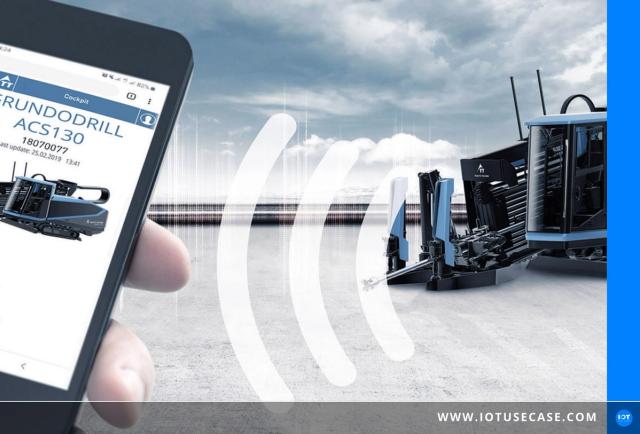




A platform for drilling rigs is the cornerstone for predictive maintenance
Podcast episodes: Construction Industry
10 episodes of the IoT Use Case Podcast on this industry, newest first.




Vibe-Coding on the Shopfloor: Building MES Applications In-House Without System Integrators


No Cables, No PLC, No IT Project: Simply Connecting Decentralized Assets



Pioneers in the construction industry: IoT-controlled fleet management



Customer Satisfaction in Mechanical Engineering through Digital Services and Business Models




Family-owned business manages production processes via Microsoft Azure IoT




Medium-sized machinery and plant engineering – This is the cornerstone for predictive maintenance
IoT use cases: Construction Industry
22 use cases already implemented in this industry, sorted by number of implementations.
With modern sensor technology and smart data analysis, damage can be detected before it escalates. Whether leaks in water pipes, overheating in electrical systems or mechanical wear – continuous monitoring makes problems visible early. In condition monitoring and predictive maintenance this leaves time for targeted maintenance, in corrective maintenance affected components are located quickly, and in loss prevention it protects assets and infrastructure in the long term.



Automated creation of reports and logs for audits and compliance requirements. Digital systems enable seamless traceability and ensure efficiency in audit processes.


Traceability with IoT data – for quality, compliance, and efficiency. Other companies in our network rely on digital traceability solutions to map complete process histories – from goods receipt to delivery. IoT sensors automatically capture time, location, condition, and ID of objects. These IoT traceability systems help meet regulatory requirements and quickly isolate quality issues. → Proven solutions from our partners show: combining traceability and asset tracking increases production security.
See implementationsIoT-supported localization in industry – cross-site and centimeter-precise. Whether tugger trains, tools, or trolleys – using modern positioning technologies such as Ultra-Wideband (UWB) or Bluetooth Low Energy (BLE), industrial companies in our network track their assets in real time. These IoT solutions for object localization not only save valuable search time but also enable automated process triggers (e.g. geofencing-based notifications) and the mapping of a digital twin on a central platform. → Practice-tested solutions from our partners provide maximum transparency on the shopfloor.
See implementationsProduction data, maintenance logs, and operating manuals are stored centrally in digital archives. This simplifies access and management for employees in production and management.
See implementationsDigital temperature monitoring, even for extreme conditions. In our network, IoT-based temperature measurements are implemented for steam pipes, for example – using LoRaWAN or mioty® sensors that operate maintenance-free for over 10 years. In condition monitoring and predictive maintenance the data reveals trends and anomalies early; in corrective maintenance it helps locate hotspots and repair defective components in a targeted way.
- Vibration Monitoring
- Audit-Reporting in Traceability
- Billing Automation
- Correlation of Production Parameters
- Digital Nameplates and Product Data Sheets
- Digital Production Logs and Manufacturing Documents
- Effective Risk Management
- GDPR-Compliant Video Surveillance
- Groundwater Level Measurement
- Leak Detection
- Level and Distance Measurement
- Moisture Measurement
- Route Optimization and Route Planning
- Tool Wear
- Track cycle times, utilization, and throughput
- Usage Monitoring
Functional areas in this industry
Number of solution examples per entry. The number leads to exactly these examples.
Connected assets: Construction Industry
25 assets from the solution examples in this industry, sorted by number of implementations.
- Excavator, 2 solution examples
- Piping network, 2 solution examples
- Rolling bearing, 2 solution examples
- Belt, 1 solution example
- Car, 1 solution example
- Concrete mixing plant, 1 solution example
- Concrete pump, 1 solution example
- Construction machine, 1 solution example
- Construction site robot, 1 solution example
- Container, 1 solution example
- Conveyor belt, 1 solution example
- Crusher, 1 solution example
- Drilling rig, 1 solution example
- Electric motor, 1 solution example
- Groundwater, 1 solution example
- Groundwater lowering system, 1 solution example
- Industrial door, 1 solution example
- Industrial furnace, 1 solution example
These challenges are driving IoT projects in the construction industry
Managing equipment and machinery across construction sites
Construction machinery, equipment, and vehicles are distributed across multiple sites. Without digital tracking, location, operating hours, and utilisation are not transparent – machines are searched for, theft goes unnoticed, maintenance intervals are missed.
Unplanned machine failures and costly downtime
A crane failure or a defective excavator does not just block one machine, but entire workflows on the construction site. Predictive maintenance based on sensor data detects wear early and prevents costly unplanned failures.
Occupational safety on sprawling construction sites
Construction sites are among the workplaces with the highest accident risk. Wearables, geofencing, and real-time personnel tracking help monitor danger zones, enforce access controls, and respond quickly in emergencies.
Structural monitoring and building surveillance
Bridges, tunnels, buildings, and infrastructure structures must be monitored over decades. Sensor-based structural monitoring detects crack formation, settlement, and material fatigue early – before critical damage occurs.
Digital construction documentation and compliance
Authorities, clients, and insurers require comprehensive evidence of materials, work steps, and inspections. Manual paper documentation is error-prone and time-consuming – digital IoT-based solutions create audit-proof records automatically.
Energy consumption and sustainability on construction sites
Construction sites consume significant quantities of energy, water, and fuel. Monitoring solutions make consumption transparent, uncover savings potential, and provide the data foundation for CO₂ reports and ESG documentation for clients.
Construction projects overrun schedules and budgets, machines stand idle or fail unexpectedly, and documentation requirements from authorities, clients and insurers keep growing. At the same time, visibility is often lacking: where is which machine, which material, which worker? This is exactly where IoT comes in: sensors monitor conditions in real time, location data flows automatically, and records are created without manual input.
Digitalisation in construction: what already works on site
The construction industry is digitalising later than manufacturing, and for good reason: every site is a one-off project, machines constantly change location, and a stable network is rare. Dust, moisture and vibration are the norm. The solution examples on this page show where IoT has nonetheless become part of everyday work: on construction machinery and equipment, on pumps and units, in site monitoring and in billing for work performed.
Connecting construction equipment and machinery
The most common starting point is the question of where each piece of equipment is right now. GPS trackers with their own battery and SIM card report the position of machines, vehicles and containers without anyone keeping a list. If a device leaves the site, an alert goes out. The Schielicke Bau group captures the position and operating status of its fleet in real time this way (machine tracking with the Industrial IoT). The example asset tracking on the construction site shows how smaller companies can do the same with a low investment.
Manufacturers go one step further and read data directly from the machine controller, for example from the CAN bus, as with the digital products for mobile working machines. You will find more implementations under asset tracking and fleet management.
Maintenance management: preventing machine failures on site
When a machine fails on a construction site, more than that one machine usually comes to a halt: follow-on trades wait and deadlines slip. Pressure, temperature and vibration sensors detect faults before they lead to downtime. On mobile concrete pumps, pressure monitoring of the delivery line warns of critical pressure spikes. The basic configuration per vehicle costs less than a single damage incident, and the system suggests maintenance dates based on operating time and load.
The manufacturer Tracto collects the status data of its drilling rigs for trenchless pipe laying centrally in the cloud. Service technicians find faults much faster as a result, and the data forms the basis for predictive maintenance.
Construction site monitoring with cameras, sensors and AI
Theft and vandalism cause major losses on construction sites and delay projects. Mobile camera towers with a cellular connection monitor sites without fixed infrastructure, AI filters out false alarms, and a control centre staffed around the clock addresses intruders directly (AI video monitoring on construction sites, see also GDPR-compliant video surveillance).
Site monitoring also covers the technology itself. Remote monitoring of groundwater lowering units reports faults by email or text message to site managers and foremen so they can step in before the dewatering fails. More on this under groundwater level measurement.
Digital construction documentation and billing
Connected machines document the work they perform themselves. On road milling machines, a performance tracker records the volume actually milled, so performance recording in road construction no longer needs a surveyor to re-measure. In groundwater lowering, the volumes pumped are recorded without external measuring devices. This produces evidence for clients and authorities without anyone filling in forms. More examples: billing automation.
Automating layout and setting-out
Transferring plans onto the shell can be automated too. An autonomous printing robot marks floor plans on the ground directly from the plan data. At the construction group Acciona, the robot achieved 225 m² per hour instead of 40 m² by hand, and the entire layout was finished in 37 hours, six times faster than usual.
Construction site safety
Safety on a construction site has two sides: protecting equipment and materials, and protecting the people who work there. IoT contributes to both. Trackers and cameras make theft harder, and sensors on machines report dangerous conditions early, such as pressure spikes in the delivery line of a concrete pump.
IoT on construction sites without Wi-Fi or a fixed network
Most construction sites have neither Wi-Fi nor a network socket. IoT solutions for construction therefore almost always bring their own connectivity: LTE-M or NB-IoT for small amounts of data and long battery life, 5G when large volumes of data need to flow quickly, or LoRaWAN for sensors spread over large areas. Where reception is weak, a gateway buffers the data and sends it once the connection is back. More on data transmission.
Real-world examples from the IoT Use Case network
Every solution example on this page names the user, the implementation partner and the technology used, from the construction site to the building materials and cement industry. Briefly describe your project via the contact form, and we will put you in touch with providers who have already delivered a comparable project in construction.
No marketing fluff. Only practice.
Frequently asked questions: implementing digitalisation in construction
How do I get started with digitalisation in construction?
Ideally with your machines and equipment, because that is where the benefit can be measured quickly. First capture location, operating hours and utilisation, then plan deployment and maintenance based on data rather than word of mouth. A construction company with more than 100 vehicles and construction machines can see at a glance where each unit is and how heavily it is used. Site monitoring and automatic documentation follow after that.
How do I track construction machinery by GPS and analyse its utilisation?
With a GPS tracker or telematics module that transmits over the cellular network. Larger machines also deliver operating hours and controller data through a gateway, for example from the CAN bus. A platform shows the location and utilisation of all equipment across several sites and uses a geofence to alert you when a machine leaves the premises. This tells you, for example, whether a 36-tonne excavator only works one hour a day and would be more useful elsewhere.
How do I keep track of tools and small equipment across all sites?
With small trackers that you attach to equipment, containers or mesh boxes, as a telematics module is rarely worthwhile for this. Tags using Bluetooth Low Energy or cellular connectivity are common. BLE tags check in with a nearby gateway or smartphone, while cellular trackers send their position themselves. Dispatch can then see which site a device is on and gets an alert when it leaves the premises.
How do I plan maintenance for construction machinery based on actual load?
The machine reports operating hours, error codes and readings such as pressure or temperature to a platform. Maintenance is then based on actual load rather than the calendar, and faults become visible before the machine breaks down. On mobile concrete pumps, the system suggests maintenance dates based on the operating time and load of individual components. The service technician knows what to expect before setting off.
How do I set up construction site monitoring against theft?
The simplest way is with mobile camera towers that transmit over the cellular network and need no fixed infrastructure. AI checks movements on site and filters out false alarms. Genuine incidents go to a control centre staffed around the clock, which addresses intruders over loudspeakers and calls the police or security services. This cuts the cost of security staff. Add GPS trackers to your machines so you can recover stolen equipment.
How does IoT work on construction sites without Wi-Fi?
IoT devices on construction sites usually transmit over the cellular network and do not need site Wi-Fi. LTE-M and NB-IoT suit small amounts of data and long battery life, while LTE or 5G handle video and large data volumes. On large areas, a LoRaWAN gateway can collect data from the sensors. If the connection drops briefly, gateways buffer the data and send it later.
How does IoT help with construction documentation?
Connected machines and sensors document work and conditions automatically, with a time stamp and location. On road milling machines, a performance tracker records the volume actually milled, so no surveyor needs to re-measure for billing. In groundwater lowering, the volumes pumped are recorded without external measuring devices. This creates records for clients and authorities without paperwork.
What does connecting construction machinery cost and when does it pay off?
Less than many expect, and it usually pays off through avoided damage and better utilisation. Battery-powered trackers run maintenance-free for up to five years, and cellular plans for tracking are available for a few euros over the entire term. For mobile concrete pumps, the basic pressure monitoring setup per vehicle costs less than a single damage incident. Also factor in the time your dispatch team spends searching for equipment today.
How do I find a provider for an IoT project in construction?
The fastest way is through projects that are already up and running. The solution examples on this page name the implementation partner, the technology used and in most cases the user. If you briefly describe your project via the contact form, we will put you in touch with providers who have already implemented a comparable project in construction.
Implementing IoT in the construction industry – we can help
Are you planning an IoT project in the construction industry, or do you want to become visible as a solution provider in this area? We help you find the right partners, present solutions in a practical way, and reach real users.
Get in touch