

Logistic
IoT in logistics makes inventory, goods and vehicles visible in real time. Sensors and trackers report where goods and load carriers are, how full warehouses and containers are, and what condition the goods are in. It is used most often for warehouse inventory management, route and tour planning, and tracking objects.
IoT solution examples: Logistic
70 solution examples from our network, newest first.
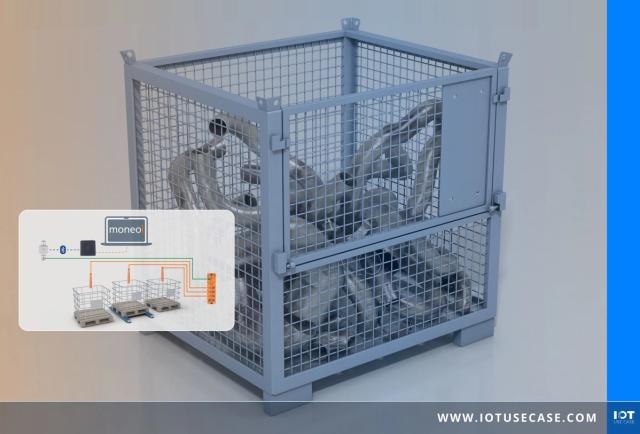




Precisely monitoring grid boxes with fill-level and weight sensing
Capture fill level and weight of mesh box pallets without any wiring: ifm sends the sensor data to moneo via Bluetooth Mesh and makes pickups plannable.




Steering heterogeneous AGV fleets vendor-neutrally via VDA 5050
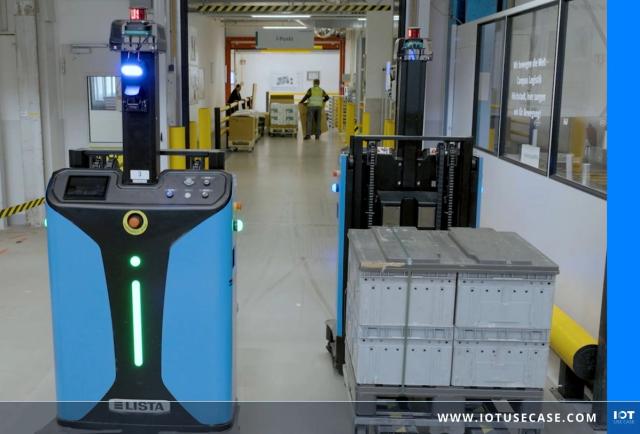

Scaling local material flows with cloud-based fleet control
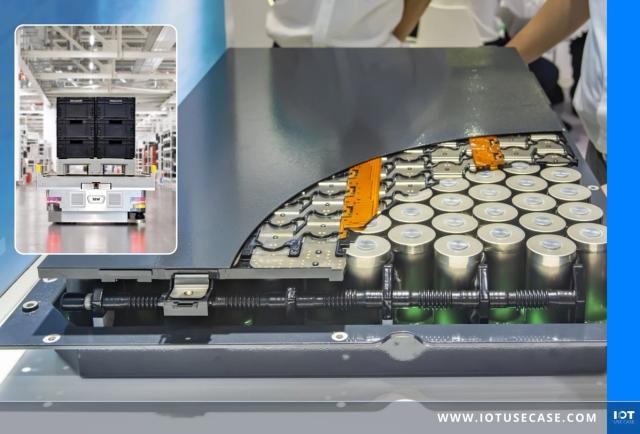


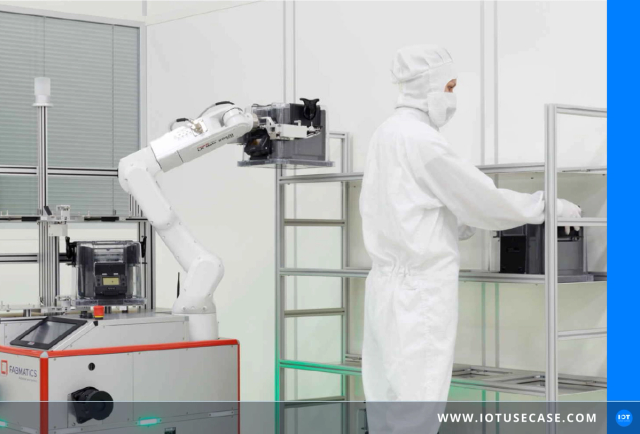
Automating cleanroom intralogistics in battery production with AGVs
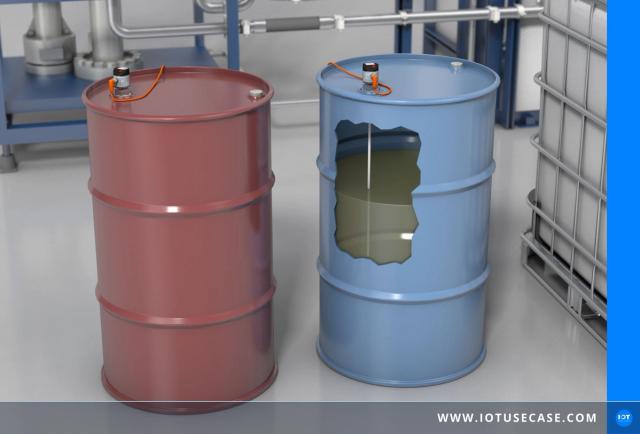
AI-supported level monitoring of casting resin drums



Sensor-to-cloud for intralogistics and digital services
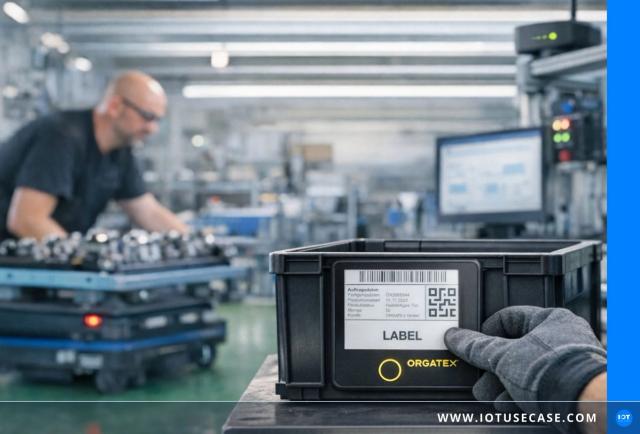





Digital job traveler closes the gap between shopfloor and IT systems
In many manufacturing environments, production control is still dominated by manual workflows and paper-based forms.
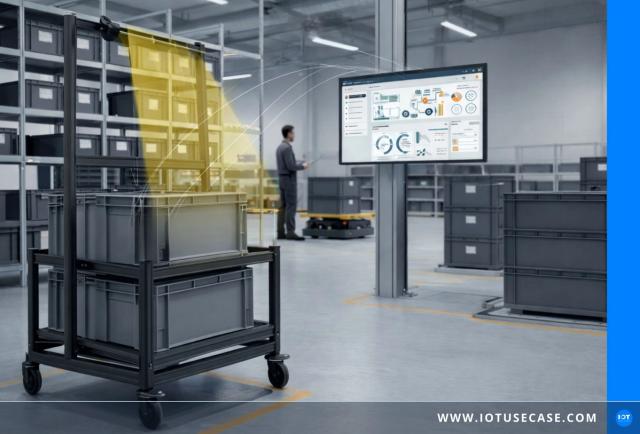

IoT-based returnable management optimizes material flow and replenishment
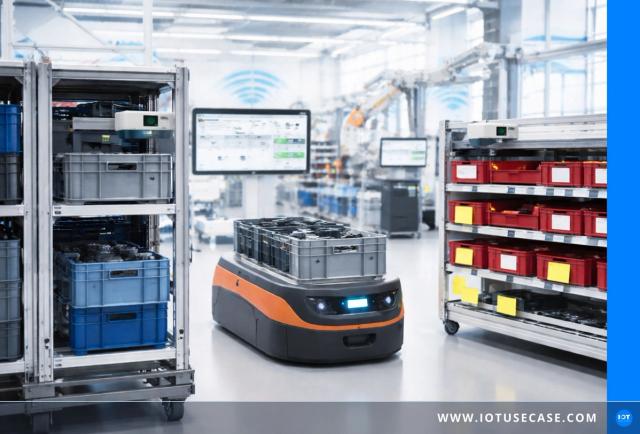
Autonomous guided vehicles (AGVs) with IoT and real-time data for efficient material flows
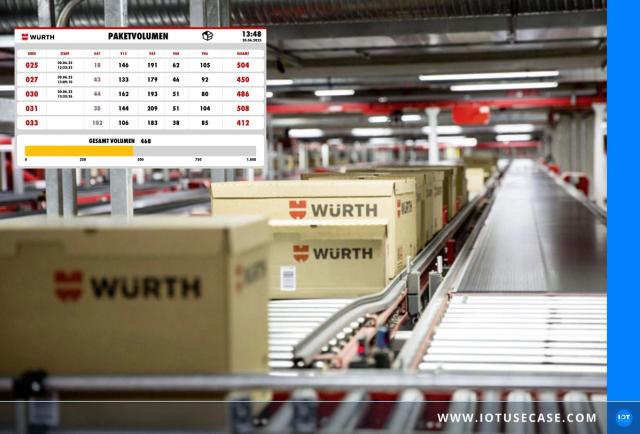



Improving workforce planning in the packing department through parcel flow forecasting
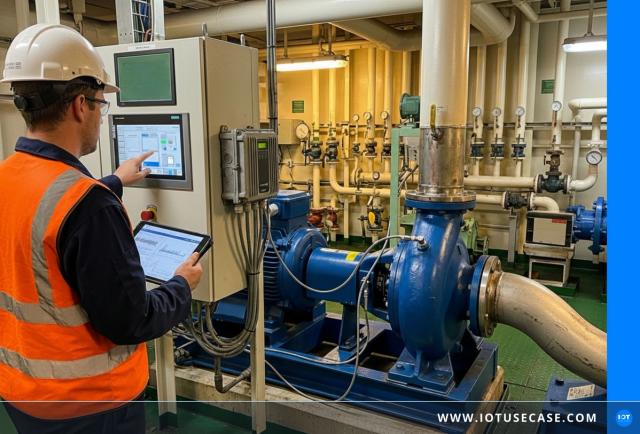




IoT-based pump control saves energy in maritime shipping



OPC UA Andon visualisation keeps assembly and logistics in sync
- Shopfloor visualisation of SAP and non-SAP data for transparent logistics
- Standardised IT/OT integration with OPC UA for scalable production
- Predictive silo management reduces costs and emissions
- VDA 5050: Unified control layer for AGV fleets, centrally in real time
- Private 5G networks as the foundation for industrial digitalization
- Extending the service life of energy chains in RMG cranes – with condition monitoring and predictive maintenance
- When tracking is not enough: how IoT protects against theft during shipping
- Production logistics: efficient transport control with smart watches and low-code middleware
- Real-time monitoring for smarter water management with Cumulocity
- Energy chains ensure continuous operation of container cranes under extreme conditions
- 30% fewer service calls through more transparency in refrigerated transport
- Uncovering insider sabotage: how a logistics company stopped attacks with anomaly detection
- More efficient intra- and production logistics with IoT button and OX label
- Optimised route planning through digital telematics
- Automated loading documentation
- Automatic load tracking with 1D/2D codes and cameras
- Localisation systems, geofencing and real-time data in production control
- Complete indoor crane automation thanks to the i.Sense monitoring system
- Optimised machine tracking with industrial IoT
- Remote monitoring of oil, gas and chemical storage tanks
- Efficient picking: AI-supported processes in use at the HARTMANN Group
- How AI & machine learning assist in packing and avoid mountains of packaging waste
- Building site: replenishment management without personnel deployment
- DKV Mobility paves the way for the future of mobility with Confluent Cloud
- Optimal balance between planning and buffer in passenger transportation
- Goodbye handwritten travel log – this is how digital excels
- Rhätische Bahn tracks freight wagons with Rail Insight from A1 Digital
- Migration from SAP to Azure for intralogistics experts
- Industry solution logistics: always stay in control to ensure your goods are in the right place at the right time
- KRITIS sector health – how to accelerate laboratory logistics
- Compatibility and mobile capability for a hybrid team
- Azure Marketplace: TCS Digital Manufacturing Platform
- Intelligent asset tracking: more transparency and automation in material flow
- Printed circuit board production: condition monitoring of solder paste
- Silo transport digitized: more efficient, safer and more convenient unloading
- Transparency and efficiency in goods receipt – through automated identification and sorting
- Optimisation of production and logistics with an efficient simulation toolbox
- Central availability of inventory data with ERP integration
- Michelin enables scalable real-time inventory management with Confluent
- Hybrid cloud data architecture in real time at BMW Group
- Accelerate data pipeline development with a platform
- Smart logistics processes with IoT transport box
- 40% process acceleration in the warehouse with IoT
- Predictive maintenance for offshore wind turbines reduces logistics costs
- Track material flow and improve OEE by 20 percent
- Logistics: automated C-parts management with tangible added value
- Tracking transport tanks for liquid fuels worldwide via IoT
- Intelligent container services for cleaning facilities in Hamburg
- Intelligent inventory management systems replace manual inventory management
- Sharp robot gaze reduces picking error rate
- Networked product and service innovation for semi-trailers
- Connect 12,000 sensors from a wide range of manufacturers
- AI expertise directly inside the camera – suitable for beginners
- Ensure error-free material postings in intralogistics
- With real-time data for efficient planning of milkrun concepts
- Lego construction kit for IoT projects – structured innovation without PowerPoint
- Automated delivery with SAP
- Tracking of transport carts in production
Podcast episodes: Logistic
45 episodes of the IoT Use Case Podcast on this functional area, newest first.



23 Episodes Condensed: What Really Worked and What Didn't



Digital Intralogistics: From Visual Management to IoT




Private 5G in Heavy Industry: Practical Insights from a Steel Plant


Scaling IoT Worldwide – How Telekom Solves Hidden Risks



Smart Building with Climate Goals – WAGO’s Practical Approach




Epple Druckfarben & Innomat: Digital Batch Traceability with Kalisto IoT
IoT use cases: Logistic
44 use cases already implemented in this functional area, sorted by number of implementations.
The implementation of sensors and IoT devices enables continuous monitoring of inventory. Companies can thereby track the location and condition of units, pallets, crates, or batches in real time.





Real-time planning of optimal routes to minimize costs and reduce delivery times. For example, in one case the loading capacity of trucks was increased from 22 to 28 tonnes, leading to more efficient utilization.



The implementation of sensors and IoT devices enables continuous monitoring of inventory. Companies can thereby track the location and condition of units, pallets, crates, or batches in real time. This leads to a reduction in overstocking, minimizes waste, and improves the overall supply chain. Seamless operations can also be ensured through integration with enterprise systems such as ERP or WMS.
IoT-based track-and-trace solutions for industrial material flows. Workpiece carriers, equipment, or containers are tracked along the production line using combined positioning and identification technology. Operations in our network use these asset tracking systems to document movements, handovers, and responsibilities seamlessly – across locations and in an audit-proof manner. → Real-time data and cloud integration make tracking an integral part of modern IIoT platforms.


With batch or lot traceability, you can monitor the entire lifecycle of your products – from raw material procurement to the finished product. This includes the identification of specific batches, tracking of process data, and documentation of all intermediate steps. This traceability enables you to identify weaknesses in the supply chain, minimize bottlenecks, and ensure compliance with quality standards. In addition, recalls can be carried out more efficiently and in a more targeted manner, saving costs and time.

IoT-supported localization in industry – cross-site and centimeter-precise. Whether tugger trains, tools, or trolleys – using modern positioning technologies such as Ultra-Wideband (UWB) or Bluetooth Low Energy (BLE), industrial companies in our network track their assets in real time. These IoT solutions for object localization not only save valuable search time but also enable automated process triggers (e.g. geofencing-based notifications) and the mapping of a digital twin on a central platform. → Practice-tested solutions from our partners provide maximum transparency on the shopfloor.



- Structured access to files and documents
- Efficient Material Supply
- Digitized Order Management
- Level and Distance Measurement
- Container Management – Logistics IoT
- Temperature Measurement
- Remote Reading
- Usage Monitoring
- Digital tracking of products and processes
- Identification of cargo units using IoT technologies
- Seamless control throughout production
- Billing Automation
- Break Detection
- Cable and Chain Monitoring
- Digital Goods Receipt with Real-Time Data
- Digital Production Logs and Manufacturing Documents
- Early Detection of Damage
- Parking Space Tracking via IoT Integration
- Self-sufficient supply of C-parts
- Tension/Thrust Monitoring
- Audits and Reportings
- Moisture Measurement
- Object Recognition in Material Flow
- Precise inspection of every incoming shipment
- Real-time damage prevention
- Tracking, visualizing, and analyzing energy consumption per unit
- Audit-Reporting in Traceability
- Consumption Data Collection and Visualization
- Demand Forecasting and Production Planning
- Effective Risk Management
- Energy Cost Optimization per Machine
- Energy Efficiency Analysis
- Fuel Management
- Immediate emergency communication
- Knowledge Retention
- Product Carbon Footprint in Sustainability (ESG)
- Resource Efficiency (Water Management)
- Track cycle times, utilization, and throughput
Industries using IoT in this functional area
Number of solution examples per entry. The number leads to exactly these examples.
Connected assets: Logistic
74 assets from the solution examples in this functional area, sorted by number of implementations.
- Automated guided vehicle (AGV), 5 solution examples
- Load carrier, 4 solution examples
- Pallet, 4 solution examples
- Parcel, 4 solution examples
- Transport container, 4 solution examples
- Truck, 4 solution examples
- Car, 3 solution examples
- Container, 3 solution examples
- Crane, 3 solution examples
- Energy chain, 3 solution examples
- Forklift truck, 3 solution examples
- High-bay warehouse, 3 solution examples
- Assembly line, 2 solution examples
- Delivery vehicle, 2 solution examples
- Energy chain cable, 2 solution examples
- Goods in transit, 2 solution examples
- Industrial truck, 2 solution examples
- Inventory, 2 solution examples
- Kanban bin
- Production material
- Returnable container
- Semi-trailer
- Storage tank
- Tugger train
- Animal feed
- Autonomous mobile robot (AMR)
- Bicycle
- Bus
- C-parts
- Charging station
- Cleaning system
- Commercial vehicle
- Container load
- Drum
- Excavator
- Filling station
- Finished part
- Food and beverages
- Freight wagon
- Gas cylinder
- Generator
- IBC
- Indoor air
- Jewellery
- Kanban rack
- Liquid in IBC
- Lubricant
- Medical sample
- Mesh pallet box
- Nut (food)
- Order picking robot
- Outer carton
- Packaging material
- Printed circuit board
- Process vessel
- Pump
- Raw material batch
- Refrigeration system
- Refrigerator
- Resin and hardener
- Scrap metal
- Ship
- Silo
- Solder paste
- Spare part
- Temperature-sensitive freight
- Track infrastructure
- Transport system
- Transport trolley
- Vending machine
- Wash water
- Wastewater
- Wind turbine
- Workpiece
These challenges are driving IoT projects in logistics
Missing real-time warehouse location and high search times
Where is which item? In which shelf, which aisle, which area? Without indoor positioning or RFID-based inventory, searching for articles costs valuable time every day. IoT-supported real-time warehouse location tracking makes inventory visible at item level – reducing search times to near zero.
High error rates in order picking
Wrong item, wrong quantity, wrong storage location: picking errors are expensive. Pick-by-light, pick-by-voice, and vision systems with IoT connectivity guide pickers precisely to the right item and digitally confirm the pick – for near-zero error rates and traceable processes.
Inefficient management of the internal vehicle fleet
Forklifts, tow trains, and industrial trucks: internal fleets are capital-intensive and maintenance-heavy. IoT-based fleet management automatically records operating times, battery status, maintenance due dates, and driver activity. This reduces downtime, prevents unexpected failures, and lowers total operating costs.
Suboptimal warehouse utilisation and process bottlenecks
Warehouses cannot be run efficiently if occupancy rates, throughput times, and bottlenecks are unknown. IoT sensors on storage locations and aisles capture occupancy, frequency, and congestion in real time. This enables warehouse layouts, routing, and processes to be optimised on a data basis.
Temperature monitoring and quality assurance in the warehouse
Storage costs are directly linked to temperature management – whether cold stores for food or climate-controlled warehouses for electronics. IoT temperature and humidity sensors continuously monitor storage conditions, alert on deviations, and log without gaps for compliance documentation.
Inefficient yard and dock management
When does which delivery arrive? Which dock is available? How long is the waiting time? Without digital visibility, congestion, idle time, and delayed unloading result. IoT-supported yard and dock management optimises the planning and coordination of truck arrivals and departures in real time.
Logistics lives on speed, accuracy, and reliability. Warehouses that don't know where goods are located. Picking errors that generate returns. Forklifts waiting without proof of usage. Loading bays that become bottlenecks: these challenges cost money every day – and can be resolved through targeted IoT solutions.
Unlike supply chain, logistics is primarily about the internal domain: warehouse logistics, intralogistics, transport coordination at your own site, fleet management, and the processes between goods receipt and goods dispatch. IoT makes these processes visible, automatable, and optimisable too.
On this page you will find verified real-world examples from the IoT Use Case network – for logistics managers who want to tackle concrete problems with concrete solutions.
IoT in Logistics: What Actually Works in Practice
Warehouses and intralogistics are often the neglected areas of digitalisation – because they do not operate machines in the traditional sense. Yet they offer enormous potential: error reduction in order picking, shorter search times, more efficient fleet utilisation, and optimised warehouse occupancy can all be achieved through targeted IoT solutions with comparatively little effort.
Typical Application Areas
Indoor Positioning and Real-Time Warehouse Location
UWB, BLE beacons, or RFID gates enable location of goods, containers, tools, and vehicles to centimetre or metre accuracy – depending on the technology. Storage location and item are automatically linked. Search times drop dramatically, mis-stocking is instantly detected.
Digital Picking Assistance
Pick-by-light guides the picker to the correct storage location via light indicators. Pick-by-voice delivers spoken instructions through a headset. Vision picking shows the shortest route and the searched item via AR headset. All variants reduce error rates to below 0.1% and increase throughput.
Internal Fleet Telematics and Vehicle Management
IoT telematics on forklifts and tow trains captures idle time, operating time, battery level, and shock events. Maintenance intervals are planned on a condition basis, shock logs prevent investigations. Utilisation analyses show over- or under-use of the fleet and optimise investment decisions.
Temperature Monitoring in Cold and Specialist Storage
Wi-Fi or LoRaWAN-capable temperature and humidity sensors continuously monitor cold stores, freezers, and specialist warehouses. Deviations trigger immediate alerts. All readings are logged without gaps – as evidence for food safety authorities, pharmaceutical regulators, or customer audits.
Yard Management and Dock Optimisation
Licence plate recognition at entrances, sensors on loading docks, and digital time-slot booking systems coordinate truck movements automatically. Dock occupancy becomes transparent, waiting times decrease, handling teams are scheduled on demand.
What Sets IoT in Logistics Apart from Other Areas
Logistics IoT must be implemented while operations continue – warehouses do not close for pilot projects. Solutions must work without extensive IT infrastructure, run on batteries or wirelessly, and be operable by staff without technical background. Simplicity here is not a nice-to-have but a condition for success.
Real-World Examples from the IoT Use Case Network
In our network you will find concrete, verified solution examples for logistics and warehousing – from indoor positioning in large warehouses and pick-by-light systems in food logistics to fleet telematics for forklift pools and yard management solutions for distribution centres. Every example shows what was actually implemented and what it achieved.
No marketing fluff. Only practice.
Frequently asked questions about IoT in warehousing and logistics
What is IoT in logistics?
IoT in logistics means that warehouses, load carriers, vehicles and goods are equipped with sensors or trackers and report their data automatically. Instead of counting stock and tracing shipments by phone, location, quantity and condition are known at all times. This is the foundation of logistics 4.0.
Which IoT applications are there in warehouse logistics?
The most frequent in our examples are warehouse inventory management, precise real-time stock monitoring, automatic reordering and locating objects in the warehouse. Fill-level sensors on containers, locating forklifts and load carriers, and temperature monitoring in cold stores are also common.
What are the benefits of IoT in logistics?
Less time spent searching and fewer stock-outs, because it is always known where goods are. Better vehicle utilisation through route and tour planning based on real data. And evidence for customers, for example on delivery times or temperatures maintained.
Where can I find IoT logistics case studies?
This page lists around 70 implemented solution examples, most of them from transport and logistics, mechanical and plant engineering, and wholesale and retail. Each example describes the starting point, solution and result, and names the users and providers involved.
What is intralogistics?
Intralogistics covers all material and goods flows within a site, from goods receipt through storage, order picking and supplying production to goods dispatch. IoT makes these flows visible: containers report their fill level, transport trolleys and forklifts are located, and material postings happen automatically. Many of our examples also show automated guided vehicles that move material between warehouse and line without staff.
What is VDA 5050?
VDA 5050 is an open interface from the German associations VDA and VDMA for communication between automated guided vehicles and a central master control, technically based on MQTT and JSON. It allows vehicles from different manufacturers to be controlled together in one fleet. In our examples it is used by ZF, Volkswagen Commercial Vehicles and Schaeffler, among others, where the AGVs reach 98 percent utilisation this way.
Implementing IoT in logistics – we can help
Are you planning an IoT project in warehouse or intralogistics, or do you want to become more visible as a solution provider in the logistics sector? We help you find the right partners and reach real end users.
Get in touch