
How an automation company is unlocking new data-driven business models
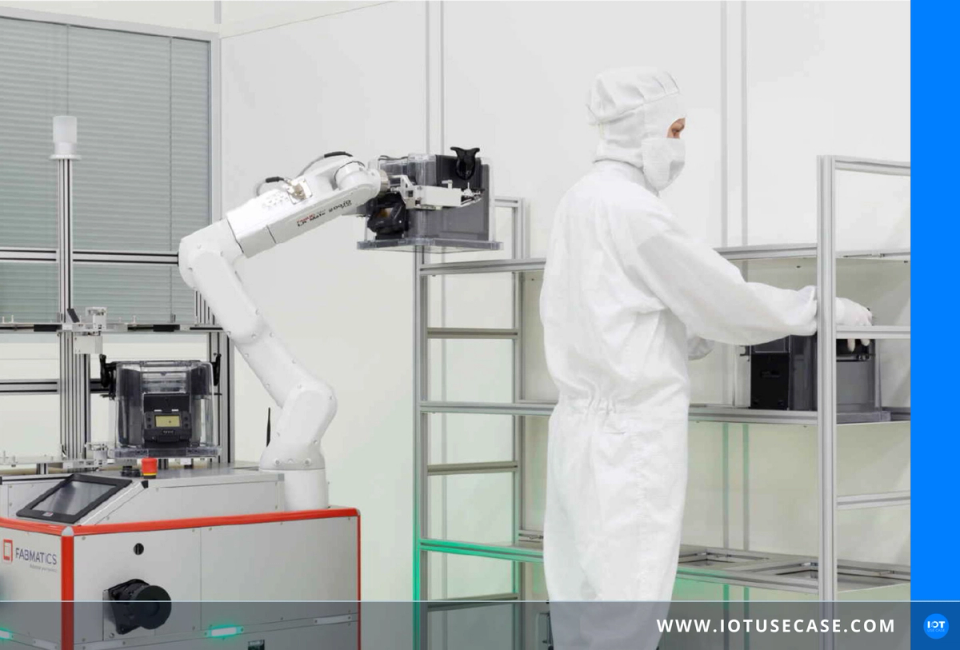
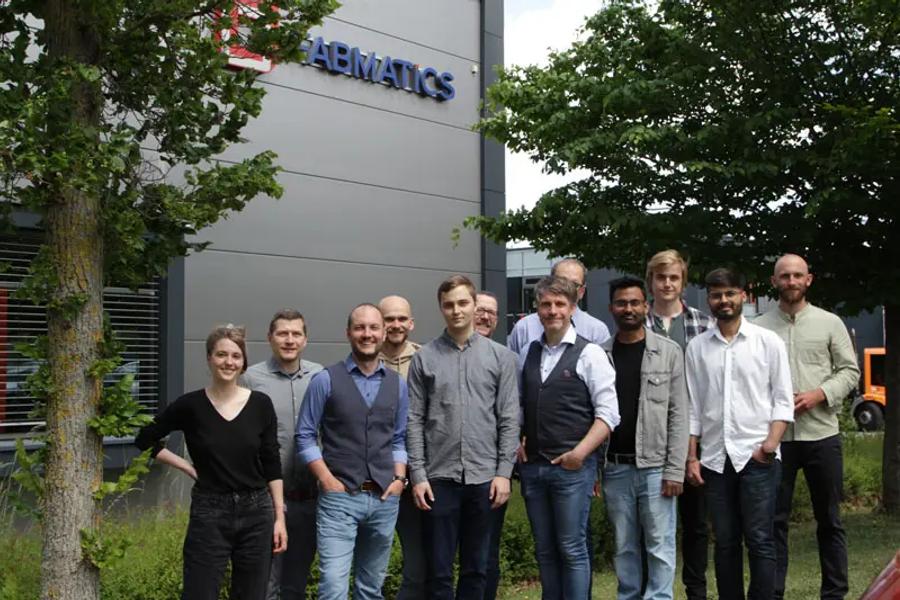
Fabmatics GmbH develops intelligent automation solutions for customers in the high-tech industry, helping them make their production logistics more efficient, faster and safer. Headquartered in Dresden and employing around 235 people, the company is an experienced specialist in the automation of material flows and handling processes in semiconductor manufacturing facilities and semiconductor production equipment.
Fabmatics has established a leading global position as a system integrator, particularly in the modernisation of 200 mm semiconductor fabrication facilities. Its customised automation solutions handle wafers, cassettes and other products in cleanroom environments – from identification and localisation to transport, storage, and machine loading and unloading.
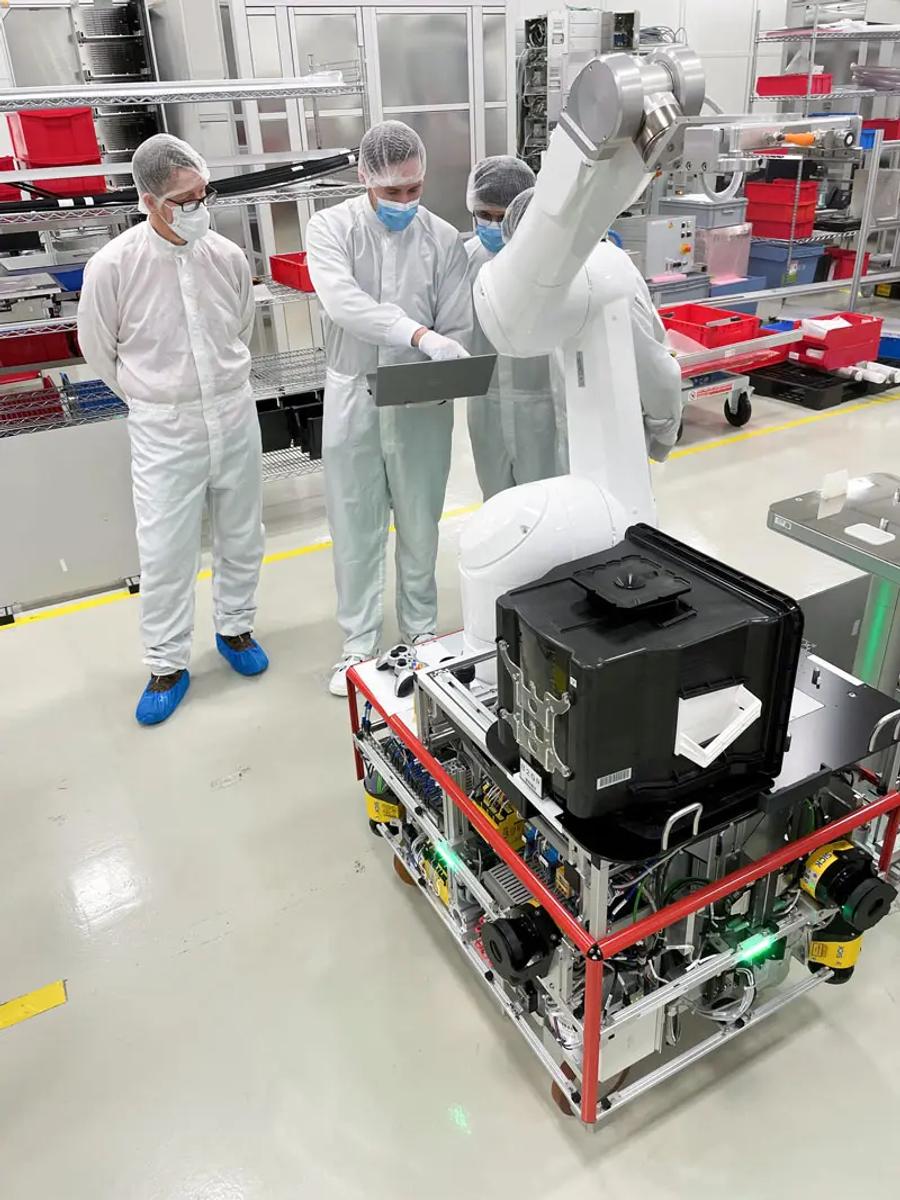
The company continuously explores optimisation potential in factory automation and develops its own innovative and competitive products for this purpose, such as the mobile HERO®FAB series and the rail-guided HERO®Rail series. These transport systems ensure optimal material flow within production environments.
Relevance
Around the turn of the year, numerous media outlets reported that the semiconductor shortage would continue beyond 2022. These reports referred, among other things, to statements by the US government and a new study by Roland Berger.
Global semiconductor shortage to persist for several years beyond 2022 | Roland Berger
The German business magazine WirtschaftsWoche also referred to a Goldman Sachs study that demonstrated the impact of the chip shortage on 169 industries.
How the chip shortage came about—and how it can be resolved (wiwo.de)
At every stage of the value chain, this creates requirements and challenges that companies address with different product portfolios and strategic orientations. Fabmatics GmbH is positioned as a solution provider for automation systems and mobile robotics applications addressing a critical element of modern semiconductor manufacturing facilities worldwide. In addition to established best practices in hardware and control software, current capacity constraints and strategic roadmaps relating to digitalisation, connectivity and, in alignment with product development portfolios, the integration of cloud applications are creating further opportunities. For automation providers, this is not solely a matter of customer-facing service, but also of identifying and shaping market opportunities in application development and integration services. Numerous examples demonstrate that cross-company collaboration in such innovation processes is effective and creates added value for all parties involved.
The challenge
The objective of Digital Product Factory #5 was to develop a vertical data integration approach within an IoT infrastructure. This approach was intended to enable the provision, processing and analysis of data from Fabmatics equipment, including built-in sensors and control elements, by means of suitable cloud services across different layers of the Fabmatics system architecture. Using a sensor/controller-to-cloud prototype as an example, the project was to establish a blueprint for a comprehensive architecture that could be applied to additional Fabmatics use cases. This approach was intended to enable the provision, processing and analysis of data from Fabmatics equipment, including built-in sensors and control elements, by means of suitable cloud services across different layers of the Fabmatics system architecture. Using a sensor/controller-to-cloud prototype as an example, the project was to establish a blueprint for a comprehensive architecture that could be applied to additional Fabmatics use cases.
Data-driven use cases in production
Challenge
To achieve the project objective, the following sub-tasks had to be completed:
- Development of an approach for building digital services
- Preparation, provision and visualisation of equipment data in addition to its transactional use
- Development of an open architecture:
- using suitable cloud services provided by a hyperscaler
- supported by appropriate cloud infrastructure components
- enabling the development and integration of additional Fabmatics products and use cases for the creation of new digital services
Implementation and working approach
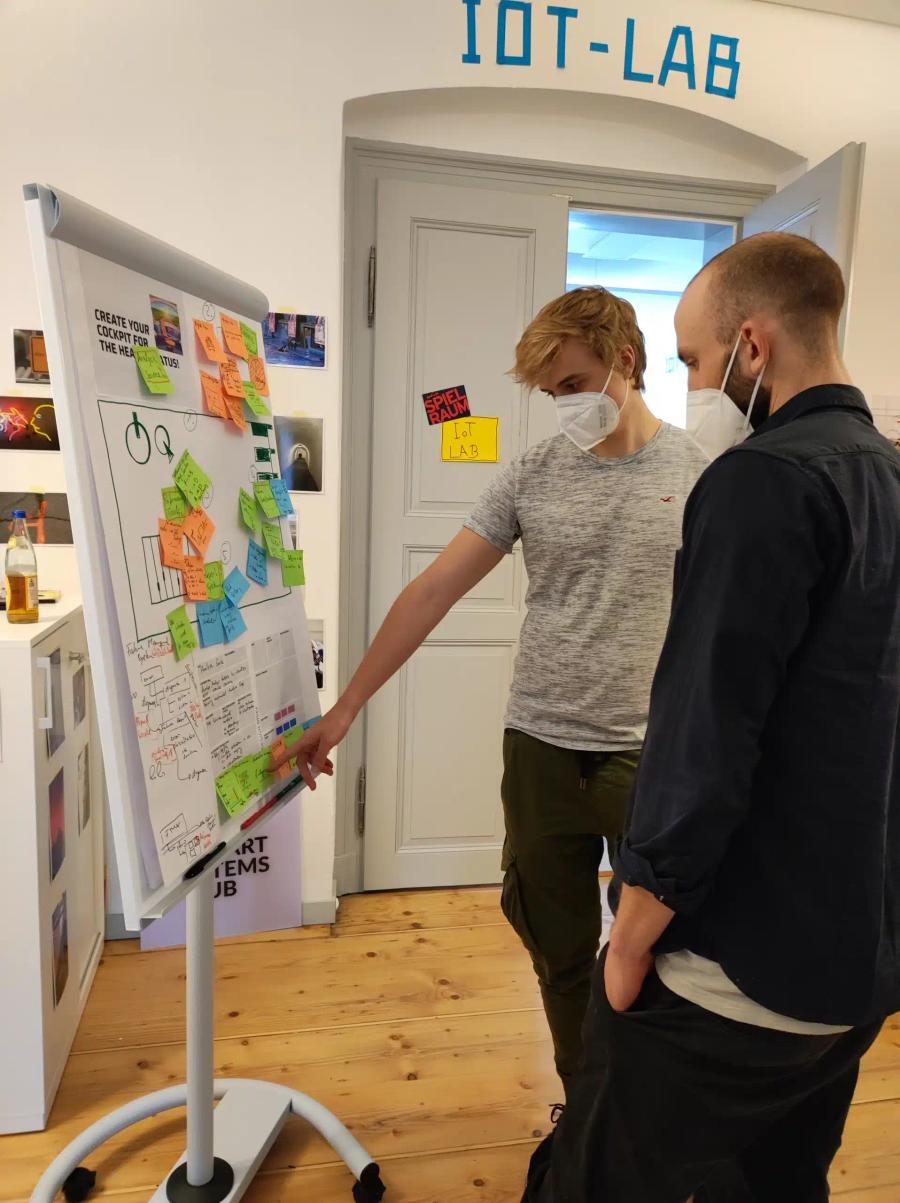
To address complex challenges, Smart Systems Hub provides a methodological framework combining design thinking and Scrum methods. At the outset of the project, the current situation was analysed in a series of architecture sessions in order to assess the requirements, conditions and opportunities associated with the technologies to be deployed.
A key factor in the success of Digital Product Factory #5 was the identification of the right partners and their integration into the project. In order to address the tasks efficiently, it was necessary to combine expertise from different specialist areas within a single team.
With the involvement of the innovation partners, various options for data processing, advanced cloud analytics and the use of cloud-based applications were implemented as prototypes in a rapid prototyping approach.
These were subsequently validated and prioritised by the challenge owner.
During the iterative implementation phase, the team presented results step by step and, through drill-down sessions and UX/UI workshops, established a process for the design of analytics tools.
Result
The minimum viable product (MVP) delivered to Fabmatics comprises a functional cloud infrastructure capable of ingesting, processing, analysing and visualising different data formats from various sensors and controllers from different user perspectives. This resulted in the vertical integration of previously fragmented file structures. It is particularly noteworthy that a blueprint approach was developed that can also support the horizontal integration of additional equipment types.
Customer benefits at a glance
- Integration of previously fragmented data through the development of data pipelines
- Extensive visualization of captured data across numerous customer use cases
- Unlocking new potential for optimizing manufacturing processes
- Blueprint enables easy integration of additional Fabmatics products
- Incremental development of new digital services
- Knowledge gained in working with agile methods and design thinking for project team members
„ 09:14 Our customers are actively asking for these solutions. The higher the degree of automation, the more important it becomes to maintain an overview of the systems — and for that, we need usable data. We are therefore delighted about this opportunity to collaborate with the innovation network — Smart Systems Hub — to advance our digital agenda. Thanks to the agile co-working methods in the Digital Product Factory and the expertise of our project partners T-Systems MMS and Wandelbots, we learned at a rapid pace, delivered results, and mastered the challenge."
– Martin Däumler, Department Manager Product Development & Product Support
Source: Smart Systems Hub