

Retail and Wholesale
IoT in retail and wholesale connects stores, warehouses and transport with sensors that report energy, temperature, stock levels and location on their own. A retailer with more than 600 stores cut energy costs by 5 to 10 percent this way, Würth Industrie Service reorders C-parts automatically via IoT scales, and TB International became almost 40 percent faster with RFID in the warehouse.
Verified IoT projects: Retail and Wholesale
15 projects from our network, newest first.
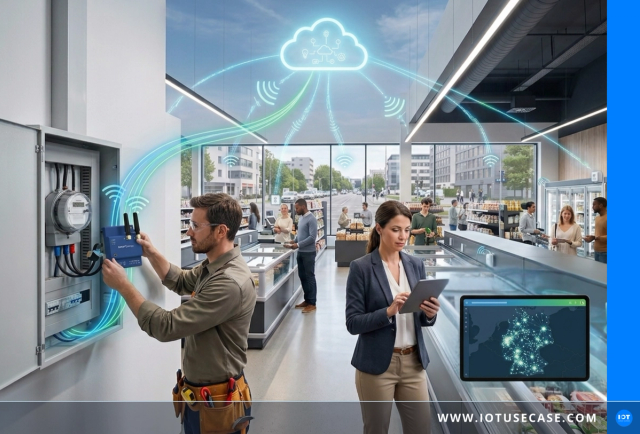





IoT energy monitoring creates cross-site transparency
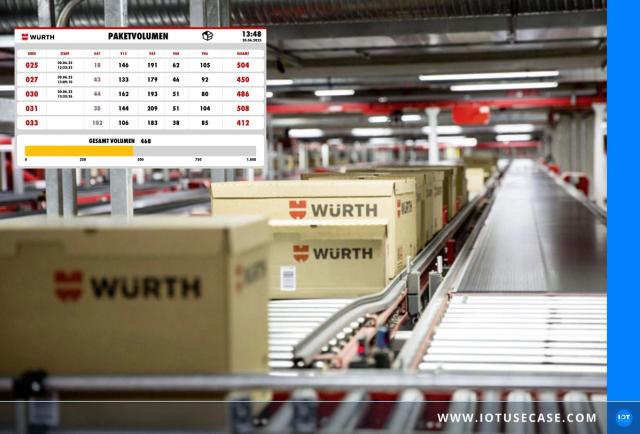



Improving workforce planning in the packing department through parcel flow forecasting
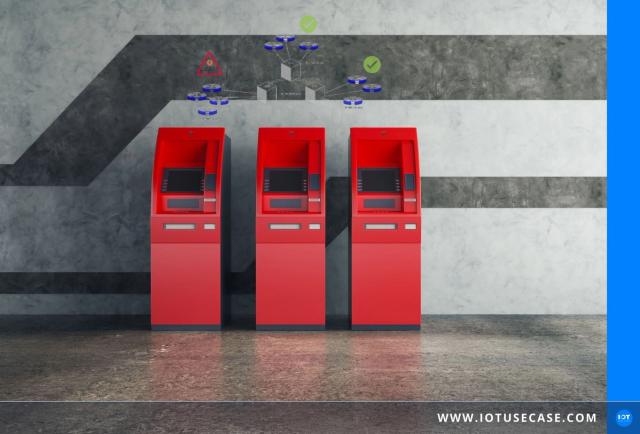
Centrally monitor and manage power outages of IT routers
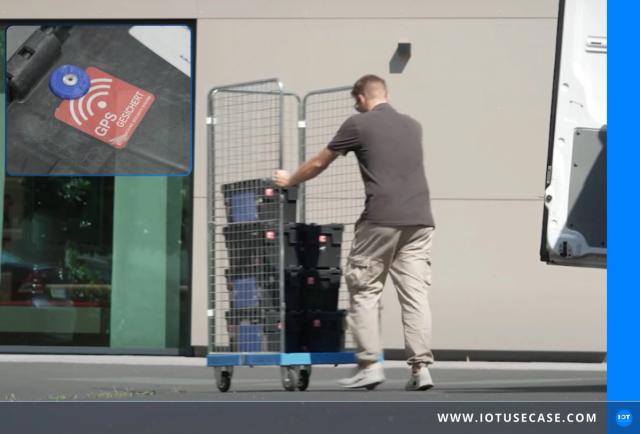



When tracking is not enough: how IoT protects against theft during shipping
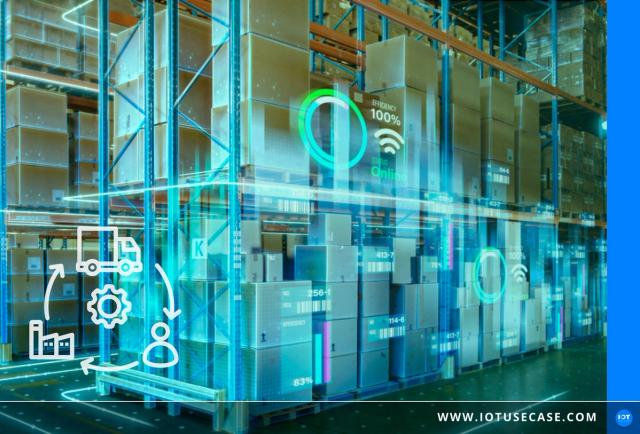

All the aces in hand: why data matters in supplier negotiations
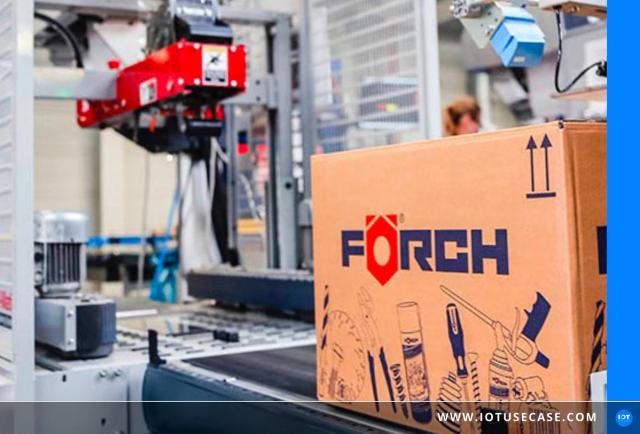



How AI & machine learning assist in packing and avoid mountains of packaging waste
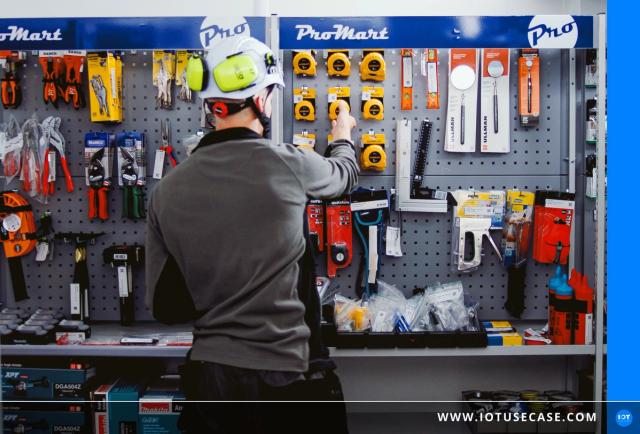


Building site: replenishment management without personnel deployment
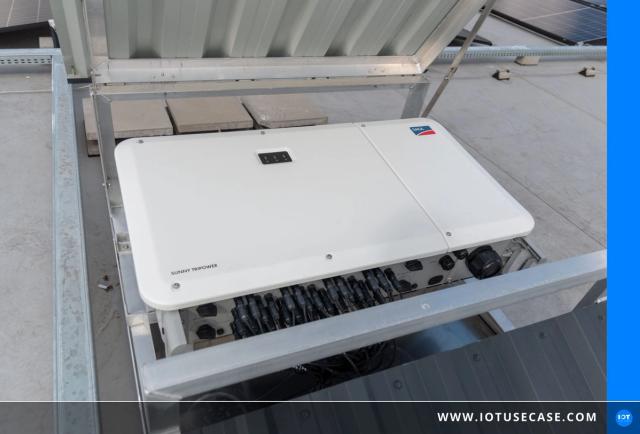




Advancing photovoltaic expansion together



Goodbye handwritten travel log – this is how digital excels
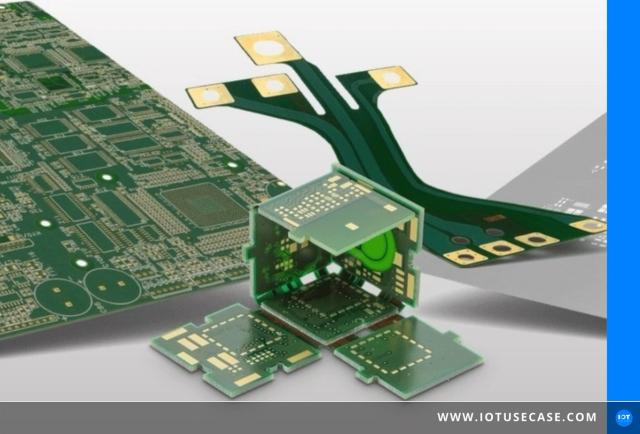



Placed on a solid MES footing – more efficient PCB production thanks to a solid database

Smart logistics processes with IoT transport box



40% process acceleration in the warehouse with IoT
Podcast episodes: Retail and Wholesale
4 episodes of the IoT Use Case Podcast on this industry, newest first.






Search less – find more | Open source technology masters cost pressure in logistics



IoT product development made easy - WÜRTH Industrie Service IoT scales as a logistics revolution & DENIOS hazardous materials storage technology




Using mobile communications correctly – inspiration for the application of IoT technologies




Business model in wholesale – added value through IoT for electrical, heating and sanitary installations
IoT use cases: Retail and Wholesale
30 use cases already implemented in this industry, sorted by number of implementations.
IoT-based track-and-trace solutions for industrial material flows. Workpiece carriers, equipment, or containers are tracked along the production line using combined positioning and identification technology. Operations in our network use these asset tracking systems to document movements, handovers, and responsibilities seamlessly – across locations and in an audit-proof manner. → Real-time data and cloud integration make tracking an integral part of modern IIoT platforms.

Automated creation of reports and logs for audits and compliance requirements. Digital systems enable seamless traceability and ensure efficiency in audit processes.
See implementationsConsumption data capture continuously collects measured values for energy and media consumption and presents them centrally in a visualized form. Consumption trends and statuses are clearly prepared and made traceable over defined time periods.
See implementationsNetworked communication systems enable rapid alerting and targeted action instructions for employees and emergency teams. This reduces response times in critical situations.
The implementation of sensors and IoT devices enables continuous monitoring of inventory. Companies can thereby track the location and condition of units, pallets, crates, or batches in real time.
With batch or lot traceability, you can monitor the entire lifecycle of your products – from raw material procurement to the finished product. This includes the identification of specific batches, tracking of process data, and documentation of all intermediate steps. This traceability enables you to identify weaknesses in the supply chain, minimize bottlenecks, and ensure compliance with quality standards. In addition, recalls can be carried out more efficiently and in a more targeted manner, saving costs and time.

- Precise real-time inventory monitoring
- Route Optimization and Route Planning
- Temperature Measurement
- Billing Automation
- Container Management – Logistics IoT
- Digital Goods Receipt with Real-Time Data
- Digital tracking of products and processes
- Digitized Order Management
- Early Detection of Damage
- Efficient Material Supply
- Identification of cargo units using IoT technologies
- IoT-Based Energy Management System
- Object Localization in the Industrial IoT
- Parking Space Tracking via IoT Integration
- Peak Load Management
- Precise inspection of every incoming shipment
- PV Yield Management and Self-Consumption Optimization
- Remote Reading
- Self-sufficient supply of C-parts
- Structured access to files and documents
- Track cycle times, utilization, and throughput
- Tracking, visualizing, and analyzing energy consumption per unit
- Usage Monitoring
- Vibration Monitoring
Functional areas in this industry
Number of projects per entry. The number leads to exactly these projects.
Connected assets: Retail and Wholesale
22 assets from the projects in this industry, sorted by number of implementations.
- Air conditioning system, 2 projects
- Pallet, 2 projects
- Parcel, 2 projects
- Transport container, 2 projects
- ATM, 1 project
- C-parts, 1 project
- Car, 1 project
- Container, 1 project
- Forklift truck, 1 project
- Goods in transit, 1 project
- Heating system, 1 project
- High-bay warehouse, 1 project
- Jewellery, 1 project
- Kanban bin, 1 project
- Lighting, 1 project
- Outer carton, 1 project
- Photovoltaic system, 1 project
- Printed circuit board, 1 project
These challenges are driving IoT projects in retail and wholesale
Inventory inaccuracies and lack of warehouse visibility
Manual stock counts are error-prone, time-consuming, and deliver only snapshots. Real-time inventory monitoring via RFID, barcode, and IoT sensors creates permanent transparency on location, quantity, and condition – preventing costly inventory discrepancies.
Out-of-stock and overstock simultaneously
Many retailers simultaneously struggle with empty shelves for top sellers and excessive storage costs for slow-movers. Sensor-based reorder triggers and demand-driven replenishment automatically optimize order quantities and timing.
Cold chain monitoring for temperature-sensitive goods
Fresh produce, pharmaceutical products, and other temperature-sensitive goods must be monitored without gaps. Cold chain breaks lead to spoilage, compliance violations, and liability risks. IoT temperature loggers and real-time alerts secure quality and document seamlessly.
Supply chain transparency and shipment tracking
In wholesale, goods are simultaneously at suppliers, in transit, and in the warehouse. Real-time tracking of shipments, containers, and pallets creates transparency, reduces shrinkage, and enables early response to delays.
Manual processes in warehouse and store
Goods receipt, picking, stocktaking, and shelf allocation are frequently still carried out manually. Automation through RFID, scanning systems, and mobile devices reduces errors, saves time, and enables staff to focus on value-adding activities.
Customer experience and omnichannel transparency
Customers expect real-time availability information online and in-store, seamless click-and-collect processes, and fast returns handling. IoT creates the data foundation for consistent omnichannel experiences – through cross-channel inventory visibility and automated processes.
Energy monitoring across hundreds of stores, scales that reorder C-parts on their own, forklifts that recognise pallets via RFID: IoT in retail and wholesale is already everyday practice. Retailers, wholesalers and distributors use connected sensors to cut costs, know their stock precisely and move goods safely between headquarters, warehouse and store.
The starting point is similar across the sector: thin margins, rising energy and staff costs, many sites in rented buildings without uniform IT, and customers who expect real-time availability. Digitalisation in retail therefore usually starts with a simple question: what is happening right now in my stores, warehouses and transports?
On this page you will find implemented solution examples from the IoT Use Case network, each with the user, the implementation partner and the technology used.
IoT in Retail and Wholesale: What Connected Stores, Warehouses and Supply Chains Deliver Today
Retail 4.0 means that stores, warehouses, containers and equipment report their own data instead of someone reading meters, counting stock or phoning around. Electricity meters, refrigeration units, routers, shelves and transport boxes are fitted with sensors that send their values over cellular or wireless networks to a platform. Energy management, automatic reordering, real-time inventory and alerts on theft or failure all build on this.
What sets retail apart from other industries is scale. A retailer often runs hundreds of sites, many of them in rented buildings with different equipment and no local IT. IoT solutions for retail therefore have to work without construction work and without touching the store network, be installed in a few hours and roll out to every store. The examples on this page show how that works.
Typical IoT Use Cases in Retail
Energy Monitoring Across the Store Network
Refrigeration, air conditioning, lighting and heating are the biggest cost drivers in stores, and equipment often keeps running outside opening hours. A retailer with more than 600 stores used the IoT Energymonitor from PSsystec and advice from TRIBICON to make all sites comparable for the first time. Non-invasive sensors read the existing electricity, gas, water and heat meters, and installation took about two hours per store without IT specialists. Energy costs fell by 5 to 10 percent, and the data provides the basis for ISO 50001 and CSRD reporting. More in the use case IoT-based energy management system.
Remote Monitoring of Routers, Vending Machines and Refrigeration
When a store router or a machine fails, headquarters often only notices once sales are missing. A company with more than 14,500 sites therefore monitors its IT routers with the SMARTsocket from PSsystec. The plug sits between socket and device, reports power failures and overheating over cellular independently of the local network and allows a remote restart. Technician call-outs and downtime fell by 40 percent.
Automatic Reordering and C-Parts Management in Wholesale
In wholesale, suppliers increasingly take responsibility for stock at the customer's site. Würth Industrie Service serves more than 20,000 customers and uses the iSCALE IoT scale from HK.SYSTEMS for this. The scale holds a kanban bin, continuously measures the weight of the C-parts and sends it via NB-IoT straight into the merchandise management system, without Wi-Fi or a gateway and with up to five years of battery life. When the content drops below a threshold, a reorder is triggered automatically. More in the use cases Self-sufficient supply of C-parts and Inventory management and reorders.
Unmanned Self-Service Stores with RFID
Technical wholesaler ProMart brings its range directly to the customer with the EasyMart store: a mobile spare parts store in an ISO container, accessible around the clock and without staff. Access and withdrawals run via RFID cards and RFID tags on the goods, with technology from TURCK Vilant Systems. Every withdrawal is booked, invoiced and reordered automatically, and stocktaking with downtime is no longer needed.
RFID in the Warehouse: From Goods Receipt to Shipping Without Scanning
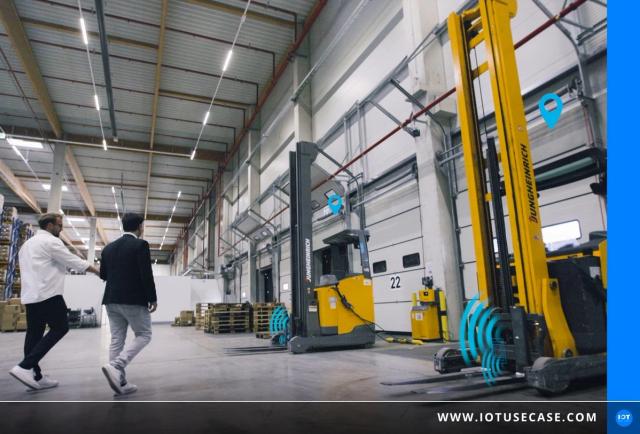
Fashion distributor and logistics provider TB International handles goods for 15 brands in a warehouse with 25,000 square metres and almost 35,000 pallet locations. With the INTRANAV platform, cartons are recognised via RFID at goods receipt and booked directly in SAP Business One, and forklifts with RFID and UWB know which pallet they are carrying and where it belongs. Efficiency in full-carton handling rose by almost 40 percent. More in the use case Inventory management.
Secure Transport Between Headquarters and Stores
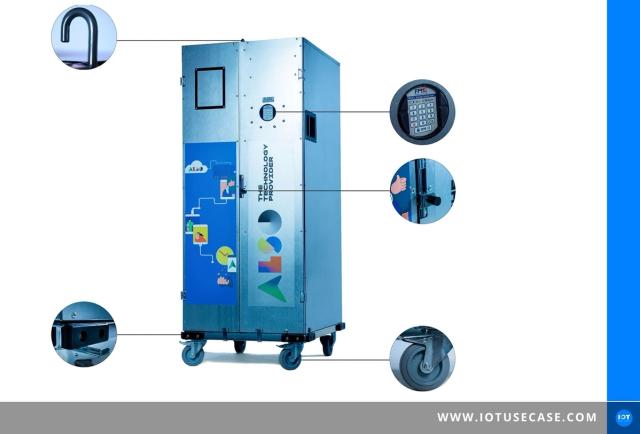
High-value goods go missing particularly often on their way to the store. Cyberport supplies its 16 stores with the electronically locked Dolly+ trolley from ALSO, which reports its position via GPS and only opens with a PIN the store receives automatically. During the pilot there was not a single loss of goods, although several break-in attempts were recorded. Jeweller Feichtinger ships jewellery to 20 stores in boxes with A1 Digital trackers that detect every opening via a magnetic contact and raise an alarm by SMS or email immediately. More in the use case Real-time damage prevention.
Packing, Shipping and Workforce Planning
At its Künzelsau distribution centre, Würth uses a Peakboard dashboard to show how many parcels are currently in the system and which series are still to come. The data comes from SAP and the material flow computer, and team leaders use it to plan staff in the packing area. Wholesaler FÖRCH worked with AIM to examine how machine learning improves the choice of packaging to reduce packaging waste and transport costs.
Air Conditioning, Refrigeration and On-Site Power Generation
Air conditioning and refrigeration rarely fail suddenly; the damage usually announces itself. An HVAC dealer and service provider uses a sensor box from Arrow and software from Codestryke to detect from compressor vibration whether refrigerant is missing, and sends the technician out with the right spare part (see the example). Large store and logistics roofs are well suited to photovoltaics: at REWE's Henstedt-Ulzburg site, 3,240 modules deliver 1,377 kWp, monitored with meteocontrol and connected via INSYS icom routers. For smaller businesses, electrical wholesaler Zander developed a vendor-independent IoT energy monitor together with codestryke.
Vendor Managed Inventory with IoT
With vendor managed inventory, or VMI, the supplier manages the stock at the customer's site. That only works if the supplier reliably knows consumption. IoT provides exactly this data: scales under kanban bins, level sensors in tanks and silos or RFID readers at withdrawal points report the current stock without anyone at the customer counting. The wholesaler sees when to deliver, combines routes and offers supply as a service. A related technique is level and distance measurement.
Smart Shelves, RFID and Electronic Shelf Labels in the Store
In brick-and-mortar retail, electronic shelf labels, RFID tags on goods and smart shelves with weight or camera sensors are among the best-known applications. They deliver stock data right at the shelf and allow price changes without relabelling. They pay off mainly where many items, frequent price changes or high shrinkage come together, for example in fashion, electronics and grocery. As with every IoT project in retail, the integration with merchandise management and point of sale decides the outcome.
Data Protection and Works Councils
Tracking technology in retail quickly captures employees too, for instance when locating forklifts or company cars. That is why a GDPR review belongs early in the project, and in Germany the works council as well if performance or behaviour could be monitored. Clear purposes, data about objects rather than people, and features such as the private-trip mode in digital logbooks, where no location data is stored, have proven effective.
How to Start an IoT Project in Retail
Start with a problem that can be expressed in euros: energy costs per store, stock-outs on fast movers, goods lost in transit or unplanned technician call-outs. Equip a manageable number of stores, bins or shelves and clarify early which system the data will feed into, such as ERP, merchandise management or energy management. Plug-and-play sensors with their own cellular connection avoid lengthy coordination with store IT. After a few weeks, the pilot shows whether a rollout to all sites is worthwhile.
Finding IoT Providers with Retail and Wholesale References
Every solution example on this page names the implementation partner, the technology used and in most cases the user, including Würth, Cyberport, REWE, ProMart, Feichtinger, FÖRCH and TB International. This shows you who has already delivered a comparable project. If you briefly describe your project via the contact form, we will put you in touch with suitable providers.
Frequently asked questions: implementing IoT in retail and wholesale
How do I start digitalising my retail business with IoT?
With a problem that costs money in every store, such as high energy costs, failed refrigeration or IT equipment, or empty shelves. Test the solution in a few stores, measure the effect and then roll it out across the network. Choose technology that works without touching the store IT and delivers its data to headquarters' merchandise management or ERP via interfaces.
Which IoT applications pay off first in retail?
The fastest are those that cut running costs across the store network: energy monitoring, remote monitoring of routers, air conditioning and refrigeration, and automatic reordering. They can usually be retrofitted without alterations. One store network detects power failures at IT routers centrally via smart sockets and shortens downtime, and an electronics distributor spots faults in air conditioning units early. The solution examples on this page show where other retailers started.
How can energy consumption across many stores be monitored?
With non-invasive sensors that read the existing meters and send their data to the cloud via radio or cellular. A retailer with more than 600 stores equipped each store in about two hours this way, without touching the IT. The platform shows peak loads and base loads outside opening hours, and energy costs fell by 5 to 10 percent.
Does IoT in stores require its own IT infrastructure?
No, in most cases it does not. Many IoT solutions for retail bring their own cellular connection and are installed plug-and-play, for example between socket and device or on the existing meter. This matters because many stores are in rented buildings with different equipment. The data flows via interfaces into headquarters' ERP, merchandise management or energy management.
How do I implement vendor managed inventory and C-parts management with IoT?
Fit containers or storage locations at the customer site with IoT scales, level sensors or RFID that report consumption automatically to your merchandise management system. When stock falls below the threshold, the system places the reorder itself. One C-parts supplier uses scales under kanban bins that transmit via NB-IoT and run on battery for up to five years. The customer needs neither Wi-Fi nor its own IT for this.
How do I speed up warehouse processes in wholesale with IoT?
By capturing cartons and pallets automatically instead of having someone scan them. RFID tags are read at goods receipt, on the forklift and at the dock door, ERP bookings happen in real time and misloads are spotted immediately. One trading company sped up full-carton handling by almost 40% this way in a warehouse with almost 35,000 pallet locations. Parcel flow forecasts also help with staff planning in the packing area.
How does IoT protect goods from theft in transit?
With trackers in transport boxes or trolleys that report not only position but also opening, shocks and movement. If a box is opened without authorisation, an alarm goes out immediately by SMS or email. One electronics retailer had no loss of goods during its pilot with a locked, GPS-monitored trolley, and a jewellery retailer monitors its boxes seamlessly from dispatch to store.
How do I find an IoT provider with retail references?
The fastest way is through projects that are already running. The solution examples on this page name the implementation partner, the technology used and in most cases the user, from C-parts suppliers to online retailers and store networks with several hundred locations. If you briefly describe your project via the contact form, we will put you in touch with providers who have delivered a comparable project.
Implementing IoT in retail and wholesale – we can help
Are you planning an IoT project in retail or wholesale, or do you want to become visible as a solution provider in this area? We help you find the right partners, present solutions in a practical way, and reach real users.
Get in touch