

Automation
IoT in industrial automation connects robots, PLCs, drives and sensors to a data platform. Machine condition, OEE and energy consumption become visible in real time instead of being recorded by hand. Schaeffler uses this to connect the machines of its 75 plants in a uniform way and recovered the investment in under a year, while Fabmatics halved its commissioning effort.
IoT solution examples: Automation
28 solution examples from our network, newest first.
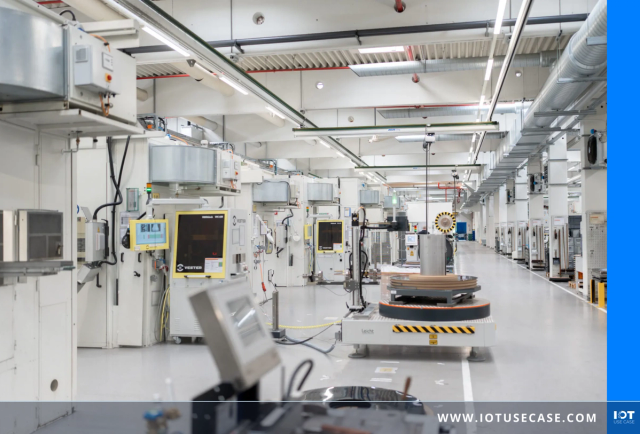



Consolidating fragmented machine communication and separating IT from OT
A manufacturer of electrical connection technology replaces its scattered communication servers with soffico's Orchestra and cleanly separates IT from OT. At the Thuringia plant, around 120 machines were connected in three days.
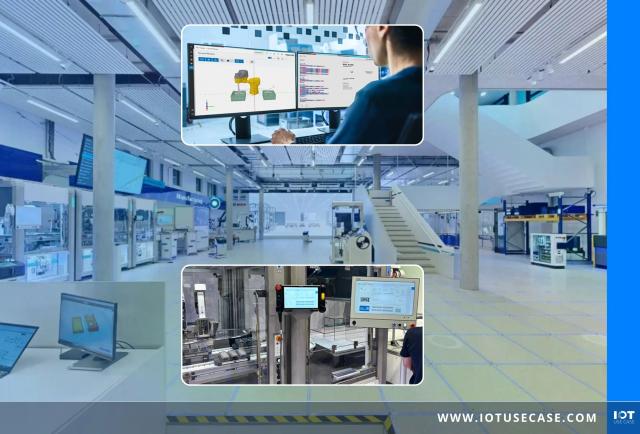





Reconfiguring production lines flexibly with the asset administration shell
At the Bosch Rexroth model factory, the Asset Administration Shell connects machines in a standardised way. XITASO adds brownfield machines with a function block.
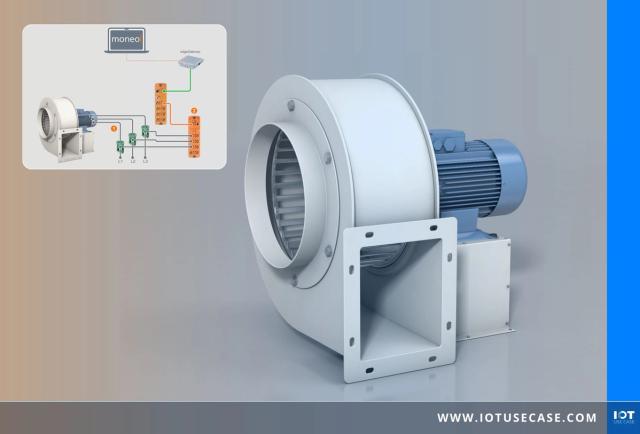


Current consumption enables condition-based fan maintenance
An ifm current transformer and the moneo platform monitor the current draw of fans. Winding damage and stiff bearings show up before the extraction system fails.
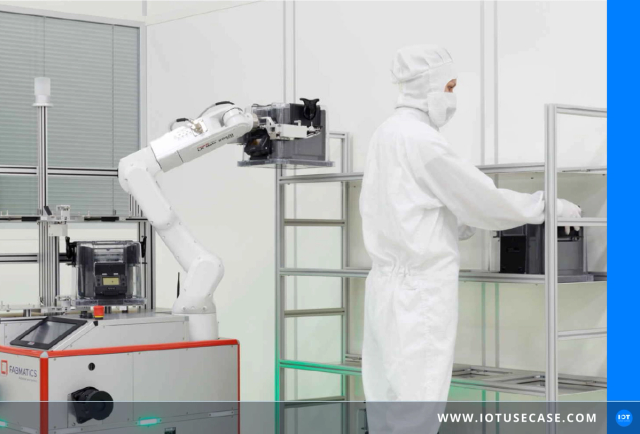


Sensor-to-cloud for intralogistics and digital services
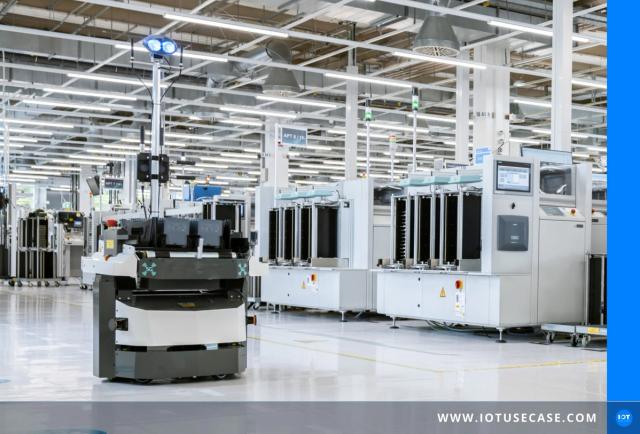




Private 5G networks as the foundation for industrial digitalization
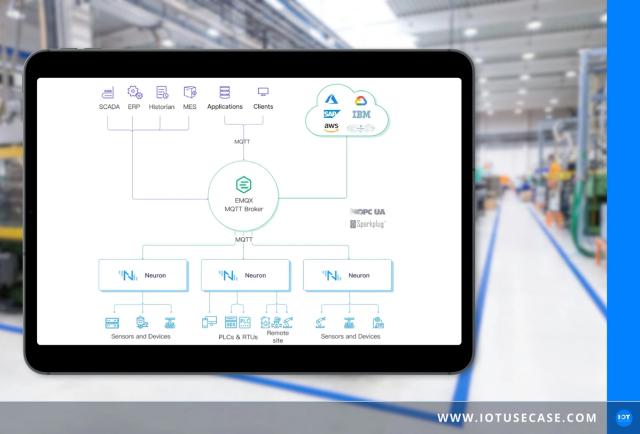


Future-proof IoT platform thanks to MQTT broker
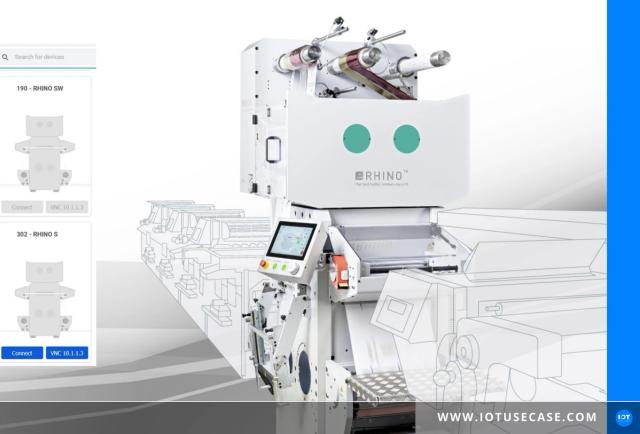



Improving machine performance worldwide with remote access and data analysis
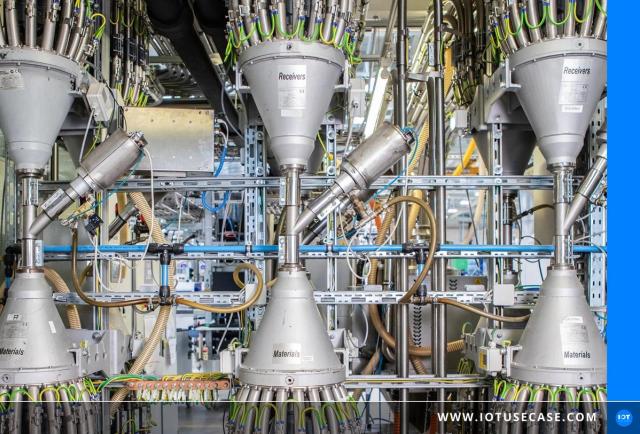



Determining the optimal maintenance time – predictive filter monitoring of a material distribution system
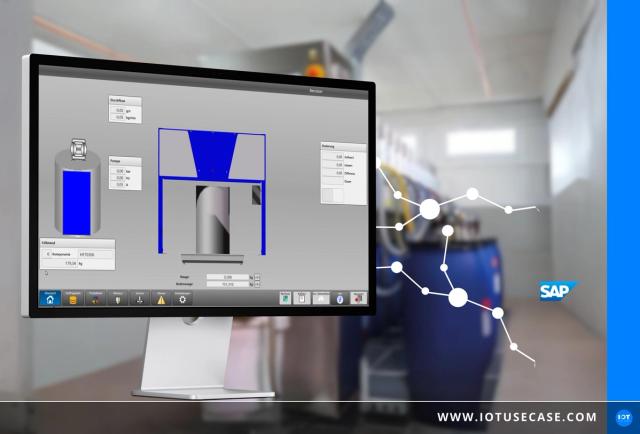

M2M communication with seamless data exchange
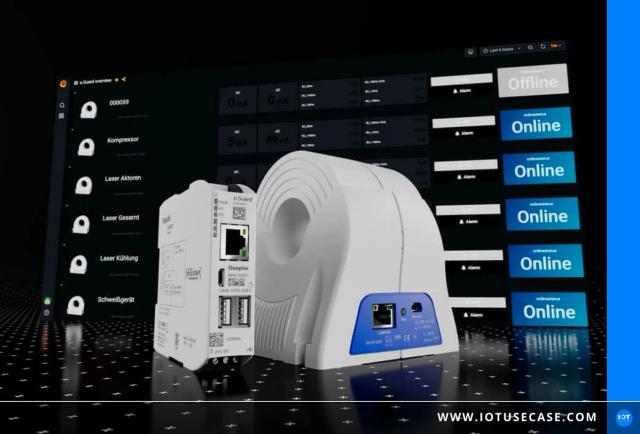


Simplifying the monitoring of residual currents





Migration from SAP to Azure for intralogistics experts
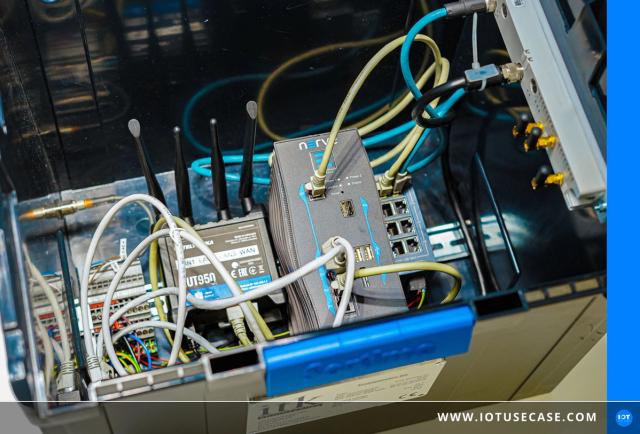

ITK Transparency-Toolkit in action: determining OEE at the Bosch Rexroth plant
- Intelligent asset tracking: more transparency and automation in material flow
- Printed circuit board production: condition monitoring of solder paste
- Predictive Maintenance: every step a great leap forward
- Monitor components in the control cabinet with new IoT service
- Real-time digital mapping of large data volumes in production
- Rhebo and Bosch Rexroth – the perfect combination for cyber security and stability
- From reactive to proactive system with the intelligent software platform KUKA iiQoT
- 3D data streaming for new industrial applications
- IoT-enabled pneumatics and electrics reduce production downtime
- Monitor manufacturing in real time and reduce scrap
- Smart and remote services: machine connectivity is the foundation
- Shopfloor networking: Schaeffler Group creates a data acquisition platform
- Cross-system and cross-site PLM data connection with business case
- Exploiting the potential of networked signal lamps and switches
- Service portal cuts commissioning effort in half
- Intelligent automation with AI and IoT increases revenue
Podcast episodes: Automation
14 episodes of the IoT Use Case Podcast on this industry, newest first.






IO-Link in Manufacturing: Condition Monitoring and Digital Services





Digital Product Passport: Making Product Data Interoperable with ECLASS and AAS


Plan connectivity from the start – Edge Layer integrating OT and IT




Use cases for System Integrators – Automators rely on new IoT services




Network anomaly detection: a security solution for the connected industry


Material flow simulation: Fact-based decision-making in the production environment
IoT use cases: Automation
29 use cases already implemented in this industry, sorted by number of implementations.
Production data, maintenance logs, and operating manuals are stored centrally in digital archives. This simplifies access and management for employees in production and management.






With modern sensor technology and smart data analysis, damage can be detected before it escalates. Whether leaks in water pipes, overheating in electrical systems or mechanical wear – continuous monitoring makes problems visible early. In condition monitoring and predictive maintenance this leaves time for targeted maintenance, in corrective maintenance affected components are located quickly, and in loss prevention it protects assets and infrastructure in the long term.



Automated creation of reports and logs for audits and compliance requirements. Digital systems enable seamless traceability and ensure efficiency in audit processes.
IoT-supported analyses examine the relationships between machine settings and product quality. This data helps to identify faulty processes and make targeted adjustments to ensure consistently high quality.


Centralized collection of distributed measurement and status data. Remote reading enables the automated retrieval of operational, status and consumption data from systems and infrastructure without manual on-site reading. The data feeds into condition monitoring and energy monitoring and is documented digitally without gaps at the same time.
Automatic spare parts ordering is triggered by defined threshold violations, faults or status changes. Maintenance orders and spare parts requests are created automatically and transferred via integration into ERP systems such as SAP, without manual intervention. In asset management this keeps inventories up to date; in corrective maintenance it shortens the time to repair.


- Digital tracking of products and processes
- Digitized Order Management
- Energy Efficiency Analysis
- Inventory Management
- Knowledge Retention
- Seamless control throughout production
- Waste Reduction
- Audit-Reporting in Traceability
- Container Management – Logistics IoT
- Digital Nameplates and Product Data Sheets
- Efficient Material Supply
- Energy Cost Optimization per Machine
- Filter Monitoring
- Humidity and Particle Measurement
- Item tracking throughout the supply and manufacturing chain
- Moisture Measurement
- Object Localization in the Industrial IoT
- Optimize your supply chain (batch traceability)
- Precise real-time inventory monitoring
- Temperature Measurement
- Tool Wear
- Track cycle times, utilization, and throughput
- Vibration Monitoring
Functional areas in this industry
Number of solution examples per entry. The number leads to exactly these examples.
Connected assets: Automation
33 assets from the solution examples in this industry, sorted by number of implementations.
- Control cabinet, 2 solution examples
- Electric motor, 2 solution examples
- Injection moulding machine, 2 solution examples
- Milling machine, 2 solution examples
- Assembly line, 1 solution example
- Autonomous mobile robot (AMR), 1 solution example
- Dosing system, 1 solution example
- Fan, 1 solution example
- Filter, 1 solution example
- Finished part, 1 solution example
- Gear wheel, 1 solution example
- Grinding machine, 1 solution example
- Handling robot, 1 solution example
- Honing machine, 1 solution example
- Honing ring, 1 solution example
- Indoor air, 1 solution example
- Industrial robot, 1 solution example
- Load carrier, 1 solution example
These challenges are driving IoT projects in industrial automation
Heterogeneous machine landscapes and protocol diversity
Production facilities consist of machines from different manufacturers, generations, and protocols – OPC UA, Profibus, Modbus, EtherNet/IP. Cross-system data acquisition is barely possible without standardization.
OT/IT integration and cybersecurity
Connecting Operational Technology and IT systems creates new efficiency potential – but also new attack surfaces. Industrial networks must be securely segmented and protected against unauthorized access.
Real-time quality assurance
Quality deviations in traditional processes are often only detected at the end of the line. Inline sensors and AI-supported image processing enable continuous monitoring directly in the process – before scrap is produced.
Flexibility with increasing product variety
Growing product variants and smaller batch sizes demand production systems that can be reconfigured quickly. Intelligent automation solutions must be flexibly parametrizable and adaptable without long downtime.
Maintenance and availability of highly automated systems
The higher the degree of automation, the more critical every failure. Predictive maintenance and condition-based maintenance are not optional in highly automated environments – they are a necessity.
Energy efficiency and resource consumption
Automated production lines are energy-intensive. Granular energy monitoring at machine and process level enables targeted savings and provides the data foundation for CO₂ reporting and ESG targets.
Robots, PLCs, drives and sensors already produce the data needed to avoid downtime, reduce scrap and save energy. IoT makes it usable: machine data flows automatically into a platform instead of staying buried in the controller.
On this page you will find implemented IoT solution examples from automation, from condition monitoring of robot fleets and OEE measurement to connecting existing machines, each with end user, partner and result.
IoT in industrial automation: from the PLC to the cloud
Many automation systems are still islands: robots, drives and controllers produce reliably, but their data stays in the PLC. IoT connects machines, sensors and controllers to a data platform. Signals that already exist turn into metrics for maintenance, production and energy management.
Unlike many other industries, real-time behaviour, availability and functional safety are basic requirements in automation. The IoT layer must therefore not disturb the process: it reads along, analyses and only intervenes in the control system where that is explicitly intended, such as an automatic stop after a tool breakage.
Typical IoT applications in automation
Machine data acquisition and shop floor connectivity
Almost every project starts with machine data acquisition: status, cycle times, part counts and fault messages are read automatically from controllers instead of being written down by hand. Schaeffler built its own data acquisition platform that connects the machines of its 75 plants in a uniform way and paid for itself in less than a year. For machine tool builder CHIRON, machine connectivity is the foundation for remote services at customer sites.
Condition monitoring and predictive maintenance
The higher the degree of automation, the more expensive every stoppage. Sensors for vibration, temperature and current consumption reveal wear before a drive fails. WAGO uses this to determine the optimal maintenance time for the filters of a material distribution system, and ifm detects winding damage in fans purely from their current consumption. KUKA uses iiQoT to bundle the condition data of entire robot fleets. More examples in the use cases condition monitoring and predictive maintenance.
OEE monitoring and bottleneck analysis
Overall equipment effectiveness (OEE) is the product of availability, performance and quality. A line that runs 90 percent of planned time, reaches 95 percent of its target rate and delivers 98 percent good parts has an OEE of around 84 percent. With automatically captured data, this calculation becomes a live metric per machine and shift. At a Bosch Rexroth plant, ITK Engineering determines OEE with a portable transparency toolkit that connects machines from different vendors via OPC UA and MQTT.
Inline quality assurance
Quality defects that only show up at end-of-line testing are expensive. On honing machines, Schaeffler analyses vibrations in real time and stops the machine after a tool breakage before further parts are damaged. TURCK monitors the condition of solder paste in PCB production, and JUMO uses AI and IoT to increase yield. More in the use case quality management.
Commissioning, remote maintenance and service
For machine builders, IoT pays off after delivery too. Fabmatics organises commissioning through a service portal and cut the time required by 50 percent, while overall process speed rose by 30 percent. Pantec improves machine performance worldwide through remote access and data analysis.
Energy monitoring at machine level
Automated lines consume electricity, compressed air and cooling water. Measurements per machine show which system draws power while idle and where load peaks occur. This is the data basis for efficiency measures and robust CO₂ reporting. Doepke and Revolution Pi, for example, simplify the monitoring of residual currents. More examples in the use case energy monitoring.
OPC UA, MQTT and the asset administration shell: which standard for what
OPC UA is the standard for communicating with controllers: it delivers data with meaning, not just a value but also the fact that it is the spindle temperature in degrees Celsius. MQTT is a lightweight publish-subscribe protocol that distributes many data sources through a broker to many consumers, all the way to the cloud. The example from EMQ shows how such an MQTT broker scales. In practice the two are often combined: OPC UA at the machine, MQTT for transport.
The asset administration shell (AAS) goes one step further and describes a machine as a standardised digital twin with master data, documentation and operating data. In the Bosch Rexroth model factory in Ulm, it is used to reconfigure production lines flexibly, and XITASO connects existing machines through a function block.
Brownfield and retrofit: connecting existing machines
Most plants run new robots next to twenty-year-old controllers with Profibus, Modbus or proprietary interfaces. There are three ways to connect them: read the controller through a gateway, retrofit additional sensors that measure independently of the PLC, or combine both. Retrofitted sensors such as current transformers or vibration sensors are often the fastest route, because nobody has to touch the existing control logic. The example of RAFI and Device Insight shows how signal lamps and switches themselves become a data source.
IT/OT convergence and OT security
Connecting machines to IT systems and the cloud creates new attack surfaces. Industrial networks therefore need to be segmented, and external access should go through secured gateways. Rhebo and Bosch Rexroth show how anomaly detection can run directly on the controller ctrlX CORE, which is certified to IEC 62443. For wireless connectivity on the shop floor, Siemens relies on private 5G networks.
How to start an IoT project in automation
1. Start with the bottleneck: pick the machine or line whose downtime or scrap costs the most, not the newest one.
2. Define the metric: decide up front how success will be measured, for example OEE, unplanned downtime hours or scrap rate.
3. Clarify data sources: check what the controller already provides and where additional sensors are needed. Agree early with IT on how data may leave the OT network.
4. Pilot small: a pilot on one machine with a data acquisition kit delivers reliable figures within a few weeks and the basis for the business case.
5. Scale on standards: if you rely on OPC UA, MQTT and open platforms from the start, you can connect further machines and plants without reprogramming.
Finding IoT providers and partners for automation
The solution examples on this page come from providers who delivered their projects together with end users, including Device Insight, WAGO, ifm, TURCK, INSYS icom, Peakboard, Kontron AIS, Revolution Pi, Rhebo and EMQ. Each example shows the technology used, the starting point and the result. If you are more interested in connected products and services for machine builders, you will find further examples in the mechanical and plant engineering industry.
No marketing fluff. Only practice.
Frequently asked questions: implementing IIoT in automation
How do I get started with IIoT in automation?
With one line or group of machines and a clear metric, such as downtime, OEE or scrap. An edge gateway reads the existing controllers, and a platform shows the values in real time. Prove the benefit after a few weeks and only then roll out to further lines and plants. How fast connectivity can be is shown by a manufacturer that connected 120 machines from 15 vendors in three days.
How do I choose the right IIoT platform?
First check whether the platform connects your existing controllers and protocols without custom programming. Also important are edge functions for pre-processing, central updates via software containers, open interfaces to MES and ERP, and a permissions concept for remote access. Test with a pilot on real machines rather than with presentations. One intralogistics manufacturer halved its commissioning effort with a service portal built on a platform.
How do I get data from PLCs and robots into MES, ERP or the cloud?
Through an integration layer between production and IT. Modern controllers deliver their data via OPC UA, older ones with Profibus or Modbus via protocol converters. An edge gateway or middleware standardises the values and distributes them, for example via an MQTT broker, to MES, ERP and the cloud. The production network stays separate from the IT network. One manufacturer replaced scattered communication servers this way and connected machines from 15 vendors in a uniform way.
How do I integrate machines from different vendors without individual interfaces?
With a uniform information model for all equipment. The asset administration shell describes the master data, documentation and operating data of each machine in standardised submodels, and OPC UA companion specifications do something similar at controller level. New machines can then be integrated into lines, MES and metrics without custom interface programming. One solution example on this page shows how production lines can be reconfigured flexibly this way while OEE remains measurable throughout.
How do I calculate OEE automatically from machine data?
OEE is the product of availability, performance and quality. If a machine runs 90 percent of planned time, reaches 95 percent of its target rate and produces 98 percent good parts, the result is around 84 percent. It becomes a real-time metric when you capture machine status, piece counts and scrap directly from the controller or via sensors. Downtime reasons are then visible per machine and shift instead of being estimated at the end of the shift.
How do I monitor drives, fans and pneumatics without touching the PLC?
With retrofitted sensors that measure independently of the controller. Current transformers capture power consumption, vibration and temperature sensors the condition of motors and bearings, and pressure and flow sensors the pneumatics. A gateway sends the values to a platform that raises an alert when something deviates. In one solution example, fans are maintained based on their condition rather than the calendar, using their power consumption. The control logic remains untouched.
How do I secure connected production systems?
With an architecture that includes security from the start. Proven measures are segmented networks according to IEC 62443, outbound-only connections from the OT network, secured edge gateways and anomaly detection that flags unusual traffic in the production network. Plan IT security and automation together. If you manufacture connected components yourself, the Cyber Resilience Act requires security updates and vulnerability management across the entire lifecycle from December 2027.
How do I find the right implementation partner for IIoT in automation?
The fastest way is through projects that are already up and running. The solution examples on this page name the implementation partner, the technology used and in most cases the user, so you can see who has already solved a comparable challenge. If you briefly describe your project via the contact form, we will put you in touch with providers who have experience with exactly your application in automation.
Implementing IoT in automation – we can help
Are you planning an IoT project in the field of automation, or do you want to become visible as a solution provider in this area? We help you find the right partners, present solutions in a practical way, and reach real users.
Get in touch