
Jürgen Pfeifer
Partnermanagement Sales Germany
Get in touch with Jürgen Pfeifer
Tell us briefly what it is about – we will pass your message on and make the introduction personally.
Use cases Jürgen has already implemented
Solution Examples
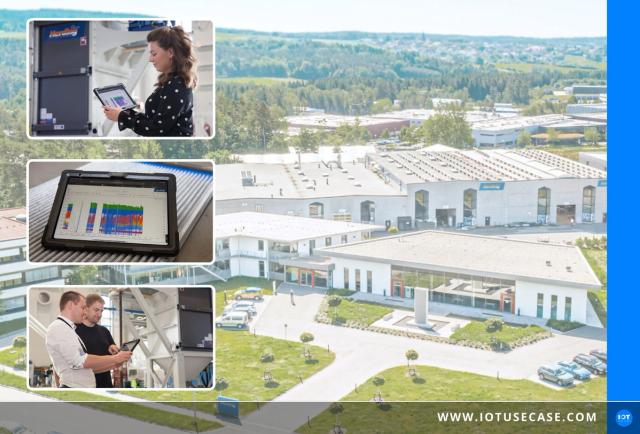


Filter systems: monitoring and data management solution from practice
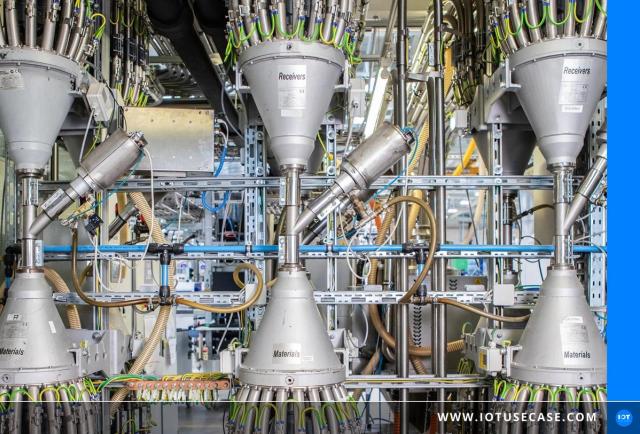
Determining the optimal maintenance time – predictive filter monitoring of a material distribution system
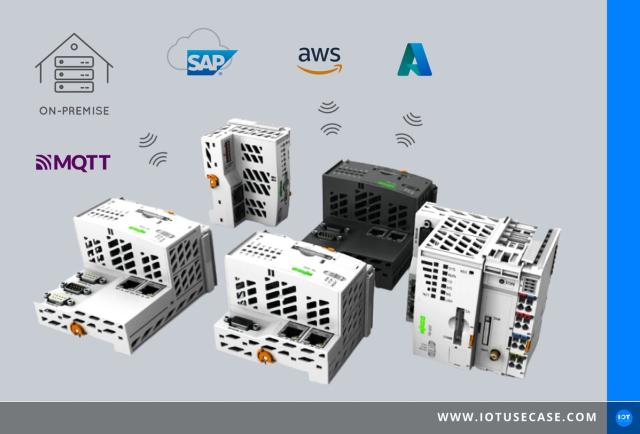

Simplified use of container infrastructure


Cross-system and cross-site PLM data connection with business case
Podcast Episodes
No laptop at the control cabinet: scaling device & application management in OT
Live from the Hannover Messe, Portainer.io and WAGO discuss how container-based application and device management makes operating and scaling edge solutions on the shopfloor practical. At the core is the transfer of proven IT principles into OT – without requiring OT teams to become IT specialists. These modern approaches meet typical challenges: heterogeneous hardware (32/64-bit architectures), lack of transparency around software versions (“golden USB stick”), time-consuming 1:1 updates directly at the control cabinet, and the organizational IT/OT gap with strictly defined update windows. The technical foundation consists of standardized Docker images (e.g., Node-RED), distributed via a control plane and deployed automatically through CI/CD pipelines. Rollbacks ensure that systems can quickly return to stable versions when needed. AI use cases can also be integrated seamlessly: edge hardware can be extended with AI accelerators to run applications such as anomaly detection or specialized smaller LLMs (tiny LLMs) directly on-site – without breaking the container-based stack. For decision-makers, this results in clear benefits: faster and more predictable deployments across distributed locations, reduced travel and integration costs, increased modularity through additional containers, and greater independence from individual vendors.
Zoom into the WAGO Plant & Partner Ecosystem Enables Predictive Maintenance of a Material Distribution System
We encounter plastics everywhere in life. How exactly their production takes place, few people know. This takes place in the so-called plastic injection molding process. In this process, molten plastic is injected into a molding cavity of a mold, compacted under pressure and then ejected as a molded part. This podcast episode is about a material distribution system at WAGO, where this process has been optimized using IoT and the filters are serviced at the ideal time – error cases are detected, scrap is reduced and unplanned downtime is avoided. Because: In the manufacturing process itself and in the upstream and downstream process, there are often errors in the plant that lead to downtimes and at the same time an enormous potential in maintenance and cleaning processes. To understand this in more detail, in episode 83 we go to a WAGO plant – which manufactures components for electrical connection technology as well as electronic components for automation technology – and take a look at what use cases exist here and what added value the data provides. For this, we have two experts with us who know the use cases inside out and have also built up the associated ecosystem in order to implement solutions– Jan Jenke (Product Manager / Project Manager Analytics) and Jürgen Pfeifer (IoT & Cloud Partner Manager).
Cross-system and cross-site PLM data connection with business case
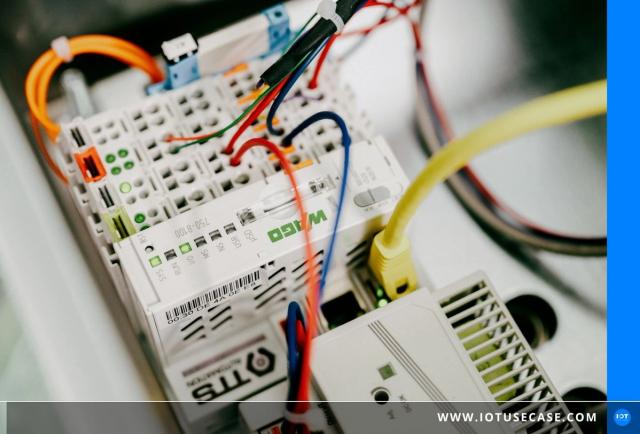
Companies that want or want to be fit for the future are above all one thing, they are already extensively networked or are working on it. The problem is that everything that has not yet been connected to IT will have to be connected at some point in the future. This is especially true for machines. Most companies today are not prepared for this. Thus, the existing machines and equipment are not able to send data. For this purpose, the WAGO company has developed the IoT Box, which integrates the machines into the Internet of Things. It is a complete system that includes all the functions a company needs for digitization. The range extends from signal acquisition to cloud connectivity. However, today’s use case focuses not only on WAGO, but also on a customer, Liebherr-IT Services. They develop organizational and programming IT solutions for the entire Liebherr Group. They currently support 31 development and production sites with more than 13,000 users. The focus of this podcast is the IoT box. No hardware needs to be planned for the IoT box, because it is designed according to the ready-to-use principle. This gets the data into the IoT application quickly. Depending on how the IoT box is to be used, flexible I/O cards can be retrofitted. This allows each system to be customized to the required specifications. But there are other options available. The IoT box is a prefabricated solution that can be retrofitted to any machine or system without much effort. The trick here is that the production process does not have to be interrupted. This means that the IoT box can not only be used universally, but also optimally records data streams, production cycles and voltages.