

Orchestra enables scalable data integration at a customer from industrial manufacturing. From legacy communication structures to a scalable integration basis for production and automation.
A future-proof integration basis for production
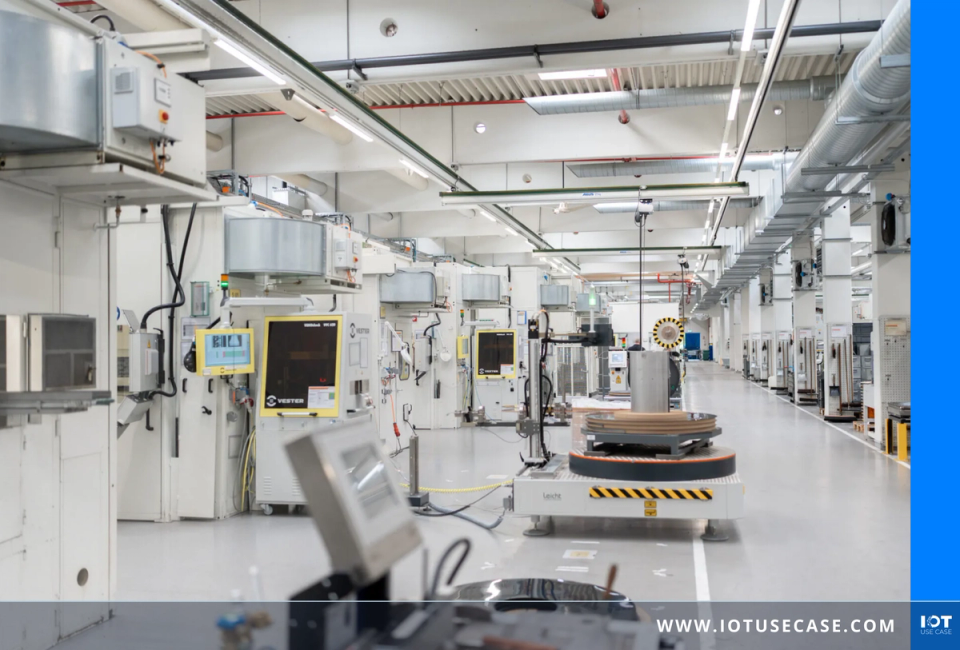
An internationally operating company in the field of electrical connection technology and automation: with around 6,000 employees, some 2,000 of them at its main site in Detmold, and production sites worldwide – including in Europe, China and the USA – the customer is one of the established providers in its sector. The machinery primarily comprises metal stamping presses, injection moulding machines and automated assembly systems. In this production-related environment, reliable communication between machines, shopfloor systems and higher-level IT systems plays a central role. The aim of the project with soffico was therefore to unify the existing communication paths, consolidate legacy structures and create a clear separation between IT and OT.
Orchestra was intended to create a single platform that would first reliably replace the existing functionality while at the same time forming the basis for further automation and integration scenarios. In the longer term, this is also intended to further increase the degree of automation in production.
Standardising legacy communication landscapes
Before Orchestra was introduced, communication between machines and higher-level systems at the Detmold and Thuringia plants ran via various communication servers per plant. Over the years, this had given rise to a heterogeneous communication landscape with different components, distributed server structures and varying communication paths.
At that point, there was no end-to-end, unified integration architecture between the shopfloor and IT systems. In some cases, machines on the shopfloor communicated directly with IT systems. As a result, a consistent separation of OT and IT was only possible to a limited extent. At the same time, the different communication components led to high complexity, increased operating and maintenance effort, and lower standardisation in machine connectivity.
Changes and extensions could only be implemented with additional integration effort. For a long-term, scalable architecture, the manufacturer therefore needed a central integration platform that takes over existing functionality, harmonises communication paths and at the same time creates room for future expansion stages.
Functionally identical replacement and scalable expansion
The first step focused on replacing the existing server infrastructure with Orchestra on a functionally identical basis. The existing communication functions were to be taken over reliably, without affecting current production processes.
At the same time, Orchestra was to create a unified integration basis for machine connectivity. This platform forms the foundation for additional functionalities, automated machine feedback and the connection of further plants – including sites that are not yet connected to the MES.
Concrete quantitative KPIs were not yet the focus at the start of the project. What mattered first was technical stability, functional equivalence and a robust basis for downstream optimisation. Measurable improvements are expected in particular in later expansion stages, for example through automated feedback from the machines and broader use of Orchestra at additional production sites.
Orchestra replaces existing communication components
With Orchestra from soffico, the previous communication servers in the environment concerned were replaced. Today, the platform handles machine communication at the Detmold and Thuringia plants and creates a central, standardised integration layer between the shopfloor and higher-level systems.
In total, systems from around 15 different manufacturers were integrated. In addition, in-house-built machines could also be connected. Communication with the machines takes place via OPC UA or Modbus. Currently, around 330 scenarios are mapped in the Orchestra environment – each relating to individual machines or measuring devices.
This made it possible to create an architecture that reliably meets existing requirements while being significantly better prepared for future extensions. Following the successful go-live, initial pilot applications for automated machine feedback based on OPC UA method calls were also implemented.
From supported commissioning to independent rollout
The project started out of OT, in close collaboration with the business. In the course of the project, responsibility was reorganised and implementation was continued within IT.
Over the following roughly six months, the go-live for the Detmold plant was carried out together with consultants from soffico. soffico supported the company closely on an operational, technical and subject-matter level – from implementing the Orchestra connection through stabilisation to successful commissioning.
On this basis, the project work could be further built up and consolidated internally. The subsequent rollout at the Thuringia plant was then carried out largely independently and clearly benefited from the experience gained in the first implementation phase: around 120 machines were connected and linked in the system within three days.
120 machines in 3 days and a central platform for integration and automation
With Orchestra, the customer today has a central platform for future integration and automation scenarios. The previously distributed communication landscape has been consolidated, existing communication structures have been replaced, and machine connectivity at the Detmold and Thuringia plants has been placed on a unified footing.
The solution creates a clearer separation between IT and OT, reduces the complexity of the communication architecture and improves long-term scalability. With the around 330 scenarios mapped across machines and measuring devices, Orchestra is already broadly established in production communication.
Even though no comprehensive before-and-after KPIs have been reported at the current project stage, the fast rollout at the Thuringia plant in particular demonstrates the operational added value of the new architecture: around 120 machines were connected and linked in the system within three days. Beyond that, the strategic basis has been created to operate existing integrations reliably, connect further plants and gradually expand new automation functions. Initial pilots for automated machine feedback already show how Orchestra can contribute to further optimising production in the future.
The key benefits at a glance:
- Replacement and consolidation of existing communication components
- Unified integration basis for machine connectivity
- Clearer separation of IT and OT
- Connection of systems from around 15 different manufacturers, plus in-house-built machines
- Around 330 mapped Orchestra scenarios for machines and measuring devices
- Around 120 machines at the Thuringia plant connected and linked in the system within three days
- Platform for future automation and integration scenarios
„“With Orchestra, we have successfully consolidated a legacy communication landscape and created a unified platform for our machine integration. The added value became particularly visible during the rollout in Thuringia: around 120 machines were connected and linked in the system within three days – a stable basis on which we can connect further plants and gradually expand future automation scenarios.” "
– The customer, (NDA)