

Automotive
IoT in automotive connects machines, components and vehicles via sensors to a platform that analyses the data in real time. Typical applications in carmakers' and suppliers' plants are predictive maintenance, OEE monitoring, traceability and energy monitoring. At Turkish carmaker Tofaş, OEE rose by 12%, and at Renault the failure rate in welding fell by 20%.
IoT solution examples: Automotive
45 solution examples from our network, newest first.





Monetizing IoT services: from machine connectivity to revenue models
Connected machines alone do not generate revenue. At ZEISS Microscopy and EWE Go, doubleSlash shows how machine data turns into recurring revenue: Connect, Make Smart, Monetize.
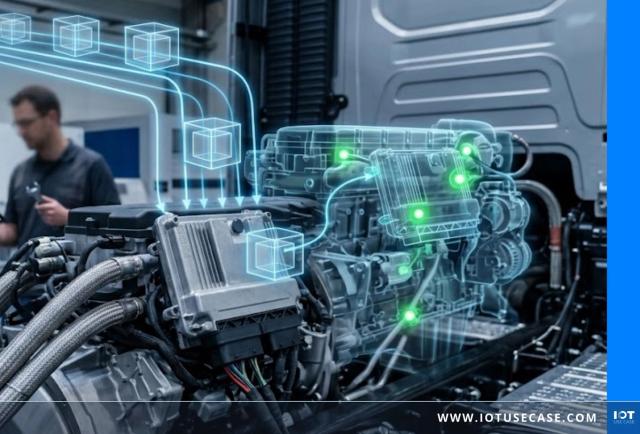





Remote container updates for software defined vehicles
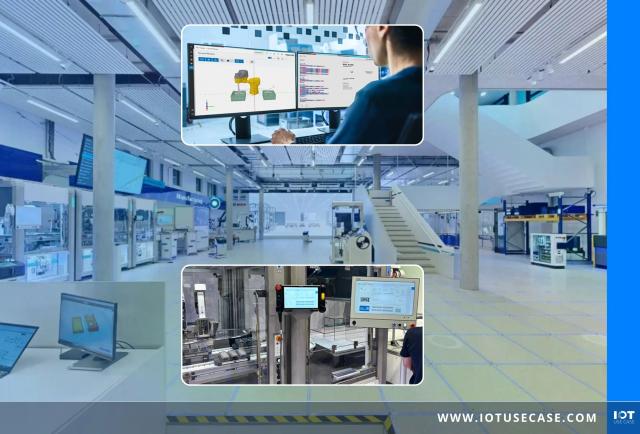





Reconfiguring production lines flexibly with the asset administration shell
At the Bosch Rexroth model factory, the Asset Administration Shell connects machines in a standardised way. XITASO adds brownfield machines with a function block.
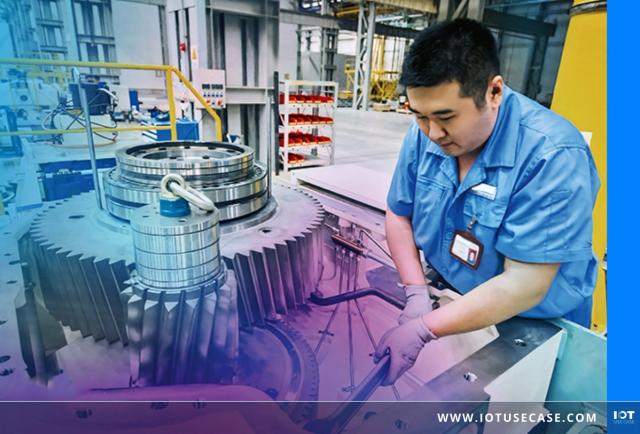


Steering heterogeneous AGV fleets vendor-neutrally via VDA 5050
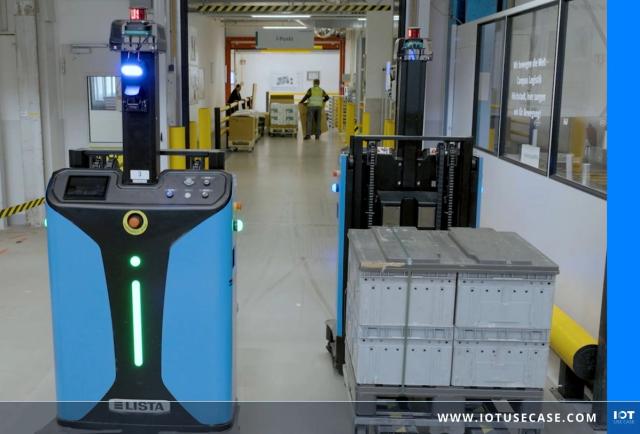

Scaling local material flows with cloud-based fleet control
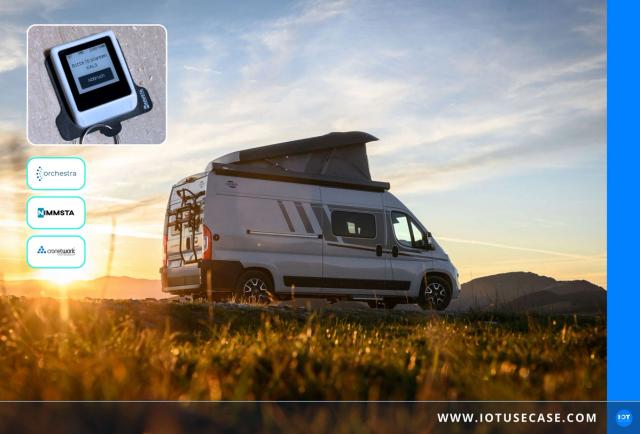




Production logistics: efficient transport control with smart watches and low-code middleware
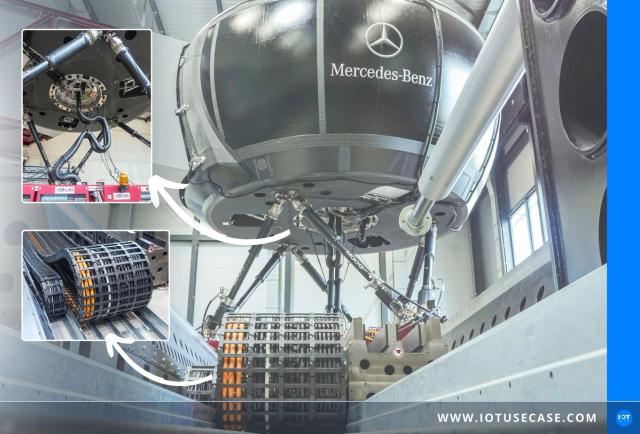



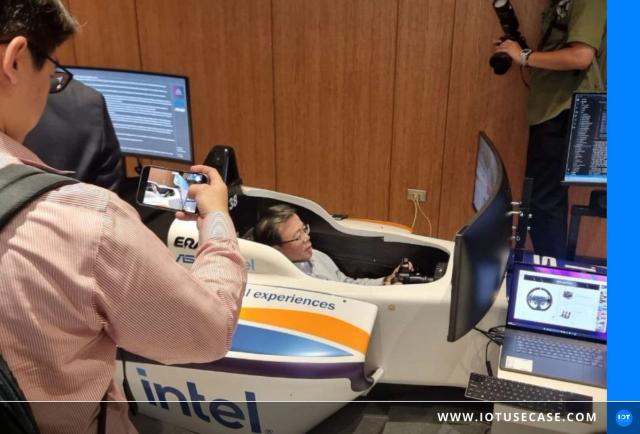
Intelligent break monitoring in 22-tonne automotive driving simulator
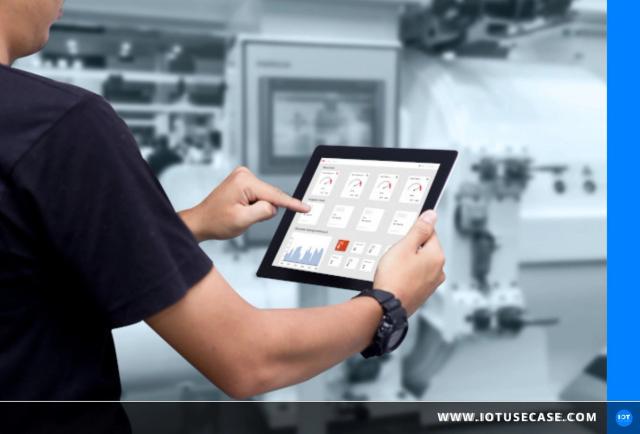


Efficient process data visualisation for industry
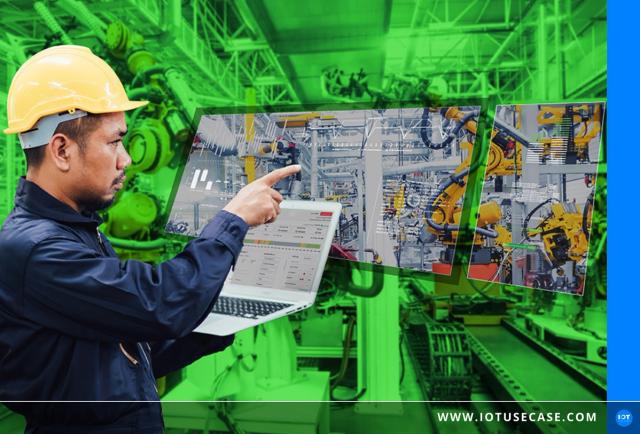


Traceability: IoT gateway for greater traceability in automotive production



Real-time data for smart process optimisation: scenarios from various industries
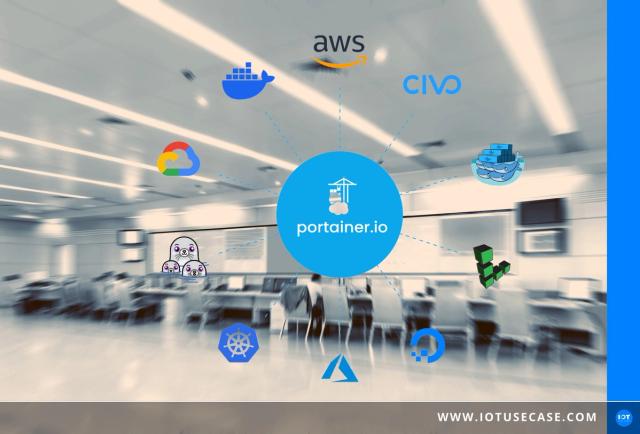








Optimising Industry 4.0: efficient software container management as the key to peak production
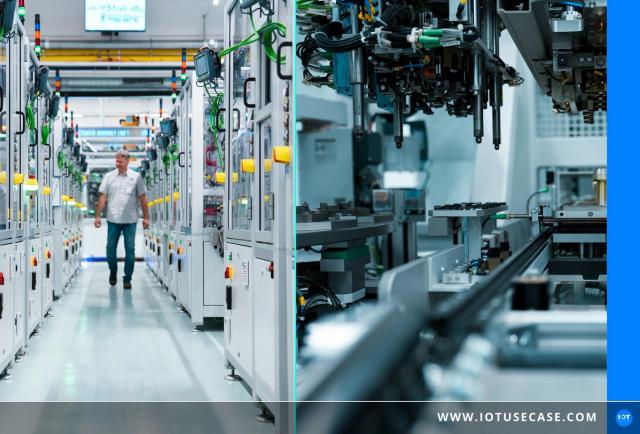


Quality improvement: optimising production processes at FORVIA HELLA
- Optimising traceability: practical approaches for data-driven manufacturing
- Transparent pressing process – benefits of stroke monitoring for development and series production
- Automated quality assurance for coating systems
- Volkswagen – Digital Production Platform Service: Shopfloor Integration Management
- Brembo drives digital transformation with innovative IoT use cases
- Leading bearing manufacturer NEI digitalises operations with IoT
- Condition monitoring of machine tools with retrofit sensors
- Efficiency increase at Tofaş with ThingWorx and DVM
- Efficient and accurate: automated quality control with cameras and artificial intelligence
- More transparency: visualise production processes with ease
- Innovative IoT retrofit in the manufacturing industry
- Intelligent energy chain systems optimise automotive production
- Detecting leaks in compressed air systems with energy monitoring
- Silo transport digitized: more efficient, safer and more convenient unloading
- Digital transformation at Groupe Renault
- Smart factory solution creates efficiency and quality improvement in the production process
- Condition monitoring in paint shops – new benchmark for Magna group
- Revolutionary productivity increase through operating point optimisation
- Test benches for development and production
- Michelin enables scalable real-time inventory management with Confluent
- Hybrid cloud data architecture in real time at BMW Group
- A uniform information model for manufacturing
- Real-time digital mapping of large data volumes in production
- From machine data acquisition to predictive maintenance
- From reactive to proactive system with the intelligent software platform KUKA iiQoT
- Detection and monitoring of particle concentrations in real time
- Data-driven optimisation and seamless monitoring of milling processes
- IoT-enabled pneumatics and electrics reduce production downtime
- RFID tracking in production avoids errors
- Clogged filters in the painting process
- On the growth path with pay-per-part
- High demand requires additional production capacity
- More transparency with energy data management
Podcast episodes: Automotive
27 episodes of the IoT Use Case Podcast on this industry, newest first.


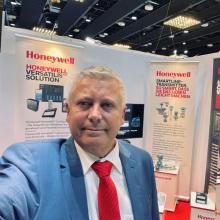

Predictive Maintenance with LoRaWAN: How Honeywell Makes Industrial Equipment Smart




Inside Cummins and Portainer: Modular IoT for Software Defined Vehicles



Real-Time Data with Apache Flink: How Ververica and Steadforce Drive IIoT Success


Beyond Predictive: IoT Architectures with SoftServe



How mioty Ensures Reliable IoT Data Transmission — Even in Challenging Signal Environments




From data to added value: How SITEC & in.hub are driving digitalization in mechanical engineering
IoT use cases: Automotive
41 use cases already implemented in this industry, sorted by number of implementations.
Production data, maintenance logs, and operating manuals are stored centrally in digital archives. This simplifies access and management for employees in production and management.








Traceability in production means documenting every step of the manufacturing process and making data available in real time. This enables the identification of process errors and the prevention of quality problems. Data packages can be correlated and processed together to gain deeper insights into the efficiency and accuracy of manufacturing. This not only creates transparency but also helps to reduce production costs through process optimization.




IoT-supported analyses examine the relationships between machine settings and product quality. This data helps to identify faulty processes and make targeted adjustments to ensure consistently high quality.


Transparency over production performance and runtimes. By capturing pulse counts, cycle times, utilization, and throughput directly at the machine, production processes become continuously measurable. The resulting data provides a reliable basis for analyzing runtimes, downtimes, and performance deviations of individual assets or production lines.



Automated creation of reports and logs for audits and compliance requirements. Digital systems enable seamless traceability and ensure efficiency in audit processes.

Production steps and quality controls are documented directly in digital form, without the detour via paper logs. This improves accuracy and saves time in analysis and tracking.
- Digital tracking of products and processes
- Digitized Order Management
- Early Detection of Damage
- Optimize your supply chain (batch traceability)
- Route Optimization and Route Planning
- Shift or Location Comparison
- Vibration Monitoring
- Audit-Reporting in Traceability
- Break Detection
- Cable and Chain Monitoring
- Digital Nameplates and Product Data Sheets
- IoT-Based Energy Management System
- Knowledge Retention
- Product Carbon Footprint in Sustainability (ESG)
- Temperature Measurement
- Tension/Thrust Monitoring
- Tracking, visualizing, and analyzing energy consumption per unit
- Waste Reduction
- Billing Automation
- Coating Monitoring
- Energy Cost Optimization per Machine
- Energy Efficiency Analysis
- Filter Monitoring
- Humidity and Particle Measurement
- Inventory Management
- Inventory Management and Reorders
- Leak Detection
- Moisture Measurement
- Peak Load Management
- Protection against counterfeiting and fraud
- Real-time damage prevention
- Remote Reading
- Smart Metering in Energy Monitoring
- Smart Procurement and Hedging
- Tool Wear
Functional areas in this industry
Number of solution examples per entry. The number leads to exactly these examples.
Connected assets: Automotive
53 assets from the solution examples in this industry, sorted by number of implementations.
- Assembly line, 4 solution examples
- Press, 3 solution examples
- Automated guided vehicle (AGV), 2 solution examples
- Coating plant, 2 solution examples
- Compressed air, 2 solution examples
- Cutting tool, 2 solution examples
- Electric motor, 2 solution examples
- Energy chain, 2 solution examples
- Laser cutting machine, 2 solution examples
- Machine tool, 2 solution examples
- Raw material batch, 2 solution examples
- Airbag, 1 solution example
- Assembled component, 1 solution example
- Battery storage, 1 solution example
- Blown film line, 1 solution example
- Body panel, 1 solution example
- Car, 1 solution example
- Cathodic dip coating bath, 1 solution example
- Commercial vehicle
- Compressor
- Drive system
- Driving simulator
- Extruder
- Film product
- Filter
- Forming tool
- Heat exchanger
- Indoor air
- Industrial furnace
- Industrial robot
- Lathe
- Load carrier
- Machining centre
- Manufactured component
- Microscope
- Milling machine
- Paint shop
- Pipe (manufactured product)
- Plastic lid
- Power tool
- Production line
- Pump
- Race car
- Rolling bearing
- Semi-trailer
- Superalloy component
- Test bench
- Truck
- Turbine blade
- Tyre
- Ventilation system
- Welding robot
- Workpiece
Six automotive challenges where IoT helps
Downtime in just-in-sequence supply chains
If a paint shop or press breaks down, the carmaker's assembly line may stop too. Condition monitoring on motors, pumps and presses detects wear before it leads to a standstill.
Traceability down to the component
Carmakers (OEMs) demand detailed evidence for safety-critical parts, such as the torque and mounting angle of every airbag. Automatically recorded process data, linked to a serial or batch number, replaces manual logs.
Battery passport and digital product passport
From February 2027, every new EV battery on the EU market needs a digital battery passport. This requires machine-readable data on origin, materials and CO₂, much of it from production and the supply chain.
Energy costs and carbon reporting
Paint shops and compressed air are among the big energy consumers in a plant. Energy monitoring down to machine level shows where energy is lost and provides reliable figures for ISO 50001 and ESG reporting.
Legacy equipment and data silos
In many plants, controllers from several decades run side by side. Standards such as OPC UA, the asset administration shell and VDA 5050 bring machines and transport vehicles from different vendors into one system.
Skills shortage in maintenance and logistics
Manual inspection rounds and monotonous material runs tie up staff who are needed elsewhere. Sensors handle the checks, and automated guided vehicles handle routine transport.
IoT in automotive connects machines, components and vehicles. Sensors capture vibration, temperature, energy consumption and process data, and an IoT platform analyses them in real time. It flags deviations before a line stops or a faulty part leaves the plant. This is the basis for predictive maintenance, end-to-end traceability and the data needed for digital product passports.
Here you will find real-world examples of automotive IoT from the IoT Use Case network, implemented at carmakers and suppliers such as ZF, Schaeffler, Magna, Renault and Brembo. They range from vendor-neutral control of automated guided vehicle (AGV) fleets and condition monitoring in the paint shop to 2,200 connected robots in the body shop. The examples show which technology is used and what it has achieved.
What is IoT in automotive?
IoT in automotive means connecting machines, components, vehicles and transport systems via sensors, networks and software. The data comes together in an IoT platform that analyses machine states in real time, triggers alerts and calculates metrics such as overall equipment effectiveness (OEE) automatically. It is also known as automotive IoT, and on the shop floor people often speak of the smart factory or Industry 4.0.
IoT in automotive covers two areas. In production and the supply chain, the focus is on availability, quality, traceability and energy. This is the industrial IoT (IIoT) in the press shop, body shop, paint shop and final assembly. In the vehicle itself, it is about telematics, over-the-air updates and the software-defined vehicle. This page focuses on the first area, because most of the solution examples in the network come from it. Connected cars have their own section further down.
In automotive production, the benefits are easy to measure: in minutes of downtime, percent OEE, energy costs in euros or days until a quality issue is resolved. The following examples show this with real figures.
IoT use cases in automotive manufacturing: real-world examples
Predictive maintenance and condition monitoring
At Magna, one of the world's largest automotive suppliers, motors, pumps and ventilation units run at up to 90 kW in the paint shops for bumpers and side skirts. Technicians used to check the condition of their bearings by hand every six months. Today, sensors continuously record vibration, imbalance and rolling bearing condition. The IIoT platform moneo from ifm sends alerts to technicians' smartphones as soon as a limit is exceeded. After the successful pilot, Magna decided to equip the entire plant and establish it as a benchmark for Industry 4.0 across the group. Sebastian Schlicht, head of automation at Magna in Meerane, talks about vibration analysis on a paint line with ifm moneo in the podcast episode on maintenance and condition monitoring.
Cathodic e-coating (KTL) shows how expensive an unnoticed clogged filter can be. If deposits clog the filters and heat exchangers, an unplanned replacement of the paint bath can cost 200,000 euros and shut the system down for up to 12 days. Bosch's Nexeed Industrial Application System therefore monitors temperature and pressure differences at the heat exchanger and warns in good time, so filter changes can be planned. At Turkish carmaker Tofaş, predictive maintenance applications cut maintenance costs by 15%.
Availability matters in development too. In the 22-tonne driving simulator at Mercedes-Benz in Sindelfingen, a break detection system from igus detects chain breaks in the energy chains early and can shut the system down automatically.
OEE and real-time production transparency
In North America, Brembo worked with integrator Brock Solutions to build real-time production performance monitoring with PTC's Kepware and ThingWorx within ten weeks. It started on three lines and was extended to 75. A troubleshooting task that used to take almost three days of data analysis now takes three to four hours. By 2020, the brake manufacturer had saved more than US$1.5 million.
At Tofaş, projects on quality parameters, fault prediction and process optimisation raised OEE by 12% and cut scrap by 23%. At brake and suspension supplier BWI Group, teams used to wait up to 24 hours for the previous day's production figures. Today, the Peakboard dashboards refresh every ten seconds.
Connected robots and welding in the body shop
Renault connects its plants via OPC UA, the open standard for industrial data exchange. At the time of the case study, OPC UA was running at 17 of its 38 manufacturing sites. A total of 3,300 OPC UA-enabled devices and more than 500 tightening controllers were connected. Using data from 2,200 connected robots in the body shop, Renault monitors welding processes in real time. Failure rates in welding have dropped by 20%.
Presses and metal forming
The Automotive Center Südwestfalen (acs) in Attendorn, Germany, tests forming processes for suppliers and OEMs on a servo press with 1,000 tonnes of pressing force. Only four high-precision displacement sensors had to be retrofitted on the press columns. The software also uses data from the existing force sensors, plus the tool number and stroke count from the controller. With this, ifm's SmartStamp software detects tilting of the ram and off-centre loading within milliseconds. Thanks to the alarm function in moneo, the press can be stopped in an emergency. “That way, we can effectively prevent serious damage to the press and tooling,” says Jan Böcking, head of forming technology at acs (translated from German).
Traceability and quality assurance in the automotive industry
Carmakers wanted Faurecia, now part of FORVIA, to tell them which vehicle each airbag was fitted in and with what torque and angle it was mounted. Faurecia introduced a Kepware IoT gateway that transfers the data directly from the controllers to its manufacturing execution system (MES). Instead of a complicated six-month project, the solution was up and running within a few days. Nokian Tyres tracks raw materials and tyres through the entire production process using RFID and records more than 100 million individual events per year.
FORVIA HELLA combines production data from its MES and test data from its test benches in a data lake via soffico's Orchestra integration platform. The aim is to find the causes of quality deviations. The solution is being rolled out in waves to around 30 plants. For more examples, see our traceability use case.
Intralogistics: vendor-neutral control of AGV fleets
ZF uses AGVs from different vendors and controls them together via the SYNAOS Intralogistics Platform. This is made possible by the standardised VDA 5050 interface. The platform runs at several sites, including one with matrix production without fixed-cycle lines. Over the next four to five years, ZF plans to integrate 250 to 300 additional vehicles worldwide each year.
Schaeffler also controls its robot fleets centrally from the cloud via SYNAOS and VDA 5050. At the Höchstadt plant, four forklift AGVs reach a daily utilisation of 98%. Together, they handle several hundred transport orders a day.
Supply chain and inventory
Michelin long struggled with unreliable and outdated reporting on inventory levels, especially for raw materials and semi-finished goods. In a proof of concept, the tyre manufacturer used real-time event streaming to monitor logistics between two sites. The global crises slowed the initiative down, but it is due to be resumed. Its online order management has been running on Confluent Cloud since spring 2022. Michelin estimates that Confluent Cloud saves around 35% of operating costs compared with running Kafka itself. Beyond the factory gate, carmakers and suppliers increasingly exchange such data via Catena-X, as described below.
Energy monitoring in automotive plants
In a seven-hall Magna pilot plant, Magna's energy monitoring measures the consumption of electricity, gas and compressed air down to individual machines. Data loggers send the meter readings via NB-IoT to Vodafone's Energy Data Management. Optimising the compressors and the cooling of a moulding press alone saves around 35,000 euros a year. The system also makes ISO 50001 certification easier. Find out how consumption per machine can be recorded and analysed in our energy monitoring use case.
Digital twin and asset administration shell
Volkswagen Sachsen, which includes the now all-electric Zwickau vehicle plant, wants to use digital twins to find the biggest energy losses in production. At the Zwickau plant, the company developed a submodel of the asset administration shell (AAS) for energy monitoring. Its partners were Siemens, MHP, Lenze, Schneider Electric, Phoenix Contact and the Industrial Digital Twin Association (IDTA). The submodel was tested on the energy data of a motor, recorded with measuring devices from different manufacturers. Volkswagen Sachsen explains the background in the podcast episode on the digital twin.
In Bosch Rexroth's model factory in Ulm, Bosch Rexroth and XITASO show how production lines can be reconfigured with the asset administration shell. XITASO connects brownfield machines via a function block.
Battery passport, Catena-X and the digital product passport
From 18 February 2027, every electric vehicle battery placed on the EU market must have a digital battery passport. This is required by the EU Battery Regulation (EU) 2023/1542. The same applies to industrial batteries above 2 kWh and to batteries for light means of transport such as e-bikes. The passport is accessible via a QR code and contains, among other things, the carbon footprint, the material composition and the share of recycled raw materials.
The battery passport is the first digital product passport the EU is making mandatory. Further product groups will follow under the Ecodesign for Sustainable Products Regulation (ESPR). According to the European Commission's working plan, these include tyres, steel and aluminium. For carmakers and suppliers, this means production, material and energy data must be machine-readable and available per component or batch.
In the automotive industry, such data is increasingly exchanged via Catena-X. In this data ecosystem, carmakers and suppliers share carbon footprints or traceability data, for example, without giving up control over their data. The basis is IoT data from production. Find out more in our use case on digital nameplates and product data sheets.
Connected cars and the software-defined vehicle
For many people, IoT in automotive first means the connected car. Connected vehicles send telemetry to the back end, receive over-the-air software updates and can be monitored remotely as a fleet. Via V2X (vehicle-to-everything), they can exchange data with other vehicles and road infrastructure. In the software-defined vehicle, software increasingly determines which functions a vehicle has, and some of them can be activated on demand after purchase.
Cummins reached the limits of its old telematics stack with more than 20 OEMs and 35 partner systems. Today, the company delivers updates directly to connected vehicles via a modular, container-based software architecture, with Portainer as its technology partner. The podcast episode on the software-defined vehicle explains how it works. For on-demand driver assistance and comfort features, IT service provider doubleSlash runs the IT behind ordering and billing, up to third-level support. For car and commercial vehicle fleets, there are dedicated fleet management applications.
Connectivity brings obligations. Since July 2024, all newly registered cars and commercial vehicles in the EU must comply with UN Regulations No. 155 and No. 156. This requires the manufacturer to have certified management systems for cybersecurity (CSMS) and software updates (SUMS). Since 12 September 2025, the EU Data Act has given users of connected products, including vehicles, a right to the data generated by their use. Products placed on the market after 12 September 2026 must be designed so that this data is accessible by default.
The technology behind automotive IoT
Data acquisition: Many plants work with equipment spanning several decades, and at Renault some of it dates back to the 1980s. Sensors are therefore often retrofitted, for example as IO-Link sensors. Data is read from existing controllers via gateways, as at Faurecia.
Standards: OPC UA standardises data exchange between machines and IT, and VDA 5050 does the same for communication with automated guided vehicles. The asset administration shell describes equipment and products as a digital twin. Standards prevent isolated solutions that cannot later be transferred to other plants.
Transmission and platform: In the plant, data travels via Ethernet, private 5G campus networks or low-power wireless such as NB-IoT. For large data volumes, carmakers rely on event streaming. The BMW Group processes machine and assembly data from its plants with Confluent in a hybrid cloud architecture. Volkswagen provides shop floor connectivity as a containerised service of its Digital Production Platform, the Shopfloor Integration Management (SIM). Portainer manages the containers, and a local installation can be done in two weeks.
Analytics and AI: Only clean, consistent data makes AI usable in the automotive industry. In the solution examples, AI is usually the next step. Brembo is planning AI and machine learning for predictive maintenance, and FORVIA HELLA is working on models that feed insights from data analysis directly back into production. Renault and Tofaş already use the underlying data for predictive maintenance and fault prediction. The building block on AI-based IoT analytics explains the technical set-up.
Security: Anyone processing confidential information for carmakers, such as design or prototype data, usually needs a TISAX label. It proves information security in line with the VDA's requirements catalogue. In the plant, this is complemented by separate IT and production networks, encrypted connections and controlled remote access. See the building block on data security for details.
What makes the automotive industry different for IoT projects
The automotive industry produces to a tight schedule. Under the just-in-sequence principle, suppliers deliver their parts in the order of assembly directly to the carmaker's line. If a paint shop fails at a supplier, the customer's supply chain is disrupted. Availability is therefore not just an internal goal but a delivery commitment.
Then there are the volumes. At peak times, the Austrian engine plant of a major German carmaker builds more than 6,000 engines a day. The igus energy chains there have to withstand millions of cycles. And carmakers' requirements apply to the entire supply chain: quality management to IATF 16949, information security to TISAX, traceability down to the component.
An IoT solution must therefore be transferable to many plants from the outset. Schaeffler plans to add more AGVs step by step across its more than 80 production sites, all controlled via the same central platform.
Digital transformation in the automotive industry: five steps to an IoT project
1. Start with a metric. Choose a use case whose benefit can be quantified in OEE, minutes of downtime, scrap or energy costs. The more precisely the loss is quantified, for example the cost of an hour of downtime, the easier it is to justify the effort for sensors and a platform.
2. Pilot small. Brembo began with three lines, Schaeffler with two proofs of concept in Homburg and Hagenau (France), and Magna with the paint shops of one plant.
3. Rely on standards, not isolated solutions. OPC UA, VDA 5050 and the asset administration shell ensure that a pilot can later be transferred to other plants and vendors. At the time of the case study, Renault planned to use OPC UA at all its production sites. Since 2019, its suppliers have also committed to producing OPC UA-enabled electric screwdrivers.
4. Involve IT, OT and security early. Network segmentation, access rights and OEM information security requirements belong in the requirements specification from day one, not in later fixes.
5. Roll out as a template. A successful pilot becomes the standard for all plants. FORVIA HELLA transfers the scenarios from its pilot plants one-to-one, with the order determined by demand.
Frequently asked questions: implementing IoT in the automotive industry
Which IoT application should I start with in automotive production?
With the equipment whose downtime or scrap costs you the most today, often presses, paint shops, welding lines or machine tools. That is where condition monitoring and OEE transparency deliver measurable results quickly. Start with a pilot on one line and involve IT and plant security from the outset. On this page you will find more than 40 solution examples from the automotive industry, each with the technology used and, where available, measurable results.
What savings does IoT deliver in automotive production?
Typical results are less unplanned downtime, less scrap, lower energy costs and higher OEE. In the solution examples, one carmaker cut its maintenance costs by 15 percent and scrap by 23 percent. Another carmaker reduced the failure rate in welding by 20 percent, and a supplier saves around 35,000 euros a year through energy monitoring in one plant. Use figures like these to build your business case before the pilot starts.
How does IoT improve OEE in automotive production?
IoT captures machine states, cycle times, downtime reasons and quality data directly from the controllers and calculates OEE continuously instead of once per shift. This makes bottlenecks and recurring faults visible while the shift is still running. At one carmaker, projects on quality parameters, fault prediction and process optimisation raised OEE by 12 percent. A brake manufacturer used to calculate OEE roughly at the end of each shift, and today its back office sees all activities in real time.
How do I connect older presses, robots and equipment in a car plant?
Usually by retrofitting, without rebuilding the equipment. Sensors for vibration, displacement or energy are attached to existing machines, and controllers are read via gateways or OPC UA. At one technology centre, four retrofitted displacement sensors and the existing force sensors were enough to monitor a 1,000-tonne press. One carmaker also connects equipment that has been running since the 1980s. Start where a failure would stop the entire line.
How do I control automated guided vehicles from different manufacturers together?
With a vendor-neutral fleet manager that communicates with all vehicles via the VDA 5050 interface. Orders, traffic rules and charging cycles are then managed centrally, regardless of which manufacturer built a vehicle. One supplier runs its mixed fleet this way in production at several sites, and another achieves 98 percent utilisation of its vehicles with cloud-based fleet control. You can then buy new vehicles based on suitability rather than manufacturer.
How do I roll out an IoT solution from pilot to several plants?
With standards and a central platform instead of individual solutions per plant. A uniform data model, open interfaces such as OPC UA and centrally distributed software containers make a pilot transferable to other lines. One carmaker manages the software on the line this way through a central production platform, and a tyre manufacturer combines inventory from several sites in real time. Settle IT security and operations before the rollout, not afterwards.
How do I prepare my production for the battery passport?
By capturing the required data for each battery in production and the supply chain. From 18 February 2027, electric vehicle batteries, industrial batteries above 2 kWh and batteries for light means of transport need a digital passport, accessible via a QR code. It contains the carbon footprint, material composition and recycled content, among other things. Link serial numbers to process and material data, and exchange supplier data via a data space such as Catena-X.
What security requirements do I have to meet in IoT projects for carmakers?
Anyone processing confidential data for carmakers usually proves their information security with a TISAX label. For connected vehicles, UN Regulations No. 155 and No. 156 require certified management systems for cybersecurity and software updates. In the plant, separate IT and production networks, encrypted connections, unique device identities and controlled remote access have proven themselves. Ask providers specifically for this evidence when selecting them.
How do I find the right provider for an IoT project in the automotive industry?
The fastest way is through projects that are already up and running. The solution examples on this page name the implementation partner, the technology used and in most cases the user. If you briefly describe your project via the contact form, we will put you in touch with providers who have already implemented a comparable project in the automotive industry.
Implement IoT in automotive production with providers who have done it before
Are you planning an IoT project in manufacturing, intralogistics or quality assurance at a carmaker or supplier? We know providers who have already implemented predictive maintenance, traceability and AGV control, and we will put you in touch with them. Do you offer IoT solutions for the automotive industry yourself? Then showcase your projects as solution examples and reach users who are looking for exactly that.
Discuss your project