
Product Value Engineer, Domain Expert Machinery

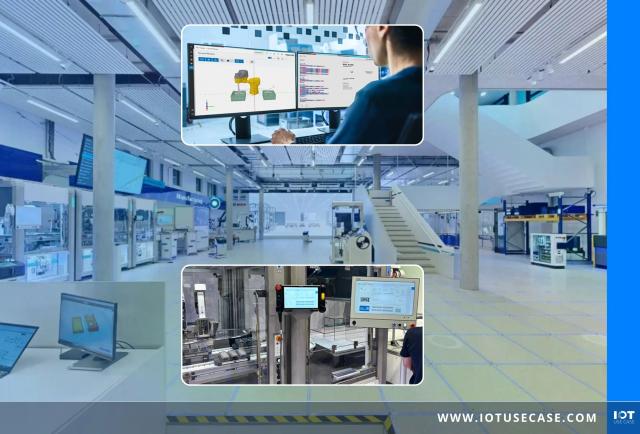
The starting point is a familiar problem: new machines are hard to integrate into existing lines, because line PLCs are rigidly programmed and data breaks across subsystems that use different semantics. The Asset Administration Shell acts as a standardized data interface – within the plant and across company boundaries. In the model factory, every machine and every module is given an Asset Administration Shell. Using an Asset Orchestration Platform, Bosch Rexroth models the line with business logic rather than fixed PLC programming, and reconfigures flexibly between AGVs and machines. XITASO supports the standardized creation of these shells; an early example is the digital nameplate at WITTENSTEIN. The Asset Administration Shell remains one technology alongside OPC UA and MQTT – what matters is choosing the right one for each use case. The biggest hurdle is creating the Asset Administration Shell itself. Krause advises starting small, at the presumed bottleneck machine, and establishing data transparency before orchestrating the line. Knoblich shifts the focus to OT/IT and a shared target vision: in the end, it is the people you have to bring along. What you'll take away The main barrier to entry is creating the Asset Administration Shell itself – for brownfield machines, XITASO offers a PLC function block for this purpose. Based on the Asset Administration Shell, a line can be modeled with business logic through an Asset Orchestration Platform instead of being rigidly programmed into the line PLC. The Asset Administration Shell is one technology among several; MQTT is suited to motion commands, OPC UA to sensor signals. To improve OEE, start at the presumed bottleneck machine: first make the losses transparent, then orchestrate.
We use cookies to optimize our website and our service. Privacy Policy