

Transportation and Logistics
IoT in logistics makes vehicles, cargo, containers and warehouses visible in real time. Trackers and sensors report position, temperature, shocks and condition over the cellular network, even on freight wagons without power. Rail Cargo Austria uses this to track its wagons across 18 countries, and Schmitz Cargobull has fitted over 55,000 trailers with telematics.
IoT solution examples: Transportation and Logistics
42 solution examples from our network, newest first.
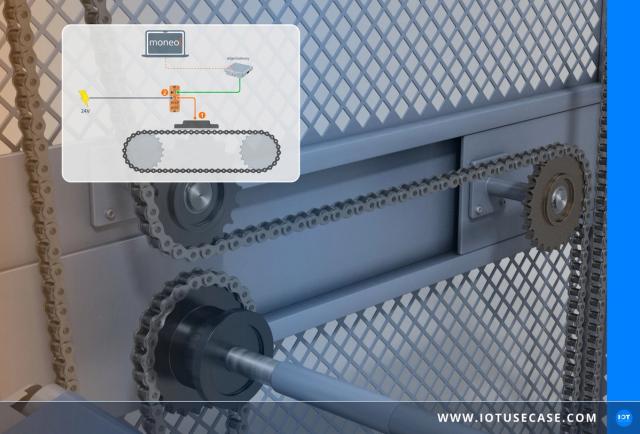





Roller chain monitoring via IO-Link to prevent downtime
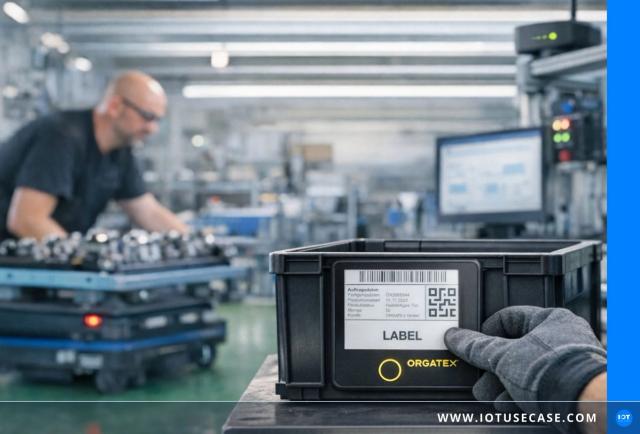






Digital job traveler closes the gap between shopfloor and IT systems
In many manufacturing environments, production control is still dominated by manual workflows and paper-based forms.
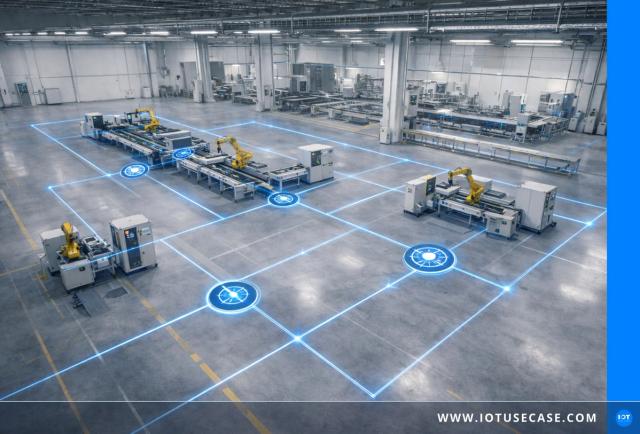


Secure OT networks with risk and vulnerability assessment
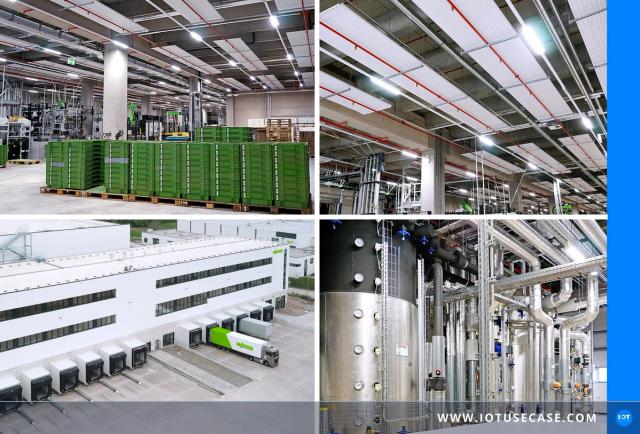


Goodbye Chimney – Fossil-free logistics centre with IoT-based energy management
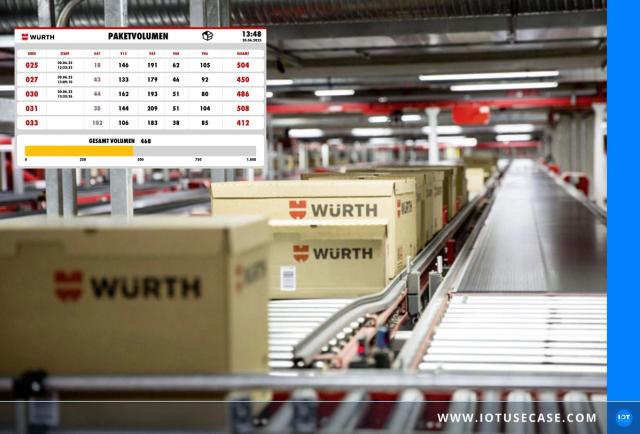



Improving workforce planning in the packing department through parcel flow forecasting
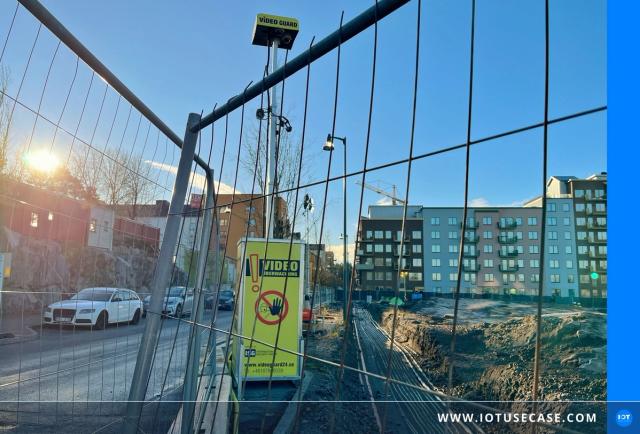




IoT monitoring with AI to reduce security costs on construction sites
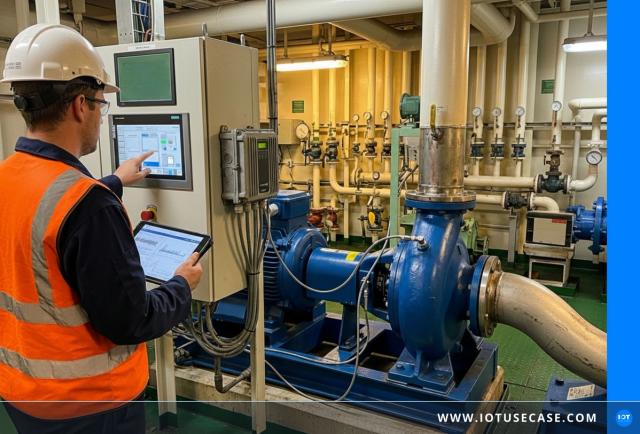



IoT-based pump control saves energy in maritime shipping
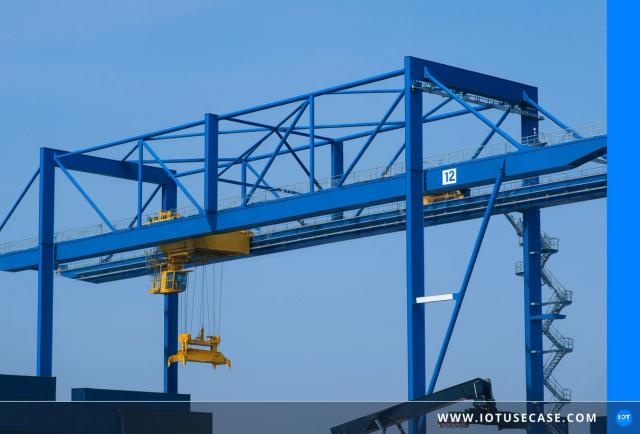


Extending the service life of energy chains in RMG cranes – with condition monitoring and predictive maintenance
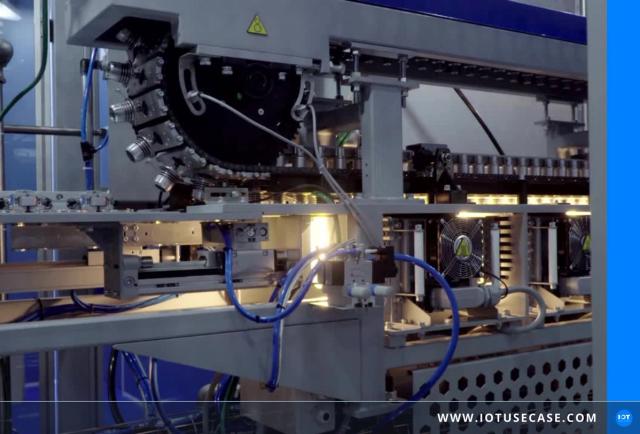





PET blow molder becomes IoT-enabled – retrofit without machine rebuild
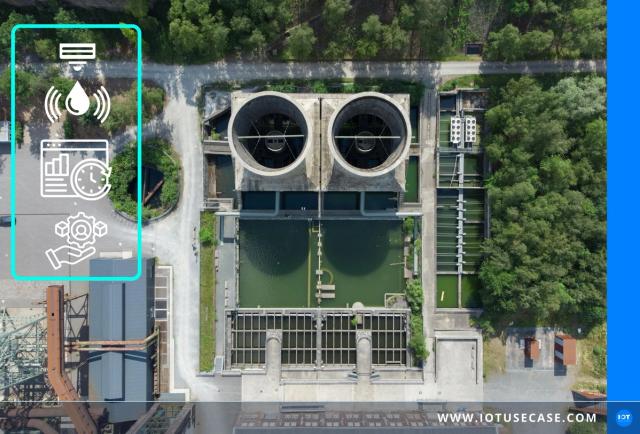


Real-time monitoring for smarter water management with Cumulocity





MQTT broker for utilities and smart transport infrastructures
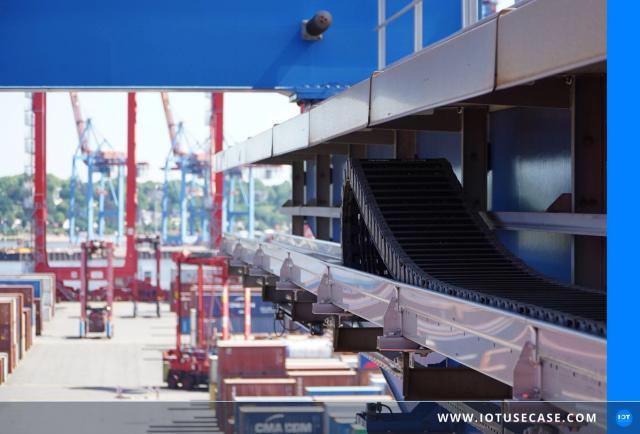

Energy chains ensure continuous operation of container cranes under extreme conditions
- Charging and energy management: intelligent load distribution for a stable power supply
- 30% fewer service calls through more transparency in refrigerated transport
- Uncovering insider sabotage: how a logistics company stopped attacks with anomaly detection
- More efficient intra- and production logistics with IoT button and OX label
- Together for the waste management of the future
- Network-independent emergency assistance: IoT-based solution for fast and precise supply
- Optimised route planning through digital telematics
- Automated loading documentation
- Automatic load tracking with 1D/2D codes and cameras
- Localisation systems, geofencing and real-time data in production control
- Automatically managing edge-based vehicular services in the smart city
- Complete indoor crane automation thanks to the i.Sense monitoring system
- DKV Mobility paves the way for the future of mobility with Confluent Cloud
- Optimal balance between planning and buffer in passenger transportation
- Rhätische Bahn tracks freight wagons with Rail Insight from A1 Digital
- Industry solution logistics: always stay in control to ensure your goods are in the right place at the right time
- KRITIS sector health – how to accelerate laboratory logistics
- Recording of all sensor data on a port data platform in Antwerp
- Silo transport digitized: more efficient, safer and more convenient unloading
- Transparency and efficiency in goods receipt – through automated identification and sorting
- Predictive maintenance of train washing stations
- Optimisation of production and logistics with an efficient simulation toolbox
- Central availability of inventory data with ERP integration
- Michelin enables scalable real-time inventory management with Confluent
- Smart products based on intelligent data use
- IoT traffic lights optimise traffic flow
- Telematics in rail freight transport: optimising operational processes and efficiently connecting wagon fleets even without power supply
- Networked product and service innovation for semi-trailers
- Lego construction kit for IoT projects – structured innovation without PowerPoint
- How IoT measurement technology improves the maintenance of railroad components
Podcast episodes: Transportation and Logistics
20 episodes of the IoT Use Case Podcast on this industry, newest first.





Product digitalization for OEMs: modular development of complex field products


Passive OT Monitoring: Detect attacks before they become critical



Scaling IoT Worldwide – How Telekom Solves Hidden Risks




Saving Energy at Sea: How IoT Is Making Pump Systems More Efficient




Real-Time Data with Apache Flink: How Ververica and Steadforce Drive IIoT Success




The future of intralogistics: IoT-Button & Co. in application
IoT use cases: Transportation and Logistics
46 use cases already implemented in this industry, sorted by number of implementations.
Production data, maintenance logs, and operating manuals are stored centrally in digital archives. This simplifies access and management for employees in production and management.






With modern sensor technology and smart data analysis, damage can be detected before it escalates. Whether leaks in water pipes, overheating in electrical systems or mechanical wear – continuous monitoring makes problems visible early. In condition monitoring and predictive maintenance this leaves time for targeted maintenance, in corrective maintenance affected components are located quickly, and in loss prevention it protects assets and infrastructure in the long term.


IoT-based track-and-trace solutions for industrial material flows. Workpiece carriers, equipment, or containers are tracked along the production line using combined positioning and identification technology. Operations in our network use these asset tracking systems to document movements, handovers, and responsibilities seamlessly – across locations and in an audit-proof manner. → Real-time data and cloud integration make tracking an integral part of modern IIoT platforms.


IoT-supported localization in industry – cross-site and centimeter-precise. Whether tugger trains, tools, or trolleys – using modern positioning technologies such as Ultra-Wideband (UWB) or Bluetooth Low Energy (BLE), industrial companies in our network track their assets in real time. These IoT solutions for object localization not only save valuable search time but also enable automated process triggers (e.g. geofencing-based notifications) and the mapping of a digital twin on a central platform. → Practice-tested solutions from our partners provide maximum transparency on the shopfloor.


Real-time planning of optimal routes to minimize costs and reduce delivery times. For example, in one case the loading capacity of trucks was increased from 22 to 28 tonnes, leading to more efficient utilization.
See implementationsTracking of operating hours, mileage, and maintenance cycles for all vehicles. This enables better resource planning and extends the service life of fleet vehicles.


- Cable and Chain Monitoring
- Inventory Management
- Temperature Measurement
- Tension/Thrust Monitoring
- Break Detection
- Digital tracking of products and processes
- Effective Risk Management
- Inventory Management and Reorders
- Precise real-time inventory monitoring
- Real-time damage prevention
- IoT-Based Energy Management System
- Remote Reading
- Smart Charging – Charging Management
- Audit-Reporting in Traceability
- Billing Automation
- Digital Goods Receipt with Real-Time Data
- Digital Production Logs and Manufacturing Documents
- Digitized Order Management
- Efficient Material Supply
- Emissions Management
- Energy Cost Optimization per Machine
- Energy Efficiency Analysis
- Fuel Management
- GDPR-Compliant Video Surveillance
- Groundwater Level Measurement
- Hazard detection
- HVAC – Suspended Ceilings, Heating, Cooling
- Immediate emergency communication
- Object Recognition in Material Flow
- Peak Load Management
- Precise inspection of every incoming shipment
- Product Carbon Footprint in Sustainability (ESG)
- PV Yield Management and Self-Consumption Optimization
- Resource Efficiency (Water Management)
- Shift or Location Comparison
- Smart Metering in Energy Monitoring
- Thermal Storage Integration
- Track cycle times, utilization, and throughput
- Tracking, visualizing, and analyzing energy consumption per unit
- Waste Management
Functional areas in this industry
Number of solution examples per entry. The number leads to exactly these examples.
Connected assets: Transportation and Logistics
53 assets from the solution examples in this industry, sorted by number of implementations.
- Crane, 4 solution examples
- Energy chain, 4 solution examples
- Charging station, 3 solution examples
- Track infrastructure, 3 solution examples
- Delivery vehicle, 2 solution examples
- Energy chain cable, 2 solution examples
- Forklift truck, 2 solution examples
- Freight wagon, 2 solution examples
- Inventory, 2 solution examples
- Pallet, 2 solution examples
- Parcel, 2 solution examples
- Photovoltaic system, 2 solution examples
- Refrigeration system, 2 solution examples
- Semi-trailer, 2 solution examples
- Truck, 2 solution examples
- Axle counter, 1 solution example
- Bicycle, 1 solution example
- Blow moulding machine, 1 solution example
- Bogie
- Bus
- Car
- Cleaning system
- Collection container
- Commercial vehicle
- Container
- Container load
- Drive chain
- Emergency vehicle
- Goods in transit
- Groundwater
- Heat pump
- Industrial truck
- Kanban bin
- Lifebuoy
- Lighting
- Load carrier
- Medical sample
- Municipal vehicle
- PET preform and bottle
- Pump
- Rail vehicle
- Raw material batch
- Returnable container
- Rolling bearing
- Ship
- Spring
- Temperature-sensitive freight
- Thermal storage tank
- Traffic signal system
- Transport container
- Ventilation system
- Wastewater
- Workpiece
These challenges are driving IoT projects in transportation and logistics
Lack of real-time visibility in the supply chain
Where is the shipment right now? What condition is the cargo in? When will the truck arrive? Without real-time tracking, these questions cannot be reliably answered – with direct consequences for planning, customer communication, and liability.
Fleet availability and unplanned vehicle failures
Commercial vehicles, construction equipment, and transport vehicles fail unexpectedly – often on the road, far from the nearest service location. Predictive maintenance based on vehicle data detects wear patterns early and prevents costly breakdowns and contractual penalties.
Cold chain and quality assurance for sensitive goods
Food, pharmaceutical products, and other temperature- or humidity-critical goods must be monitored without gaps. A cold chain break means spoilage, liability risks, and compliance violations.
Warehouse efficiency and process automation
Growing SKU variety, higher order volumes, and increasing demands on delivery speed require ever more efficient warehouse processes. RFID, smart conveyor technology, and mobile systems reduce errors, accelerate throughput, and reduce staffing requirements.
Shrinkage reduction and asset security
Cargo theft, lost containers, and unreturned transport equipment cause billions in damage annually. GPS tracking, geofencing, and smart access controls make shrinkage visible and reducible.
Emissions documentation and CO₂ reporting for clients
Shippers and clients increasingly demand documented CO₂ footprint data for transport services. Telematics data from vehicles provides the foundation for automated emissions reporting according to ISO 14083 and Scope 3 accounting.
Trucks, trailers, freight wagons, reefer containers and pallets are constantly on the move, often across borders and without their own power supply. If you do not know where a shipment is and what condition it is in, you plan with buffers and make phone calls afterwards. IoT trackers and sensors report position, temperature, shocks and maintenance needs automatically, over the cellular network and via SMS fallback where there is no coverage. Here you will find more than 40 solution examples from trucking, rail, ports and warehouses, with user, technology and implementation partner.
IoT in logistics: what connected transport and warehouses already deliver
Logistics 4.0 means that vehicles, load carriers and warehouses report their own data instead of dispatchers collecting it by phone, hand scanner or delivery note. Digitalisation in logistics therefore almost always starts with visibility: where is the shipment, what condition is it in, and when will it arrive? Only on that data basis can routes be optimised, maintenance planned and emissions documented.
Unlike in a factory, logistics IoT is mobile. The devices travel on motorways, rails, ships and terminal yards, switch between networks and countries and often have no power supply. The solution examples on this page show how freight forwarders, railways, port operators and warehouse operators have solved this.
Typical IoT applications in transportation and logistics
Real-time shipment tracking and track & trace
GPS trackers on vehicles, trailers and load carriers deliver continuous position data, and geofences report when a shipment leaves a depot or crosses a border. In the warehouse, cameras, RFID and UWB take over this task: the ALDIS system from SICK automatically detects loads during loading and unloading and links them to the position of the forklift. More implementations in the use case item tracking throughout the supply chain.
Fleet management and truck telematics
Telematics units in the tractor and trailer transmit location, vehicle condition and maintenance data to a portal that the carrier and dispatch can access. Schmitz Cargobull ships every refrigerated trailer with telematics from the factory and now has more than 55,000 connected semi-trailers on the road. A caterer delivering around 7,500 lunches a day shows how route planning benefits: it manages its routes via a telematics app instead of by phone. More in the use case route optimization and route planning.
Cold chain monitoring in refrigerated transport
Temperature sensors in the refrigeration unit report deviations in real time instead of at the loading dock. The recorded values also serve as proof. In a project with Cumulocity, a refrigerated transport service provider used the telematics history to prove that a rejected load of strawberries had been kept at the right temperature throughout. The supermarket had to accept it, saving the grower a loss of 180,000 dollars.
Asset tracking for containers, pallets and load carriers
Returnable containers, mesh boxes, IBCs and special load carriers regularly disappear in the supply chain. Battery-powered trackers using LTE-M, NB-IoT or BLE report where a load carrier is and how long it has been there. Container management sees shrinkage and dwell times and controls returns instead of regularly restocking the pool. Examples in the use case object localization in the industrial IoT.
Telematics in rail freight
Freight wagons have no power supply, so the trackers run autonomously and send only small data packets. Rail Cargo Austria, the freight division of the Austrian Federal Railways, moves almost 100 million tonnes a year through 18 countries and has fitted its wagons with telematics from A1 Digital: GPS, shock detection, geofencing and SMS fallback where there is no coverage. Rhätische Bahn has connected around 500 freight wagons and infrastructure vehicles the same way.
Predictive maintenance for vehicles, cranes and handling equipment
Maintenance based on condition rather than the calendar reduces failures of vehicles and handling equipment. Rail Cargo Austria maintains its freight wagons according to actual use, based on telematics data. At the port of Hamburg, EUROGATE monitors the energy chains of its rail-loading cranes with sensors that measure push and pull forces and detect chain breaks early, so maintenance can be planned before a crane stops. More in the use case early detection of damage.
Warehouse and intralogistics: inventory and parcel flow in real time
In the warehouse, it is about inventory, throughput and staff. At its distribution centre in Künzelsau, Würth shows on a dashboard how many parcels are currently in the system and which batches are still to come, and uses this to plan staffing in the packing department. On Feldbinder silo trailers, the driver operates all valves centrally from one display and unloading is documented automatically. More examples in the use case inventory management.
Energy management and CO₂ reporting under ISO 14083
Shippers increasingly demand verifiable emissions data for transport and warehousing. Telematics data on distance and consumption is the basis for accounting under ISO 14083. At the site, consumption can be measured directly: the WAGO logistics centre in Sondershausen runs without fossil fuels, with around 650 kWp of solar power, heat pumps and IoT-based energy management that reports CO₂ emissions by plant area. More in the use case IoT-based energy management system.
Which connectivity fits logistics
For vehicles and trailers on the road, cellular is the norm, with roaming SIMs for cross-border transport. Battery-powered trackers on containers and freight wagons use low-power variants such as LTE-M or NB-IoT. On bounded sites such as ports, terminals or factory yards, LoRaWAN covers large areas with just a few gateways. Indoors, BLE, UWB and RFID are added because GPS does not work there. Most projects combine several of these technologies.
How to start an IoT project in logistics
Start with a question whose answer is worth money: where do load carriers disappear, which refrigerated shipments get rejected, which vehicles fail unexpectedly? Equip a manageable number of vehicles, containers or wagons and clarify early who owns the data and which system it flows into, such as the TMS, ERP or customer portal. After a few weeks the pilot shows whether the data holds up. Then roll it out to the fleet or the pool.
Finding IoT providers with logistics references
Every solution example on this page names the implementation partner, the technology used and in most cases the user, including Rail Cargo Austria, Rhätische Bahn, Schmitz Cargobull, EUROGATE, Würth and Feldbinder. So you can see who has already delivered a comparable project. If you briefly describe your project via the contact form, we will put you in touch with suitable providers.
Frequently asked questions: implementing IoT in logistics
Where do I start when digitalising my logistics with IoT?
With the process that currently costs you the most search time, shrinkage or downtime, not with the platform. Typical starting points are locating trailers and load carriers, temperature in refrigerated transport or the condition of cranes and conveyors. Equip a manageable fleet or one container loop, measure the benefit in hours, euros or incidents and only then roll out. The solution examples on this page show where other logistics companies started.
Which logistics 4.0 application pays off first?
Usually the one that directly prevents losses. Temperature monitoring in refrigerated transport stops spoiled loads and proves the cold chain in a dispute. Locating trailers and containers cuts search time, shrinkage and detention charges. Condition monitoring on cranes and handling equipment prevents unplanned downtime, which is costly in a port or warehouse. One refrigerated transport provider cut its service call-outs by 30 percent with real-time data. Do the maths with your own figures: claims rate, dwell times, downtime.
How do I retrofit telematics to existing trucks, trailers and load carriers?
It depends on the power supply. Trucks feed position, consumption and vehicle data to a retrofitted telematics unit via the FMS interface. Trailers and refrigeration units get their own devices that keep transmitting when uncoupled. For pallets, containers and wagons without power, battery trackers using LTE-M or NB-IoT run for several years. Check older units while you are at it: devices that only support 2G lose their connection when 2G networks are switched off.
How do I introduce container management with IoT trackers?
Start with one loop, for example between your warehouse and one customer, and fit some of the load carriers with battery trackers. Define zones for warehouse, customer and empties yard, and the platform reports cycle times, dwell times and containers that go missing. After a few weeks you know how many load carriers you really need and where shrinkage happens. The data flows into your ERP or warehouse management system via an interface, so nobody counts stock by hand.
How do I secure the cold chain across all my shipments?
With telematics on the refrigeration unit and temperature sensors in the cargo that report continuously to a platform. If there is a deviation, alerts go to the driver and dispatch while there is still time to act. The complete record is also your proof towards recipients and authorities: in one solution example, the data showed the correct temperature when a retailer tried to reject the load, saving the grower a loss of 180,000 dollars.
How can freight wagons without a power supply be connected?
With self-powered telematics devices that send only small data packets at fixed intervals and wake up on movement or shocks. An Austrian rail freight operator uses devices with GPS, a 3D acceleration sensor, geofencing and SMS fallback where there is no network coverage. A Swiss railway has equipped around 500 freight wagons and infrastructure vehicles in this way. Dispatchers always see where each wagon is and can keep customers reliably informed about their delivery.
How do I prove the CO₂ emissions of my transport operations under ISO 14083?
With measured consumption instead of default values. ISO 14083 sets out how greenhouse gas emissions of transport chains are calculated and explicitly allows primary data. Telematics provides fuel or electricity consumption, distance and load factor per vehicle and trip. This gives shippers reliable figures for their Scope 3 reports and lets you prove savings, for example from better route planning or electric trucks. Agree on the data format and calculation tool with your largest customers early on.
How do I find an IoT provider with logistics references?
The fastest way is through projects that are already running. The solution examples on this page name the implementation partner, the technology used and in most cases the user, from freight wagon telematics and warehouse logistics to crane monitoring in a container port. If you briefly describe your project via the contact form, we will put you in touch with providers who have already delivered a comparable project.
Implementing IoT in transportation and logistics – we can help
Are you planning an IoT project in logistics or transportation, or do you want to become visible as a solution provider in this area? We help you find the right partners, present solutions in a practical way, and reach real users.
Get in touch