
Pharmaceuticals and Healthcare
IoT in pharma and healthcare mainly means sensors capturing temperature, pressure and particles in clean rooms, cold chains and equipment, with data stored GMP-compliant and audit-trailed. Hospitals use it to monitor medical devices and medicine storage. One medical device maker saves an estimated USD 3.5 million a year with IoT remote monitoring.
IoT solution examples: Pharmaceuticals and Healthcare
10 solution examples from our network, newest first.
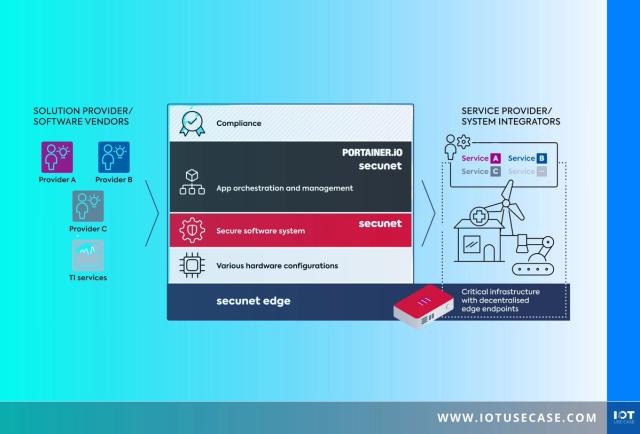







Operating distributed systems securely: with containers and edge platform
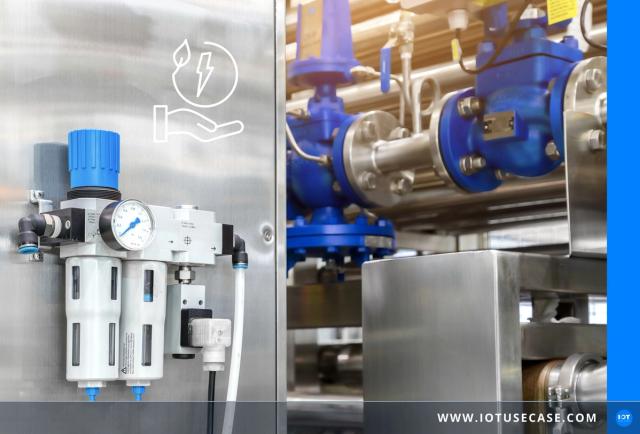


Saving energy with IoT compressed air monitoring in production
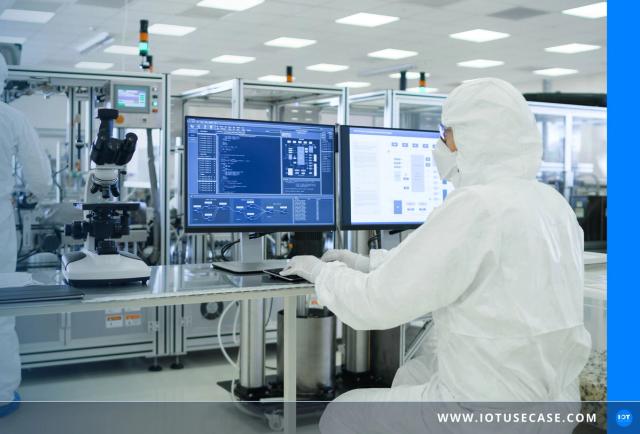




Pharma compliance implemented with track-and-trace tool – at Uhlmann Pac-Systeme
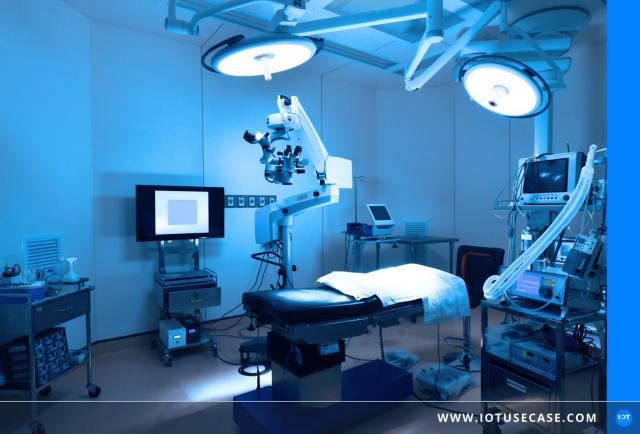

Remote monitoring delivers cost savings and compliance benefits for a medical equipment manufacturer
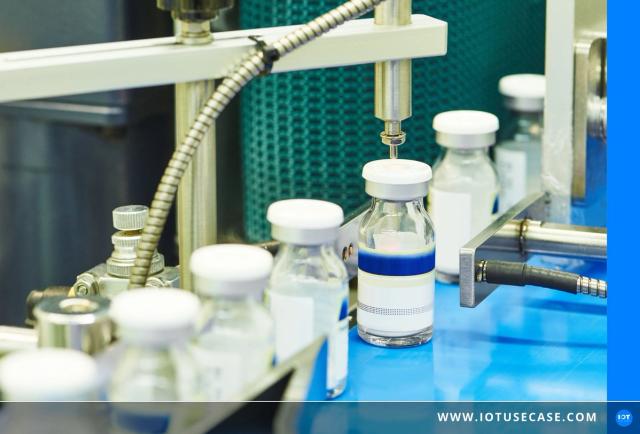

Pharma 4.0 made easy: IT/OT integration for safe, smart GMP solutions



Efficient picking: AI-supported processes in use at the HARTMANN Group
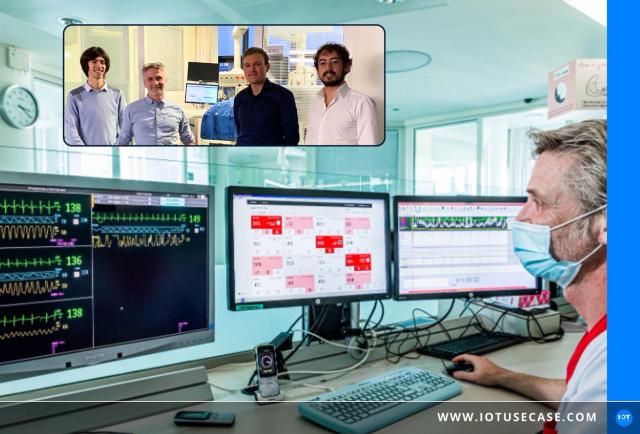

Early warning systems in hospitals benefit from industrial Docker container technology
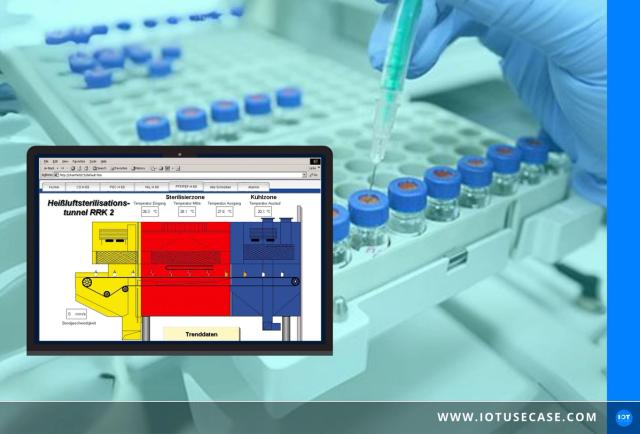



How medicine benefits from industrial automation solutions
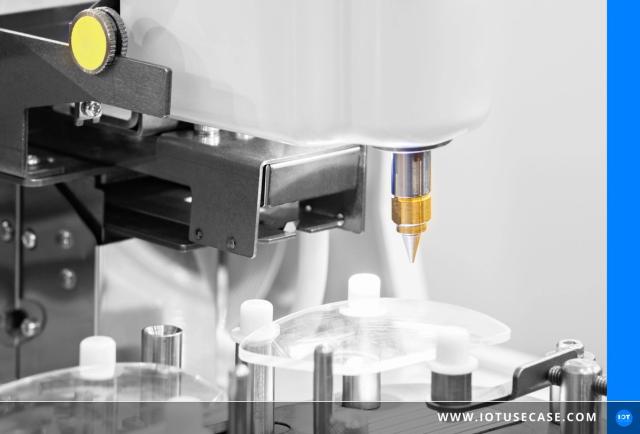


ZEISS: new integration level regulates data heterogeneity and sets group-wide data standards




Biotech: how CO.DON ensures stable processes and high quality
Podcast episodes: Pharmaceuticals and Healthcare
19 episodes of the IoT Use Case Podcast on this industry, newest first.



No Cables, No PLC, No IT Project: Simply Connecting Decentralized Assets




IT/OT Integration in the Pharmaceutical Industry: Scaling in a GMP-Compliant Way


From Measurement to Maintenance: IoT in Practice with Ethernet-APL



How mioty Ensures Reliable IoT Data Transmission — Even in Challenging Signal Environments



More Than Just Emergency Medicine – An Insight into the IoT Connectivity Solution



Factory-X and the realization of use cases in the data ecosystem
IoT use cases: Pharmaceuticals and Healthcare
19 use cases already implemented in this industry, sorted by number of implementations.
Automated creation of reports and logs for audits and compliance requirements. Digital systems enable seamless traceability and ensure efficiency in audit processes.





Meet audit requirements effortlessly. In regulated industries such as pharma, food, or chemicals, conformity and certification requirements are particularly demanding. With traceability solutions, you can seamlessly document all relevant data – from the origin of raw materials through production processes to the end consumer. Integration of QR codes on products allows direct access to this data. This promotes transparency in the supply chain, strengthens customer trust, and facilitates cooperation with regulatory authorities.
Production steps and quality controls are documented directly in digital form, without the detour via paper logs. This improves accuracy and saves time in analysis and tracking.
Traceability with IoT data – for quality, compliance, and efficiency. Other companies in our network rely on digital traceability solutions to map complete process histories – from goods receipt to delivery. IoT sensors automatically capture time, location, condition, and ID of objects. These IoT traceability systems help meet regulatory requirements and quickly isolate quality issues. → Proven solutions from our partners show: combining traceability and asset tracking increases production security.
Traceability in production means documenting every step of the manufacturing process and making data available in real time. This enables the identification of process errors and the prevention of quality problems. Data packages can be correlated and processed together to gain deeper insights into the efficiency and accuracy of manufacturing. This not only creates transparency but also helps to reduce production costs through process optimization.
Component traceability ensures that individual parts can be clearly identified at any time – from raw material inspection through internal testing to delivery to the customer. Innovative technologies such as mark-free recognition methods offer a solution to challenges such as damaged labels or unreadable codes. This not only protects against counterfeiting but also reduces the complexity of integration into existing systems.
- Optimize your supply chain (batch traceability)
- Structured access to files and documents
- Correlation of Production Parameters
- Digitized Order Management
- Early Detection of Damage
- Effective Risk Management
- Efficient Material Supply
- Hazard detection
- Inventory Management
- Leak Detection
- Remote Reading
- Track cycle times, utilization, and throughput
- Waste Reduction
Functional areas in this industry
Number of solution examples per entry. The number leads to exactly these examples.
Connected assets: Pharmaceuticals and Healthcare
14 assets from the solution examples in this industry, sorted by number of implementations.
- Packaging machine, 2 solution examples
- Compressed air, 1 solution example
- Filling line, 1 solution example
- Granulator, 1 solution example
- Incubator, 1 solution example
- Isolator, 1 solution example
- Machining centre, 1 solution example
- Medical device, 1 solution example
- Mixing plant, 1 solution example
- Pharmaceutical batch, 1 solution example
- Power tool, 1 solution example
- Press, 1 solution example
- Truck, 1 solution example
- Vials and single-use syringes, 1 solution example
These challenges are driving IoT projects in pharma and healthcare
GMP compliance and seamless process documentation
Every production step in pharmaceutical manufacturing must be documented according to GMP – without gaps, tamper-proof, and audit-ready. Manual records are error-prone and time-consuming. IoT systems generate this documentation automatically and significantly facilitate regulatory inspections.
Cold chain monitoring for temperature-sensitive medicines
Vaccines, biologics, and other temperature-critical medicines must be consistently stored and transported at defined temperatures. A single break can render them unusable. IoT temperature monitoring secures the cold chain without gaps and documents every step.
Batch traceability and product recall readiness
In the pharmaceutical sector, batches must be fully traceable from raw material supplier to pharmacy. In the event of a safety alert or recall, affected batches must be identifiable within minutes – not days.
Clean room monitoring and environmental control
Clean rooms in pharmaceutical production must be continuously monitored for particles, temperature, humidity, and pressure. Deviations from specifications must be reported and documented immediately – a classic IoT application area with direct compliance relevance.
Patient monitoring and connected medical devices
Connected medical devices – from infusion pumps to wearables – continuously deliver vital data and enable early interventions. At the same time, MDR, FDA, and cybersecurity requirements place extremely high demands on safety and reliability.
Plant availability in validated production environments
Every change to a validated pharmaceutical facility requires extensive revalidation processes. Predictive maintenance must therefore be integrable into existing validation concepts – without compromising compliance documentation.
IoT in pharma and healthcare is already everyday practice: sensors monitor clean rooms, cold chains and filling lines, production data is stored GMP-compliant with a full audit trail, and hospitals keep track of their medical devices and medicine refrigerators. Pharmaceutical companies, medical device manufacturers and hospitals are working with it today.
The bar is high: processes must be GMP-validated, every batch must be documented without gaps, cold chains must never break, and connected medical devices fall under the MDR and FDA rules. At the same time cost pressure keeps rising, with zero tolerance for quality deviations.
On this page you will find pharma IoT use cases from the IoT Use Case network, including CSL Behring, CO.DON, Uhlmann and HARTMANN: which technology was used, how the project handled validation and what it achieved in the end.
IoT in Pharma and Healthcare: What Works in Practice
No industry places higher demands on data integrity, precision and compliance than pharma and healthcare. An error in batch documentation can trigger a recall, a broken cold chain renders vaccines unusable, a system failure in a hospital puts patients at risk. That is why IoT here is less an efficiency project and more compliance infrastructure and patient protection.
The difference from other industries: every IoT solution is a potentially regulated system. Software in medical devices falls under the MDR and FDA rules, systems in pharmaceutical manufacturing must be GxP-validated, and every change to hardware or software needs documented qualification.
IoT Applications in the Pharmaceutical Industry
Pharma 4.0: GMP-Compliant Process Monitoring
Temperature, humidity, pressure, pH and other process parameters are captured continuously and stored with timestamp, equipment ID and batch information, tamper-proof and ready for inspections at the push of a button. Biotech company CO.DON connected 24 controllers of its isolators and incubators to a monitoring system this way. Integration took five hours without interrupting production. How to connect a mixed machine landscape securely is shown in Pharma 4.0 with IT/OT integration.
Cleanroom Monitoring to GMP Annex 1 and ISO 14644
Particle counters, differential pressure and climate sensors monitor clean rooms without interruption. The revised EU GMP Annex 1 requires continuous particle monitoring in grade A for the full duration of critical processing, as well as a contamination control strategy. Deviations trigger an alarm immediately and are recorded with an audit trail. This replaces manual rounds and provides a complete environmental history for audits.
Pharmaceutical Cold Chain Monitoring
Wireless data loggers monitor the cold chain from production output through storage and transport to the pharmacy or hospital. The EU GDP guidelines require proof that temperatures were maintained during storage and transport. Readings sent over cellular networks flag excursions before goods have to be discarded and make proof towards authorities and insurers easy.
Pharma Track and Trace and Serialization
Since the EU Falsified Medicines Directive, prescription medicines carry a unique serial number that is verified before dispensing. Packaging lines from different vendors therefore have to deliver data in a common format. Track and trace at Uhlmann shows how: a manufacturing service bus connects machines via OPC UA, MQTT and REST and replaces many point-to-point interfaces. More under traceability.
Predictive Maintenance in Validated Facilities
Bioreactors, sterilizers, filling lines and HVAC systems are retrofitted with vibration and temperature sensors. Maintenance alerts are generated without touching the validated control system. This reduces unplanned downtime and avoids costly requalification after an emergency repair. An easy starting point is compressed air monitoring, more examples under predictive maintenance.
IoT in Hospitals and Connected Medical Devices
In hospitals, IoT is less about production data and more about devices, rooms and patients. Typical applications: locating medical equipment, monitoring medicine refrigerators on wards and in the hospital pharmacy, logging climate and pressure in operating rooms, and using vital signs for early warning systems.
One example from practice: Innocens, a spin-off of Antwerp University Hospital, is developing an early warning system for sepsis in premature babies that is being trialled in several hospitals. The software runs in containers inside each hospital network, so patient data never leaves the building. This allows the solution to be operated and updated across many hospitals while staying GDPR-compliant.
IoT Medical Devices and Remote Service
Medical device manufacturers connect their devices to see condition, software version and usage remotely. A North American maker of cardiac rhythm monitoring devices connected tens of thousands of devices to an IoT platform within a few days. Software updates no longer need an on-site technician, and the company estimates savings of USD 3.5 million a year.
Regulation: GMP, 21 CFR Part 11, ALCOA+ and MDR
In no other industry are the requirements for digital systems as layered. The key regulations for IoT projects:
EU GMP Annex 11 and 21 CFR Part 11 govern computerized systems and electronic records: audit trail, access control, electronic signatures and backup.
ALCOA+ defines data integrity: data must be attributable, legible, contemporaneous, original and accurate, as well as complete, consistent, enduring and available. Automatically captured sensor data meets this more easily than handwritten records.
GAMP 5 is the guide for risk-based computer system validation. The more standard software you use, the lower the validation effort.
MDR, ISO 13485 and IEC 62443 apply to connected medical devices and to cybersecurity in production.
How long data has to remain available is shown by CSL Behring: for the vaccine its Marburg plant fills for the US market, audit trails and validation records must remain inspectable for 42 years.
How to Start an IoT Project in a Regulated Environment
1. Start with a non-GMP-critical use case. Energy and compressed air monitoring or monitoring utilities deliver value quickly and do not require full validation.
2. Measure without touching the validated controls. Retrofitted sensors and edge gateways read data alongside, the equipment itself stays unchanged.
3. Involve quality assurance from day one. Aligning risk assessment, requirements and test plan with QA early saves the most time. Technology is rarely the bottleneck.
4. Rely on standards. OPC UA, MQTT and established platforms reduce integration and validation effort and make the solution transferable to other lines and sites.
Pharma IoT Use Cases from the IoT Use Case Network
In our network you will find verified solution examples from pharma and healthcare, from GMP-compliant process monitoring and track and trace to connected medical devices and hospital early warning systems. Every example shows which technology was used, what obstacles existed and what was achieved. Planning your own project? Get in touch and we will connect you with providers who have references in the industry.
No marketing fluff. Only practice.
FAQ: implementing IoT in pharma and healthcare
Where do I start with IoT in pharmaceutical manufacturing?
Where most documentation is still done by hand today: clean room climate, cold rooms and the process parameters of production equipment. Start by reading the data alongside, without changing the validated control system, and have limit violations reported automatically. This immediately takes load off production and quality assurance and creates the data basis for electronic batch records. You can then connect further lines and sites using the same architecture.
How do I implement Pharma 4.0 in existing facilities?
With a uniform interface between machines and IT instead of many point-to-point connections. Pharma plants often run machines from several generations and manufacturers side by side, because validated equipment stays in service for a long time. One manufacturer of pharmaceutical packaging lines therefore introduced an interface standard that harmonises data and builds in data integrity from the start. This reduces the effort for connection and maintenance, which is particularly expensive in validated environments.
How does an IoT system in pharmaceutical manufacturing become GMP-compliant?
Through risk-based validation according to GAMP 5 and the requirements of EU GMP Annex 11 or 21 CFR Part 11. The system needs an audit trail, user management, secure data storage and documented testing. It helps to read data alongside at first, without changing the validated control system, and to use standard software instead of custom development.
How do I implement cleanroom monitoring in line with GMP Annex 1?
With permanently installed sensors for particles, differential pressure, temperature and humidity that measure continuously and raise an alarm immediately when a limit is exceeded. The revised Annex 1 requires particle monitoring in grade A for the full duration of critical processing and recommends it for grade B. Define measuring points based on risk, store the data with an audit trail and link it to your contamination control strategy. Plan the qualification of the system from the start.
How do I switch cold chain monitoring for medicines to IoT?
By deploying wireless data loggers in cold rooms, refrigerators and shipping boxes that send their readings continuously via cellular or LoRaWAN to a platform. Define limits and an alarm chain with clear responsibilities so that someone reacts immediately to any deviation. The stored history serves as evidence under the EU GDP guidelines and replaces reading out individual loggers after transport. For the cold stores themselves, a temperature mapping beforehand is recommended.
Where do I start digitalising a hospital with IoT?
With applications that take load off staff and show their value quickly: locating medical equipment, monitoring the temperature of medicines and blood products, and logging climate and pressure in operating theatres. Clinical applications such as early warning systems based on vital signs follow. A spin-off of a university hospital, for example, is trialling an early warning system for sepsis in premature babies that runs directly inside the hospital network. Involve hospital IT early on data protection and security.
How do I meet ALCOA+ requirements with sensor data?
By building the requirements into the architecture from the outset. ALCOA+ requires data to be attributable, legible, contemporaneous, original and accurate, as well as complete, consistent, enduring and available. In practice this means unique device IDs, synchronised timestamps, immutable raw data with an audit trail, redundant storage and archiving for the full retention period. When choosing a provider, check that the platform demonstrably covers these points.
How quickly can an IoT project in pharmaceutical manufacturing be implemented?
The technology is often ready faster than expected. At one biotech company, connecting 24 controllers took five hours without interrupting production, and after one week the data points were identified and verified. Most of the time usually goes into risk assessment, qualification and validation with quality assurance. So plan these steps in from the start.
How do I find a provider for IoT projects in pharma and healthcare?
The fastest way is through projects that are already up and running. The solution examples on this page name the implementation partner, the technology used and in most cases the user, so you can see who has already delivered a comparable project in a GMP environment or hospital. If you briefly describe your project via the contact form, we will put you in touch with providers who have experience with your exact use case in pharma and healthcare.
Implementing IoT in pharma and healthcare – we can help
Are you planning an IoT project in the pharmaceutical industry or healthcare sector, or do you want to become visible as a solution provider in this area? We help you find the right partners, present solutions in a practical way, and reach real users.
Get in touch