

Economy, Politics, Government, Leisure, and Society
In the public sector, IoT means water gauges, tanks, meters, bins and emergency call points report their own data to a platform. Municipalities, utilities and authorities spot floods, leaks or low reserves earlier, cut inspection trips and produce records automatically. Common technologies are LoRaWAN, mioty, NB-IoT and edge computing.
IoT solution examples: Economy, Politics, Government, Leisure, and Society
13 solution examples from our network, newest first.
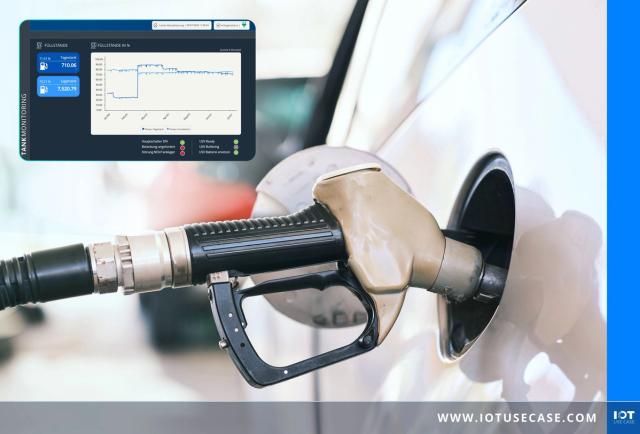






Monitoring tank fill levels via MQTT to safeguard operational readiness
The German state of Hesse records fuel tank levels at 48 critical infrastructure sites via ultrasonic sensors and MQTT on the VISUALYS platform. Manual inspection trips are no longer needed, saving one to three hours per site each week.
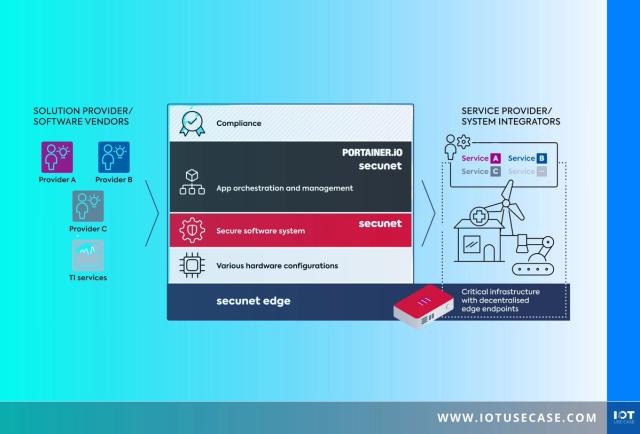







Operating distributed systems securely: with containers and edge platform
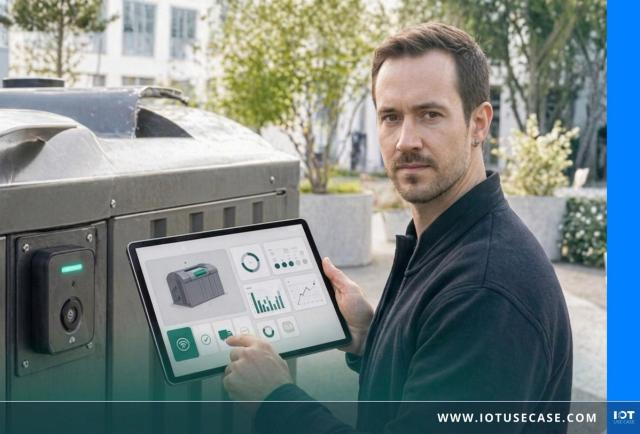


Usage-based billing with digital twins — demonstrated in waste management
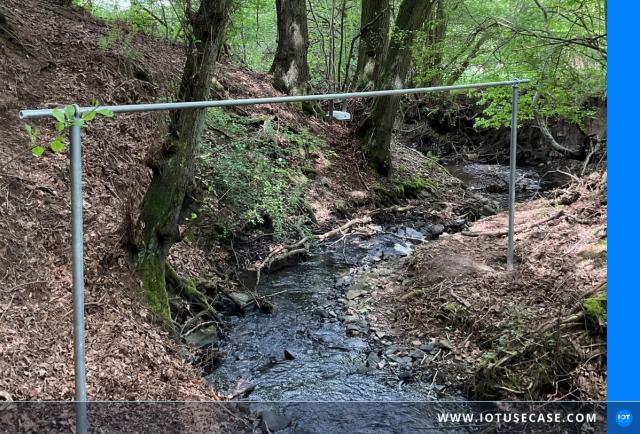


Detect floods earlier with connected water level sensors and AI
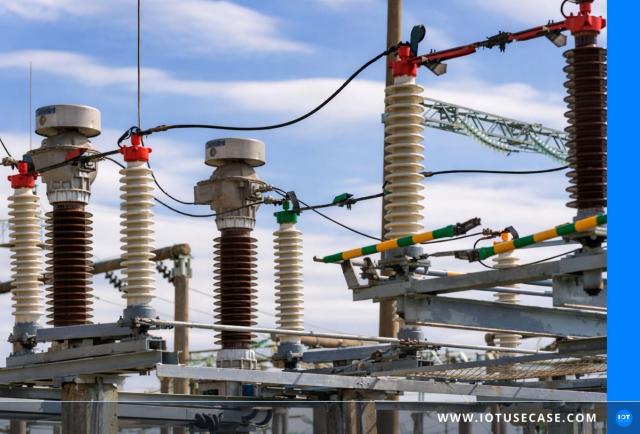





Energy monitoring as a digital service for municipal utilities








Resilient Emergency Communication for South Tyrol with mioty
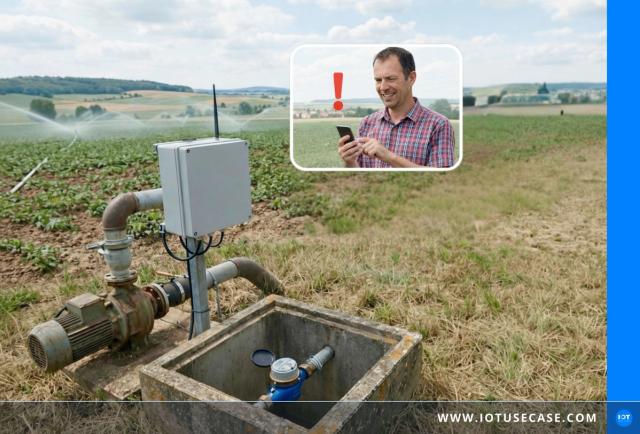




Remote monitoring in water management: district digitises irrigation




Condition-based maintenance of drive motors for higher plant availability




MQTT broker for utilities and smart transport infrastructures


Rethinking confidential communication – with encrypted business messengers
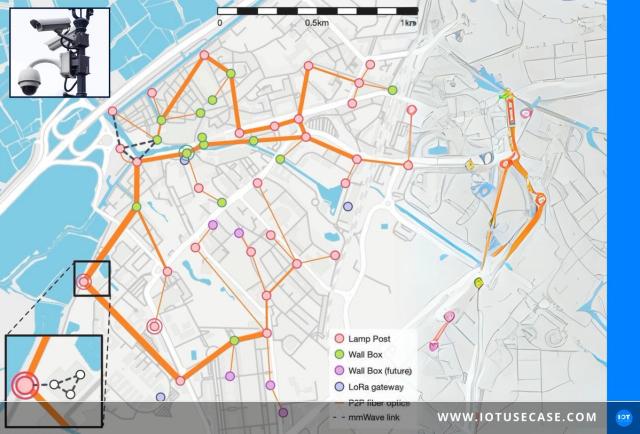




Automatically managing edge-based vehicular services in the smart city
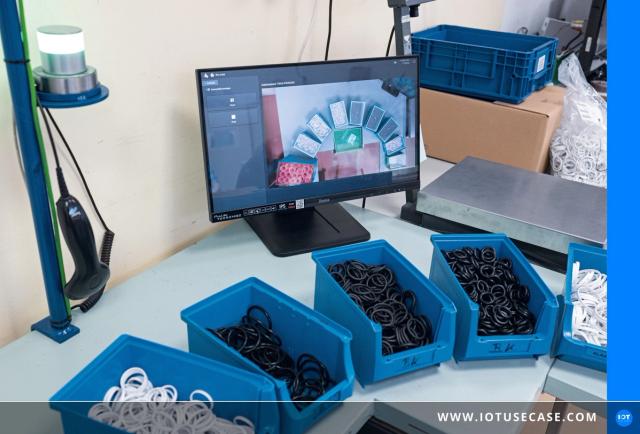


The human hand as a sensor – worker assistance system with connection to ERP and server structures
Podcast episodes: Economy, Politics, Government, Leisure, and Society
13 episodes of the IoT Use Case Podcast on this industry, newest first.



23 Episodes Condensed: What Really Worked and What Didn't



Smart Building & Workplace IoT with ICONICS




Bringing Energy Usage to Light – with GELSENWASSER AG & CREM SOLUTIONS




More Than Just Emergency Medicine – An Insight into the IoT Connectivity Solution



Vulnerability detection and risk management: IT security using the example of a hospital




IoT in the application of intelligent waste management | Thermal waste treatment & emissions
IoT use cases: Economy, Politics, Government, Leisure, and Society
15 use cases already implemented in this industry, sorted by number of implementations.
Production data, maintenance logs, and operating manuals are stored centrally in digital archives. This simplifies access and management for employees in production and management.





Efficiency in warehouse and production. Real-time monitoring of fill levels in tanks or silos enables precise control of production processes. Automatic notifications make reordering easier and prevent overflows or bottlenecks. In asset management inventories stay in view, and the readings are logged automatically – a reliable basis for audits and analyses.



Automated creation of reports and logs for audits and compliance requirements. Digital systems enable seamless traceability and ensure efficiency in audit processes.
Automatic spare parts ordering is triggered by defined threshold violations, faults or status changes. Maintenance orders and spare parts requests are created automatically and transferred via integration into ERP systems such as SAP, without manual intervention. In asset management this keeps inventories up to date; in corrective maintenance it shortens the time to repair.


Automated data basis for transparent billing. Billing automation automatically creates structured and traceable data records for billing and operations. Measured values are captured with timestamps, stored centrally, and continuously updated. Consumption data is thus available directly to relevant internal and external stakeholders for automated billing systems.


With modern sensor technology and smart data analysis, damage can be detected before it escalates. Whether leaks in water pipes, overheating in electrical systems or mechanical wear – continuous monitoring makes problems visible early. In condition monitoring and predictive maintenance this leaves time for targeted maintenance, in corrective maintenance affected components are located quickly, and in loss prevention it protects assets and infrastructure in the long term.
Functional areas in this industry
Number of solution examples per entry. The number leads to exactly these examples.
Connected assets: Economy, Politics, Government, Leisure, and Society
15 assets from the solution examples in this industry, sorted by number of implementations.
- Collection container, 2 solution examples
- District heating network, 1 solution example
- Electric motor, 1 solution example
- Emergency call button, 1 solution example
- Fuel tank, 1 solution example
- Groundwater, 1 solution example
- Heat meter, 1 solution example
- Inspection robot, 1 solution example
- Irrigation water, 1 solution example
- O-ring, 1 solution example
- Packaging bag, 1 solution example
- Plain bearing bushing, 1 solution example
- Pumping station, 1 solution example
- Surface water, 1 solution example
- Water meter, 1 solution example
The challenges driving IoT projects in the public sector
Fail-safe emergency communication for civil protection
Public warning systems and emergency communication must function even when mobile or power networks fail. Resilient IoT infrastructures based on LPWAN technologies such as mioty create network-independent fallback layers for emergencies – protecting lives in the process.
Energy efficiency and transparency at municipal utilities
Municipal utilities must make energy consumption transparent, manage load peaks, and provide CO₂ documentation. Granular IoT monitoring at line, building, and device level provides the data foundation for efficient, compliant energy supply.
Smart city: digitally managing traffic and public infrastructure
Smart cities need a digital infrastructure for traffic control, parking management, public lighting, and mobility services. IoT platforms and edge technologies process traffic and movement data in real time – making control processes more efficient and citizen-friendly.
Remote monitoring for municipal water and environmental infrastructure
Water supply, irrigation infrastructure, and sewage systems must be monitored across large areas – often in remote locations without permanent network access. Remote monitoring via LoRaWAN or NB-IoT enables surveillance without permanent on-site presence.
Maintenance and availability of public facilities
Pumps, sewage treatment plants, transformers, and drive units in municipal ownership must be maintained cost-efficiently. Condition-based monitoring replaces rigid maintenance intervals, saves personnel and material costs, and increases the availability of public facilities.
Data sovereignty and cybersecurity for public infrastructure
Critical infrastructure in the public sector is a prime attack target. IoT systems must therefore be secured according to KRITIS requirements: secure device identities, encrypted communication, segmented networks, and documentable access controls.
IoT in the public sector, from real projects: see how municipalities, districts, utilities and public authorities use IoT today. From a flood early warning system in Bad Münstereifel and an emergency call network covering all of South Tyrol to tank monitoring for the critical infrastructure of the German state of Hesse.
Public infrastructure has to keep working when power, mobile networks or the internet fail. At the same time, administrations are expected to do more with fewer staff. Connected sensors replace inspection trips, raise alarms earlier and deliver the data for planning, billing and compliance. Every example shows the technology used, the partners involved and the result.
IoT in the public sector: smart city examples from real projects
This industry covers everything that is not manufacturing: municipalities and districts, state authorities, municipal utilities, civil protection, public waste services and the infrastructure that keeps cities and regions running. What they share: failures hit citizens directly, budgets are tight, and systems have to run for many years with small IT teams.
The examples on this page show that IoT in the public sector is no longer a future topic. Water gauges, tanks, emergency call points, waste locks and water meters already report their own data, and administrations decide based on real measurements instead of inspection trips and spreadsheets.
What is a smart city?
A smart city is a town or municipality that uses data from connected sensors to run infrastructure and public services better: traffic, energy, water, waste and safety. What matters is not the technology but the benefit for public services. A municipality does not have to connect everything at once. Most projects start with one well-defined, measurable problem and grow into a platform from there. For rural areas or a whole district, the term smart region is often used.
Smart city IoT examples from the IoT Use Case network
Flood early warning with connected water level sensors
After the 2021 floods, the town of Bad Münstereifel installed 13 self-sufficient water level sensors on streams in the Erft and Ahr catchments. The sensors measure every minute, transmit every 12 hours under normal conditions and hourly or every five minutes when levels rise. That saves energy while still delivering current data when it matters. The Okeanos.VIVID platform combines the readings with radar rainfall and river gauges and sends alerts to PC and smartphone.
Resilient emergency communication during power and network outages
The Autonomous Province of South Tyrol is building an emergency call network based on mioty for around 540,000 residents. 50 base stations cover 7,400 km², and 333 public emergency call points at fire stations bridge power outages of up to 48 hours with a backup battery. The back end deliberately runs locally and redundantly rather than in the cloud, so it keeps working without the public internet.
Critical infrastructure: fuel reserves for emergencies
The German state of Hesse monitors the fill levels of fuel tanks at 48 sites centrally using ultrasonic sensors and MQTT. When a tank drops below its threshold, an email alert goes out automatically. Inspection trips are no longer needed, saving one to three hours per site per week. Encrypted transmission, logged access and role-based permissions meet the requirements for critical infrastructure.
Municipal utilities as a smart city platform
Stadtwerke Krefeld runs several applications on one shared IoT platform: energy monitoring for business customers, monitoring of the district heating network with 1,500 meters, around 450 groundwater level sensors for the regional government in Düsseldorf, and parking, environmental and container fill level data for the city. How utilities and transport infrastructure distribute their data streams reliably is shown in the MQTT broker for utilities example.
IoT in water utilities: remote monitoring of pumps and meters
A German district has digitised agricultural irrigation with remote monitoring. Battery-powered data loggers in shafts read water meters over LTE-M and NB-IoT and compare volumes against permitted time windows. One set of batteries lasts up to five years. Inspection trips are no longer needed, and the records required for funding are produced automatically. An additional driver: Germany's 2G network shuts down on 30 June 2028, so legacy telemetry has to be replaced anyway.
Smart waste: billing by actual use
A municipal waste services provider, active in more than 230 towns with around 700,000 households, bills residents fairly using digital twins of its waste locks. Emptying data flows straight into individual invoices. Around 250 sensors are connected today, with roughly 3,000 planned by the end of 2026.
Smart traffic infrastructure at the edge
In the Aveiro Tech City Living Lab in Portugal, edge nodes sit in smart lamp posts and wall boxes, equipped with cameras, traffic radar and ITS-G5 modules for V2X communication. Services such as object detection are rolled out automatically as containers, and external partners only get access to the nodes they need. How to operate distributed systems like these securely is shown in the edge platform with software containers example.
Which wireless technology suits municipalities?
LoRaWAN is the entry point in many German cities because municipal utilities run their own networks and battery-powered sensors last for years. mioty is another LPWAN standard and stands out where many devices transmit at once or transmission has to be especially robust, as in civil protection. NB-IoT and LTE-M use the cellular network and suit scattered individual sites without a private network. Cameras, traffic radar and V2X need more bandwidth than low-power radio offers: here, edge nodes with fibre or 5G connections do the work.
Critical infrastructure, NIS2 and data sovereignty
Water supply, energy and civil protection are critical infrastructure. The EU NIS2 Directive has added obligations for risk management, incident reporting and supply chain security. Whether a municipality itself is in scope depends on national and regional law; municipal companies such as utilities often are. For IoT projects this means secure device identities, encrypted transmission, segmented networks, logged access and devices whose firmware can be updated remotely. Then there is the question of where the data lives. Many public bodies therefore prefer self-hosted or open platforms over solutions that lock them into one vendor. How confidential communication works in public authorities is shown in the encrypted business messengers example.
How a municipality starts an IoT project
First, pick one concrete problem that costs money, time or safety: inspection trips, missing early warning, unclear consumption. Second, clarify who owns the data and who uses it: the department, the utility, the control centre or citizens. Third, choose the wireless technology by site and data volume, not by vendor. Fourth, run a pilot with a few measuring points and measure the benefit in hours, litres or euros. Fifth, choose a platform that leaves room for more applications, as Stadtwerke Krefeld has done.
Providers who have already delivered projects like these are listed in the solution examples above, each with the technology used and the result.
Frequently asked questions: implementing smart city and public sector IoT
How should a public authority start an IoT project?
Start with one concrete problem that costs time, money or safety, such as inspection trips or missing early warning. Then clarify who uses the data, choose the wireless technology by site and run a pilot with a few measuring points. Measure the benefit in hours, litres or euros before rolling out, and pick a platform that can take on further applications.
Which IoT application pays off first for a municipality?
Usually the one that replaces regular inspection trips. Tank levels, water levels, pumps, water meters or bins can be monitored remotely by radio instead of someone driving out every week. One German state saves one to three hours per site and week this way when monitoring its fuel tanks at 48 sites. Calculate with trips, staff hours and avoided damage, and the benefit becomes tangible for the budget and the council.
Which smart city examples can my municipality adopt?
Above all, the ones that solve a concrete problem in public services. A town in the Eifel region uses 13 self-sufficient level sensors to warn of flooding on small streams. A German state monitors fuel tanks at 48 sites without inspection trips. A municipal utility brings district heating meters, groundwater sensors, parking and bin fill levels together on one platform, and a rural district monitors its irrigation remotely. The solution examples on this page name technology, partner and result.
How do individual sensor projects grow into an urban data platform?
By choosing a platform from the outset that can take on further applications, radio networks and vendors, instead of buying an isolated solution for each project. Define open interfaces, data ownership by the municipality and a shared permissions concept. One municipal utility runs energy monitoring, around 1,500 district heating meters, some 450 groundwater sensors and the city's parking and bin data on a single platform. Every further application shares the network and platform and becomes cheaper as a result.
How does a municipality set up a flood early warning system with level sensors?
First choose the streams that lack official gauges and turn dangerous quickly in heavy rain, and install self-sufficient level sensors there. They measure continuously and transmit more often as levels rise; a platform combines the readings with radar rainfall and official gauges and raises alerts automatically. A town in the Eifel region uses 13 sensors that transmit every 12 hours normally and up to every five minutes when flooding threatens. Decide in advance who is alerted at which threshold.
How can a region keep emergency calls working during power and network outages?
With a dedicated radio network that runs independently of cellular and internet. In an Alpine region, 50 base stations on backup power connect 333 public emergency call points, which bridge power outages of up to 48 hours with a backup battery. The back end runs locally and redundantly, and calls go straight to the regional fire brigade. Your own buildings such as fire stations or town halls make good base station sites because backup power is often already in place.
Which wireless technologies do municipalities use for IoT?
Most often LoRaWAN, because many municipal utilities run their own networks and sensors last for years on battery. mioty is used where very many devices transmit or transmission has to be especially robust. NB-IoT and LTE-M suit scattered individual sites. Cameras and traffic radar need edge nodes with fibre or 5G.
What funding is available for smart city and IoT projects in municipalities?
It depends on the project and the federal state. In Germany, energy management in municipal buildings is funded federally through the Kommunalrichtlinie, and many states run their own programmes for digitalisation and flood protection. The federal Smart Cities model projects programme funded selected municipalities whose solutions others can reuse. Check funding options before you go to tender, as many programmes exclude projects that have already started.
What must a municipality consider under NIS2 for its IoT projects?
First clarify whether the municipality itself or its companies, such as water and energy utilities, fall under NIS2. Rules for municipal administrations vary by state, while municipal utilities are often in scope. Obligations for risk management and incident reporting then apply. For IoT systems this means encrypted transmission, a role and permissions concept, logged access and remote updates. Require these points in the tender, as adding them later is expensive.
How does a municipality find the right implementation partner for smart city projects?
The fastest way is through projects that are already running. The solution examples on this page name the implementation partner, the technology used and the result, from flood warning and tank monitoring to a shared data platform. This shows you before tendering who has already solved a comparable challenge. If you briefly describe your project via the contact form, we will put you in touch with providers who have experience with your exact use case.
Implementing IoT in the public sector – we can help
Are you planning an IoT project in the public sector, or do you want to become visible as a solution provider for municipalities, utilities, or smart city projects? We help you find the right partners, present solutions in a practical way, and reach real users.
Get in touch