
Agricultural sector
IoT in agriculture connects sensors in the field, on the farm and on machines via wireless networks to a platform that analyses readings and raises alerts. This saves water, inspection trips and downtime at harvest time, and records evidence automatically. In practice, a horticultural business saves up to 60% water, and a German district records irrigation without on-site checks.
Verified IoT projects: Agricultural sector
9 projects from our network, newest first.
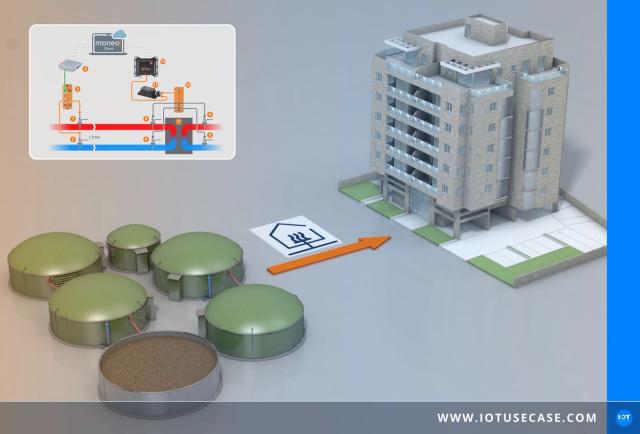


Remote heating network monitoring via mobile IoT gateway
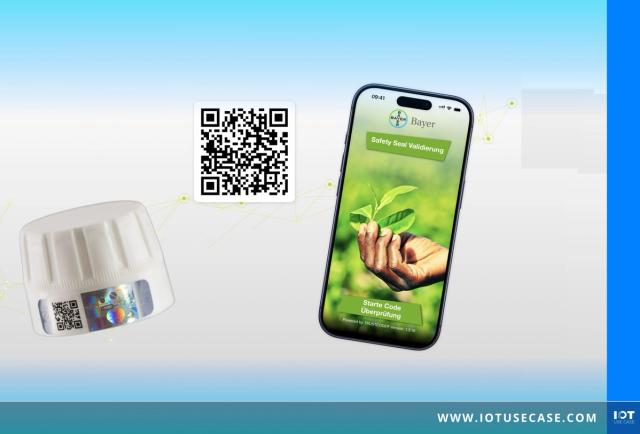


Digital Product Passport via QR Code: Connecting Compliance and Service
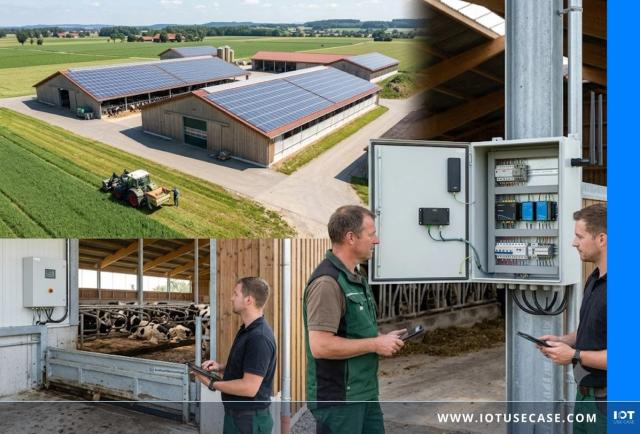


Remote access to control systems: from on-premise VPN to cloud platform
Water well level monitoring via IO-Link and cellular remotely



Remote monitoring in water management: district digitises irrigation




Secure digital identities for networked agricultural machinery

Bird protection in wind turbines



Agricultural technology: 60% water savings with energy chains and sensor technology
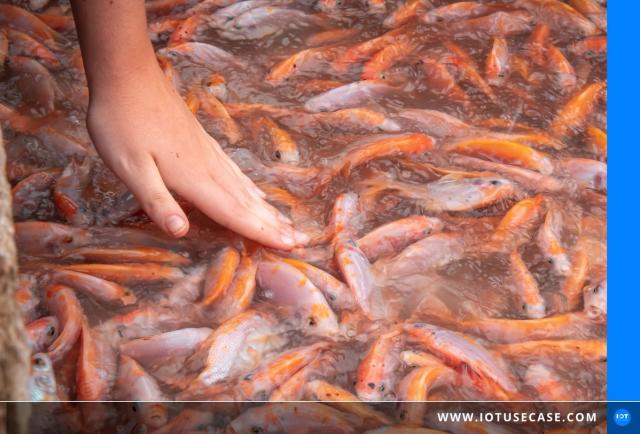

Fish farming with sunlight and the internet of things
Podcast episodes: Agricultural sector
1 episode of the IoT Use Case Podcast on this industry, newest first.


IoT use cases: Agricultural sector
17 use cases already implemented in this industry, sorted by number of implementations.
Production data, maintenance logs, and operating manuals are stored centrally in digital archives. This simplifies access and management for employees in production and management.



With modern sensor technology and smart data analysis, damage can be detected before it escalates. Whether leaks in water pipes, overheating in electrical systems or mechanical wear – continuous monitoring makes problems visible early. In condition monitoring and predictive maintenance this leaves time for targeted maintenance, in corrective maintenance affected components are located quickly, and in loss prevention it protects assets and infrastructure in the long term.




In supply chain management and for high-value goods, protection against counterfeiting is essential. Track-and-trace technologies and blockchain-based solutions create transparency and prevent tampering. This builds trust in your products and strengthens your brand in the market.
Centralized collection of distributed measurement and status data. Remote reading enables the automated retrieval of operational, status and consumption data from systems and infrastructure without manual on-site reading. The data feeds into condition monitoring and energy monitoring and is documented digitally without gaps at the same time.
Digital temperature monitoring, even for extreme conditions. In our network, IoT-based temperature measurements are implemented for steam pipes, for example – using LoRaWAN or mioty® sensors that operate maintenance-free for over 10 years. In condition monitoring and predictive maintenance the data reveals trends and anomalies early; in corrective maintenance it helps locate hotspots and repair defective components in a targeted way.

Automated creation of reports and logs for audits and compliance requirements. Digital systems enable seamless traceability and ensure efficiency in audit processes.
See implementations- Cable and Chain Monitoring
- Consumption Data Collection and Visualization
- Digital Nameplates and Product Data Sheets
- Digital tracking of products and processes
- IoT-Based Energy Management System
- Level and Distance Measurement
- Marketing Flexibility in the Energy Market
- PV Yield Management and Self-Consumption Optimization
- Real-time damage prevention
- Resource Efficiency (Water Management)
- Tension/Thrust Monitoring
Functional areas in this industry
Number of projects per entry. The number leads to exactly these projects.
Connected assets: Agricultural sector
21 assets from the projects in this industry, sorted by number of implementations.
- Agricultural machine, 1 project
- Bioreactor, 1 project
- Casting car, 1 project
- Circuit breaker, 1 project
- Crop protection products and seed, 1 project
- District heating network, 1 project
- Energy chain, 1 project
- Fish (aquaculture), 1 project
- Groundwater, 1 project
- Heat exchanger, 1 project
- Hose line, 1 project
- Irrigation water, 1 project
- Livestock housing system, 1 project
- Manure removal system, 1 project
- Photovoltaic system, 1 project
- Process water, 1 project
- Pumping station, 1 project
- Service water, 1 project
Six challenges where IoT in agriculture helps
Saving water in irrigation
Dry spells are getting longer and water is getting more expensive. Soil moisture sensors, water meters and time-controlled irrigation ensure that plants are only watered where and when they need it.
Avoiding downtime at harvest time
If a machine breaks down in the middle of the harvest, the lost time cannot be made up. Condition monitoring detects wear on agricultural machinery and equipment before it leads to a standstill.
Traceability and documentation requirements
Retailers, authorities and subsidy programmes require proof of origin, irrigation and crop protection. Automatically recorded data replaces paper logs, and QR codes on the product make authenticity verifiable.
Sustainability and ESG reporting
Buyers, banks and the EU are asking for reliable figures on water, energy and CO₂. Sensor data makes consumption measurable and reports verifiable.
Cybersecurity for connected farm machinery
Agricultural machines send telemetry to the backend and receive updates remotely. Digital identities and encrypted connections ensure that only authorised devices communicate with each other.
Labour shortage and remote sites
Fewer and fewer people look after more and more land. Instead of daily inspection trips to wells, pumps and meters, battery-powered sensors report via the mobile network when something is wrong.
IoT in agriculture replaces inspection trips with measured data. Sensors capture soil moisture, water levels, temperatures and machine condition, and wireless networks deliver the data to your smartphone, your office or straight into the control system. This data-driven way of working is called smart farming.
Here you will find real-world examples from the agricultural sector, implemented by users and providers from the IoT Use Case network. They range from a watering trolley that saves up to 60% water to remote maintenance of barn technology and secure digital identities for CLAAS agricultural machinery. Each example shows which technology is used and what it has achieved. No vision of the future, just projects that have actually been implemented.
What is smart farming?
Smart farming is data-driven agriculture. Connected sensors capture what is happening in the field, in the barn or on the machine, and software turns this into alerts, control commands and a basis for decisions. The technical foundation is the Internet of Things (IoT). The terms agriculture 4.0 and digital farming are often used to mean the same thing.
Typical fields of application are irrigation, barn and farm machinery, a farm's water and energy supply, and documentation. Precision farming, also known as precision agriculture, is a subset of smart farming. Fertiliser, crop protection and water are applied according to the needs of each part of a field, usually GPS-guided and based on satellite or drone data. IoT in agriculture goes further and covers everything that can be measured and monitored remotely.
The big advantage of the digitalisation of agriculture is that its benefits can often be measured directly. They show up in cubic metres of water, inspection trips saved and hours of downtime avoided. The following examples from the IoT Use Case network show this with real figures.
Smart farming examples: IoT applications in agriculture today
Irrigation: up to 60% less water
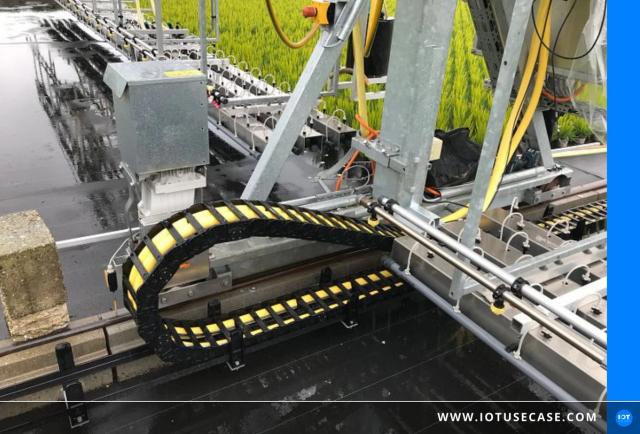
The precision watering trolley from Dercks Gartenbau places water exactly in the centre of each pot and saves up to 60% water as a result. Per hectare and season, that amounts to up to 4,000 cubic metres of water and 1,400 kilograms of nutrient salts. Energy chains from igus guide the supply lines along the long travel paths, while sensors continuously monitor the forces acting on the cables.
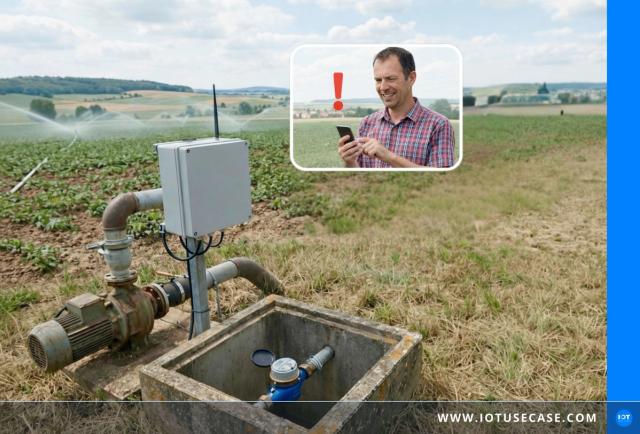
A district in Germany has digitised agricultural irrigation. Battery-powered data loggers from PSsystec read the water meters in the field chambers via NB-IoT and LTE-M. The volumes are compared with the planned time windows, for example 8 to 10 p.m. This reduces evaporation, makes on-site checks unnecessary and documents every irrigation run automatically, including for processing subsidies.
Monitoring wells and heat pipelines via the mobile network
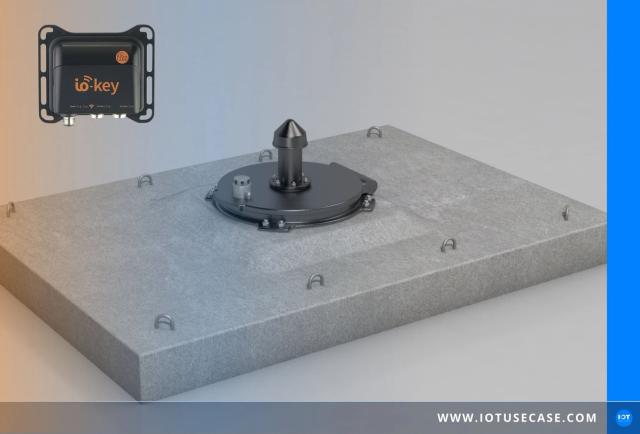
At Kögelhof in Mochenwangen, a farm with a biogas plant, an IO-Link level sensor measures the water level of the well, which is a few hundred metres from the farm. The io-key mobile gateway from ifm sends the readings to the IIoT platform moneo, without any cables or network on site. Power comes from a small solar module with a battery. If the level falls below the limit, a notification is sent automatically.
The same farm supplies heat from its biogas plant to the local school via a 1.5-kilometre pipeline. Temperature sensors on the flow and return lines monitor the district heating pipeline, and a mobile gateway reports when too little heat reaches the school.
Remote maintenance of barn and farm technology
Rudolf Hörmann builds barn, hall and control systems for agricultural businesses. For remote access to its control systems, the company now relies on the IXON cloud platform instead of its own VPN servers. A new router can be set up with a USB stick in five minutes instead of around 30 minutes. Many service cases can now be solved remotely, for example when a manure scraper stops because a motor protection switch has tripped. In the past, that often meant hours on the road.
Where downtime is expensive, condition monitoring is also worthwhile: sensors record forces, temperatures or vibrations and report wear before a system comes to a standstill. On the Dercks Gartenbau watering trolley, the sensors can even trigger an emergency stop if a limit value is exceeded.
Traceability and the digital product passport
Bayer CropScience has been labelling crop protection products and seeds with security labels and QR codes from KURZ Digital for around ten years. A scan shows whether a product is genuine. More than one billion codes are now in the system. The same technology is the basis for the digital product passport, which the EU will gradually make mandatory for many product groups from 2027. Learn more about traceability.
Secure digital identities for agricultural machinery
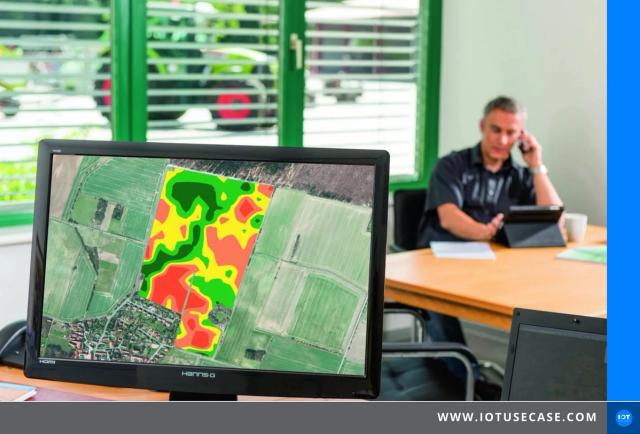
Modern agricultural machines send telemetry, GPS and harvest data to the backend and receive software updates over the air. For this purpose, CLAAS and secunet have built a public key infrastructure (PKI) for connected agricultural machinery. Each machine receives its own certificate during production, linked to its serial number. This ensures that only authorised machines communicate with the backend and with platforms such as CLAAS connect. Both companies explain how they went about it in the podcast episode Digital agriculture with secure identities.
Wind energy on farmland: bird protection during field work
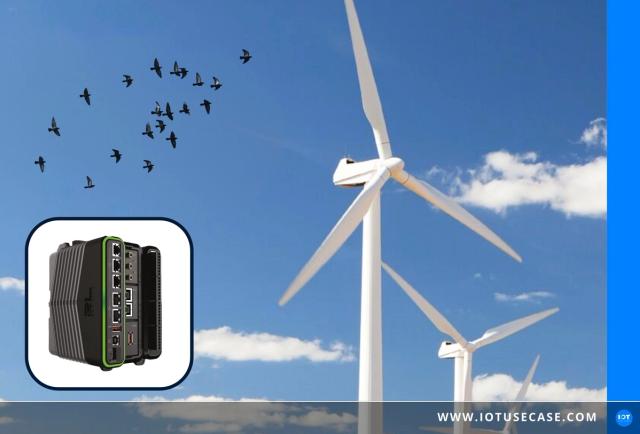
Where wind turbines stand on agricultural land, under certain conditions they must shut down during the day while fields are being mown, harvested or tilled, and for a while afterwards. This work attracts bird species such as the red kite. The SELA system from ATEG Automation detects field work with infrared cameras within a radius of up to 250 metres. Via an IIoT gateway from Red Lion, it automatically switches the turbine into a bird-safe idling mode. This makes the error-prone coordination between farmer and turbine operator unnecessary.
Aquaculture: fish farming in a container
The Austrian start-up Blue Planet Ecosystems breeds fish in a closed ecosystem the size of a container, powered by sunlight. Sensors measure temperature, light and oxygen levels, while cameras with artificial intelligence observe the fish. Via MQTT and the Cloudflight cloud platform, the system is monitored, controlled and continuously optimised remotely.
The technology behind smart farming: sensors, connectivity and platform
An IoT solution in agriculture usually consists of three parts. Sensors measure what matters: soil moisture, level, flow, temperature, forces or machine condition. Industrial sensors are often connected via IO-Link, water meters with a pulse output via simple data loggers.
Data transmission has to suit the location. Fields and meter chambers rarely have power or Wi-Fi. That is why many projects rely on low-power wireless: NB-IoT and LTE-M use the mobile network, while LoRaWAN bridges several kilometres with its own gateways. Battery-powered devices can often run for years without a battery change, the data logger in the district project for up to five years.
Finally, the IoT platform collects the data, displays it in dashboards and sends alerts by SMS, email or app. Interfaces such as a REST API pass the data on to existing systems. Data security is part of it from the start: encrypted connections, separate networks and unique device identities, as in the CLAAS example.
Field, not factory: what makes IoT in agriculture different
Conditions in the field are different from those in a factory: dust, moisture, frost and heat, dead spots in rural areas and measuring points without a power supply. That is why robust, waterproof devices are needed, powered by batteries or solar modules, along with wireless technology that uses little energy. Solutions that pre-process data on site keep working even when the connection is weak.
Then there is the size of the business. Many farms do not have their own IT department. Solutions need to be easy to commission without programming skills, require little maintenance and be able to start with a single measuring point. Dercks Gartenbau installed the energy chain and monitoring itself. For the well at Kögelhof, a level sensor, a mobile gateway and a small solar module were enough.
Five steps to your own smart farming project
1. Start with a measurable problem. Choose a use case whose benefit you can express in euros, cubic metres or hours: water consumption, inspection trips, downtime or documentation effort.
2. Retrofit existing equipment. Meters with a pulse output, existing controls and sensors can usually be connected by retrofitting, without rebuilding the system.
3. Choose the wireless technology to suit the site. Check mobile coverage, clarify the power supply, then decide between NB-IoT, LTE-M, LoRaWAN or 4G.
4. Start small, then roll out. A pilot with a few measuring points shows after one season whether the solution pays off. At Dercks Gartenbau, the calculation was confirmed after the very first season.
5. Make the data usable. Alerts, dashboards and interfaces determine whether the data is used in everyday work and whether it can be reused for subsidy applications and ESG reports.
Frequently asked questions: implementing smart farming and IoT in agriculture
How do I get started with smart farming on my farm?
Start with the one problem that costs you the most time or money today, such as inspection trips to wells, pumps or irrigation systems. Retrofit a sensor and a cellular gateway there, set up alerts and measure the benefit after one season. A farm with a biogas plant monitors its remote well this way, using a level sensor and a small solar module. Only once this pays off do you add further sites and applications.
Which sensors pay off first in agriculture?
The sensors that save you inspection rounds or prevent costly failures. Level sensors on wells and tanks report shortages in good time, meters at pumping stations record irrigation volumes automatically, and temperature sensors safeguard heat pipes, for example from a biogas plant. On machines and irrigation booms, force sensors monitor the cable and hose guidance and trigger an emergency stop at limit values. Soil moisture and weather data pay off once you use them to control irrigation.
How do I digitalise irrigation in agriculture?
With battery-powered data loggers that you connect to existing water meters and pumping stations, without any new IT infrastructure. They send volumes and the start and end of irrigation to a platform via the cellular network and send text alerts when limits are exceeded. One district uses this to match irrigation volumes against fixed evening time slots, saves water through less evaporation and documents everything automatically, including for funding claims. The retrofit paid for itself quickly.
How do I switch pumps and alarm systems over before the 2G sunset?
First list all devices with a 2G modem, for example on pumps, wells, irrigation systems or barns, and replace them with modems or data loggers using LTE-M or NB-IoT. Both are energy-efficient and designed for battery operation. In Germany, Telekom will switch off its 2G network on 30 June 2028, with Vodafone and O2 following in the second half of 2028. Use the upgrade for more: remote reading, fault alerts and automatic documentation then cost hardly anything extra.
How do I connect remote wells, pumps and pipes without my own network?
With cellular gateways or data loggers that send their readings straight to a cloud platform. You do not need a cable to the farm or Wi-Fi. Power comes from batteries lasting up to five years or from a small solar module. Weak reception in a shaft? An external antenna helps, and a LoRaWAN gateway suits many measuring points across large areas. Choose open interfaces such as a REST API so the data reaches your other systems.
Is IoT also worthwhile for smaller farms?
Yes, if the project addresses a specific problem. On a farm with a biogas plant, a sensor, a cellular gateway and a solar module were enough to monitor the well. A horticultural business recouped its investment in cable guidance and sensors after four years through the additional growing space alone. For one district, digital irrigation paid for itself after a short time thanks to lower water consumption.
How do I secure remote access to barn and farm control systems?
With a router that builds an encrypted outbound connection to a cloud platform, so no ports are open in the farm network. Each machine gets a unique digital identity, and technicians use their own permissions. One manufacturer of barn control systems commissions its routers this way with a USB stick in five minutes instead of thirty and no longer has to send out certificates. An agricultural machinery manufacturer protects its machines against tampering with certificates from its own PKI.
How do I find the right provider for a smart farming project?
The fastest way is through projects that are already up and running. Every solution example on this page names the user, the implementation partner and the technology used. If you briefly describe your project via the contact form, we will put you in touch with providers who have already implemented a comparable project in the agricultural sector.
Implement smart farming – with providers who have already done it
Are you planning an IoT project in agriculture? We know the providers who have already implemented irrigation, remote monitoring and connected farm machinery, and we will put you in touch with them. Do you offer IoT or agritech solutions for agriculture yourself? Then showcase your projects as solution examples and reach users who are looking for exactly that.
Discuss your project