
IoT adapters and protocol converters for sensors and field devices
Components and adapters are compact hardware modules that make existing sensors, actuators and field devices IoT-ready. They convert signals such as 4-20 mA, switching outputs or Modbus into formats such as IO-Link, Ethernet or MQTT. This allows existing equipment to be retrofitted without replacing devices or changing the control program.

Salzgitter Flachstahl 
Co-Founder & CTO/CPO, Greenlyte Carbon Technologies 
CEO, inray Industriesoftware GmbH 
Magna Exteriors (Meerane) GmbH, Manager Automation, Magna 
PLM-Innovation-Consultant, Liebherr-IT Services GmbH
5 users from the network have already implemented this
Talk implementation with other users
In the user group, 300+ users discuss every month what worked in their projects and what they would do differently today. No vendors in the room, honest exchange under NDA.
Who offers it
Components & adapters in practice
5 manufacturers from our partner network with 58 solution examples. Those with the most documented use in this category come first.
- Get in touch with ifm-Unternehmensgruppe
ifm-Unternehmensgruppe
Components & adapters27 solution examples

 Condition MonitoringEnergy MonitoringAsset Management
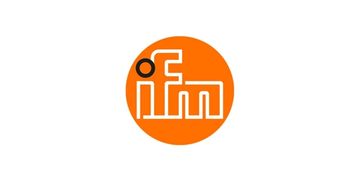
Current consumption enables condition-based fan maintenance
An ifm current transformer and the moneo platform monitor the current draw of fans. Winding damage and stiff bearings show up before the extraction system fails.
Sep 1, 2026Read more →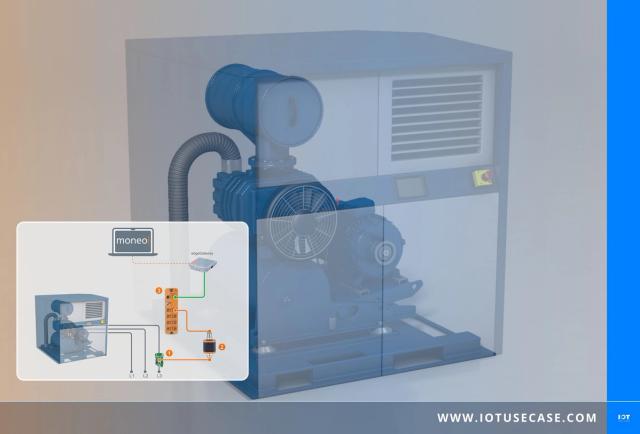 Energy MonitoringCondition MonitoringCorrective maintenance
Detecting compressor operating states based on current consumption
Jun 30, 2026Read more →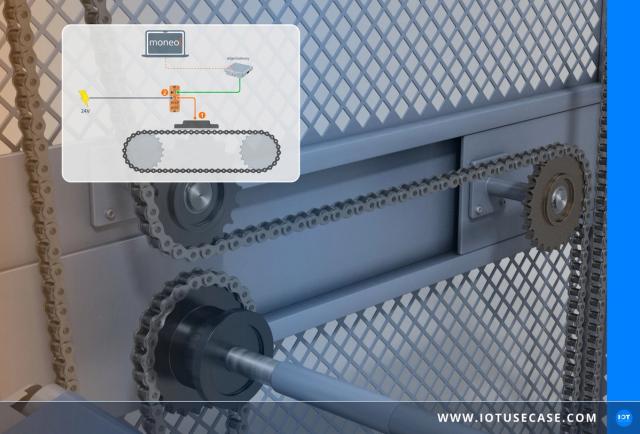

 Condition Monitoring
Roller chain monitoring via IO-Link to prevent downtime
Jun 16, 2026Read more → 
ORGATEX GmbH
Components & adapters4 solution examples




 Asset ManagementAsset Tracking/ Track and Trace
IoT-based returnable management optimizes material flow and replenishment
Feb 19, 2026Read more →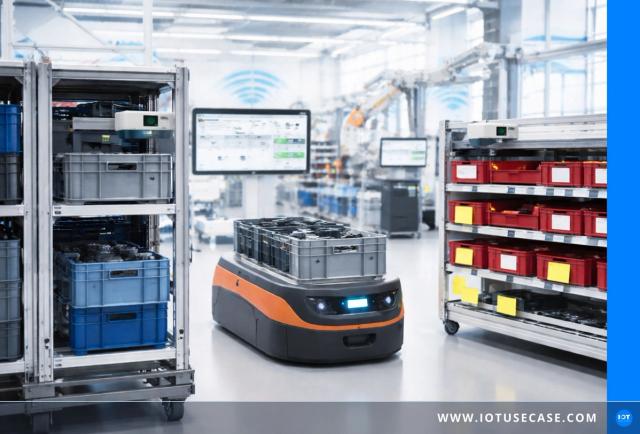

 Asset ManagementAsset Tracking/ Track and TraceFleet Management
Autonomous guided vehicles (AGVs) with IoT and real-time data for efficient material flows
Jan 30, 2026Read more →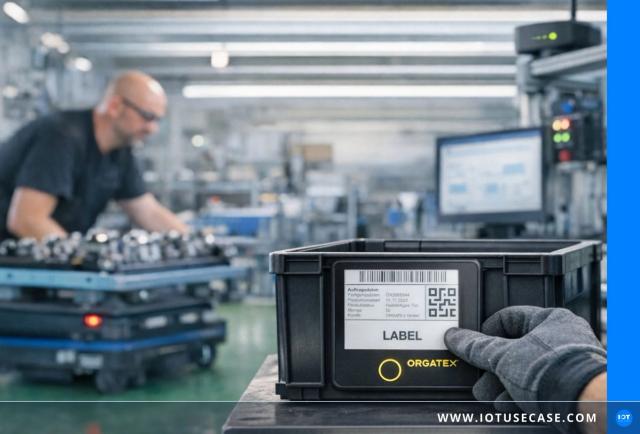 Digital Documentation
Digital job traveler closes the gap between shopfloor and IT systems
In many manufacturing environments, production control is still dominated by manual workflows and paper-based forms.
Mar 5, 2026Read more →
WAGO GmbH & Co. KG
Components & adapters11 solution examples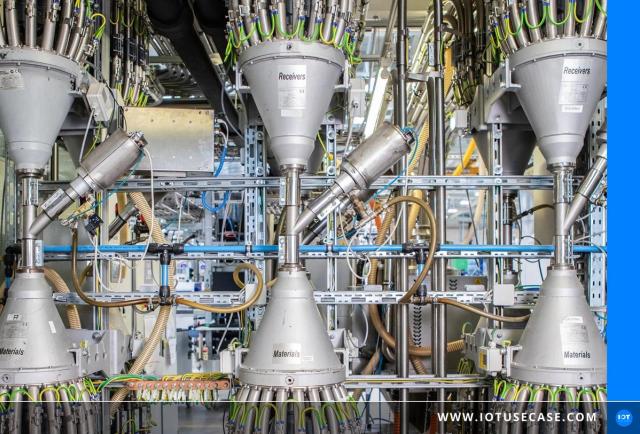


 Condition MonitoringPredictive Maintenance
Determining the optimal maintenance time – predictive filter monitoring of a material distribution system
Jul 31, 2024Read more →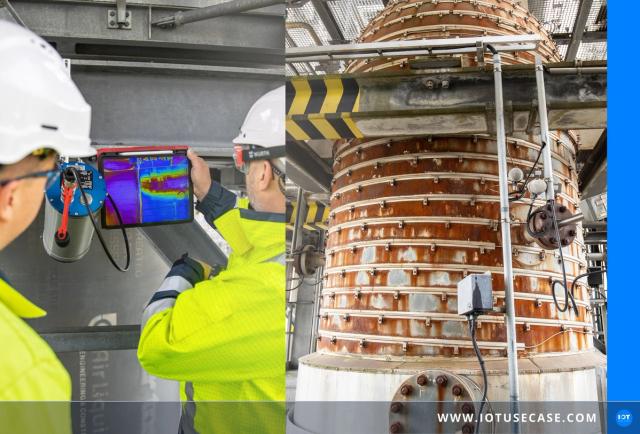


 Condition MonitoringCorrective maintenanceEmployee Safety
Maintenance at 1000°C – using condition data instead of stopping plants
Jul 17, 2025Read more →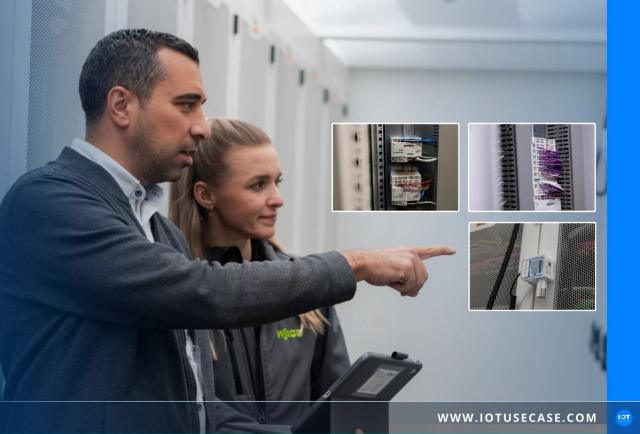
 Energy MonitoringSustainability (ESG)
Reducing energy consumption in the data centre with AI & automation
May 19, 2025Read more →
Endress+Hauser
Components & adapters7 solution examples

 Condition MonitoringCorrective maintenance
High availability in flat steel production
Jul 21, 2021Read more →

 Fraud and Loss PreventionCondition MonitoringDigital Documentation
Detect floods earlier with connected water level sensors and AI
Jun 18, 2026Read more →
 Condition MonitoringDigital Documentation
Seamlessly integrated down to field level – including hazardous areas: Ethernet-APL networks the process industry
Jun 2, 2025Read more →
Perinet GmbH
Components & adapters10 solution examples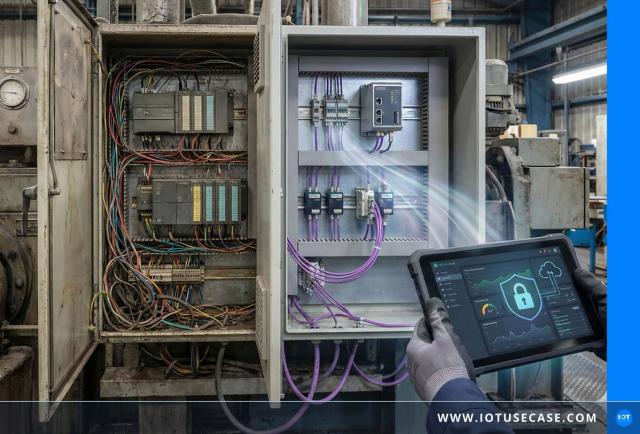



 Condition MonitoringEnergy Monitoring
Modbus retrofit makes legacy systems secure and IoT-capable
Dec 8, 2025Read more →
 Condition MonitoringEnergy MonitoringQuality Management
Securely capturing machine KPIs and process data from production
Oct 28, 2025Read more → Condition MonitoringQuality Management
Optimising packaging lines with IoT-based OEE monitoring
Oct 17, 2025Read more →
What it is used for
What they are used for, and with what
Based on these manufacturers' solution examples: the most common use cases and the technologies their solutions speak.
Use cases
- Early Detection of Damage in Condition Monitoring8 solution examples
- Track cycle times, utilization, and throughput8 solution examples
- Tracking, visualizing, and analyzing energy consumption per unit8 solution examples
- Temperature Measurement in Condition Monitoring6 solution examples
- Audits and Reportings4 solution examples
What to look for
What components and adapters do
Components and adapters make existing sensors, actuators and field devices IoT-ready without replacing the device itself. An adapter picks up a conventional signal, such as a 4-20 mA analog value, a switching output or a serial Modbus interface, and converts it into a format that can be forwarded over an IP network or an IoT protocol such as MQTT. This category also includes IO-Link adapters that turn analog signals into IO-Link process data, as well as modular connector and electronics components that integrate signal conversion directly into the cabling.
This makes adapters one of the simplest ways to connect existing equipment. A single measured value can be retrofitted without touching the controller or the PLC program. On older machines whose sensors still work well, this saves effort and downtime.
How they differ from edge devices and routers
An adapter translates a single signal or a few channels directly at the source. It has very little computing power and does not run its own applications. Edge devices, in contrast, combine many data sources, preprocess data and run local logic or containers. Routers provide the network connection between the machine network and cellular networks or the internet. In a typical architecture, adapters deliver the data, and an edge device or router passes it on to the platform and IT. With many signals at one location, an edge device with suitable inputs can be more economical, while for a few distributed measuring points the adapter is usually the leaner solution.
What to look for when selecting an adapter
The starting point is which signal is available and where it needs to go: analog, digital or serial on one side, Ethernet, Single Pair Ethernet, IO-Link or wireless on the other. Other criteria are the power supply, for example over the data cable, the ingress protection rating, DIN rail or field mounting and the supported protocols such as MQTT, OPC UA or HTTP. One example is the periNode adapters from Perinet, which make existing Modbus and 4-20 mA devices IoT-ready without replacement and are well suited to step-by-step retrofitting.
Frequently asked questions about components and adapters
What does a Modbus gateway do?
A Modbus gateway connects devices with a serial Modbus RTU interface to an Ethernet network or to an IoT protocol such as MQTT. It is used to integrate meters, drives, sensors or older controllers that only support Modbus RTU over RS-485. The gateway polls the device registers and makes the values available on the network without modifying the device itself.
How does an analog to IO-Link converter work?
An analog to IO-Link converter turns the signal of a conventional sensor, such as 4-20 mA, 0-10 V or a switching output, into IO-Link process data. It is plugged in between the sensor and the IO-Link master. This allows sensors without their own IO-Link interface to be integrated into an IO-Link architecture and pass their readings digitally to the controller and IT.
What is a 4-20 mA signal converter?
A 4-20 mA signal converter transforms an analog signal into another analog signal, for example 0-10 V into 4-20 mA, or isolates circuits galvanically. An IoT adapter goes one step further: it digitizes the signal and makes it available via a network protocol such as MQTT, OPC UA or IO-Link. This makes the measured value directly usable for IoT platforms and software.
What is an RS485 to Ethernet converter used for?
An RS485 to Ethernet converter brings devices with a serial RS-485 interface onto an Ethernet network. Typical examples are energy meters, drives, HVAC units or older controllers that communicate via Modbus RTU. The converter makes the data accessible over the network, often as Modbus TCP. This allows distributed legacy devices to be read centrally without laying new serial cables.
What are the benefits of a Single Pair Ethernet adapter?
A Single Pair Ethernet adapter connects sensors and field devices to the Ethernet network over a single wire pair. Data and power can run over the same slim cable. This enables IP communication right down to the sensor without an additional gateway. Single Pair Ethernet adapters can also integrate existing analog or Modbus devices and are particularly suited to retrofitting.
On the podcast
Episodes with these manufacturers and their customers.
- #83Zoom into the WAGO Plant & Partner Ecosystem Enables Predictive Maintenance of a Material Distribution SystemWAGO GmbH & Co. KG · Dec 14, 2022Listen
- #47Salzgitter AG & Endress+Hauser – Steel Production of the FutureSalzgitter Flachstahl · Endress+Hauser · Jul 21, 2021Listen
- #211LIVE: Making sensors network-ready: shopfloor data directly into ITPerinet GmbH · Apr 22, 2026Listen
Related categories
More product categories on the same layer and the technologies solutions in this category connect through.