
Industrial tilt sensors and inclinometers for machines and structures
Tilt sensors, also called inclinometers, measure the angle of an object relative to gravity in degrees or percent, on one or two axes. Most are MEMS-based or electrolytic and are used on cranes, excavators, aerial work platforms, vehicles and in structural monitoring. Typical outputs are 4-20 mA, CANopen and IO-Link.

Co-Founder & CTO/CPO, Greenlyte Carbon Technologies 
Magna Exteriors (Meerane) GmbH, Manager Automation, Magna
2 users from the network have already implemented this
Talk implementation with other users
In the user group, 300+ users discuss every month what worked in their projects and what they would do differently today. No vendors in the room, honest exchange under NDA.
Who offers it
Tilt sensors in practice
2 manufacturers from our partner network with 34 solution examples. Those with the most documented use in this category come first.
- Get in touch with ifm-Unternehmensgruppe

ifm-Unternehmensgruppe
Tilt sensors27 solution examples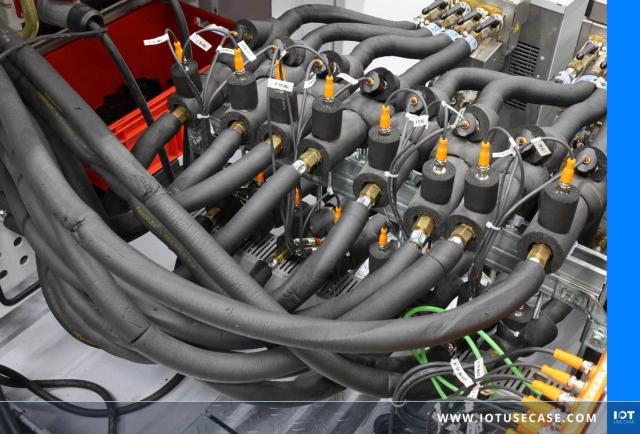




 Condition MonitoringEnergy Monitoring
Monitoring injection mould cooling via IO-Link to cut energy use
From gut feeling to hard data: at RAFI in Bad Waldsee, sensors and the moneo IIoT platform make the injection moulding process transparent. Temperatures, flow rates, compressed air and energy consumption are recorded, visualised and analysed continuously.
Sep 21, 2026Read more →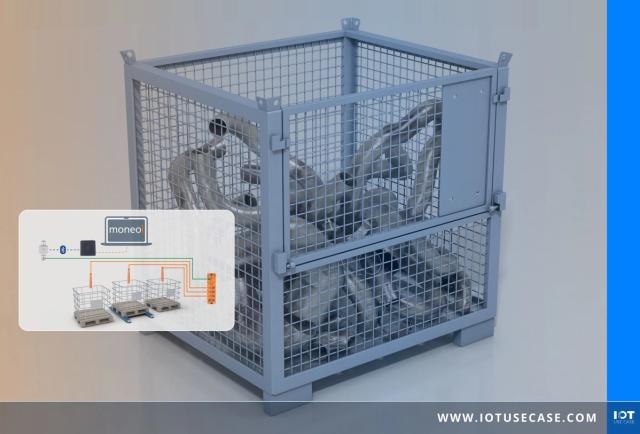
 Condition MonitoringAsset Management
Precisely monitoring grid boxes with fill-level and weight sensing
Capture fill level and weight of mesh box pallets without any wiring: ifm sends the sensor data to moneo via Bluetooth Mesh and makes pickups plannable.
Sep 14, 2026Read more →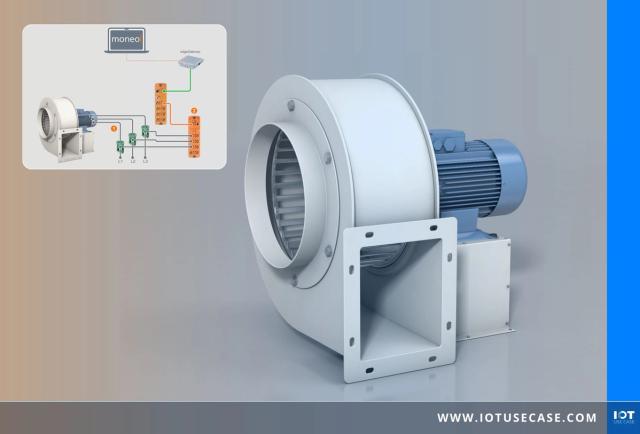 Condition MonitoringEnergy MonitoringAsset Management
Current consumption enables condition-based fan maintenance
An ifm current transformer and the moneo platform monitor the current draw of fans. Winding damage and stiff bearings show up before the extraction system fails.
Sep 1, 2026Read more → 
WIKA Alexander Wiegand SE & Co. KG
Tilt sensors7 solution examples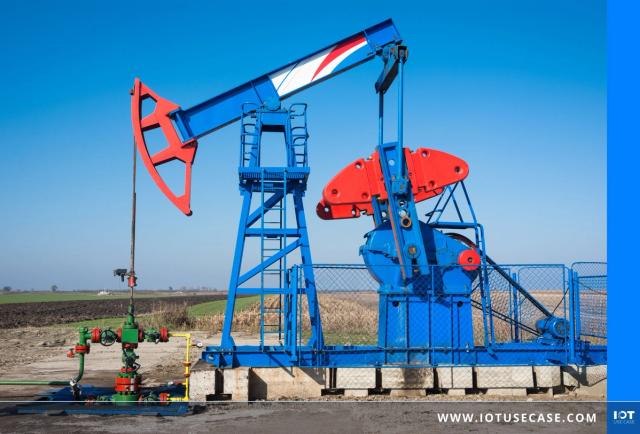



 Condition MonitoringCorrective maintenanceDigital Documentation
Proving well integrity continuously via LoRaWAN without site visits
WIKA captures annulus and tubing pressure at oil and gas wells via LoRaWAN®, without laying a cable. The wireless sensor reports anomalies within minutes and site inspections drop by over 75 percent.
Sep 17, 2026Read more →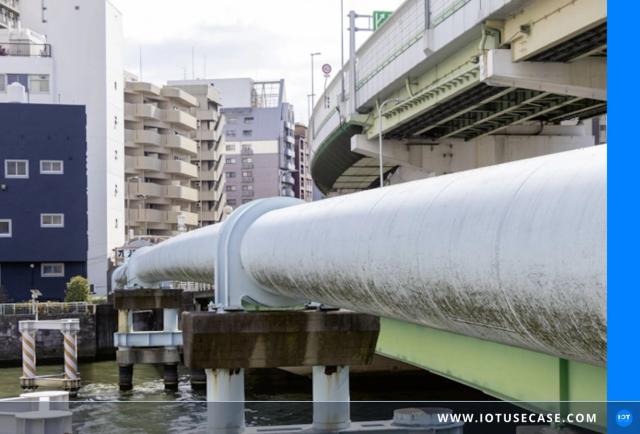
 Condition MonitoringCorrective maintenance
Maintain district heating networks via IIoT pressure monitoring
Jul 27, 2026Read more → Condition MonitoringCorrective maintenance
Filter monitoring in coal plants: manual to LoRaWAN diff-pressure sensor
Mar 30, 2026Read more →
What it is used for
What they are used for, and with what
Based on these manufacturers' solution examples: the most common use cases and the technologies their solutions speak.
Use cases
- Temperature Measurement in Condition Monitoring8 solution examples
- Early Detection of Damage in Condition Monitoring7 solution examples
- Level and Distance Measurement in Condition Monitoring7 solution examples
- Automatic Spare Parts Ordering in Corrective Maintenance6 solution examples
- Vibration Monitoring in Condition Monitoring5 solution examples
What to look for
How tilt sensors work
Tilt sensors, also called inclinometers, measure the angle of an object relative to gravity. They output the value in degrees or percent, on one or two axes. Most industrial devices are MEMS-based: a micromechanical element measures the share of gravitational acceleration on each axis, and the electronics calculate the angle from it. Electrolytic sensors use a conductive liquid whose position changes with the tilt. They are known for very high long-term stability and suit applications with very small angle changes.
How they differ and where they are used
An accelerometer can also determine tilt statically, but it is designed for shock and vibration measurement. Tilt sensors, in contrast, are optimized for a stable, filtered angle value and dampen short shocks and vibration. Unlike position sensors, they do not detect a distance or a switching point but the orientation in space.
Typical applications are mobile machinery such as cranes, excavators and aerial work platforms, where the angle is needed for stability, leveling and load limitation. Vehicles, the alignment of equipment and structural and slope monitoring are further fields. Here inclinometers detect gradual deformation of bridges, masts, retaining walls or embankments, often over many years and at distributed measuring points.
What to look for when selecting a sensor
The first criteria are measuring range, number of axes and accuracy, followed by resolution, temperature drift and behavior under vibration. Common interfaces are 4-20 mA, CANopen and IO-Link. CANopen is well established in mobile machinery, while IO-Link brings the angle and diagnostic data via the master to IT systems without extra effort. For large structures, battery-powered wireless sensors send their readings at fixed intervals.
Outdoor use calls for rugged housings with a high ingress protection rating and a wide temperature range. For hazardous areas, ATEX versions according to the EN 60079 series are available. For safety-related functions, such as crane stability, redundant designs with diagnostic functions are worth considering. In practice, tilt data is increasingly evaluated centrally on an IoT platform, for example to monitor fleets of mobile machines or to document measurement series on structures without gaps over many years.
Frequently asked questions about tilt sensors
What is the difference between a tilt sensor and an inclinometer sensor?
In practice, both terms mean the same thing: a sensor that measures the angle relative to gravity. Inclinometer is often used for precision instruments and in geotechnics, tilt sensor more for devices built into machines and vehicles. A tilt switch is different, because it only signals whether a limit angle is exceeded and does not provide an angle value.
When do you need a dual axis inclinometer?
You need a dual axis inclinometer when an object can tilt in two directions and both angles matter. This applies to leveling aerial work platforms, cranes or vehicles that must stand level both lengthwise and crosswise. A single axis sensor is sufficient when there is only one axis of rotation, for example the angle of a boom.
MEMS or electrolytic tilt sensor: which principle fits?
MEMS fits most machine applications, while electrolytic tilt sensors are the choice for very small angle changes and long-term measurements. MEMS sensors measure how strongly gravity acts on each axis and calculate the angle from it. They are compact, rugged and accurate enough for cranes, platforms and vehicles. Electrolytic sensors use a conductive liquid and offer higher long-term stability, for example in structural monitoring.
Which outputs do digital tilt sensors offer?
Digital tilt sensors usually output the angle via CANopen, IO-Link or a serial interface, alongside analog versions with 4-20 mA. CANopen is the standard in mobile machinery because a CAN network is already in place there. IO-Link suits stationary equipment and also transmits diagnostic data. Wireless versions run on batteries and send readings from distributed measuring points, for example on structures.
How are wireless tilt sensors used for structural monitoring?
Wireless tilt sensors are mounted on bridges, masts, retaining walls, slopes or buildings and detect the smallest changes in position over months and years. They run on batteries and send their readings at fixed intervals to an IoT platform. This removes the need for manual readings on site, and exceeding a limit value automatically triggers a notification.
On the podcast
Episodes with these manufacturers and their customers.
- #213Direct Air Capture: From Pilot to Autonomous Industrial ScaleGreenlyte Carbon Technologies · ifm-Unternehmensgruppe · May 13, 2026Listen
- #192Ensuring Quality with IoT: How RAFI and ifm Digitalize Injection Moldingifm-Unternehmensgruppe · RAFI GmbH & Co. KG · Nov 5, 2025Listen
- #12Simple, secure and without detours all sensor data via radio and NB-IoT in the cloud – no limits with the io-key | Kevin Munzert | ifmifm-Unternehmensgruppe · Sep 23, 2020Listen
Related categories
More product categories on the same layer and the technologies solutions in this category connect through.