
Industrial vibration sensors for machine condition monitoring
Vibration sensors measure machine vibration as acceleration or vibration velocity, usually with a piezoelectric element. They are the main data source for condition monitoring of bearings, pumps, motors and gearboxes. Via 4-20 mA, IO-Link or wireless links, the characteristic values reach the controller, the IoT platform and IT systems.

Co-Founder & CTO/CPO, Greenlyte Carbon Technologies 
Magna Exteriors (Meerane) GmbH, Manager Automation, Magna
2 users from the network have already implemented this
Talk implementation with other users
In the user group, 300+ users discuss every month what worked in their projects and what they would do differently today. No vendors in the room, honest exchange under NDA.
Who offers it
Vibration sensors in practice
1 manufacturer from our partner network with 27 solution examples. Those with the most documented use in this category come first.
- Get in touch with ifm-Unternehmensgruppe

ifm-Unternehmensgruppe
Vibration sensors27 solution examples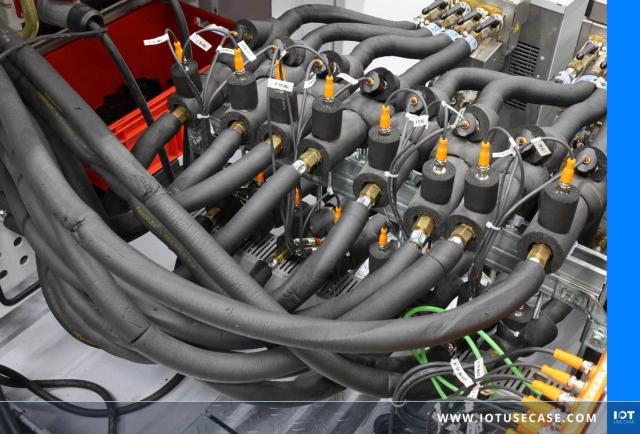




 Condition MonitoringEnergy Monitoring
Monitoring injection mould cooling via IO-Link to cut energy use
From gut feeling to hard data: at RAFI in Bad Waldsee, sensors and the moneo IIoT platform make the injection moulding process transparent. Temperatures, flow rates, compressed air and energy consumption are recorded, visualised and analysed continuously.
Sep 21, 2026Read more →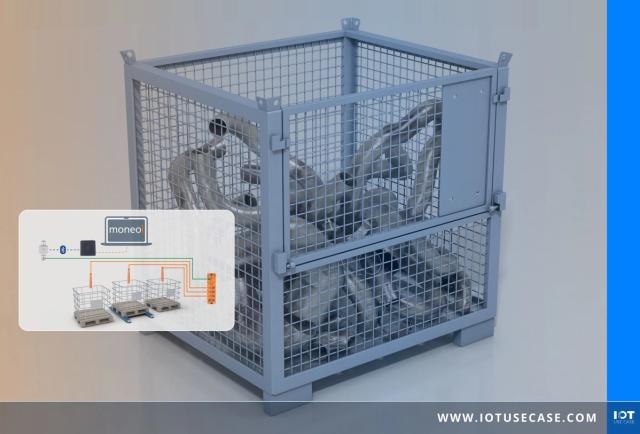
 Condition MonitoringAsset Management
Precisely monitoring grid boxes with fill-level and weight sensing
Capture fill level and weight of mesh box pallets without any wiring: ifm sends the sensor data to moneo via Bluetooth Mesh and makes pickups plannable.
Sep 14, 2026Read more →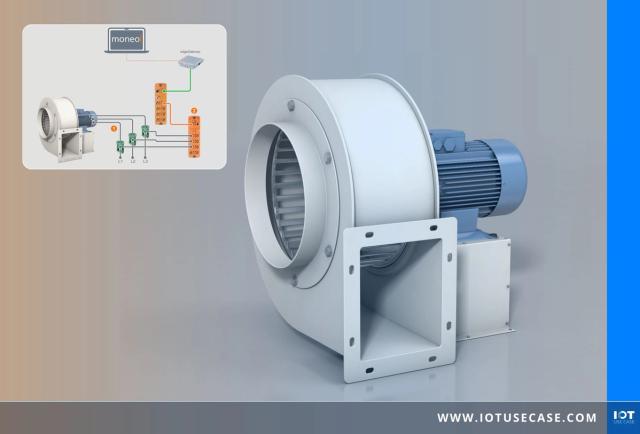 Condition MonitoringEnergy MonitoringAsset Management
Current consumption enables condition-based fan maintenance
An ifm current transformer and the moneo platform monitor the current draw of fans. Winding damage and stiff bearings show up before the extraction system fails.
Sep 1, 2026Read more →
What it is used for
What they are used for, and with what
Based on these manufacturers' solution examples: the most common use cases and the technologies their solutions speak.
Use cases
- Temperature Measurement in Condition Monitoring8 solution examples
- Early Detection of Damage in Condition Monitoring7 solution examples
- Level and Distance Measurement in Condition Monitoring7 solution examples
- Automatic Spare Parts Ordering in Corrective Maintenance6 solution examples
- Vibration Monitoring in Condition Monitoring5 solution examples
What to look for
What vibration sensors measure
Vibration sensors capture the mechanical vibration of machines: amplitude, frequency and vibration velocity. Most of them are built around a piezoelectric accelerometer. When the machine vibrates, a small mass presses on a piezoelectric crystal, and the electronics convert the resulting electrical charge into acceleration (g) or vibration velocity (mm/s RMS). Many devices also report values such as peak level or shock pulse, plus the temperature at the measuring point.
This makes vibration sensors the most important data source for condition monitoring of rotating equipment. Bearing damage, imbalance, misalignment or loose mounting show up as typical vibration patterns long before a machine fails.
How they differ from accelerometers
General-purpose accelerometers measure acceleration for many tasks, such as shock detection or orientation. Vibration sensors use the same measuring principle but are designed for machine monitoring. They process the signal inside the device, output standardized characteristic values and can be configured with warning and alarm thresholds. The actual diagnosis, meaning trend analysis and frequency analysis across many machines, is handled by condition monitoring software in the function layer.
What to look for when selecting a sensor
The key criteria are frequency range, measuring range and mounting method. Bearing diagnostics require a wide frequency range, while overall vibration assessment is often covered by the range defined in ISO 10816 and its successor series ISO 20816. DIN ISO 13373 and VDI 3839 provide further guidance. For outputs, 4-20 mA is common when a single value goes to the PLC. IO-Link transmits several values plus diagnostic data, and some devices also offer OPC UA. For hard-to-reach equipment, battery-powered wireless versions are available, for example with LoRaWAN.
Reliable readings depend on rigid mounting, ideally with a screw, and an ingress protection rating that matches the environment. Hazardous areas require certified explosion-proof versions. In practice, vibration sensors monitor pumps, fans, motors, gearboxes and spindles, often as a retrofit on existing equipment. Via IO-Link masters or wireless gateways, the values reach an IoT platform in parallel to the controller, where trends across many machines become visible and maintenance can be planned by actual condition instead of fixed intervals.
Frequently asked questions about vibration sensors
How does a piezoelectric vibration sensor work?
A piezoelectric vibration sensor uses a crystal that generates an electrical charge under mechanical stress. When the machine vibrates, a small mass inside the sensor presses rhythmically on the crystal. The electronics amplify the signal and convert it into acceleration or vibration velocity. The principle is robust, free of wear and also captures the high frequencies that occur with bearing damage.
Which motor vibration sensor is suitable for bearing monitoring?
For bearing monitoring on motors, choose a vibration sensor with a wide frequency range that reports acceleration or shock pulse values in addition to vibration velocity. Bearing damage first appears in the higher frequency range. The sensor should be mounted as close to the bearing as possible and screwed on rigidly. An IO-Link or wireless output makes it easier to evaluate several values at once.
Vibration sensor with 4-20 mA or IO-Link: which output is better?
It depends on how much information is needed. A 4-20 mA output transmits exactly one value, usually vibration velocity, and connects to any PLC. IO-Link delivers several values, temperature and diagnostic data over the same standard cable and allows remote configuration. For condition monitoring with a data connection to IT systems, IO-Link is usually the more flexible choice.
What is an IEPE accelerometer for vibration measurement?
An IEPE accelerometer is a piezoelectric sensor with a built-in amplifier that is powered by a constant current source. It delivers the raw vibration signal and is suited to detailed frequency analysis. To do this, it needs a measuring instrument or data acquisition module that processes the signal. Sensors with integrated processing, by contrast, output ready-made values via 4-20 mA or IO-Link.
When does a wireless vibration sensor make sense?
A wireless vibration sensor makes sense when cabling would be costly, for example on hard-to-reach, widely distributed or retrofitted machines. These sensors run on batteries and send their values via LoRaWAN, Bluetooth Low Energy or cellular networks. Because they measure at intervals, they mainly provide trend data. For detailed high-frequency analysis, wired sensors are the better fit.
On the podcast
Episodes with these manufacturers and their customers.
- #213Direct Air Capture: From Pilot to Autonomous Industrial ScaleGreenlyte Carbon Technologies · ifm-Unternehmensgruppe · May 13, 2026Listen
- #192Ensuring Quality with IoT: How RAFI and ifm Digitalize Injection Moldingifm-Unternehmensgruppe · RAFI GmbH & Co. KG · Nov 5, 2025Listen
- #12Simple, secure and without detours all sensor data via radio and NB-IoT in the cloud – no limits with the io-key | Kevin Munzert | ifmifm-Unternehmensgruppe · Sep 23, 2020Listen
Related categories
More product categories on the same layer and the technologies solutions in this category connect through.