
Industrial position sensors for IoT applications
A position sensor detects whether an object is at a defined point or measures its location along a path. Proximity switches deliver a switching signal, linear position sensors a continuous measured value. Connected via IO-Link or wireless, they supply data for condition monitoring, cycle counting and process analysis.

Co-Founder & CTO/CPO, Greenlyte Carbon Technologies 
Magna Exteriors (Meerane) GmbH, Manager Automation, Magna
2 users from the network have already implemented this
Talk implementation with other users
In the user group, 300+ users discuss every month what worked in their projects and what they would do differently today. No vendors in the room, honest exchange under NDA.
Who offers it
Position sensors in practice
1 manufacturer from our partner network with 27 solution examples. Those with the most documented use in this category come first.
- Get in touch with ifm-Unternehmensgruppe

ifm-Unternehmensgruppe
Position sensors27 solution examples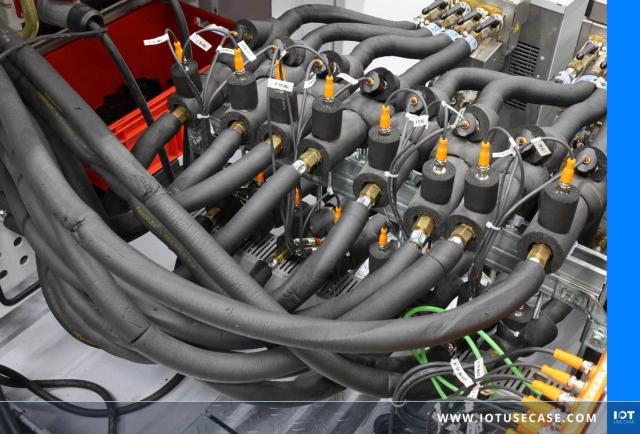




 Condition MonitoringEnergy Monitoring
Monitoring injection mould cooling via IO-Link to cut energy use
From gut feeling to hard data: at RAFI in Bad Waldsee, sensors and the moneo IIoT platform make the injection moulding process transparent. Temperatures, flow rates, compressed air and energy consumption are recorded, visualised and analysed continuously.
Sep 21, 2026Read more →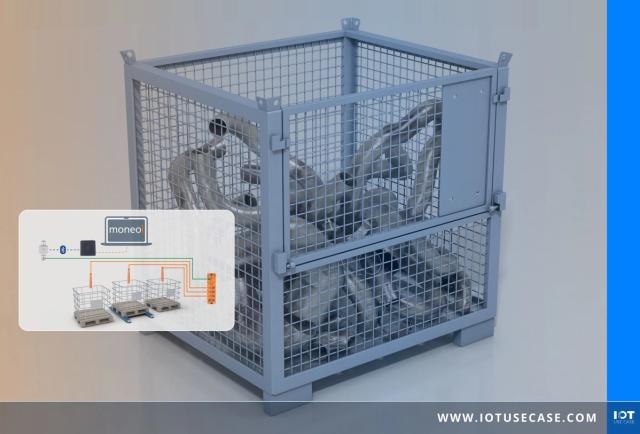
 Condition MonitoringAsset Management
Precisely monitoring grid boxes with fill-level and weight sensing
Capture fill level and weight of mesh box pallets without any wiring: ifm sends the sensor data to moneo via Bluetooth Mesh and makes pickups plannable.
Sep 14, 2026Read more →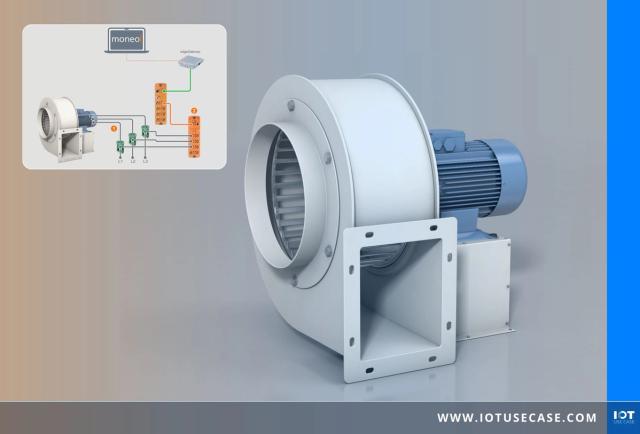 Condition MonitoringEnergy MonitoringAsset Management
Current consumption enables condition-based fan maintenance
An ifm current transformer and the moneo platform monitor the current draw of fans. Winding damage and stiff bearings show up before the extraction system fails.
Sep 1, 2026Read more →
What it is used for
What they are used for, and with what
Based on these manufacturers' solution examples: the most common use cases and the technologies their solutions speak.
Use cases
- Temperature Measurement in Condition Monitoring8 solution examples
- Early Detection of Damage in Condition Monitoring7 solution examples
- Level and Distance Measurement in Condition Monitoring7 solution examples
- Automatic Spare Parts Ordering in Corrective Maintenance6 solution examples
- Vibration Monitoring in Condition Monitoring5 solution examples
What to look for
What position sensors detect
Position sensors come in two basic forms. Proximity switches report in binary form whether an object is at a specific point, for example whether a gripper is closed or a workpiece is in place. Linear position sensors, in contrast, continuously measure how far a slide, piston or lever has moved. Different sensing principles suit different tasks. Inductive sensors detect metal objects without contact and are very rugged. Capacitive sensors also detect plastic, wood or liquids. Magnetic sensors based on the Hall effect respond to a magnet, for instance on the piston of a pneumatic cylinder. Optical sensors such as light barriers or laser sensors bridge longer distances.
How they differ from encoders and speed sensors
Encoders measure the angular position of a shaft and belong to rotary measurement technology. Speed sensors count pulses per unit of time and deliver rotational speed. Position sensors answer a different question: where something is, or whether it has arrived. In practice the categories overlap. An inductive proximity switch that scans gear teeth can also serve as a simple speed pickup.
What to look for when selecting a sensor
For proximity switches, the key criteria are sensing distance, mounting style (flush or non-flush), thread size such as M8, M12 or M18, and the output, usually PNP or NPN. Requirements for proximity switches are defined in IEC 60947-5-2. IO-Link is particularly useful for IoT applications: in addition to the switching state, the sensor transmits measured values, switching counters and diagnostic data, such as declining signal quality caused by contamination. Linear position sensors are available with analog outputs (4–20 mA, 0–10 V) or IO-Link. Ingress protection of IP67, or IP69K for washdown areas, and the temperature range should match the environment.
Typical solution examples include end-position monitoring on pneumatic cylinders, counting tool strokes, monitoring flaps and doors, and recording stroke lengths on presses. Connected position sensors make it possible to send these signals to an IoT platform for analysis without changing the machine control program.
Frequently asked questions about position sensors
How does an inductive proximity sensor work?
An inductive proximity sensor uses a coil to generate a high-frequency alternating magnetic field in front of its sensing face. When a metal object approaches, eddy currents form in it and draw energy from the field. The sensor electronics detect this damping and switch the output. Detection is contactless and wear-free, even in the presence of dust, oil or vibration.
What is the sensing distance of an inductive sensor?
The sensing distance is the range at which the sensor reliably detects an object. The rated sensing distance in the datasheet applies to a standardized steel target plate. For aluminum, copper or brass it is significantly shorter, and manufacturers specify correction factors for these materials. Flush-mountable sensors have a shorter sensing distance than non-flush models of the same size.
What is the difference between inductive and capacitive proximity sensors?
Inductive sensors detect only metal, while capacitive sensors detect almost any material. A capacitive sensor responds to a change in its electric field, so it also detects plastic, glass, wood, granules or liquids, sometimes even through a container wall. Inductive sensors are less sensitive to moisture and contamination, which makes them the first choice for detecting metal parts in manufacturing.
What is a linear position sensor?
A linear position sensor continuously measures the position of a moving part along a path, unlike a proximity switch, which only reports on or off. Common principles include magnetostrictive, inductive and potentiometric transducers as well as draw-wire and laser distance sensors. The measured value is output as an analog 4–20 mA or 0–10 V signal or digitally via IO-Link.
What is the difference between a position sensor and a rotary encoder?
A position sensor detects or measures where an object is, usually along a straight path, while a rotary encoder measures the angular position of a rotating shaft. Encoders output incremental pulses or an absolute angle and are used on motors, axes and turntables. Proximity switches and linear position sensors cover end positions, presence detection and stroke lengths.
On the podcast
Episodes with these manufacturers and their customers.
- #213Direct Air Capture: From Pilot to Autonomous Industrial ScaleGreenlyte Carbon Technologies · ifm-Unternehmensgruppe · May 13, 2026Listen
- #192Ensuring Quality with IoT: How RAFI and ifm Digitalize Injection Moldingifm-Unternehmensgruppe · RAFI GmbH & Co. KG · Nov 5, 2025Listen
- #12Simple, secure and without detours all sensor data via radio and NB-IoT in the cloud – no limits with the io-key | Kevin Munzert | ifmifm-Unternehmensgruppe · Sep 23, 2020Listen
Related categories
More product categories on the same layer and the technologies solutions in this category connect through.