
Pressure Transmitters and Sensors for Industrial IoT
A pressure transmitter measures the pressure of gases and liquids and converts it into an electrical signal, as gauge, absolute or differential pressure. In the IoT stack, pressure sensors are among the most important data sources: they monitor pumps, filters, hydraulics and compressed air and pass their values to the controller and IT via analog output or IO-Link.

Co-Founder & CTO/CPO, Greenlyte Carbon Technologies 
Magna Exteriors (Meerane) GmbH, Manager Automation, Magna 
Salzgitter Flachstahl
3 users from the network have already implemented this
Talk implementation with other users
In the user group, 300+ users discuss every month what worked in their projects and what they would do differently today. No vendors in the room, honest exchange under NDA.
Who offers it
Pressure sensors in practice
3 manufacturers from our partner network with 41 solution examples. Those with the most documented use in this category come first.
- Get in touch with Endress+Hauser

Endress+Hauser
Pressure sensors7 solution examples


 Condition MonitoringDigital Documentation
Seamlessly integrated down to field level – including hazardous areas: Ethernet-APL networks the process industry
Jun 2, 2025Read more →

 Fraud and Loss PreventionCondition MonitoringDigital Documentation
Detect floods earlier with connected water level sensors and AI
Jun 18, 2026Read more →

 Asset ManagementCondition Monitoring
Smart monitoring of municipal and industrial water applications
Sep 3, 2024Read more → 
ifm-Unternehmensgruppe
Pressure sensors27 solution examples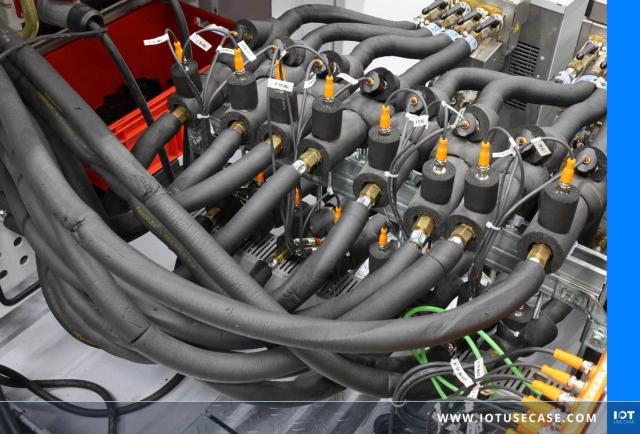




 Condition MonitoringEnergy Monitoring
Monitoring injection mould cooling via IO-Link to cut energy use
From gut feeling to hard data: at RAFI in Bad Waldsee, sensors and the moneo IIoT platform make the injection moulding process transparent. Temperatures, flow rates, compressed air and energy consumption are recorded, visualised and analysed continuously.
Sep 21, 2026Read more →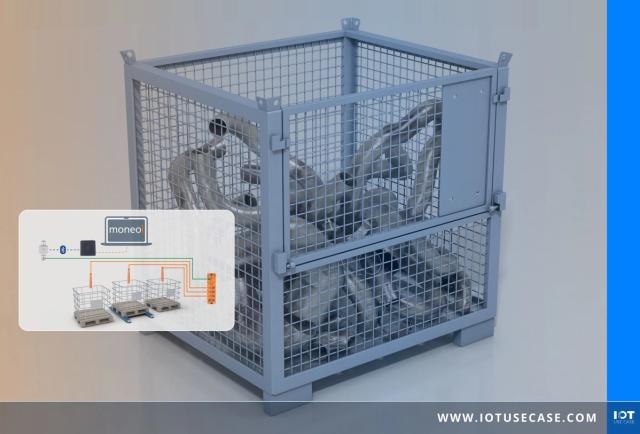
 Condition MonitoringAsset Management
Precisely monitoring grid boxes with fill-level and weight sensing
Capture fill level and weight of mesh box pallets without any wiring: ifm sends the sensor data to moneo via Bluetooth Mesh and makes pickups plannable.
Sep 14, 2026Read more →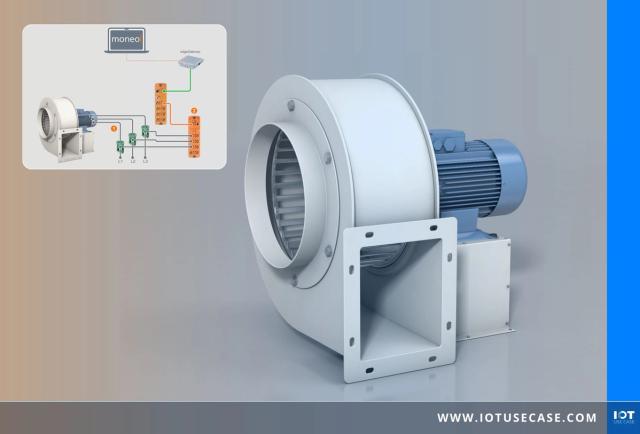 Condition MonitoringEnergy MonitoringAsset Management
Current consumption enables condition-based fan maintenance
An ifm current transformer and the moneo platform monitor the current draw of fans. Winding damage and stiff bearings show up before the extraction system fails.
Sep 1, 2026Read more →
WIKA Alexander Wiegand SE & Co. KG
Pressure sensors7 solution examples

 Condition MonitoringCorrective maintenanceDigital Documentation
Proving well integrity continuously via LoRaWAN without site visits
WIKA captures annulus and tubing pressure at oil and gas wells via LoRaWAN®, without laying a cable. The wireless sensor reports anomalies within minutes and site inspections drop by over 75 percent.
Sep 17, 2026Read more →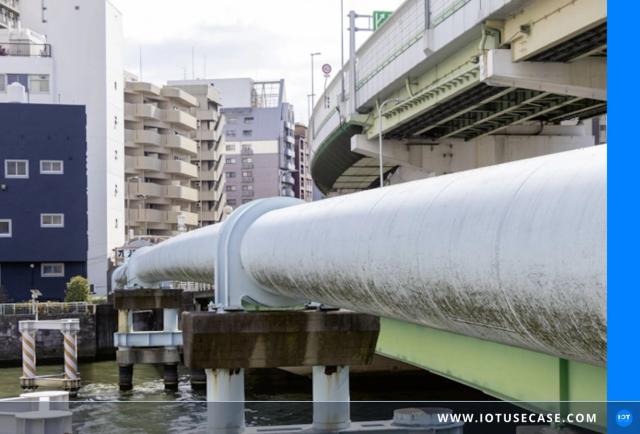
 Condition MonitoringCorrective maintenance
Maintain district heating networks via IIoT pressure monitoring
Jul 27, 2026Read more → Condition MonitoringCorrective maintenance
Filter monitoring in coal plants: manual to LoRaWAN diff-pressure sensor
Mar 30, 2026Read more →
What it is used for
What they are used for, and with what
Based on these manufacturers' solution examples: the most common use cases and the technologies their solutions speak.
Use cases
- Temperature Measurement in Condition Monitoring9 solution examples
- Early Detection of Damage in Condition Monitoring7 solution examples
- Level and Distance Measurement in Condition Monitoring7 solution examples
- Automatic Spare Parts Ordering in Corrective Maintenance6 solution examples
- Vibration Monitoring in Condition Monitoring5 solution examples
What to look for
What pressure sensors measure and how they work
Pressure sensors capture the static or dynamic pressure of gases and liquids. They differ by reference point: gauge pressure refers to the current ambient pressure, absolute pressure to a vacuum and differential pressure to the difference between two measuring points. Inside the measuring cell, pressure deflects a diaphragm. Piezoresistive silicon cells, thin-film strain gauges on stainless steel or ceramic capacitive cells convert this deflection into an electrical signal. The electronics linearize it, compensate for temperature and output it as 4–20 mA, 0–10 V or digitally via IO-Link.
A pressure transmitter delivers a continuous measured value. A pressure switch, by contrast, only reports whether a limit has been exceeded or undershot. Many electronic pressure sensors combine both: they provide a switching output for the controller and transmit the measured value at the same time. Purely mechanical pressure gauges according to EN 837 display the pressure locally; versions with an additional electrical output make the reading available as data.
What matters when selecting a pressure transmitter
The key criteria are the measuring range and pressure type, overload resistance against pressure peaks, the medium and the diaphragm materials, and the process connection. Industrial applications also depend on ingress protection, temperature range, accuracy and long-term stability. IEC 61298 describes how these characteristics are determined and stated for process measurement devices, which makes datasheets comparable. Versions with hazardous area approval are available for explosive atmospheres. To bring data into IT, IO-Link is the interface to look for: the sensor then transmits temperature, diagnostics and parameters in addition to pressure.
Pressure sensors in practice
Typical solution examples include monitoring compressed air networks for leaks, condition monitoring of hydraulic units and pumps, and filter monitoring via differential pressure. Hydrostatic level measurement also relies on a pressure sensor at the bottom of the tank. Manufacturers such as WIKA and Endress+Hauser offer pressure sensors and transmitters with IO-Link or wireless connectivity for retrofitting. This way, measured values reach an IoT platform without new cabling.
Frequently asked questions about pressure sensors
How does a pressure transmitter work?
A pressure transmitter measures how much a diaphragm deflects under pressure. Piezoresistive, thin-film or ceramic capacitive measuring cells convert this deflection into an electrical signal. The electronics amplify, linearize and temperature-compensate the signal and output it as 4–20 mA, 0–10 V or via IO-Link. The result is a measured value that controllers and IoT platforms can process directly.
What is the difference between absolute and gauge pressure?
Gauge pressure refers to the current ambient air pressure, absolute pressure to a perfect vacuum. A gauge pressure sensor reads zero in open air, an absolute pressure sensor reads about one bar. Gauge pressure is standard for most hydraulic, pneumatic and water applications. Absolute pressure is needed when changes in atmospheric pressure would distort the result, for example in vacuum processes.
What is a differential pressure transmitter used for?
A differential pressure transmitter measures the pressure difference between two measuring points. This shows how clogged a filter is, how much air flows through a ventilation duct or how high the level is in a closed vessel. It is one of the most common measurements in building and process technology because it makes changes in condition visible early.
What does 4–20 mA mean for a pressure transmitter?
4–20 mA is an analog current signal where 4 mA corresponds to the start of the measuring range and 20 mA to its end. Because zero sits at 4 mA, the controller detects a broken wire immediately. The current signal is resistant to interference and suits long cable runs. For IoT applications, it needs an analog input or an adapter that digitizes the signal.
What are the benefits of an IO-Link pressure sensor?
An IO-Link pressure sensor transmits the measured value digitally and without conversion losses. It also provides device temperature, diagnostic messages and parameters over the same standard cable. Switch points can be set remotely, and when a device is replaced, the master transfers the settings automatically. Via an IO-Link master with an IoT interface, the data reaches IT through MQTT or OPC UA.
On the podcast
Episodes with these manufacturers and their customers.
- #213Direct Air Capture: From Pilot to Autonomous Industrial ScaleGreenlyte Carbon Technologies · ifm-Unternehmensgruppe · May 13, 2026Listen
- #192Ensuring Quality with IoT: How RAFI and ifm Digitalize Injection Moldingifm-Unternehmensgruppe · RAFI GmbH & Co. KG · Nov 5, 2025Listen
- #12Simple, secure and without detours all sensor data via radio and NB-IoT in the cloud – no limits with the io-key | Kevin Munzert | ifmifm-Unternehmensgruppe · Sep 23, 2020Listen
Related categories
More product categories on the same layer and the technologies solutions in this category connect through.