


Modern plastics processing is characterised by growing quality requirements, increasing cost pressure and the need for maximum process stability. In injection moulding in particular, reproducible conditions and precise process control are key factors in influencing scrap rates, energy consumption and cost-effectiveness. A key prerequisite for this is the availability of reliable process data. At its Bad Waldsee site, the RAFI Group demonstrates how the targeted use of sensors and the moneo IIoT platform can transform raw data into valuable insights for production optimisation.
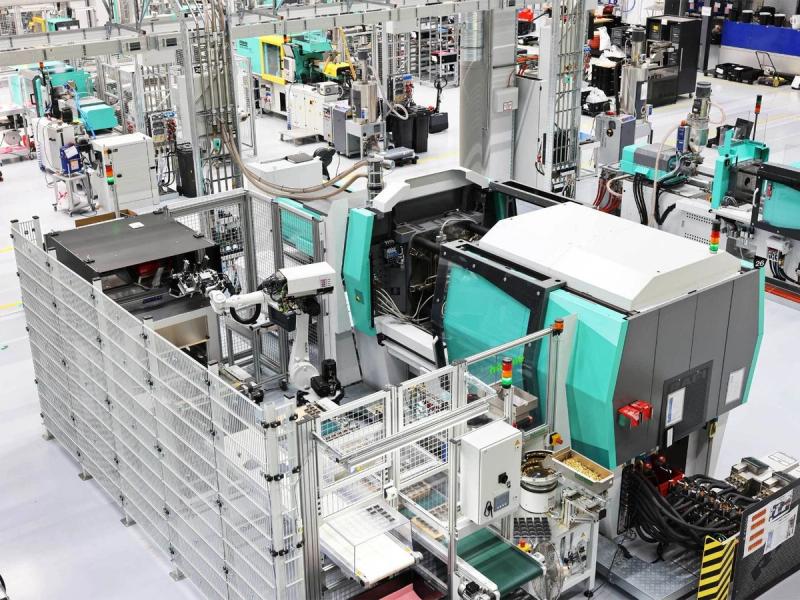
RAFI manufactures plastic injection-moulded parts for both its own standard HMI products and customised customer applications at the Bad Waldsee site. The areas of application range from medical and agricultural technology to industrial and automotive applications. As a result, the requirements regarding dimensional accuracy, surface quality and long-term stability of the components are correspondingly high.
In the injection moulding process, pre-dried plastic granules are melted and injected into the mould under high pressure. The subsequent cooling phase is crucial to component quality. Tool temperature, coolant flow rate and the temperature difference between the supply and return lines must be maintained with precision. Even minor deviations can negatively affect cycle time, dimensional stability or visual properties.
Motivation: Making processes visible instead of relying on guesswork
The project was based on the targeted use of sensors and the moneo IIoT platform from automation specialist ifm. The aim was to move away from assessing the injection moulding process solely on the basis of experience and spot checks. Instead, the process was to be made transparent and traceable through data.
Guido Zoll, from RAFI’s development and design department, describes the approach as follows: “We wanted to understand exactly what happens during an injection moulding cycle and which parameters really affect quality and efficiency.”
The focus was, in particular, on the thermal conditions in the tool, the utilisation of the cooling circuits, and the consumption of auxiliary media such as compressed air and electrical energy. The aim was to create transparency and, on that basis, identify specific opportunities for improvement.
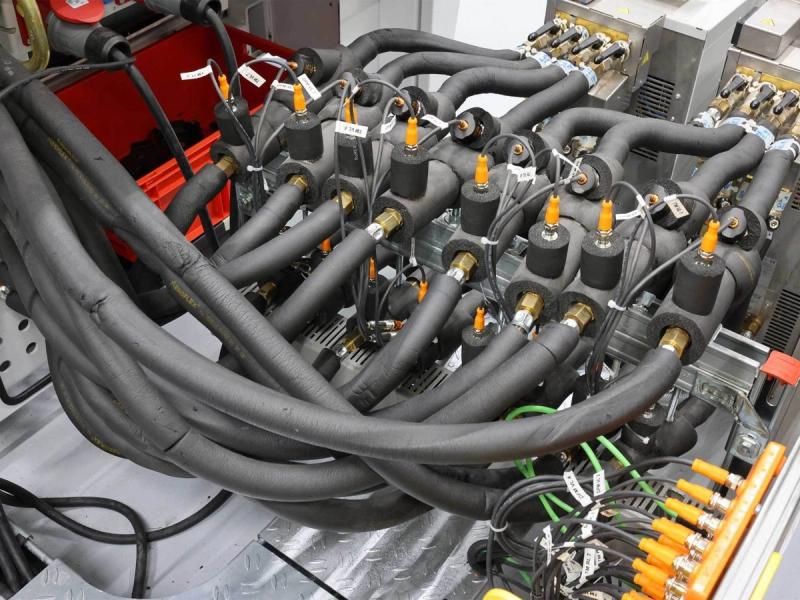
Sensors serving as data sources within the tool and on the machine
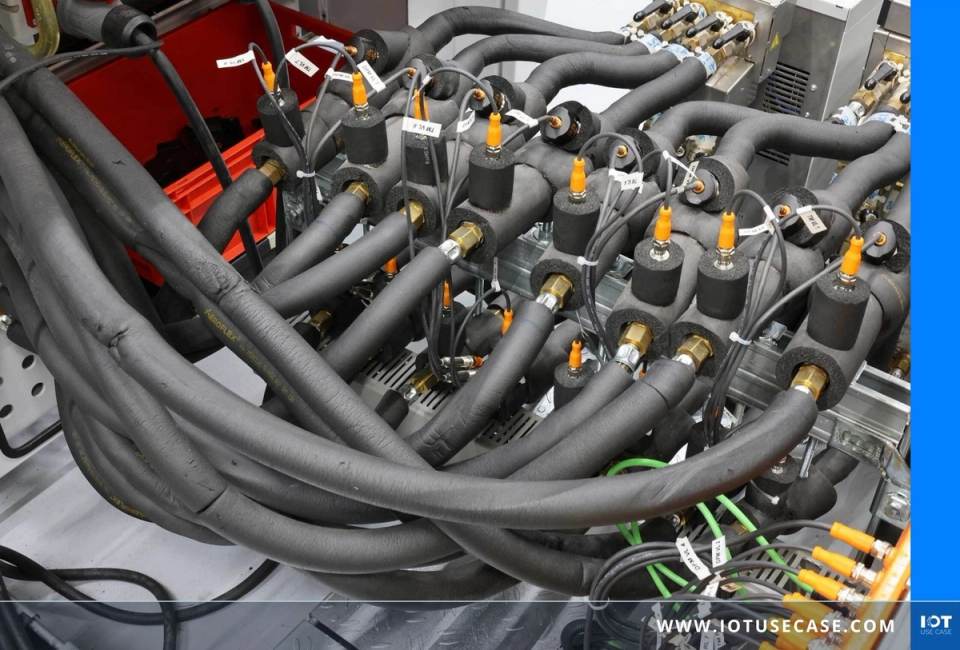
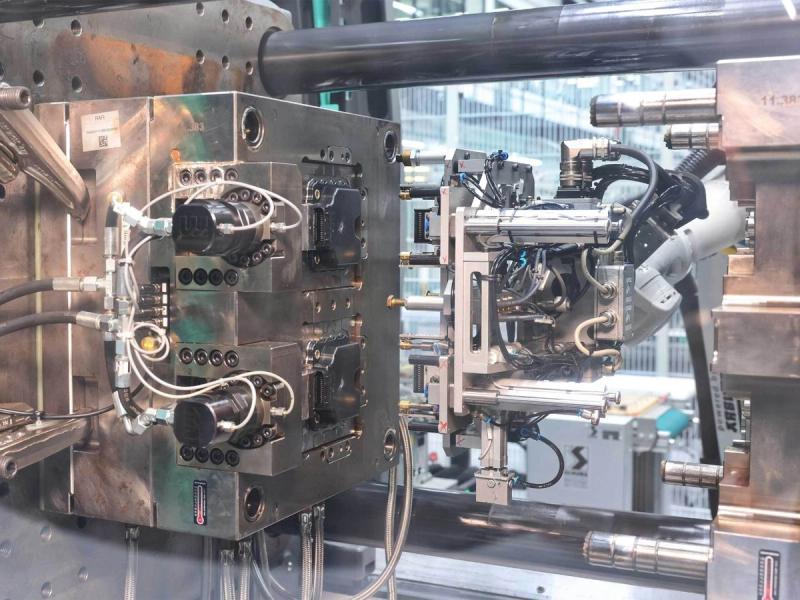
In practice, the various cooling circuits of the injection moulding tools have been equipped with flow and temperature sensors. These sensors continuously measure the flow and return temperatures, as well as the respective cooling water volume. Based on this data, temperature differences can be determined precisely, allowing reliable conclusions to be drawn about the efficiency of tool cooling.
“In addition to the cooling circuit, we also analyse the machine’s power consumption to detect peak loads at an early stage. We also monitor the compressed air supply to both the robot arm and the injection moulding machine, as any leaks or loose fittings are immediately reflected in the characteristic curves. moneo detects and continuously analyses this data. The software automatically triggers an alarm if the measured values exceed the defined limits. This allows faults to be identified in real time, for example, when a robot drops a component due to insufficient pressure,” said Guido Zoll. As compressed air is one of the most expensive forms of energy, even small leaks have a significant economic impact.
moneo as a central IIoT platform
A large volume of sensor data alone does not create any added value. What matters is its structured collection, analysis and interpretation. This is exactly where moneo comes in: “Our IIoT platform provides transparency across the plant and reveals how machines are actually operated,” explains Christoph Schneider, Vice President Product Management Applications at ifm solutions.
Guido Zoll adds: “What’s more, everyone in the team, from the group leader to the shift supervisor, has access to the key performance indicators. Everyone can immediately tell from the characteristic curves whether a process is running smoothly or whether something is going wrong.”
The IO-Link sensors used communicate via IO-Link masters, which aggregate the data and transmit it to the company network via Ethernet. From there, the measured values are fed into moneo. The platform’s modular design proved advantageous right from the start of commissioning:
“Using the moneo configure software module, we were able to configure the sensors in advance and then commission them without any significant downtime,” said Christoph Schneider, who supported the implementation of the project on behalf of ifm.
moneo has a modular structure and covers several levels, ranging from device management and data acquisition to analysis and alarms.
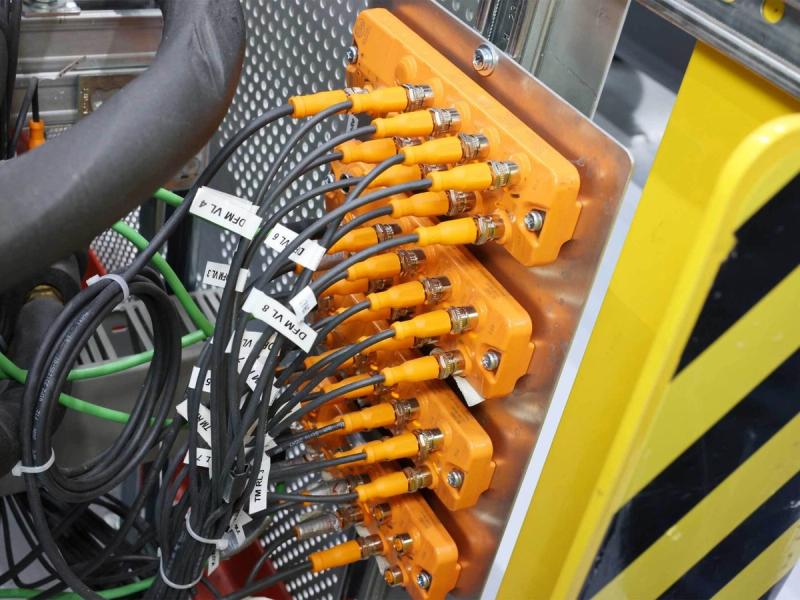
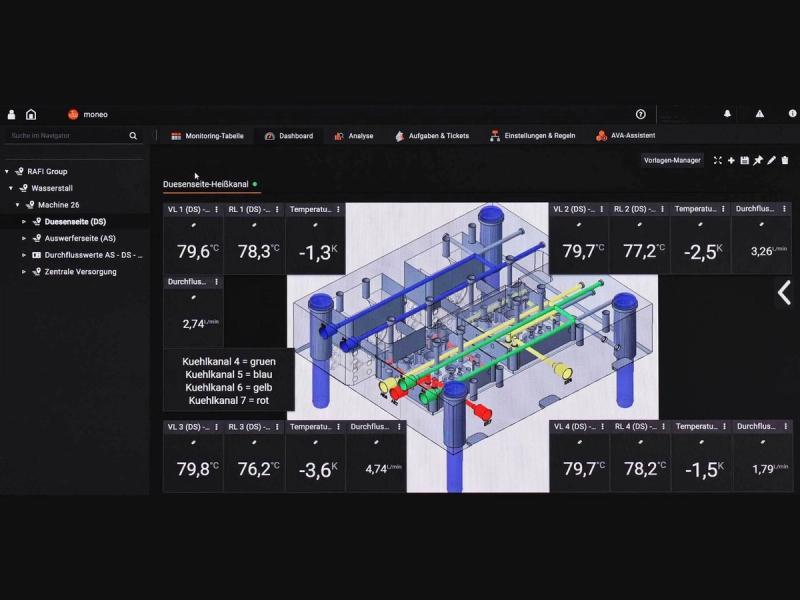
Data acquisition, analysis, visualisation and archiving
In moneo, all sensor data is recorded, stored centrally and processed in a way that enables historical traceability. Dashboards provide a numerical and graphical overview of current process conditions. Users can see at a glance whether temperatures, flow rates or consumption figures are within the defined tolerances.
This transparency, combined with the analysis of measured values to derive meaningful key performance indicators, is a crucial step, as Christoph Schneider, Vice President Product Management Applications at ifm solutions, emphasises: “You can only identify where to start once the data is visible.”
Beyond simply visualising data, moneo enables comprehensive historical tracking. This allows process trends to be analysed over hours, days or weeks and correlated with the quality characteristics of the manufactured components.
Thresholds, alarms and anomaly detection
A key feature of moneo is the automatic monitoring of defined thresholds. The system triggers alerts, for example via email or dashboard notifications, if these thresholds are exceeded or not met. This enables deviations to be detected and corrected at an early stage, before they result in faulty components.
In addition, moneo helps identify anomalies in the process. Changes in temperature or flow rate curves, as well as analyses of the calculated heat transfer, can reveal gradual fouling of cooling channels, for example.
“People often assume that everything is fine as long as the component looks good. However, the data shows whether cooling may be too intense or uneven,” says Christoph Schneider. These intelligent analysis functions of moneo play a key role in ensuring stable processes and consistently high product quality.
From monitoring to active process optimisation
The added value of moneo lies not only in monitoring, but also in deriving specific measures. At RAFI, the data has already helped identify optimisation potential, for example with regard to cooling water volumes.
In one case, it became apparent that, instead of the target temperature difference of two degrees Celsius, only 0.8 degrees had been achieved, clearly indicating an excessive flow rate.
By adjusting the cooling circuit, energy savings were achieved without compromising process stability. At the same time, the data makes it possible to reduce cycle times in a targeted manner and thus increase product output within the same amount of time.
“The added value only arises when actions are derived from the data and fed back into the process,” says Christoph Schneider. Guido Zoll of RAFI agrees: “The basic idea was to conserve resources and use only as much as was actually necessary, in other words, to use cooling water, electricity or compressed air in a targeted manner. We also wanted to avoid peak currents. When several machines switch on their heating elements simultaneously, this leads to high load peaks. Using the data collected, we will be able to ensure that the machines start up at staggered intervals in future. This allows us to reduce these peaks and save energy.”
In the long term, the plan is to connect external systems, such as temperature control units, directly in order to enable automatic adjustment of control variables.
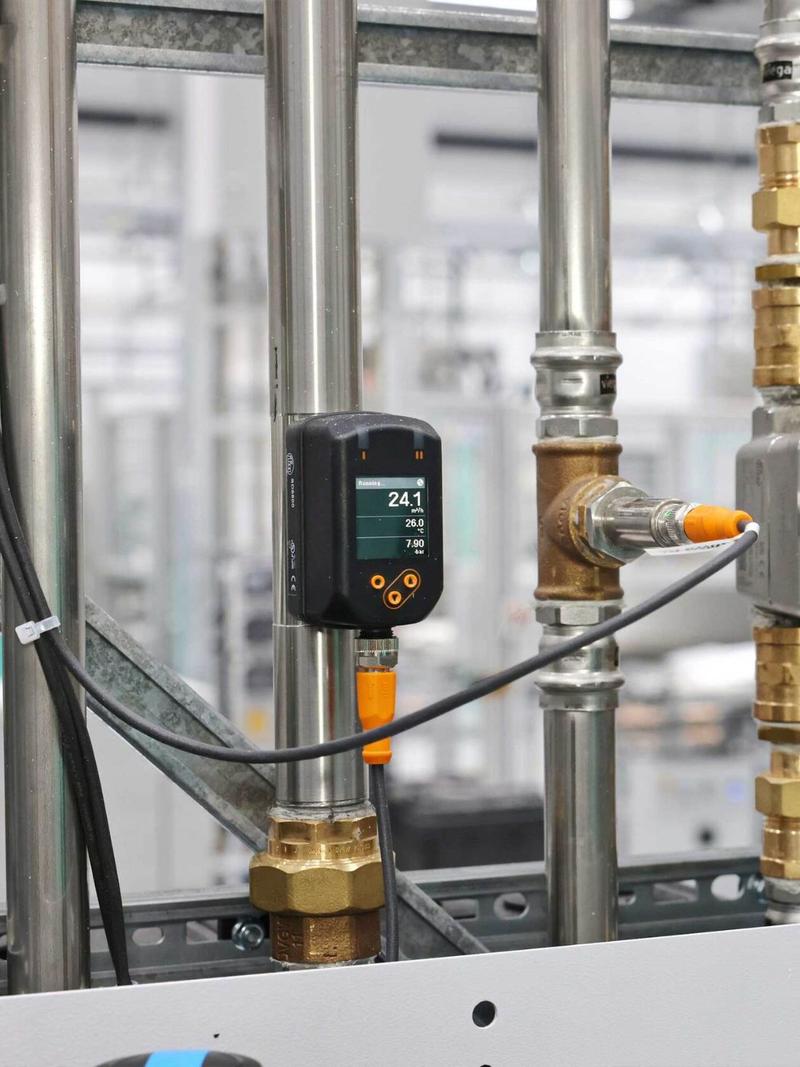
Energy efficiency and sustainability
Alongside quality and process optimisation, energy efficiency is becoming an increasingly important focus. moneo enables the detailed recording, analysis and cost-effective evaluation of energy and media consumption. In this way, potential savings are not only made visible but also quantifiable. A specific example is compressed air consumption: “Shortly after the system went live, we noticed a steady increase in compressed air consumption. We were able to identify the cause immediately and take the necessary action,” says Christoph Schneider.
Thanks to continuous data collection, even the smallest leaks, such as those occurring during machine shutdowns, are reliably detected. Based on the insights gained, it is possible to determine precisely when maintenance measures become cost-effective. In addition to directly reducing costs, this data-driven approach also makes a measurable contribution to lowering energy consumption and CO₂ emissions.
Scaling and further development
RAFI has deliberately designed the project with scalability in mind. Additional machines are to be connected step by step, and further sensors, for example to measure the shop-floor temperature or humidity, are already planned. The aim is to consolidate all quality-related factors in moneo and link them to one another.
“We are currently planning to extend this to other machines. We also intend to integrate additional sensors, for example to measure the humidity in the dryer, the pressure in the tool, the shop-floor temperature or the air conditioning system. The aim is to capture in moneo all the parameters that could affect the quality of the injection-moulded parts,” says Guido Zoll.
Future enhancements, such as condition-based maintenance, automated recommendations for action and AI-supported analyses, are intended to further support the transition from transparency to self-optimising production.
Conclusion
The RAFI example demonstrates that sensors in injection moulding only realise their full potential when combined with a high-performance IIoT platform. moneo serves as the central platform for production, collecting, organising and interpreting process data and making it available to different user roles. The resulting transparency not only enables consistent quality assurance, but also targeted energy savings and the continuous optimisation of cycle times. This makes moneo a key tool for data-driven decision-making and sustainable competitiveness in plastic injection moulding.
Source: ifm