
Industrial Temperature Sensors for IoT Applications
An industrial temperature sensor measures the temperature of a medium or surface and converts it into an electrical signal. Resistance thermometers such as PT100 and PT1000, thermocouples and non-contact pyrometers are common in industry. In the IoT stack, they supply process and condition data, for example for quality assurance, energy monitoring and condition monitoring.

Co-Founder & CTO/CPO, Greenlyte Carbon Technologies 
Magna Exteriors (Meerane) GmbH, Manager Automation, Magna 
Salzgitter Flachstahl
3 users from the network have already implemented this
Talk implementation with other users
In the user group, 300+ users discuss every month what worked in their projects and what they would do differently today. No vendors in the room, honest exchange under NDA.
Who offers it
Temperature sensors in practice
3 manufacturers from our partner network with 41 solution examples. Those with the most documented use in this category come first.
- Get in touch with Endress+Hauser

Endress+Hauser
Temperature sensors7 solution examples


 Condition MonitoringDigital Documentation
Seamlessly integrated down to field level – including hazardous areas: Ethernet-APL networks the process industry
Jun 2, 2025Read more →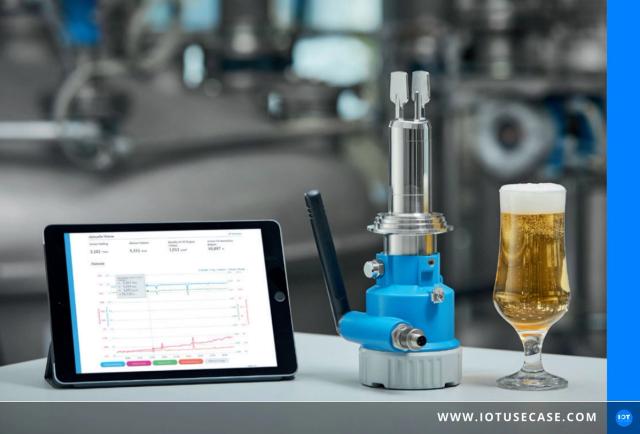 Condition MonitoringDigital Documentation
Beer brewers benefit from fermentation monitoring
Dec 12, 2022Read more →

 Fraud and Loss PreventionCondition MonitoringDigital Documentation
Detect floods earlier with connected water level sensors and AI
Jun 18, 2026Read more → 
ifm-Unternehmensgruppe
Temperature sensors27 solution examples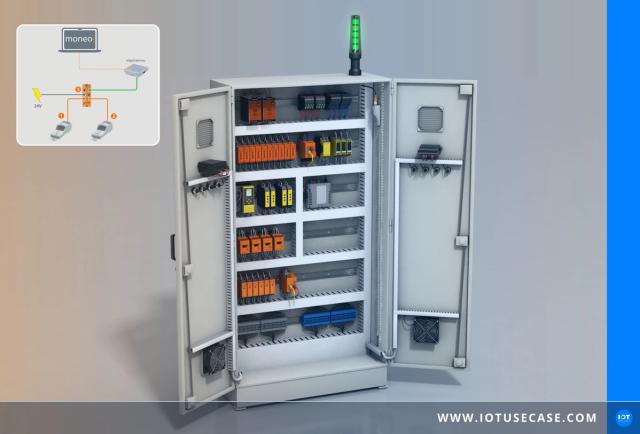


 Condition MonitoringCorrective maintenance
Control cabinet monitoring – protecting and monitoring components
Jul 31, 2026Read more →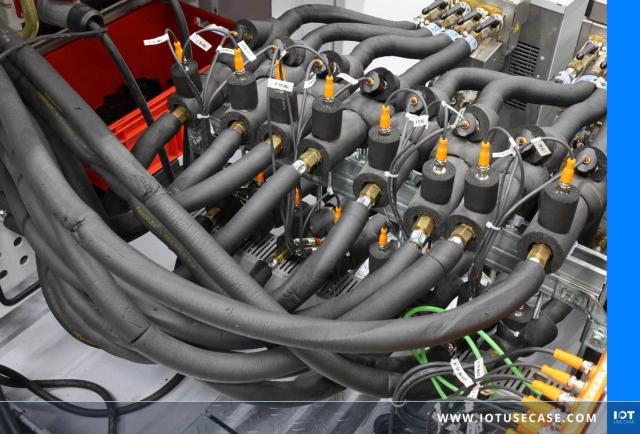

 Condition MonitoringEnergy Monitoring
Monitoring injection mould cooling via IO-Link to cut energy use
From gut feeling to hard data: at RAFI in Bad Waldsee, sensors and the moneo IIoT platform make the injection moulding process transparent. Temperatures, flow rates, compressed air and energy consumption are recorded, visualised and analysed continuously.
Sep 21, 2026Read more →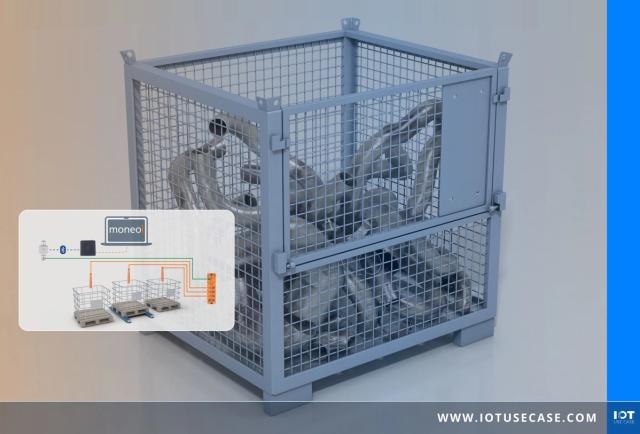
 Condition MonitoringAsset Management
Precisely monitoring grid boxes with fill-level and weight sensing
Capture fill level and weight of mesh box pallets without any wiring: ifm sends the sensor data to moneo via Bluetooth Mesh and makes pickups plannable.
Sep 14, 2026Read more →
WIKA Alexander Wiegand SE & Co. KG
Temperature sensors7 solution examples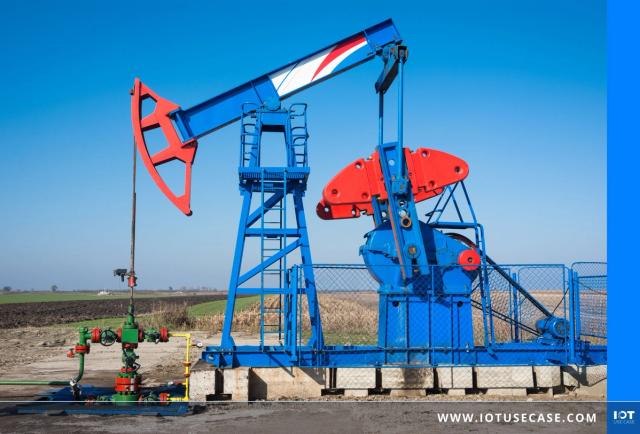


 Condition MonitoringCorrective maintenanceDigital Documentation
Proving well integrity continuously via LoRaWAN without site visits
WIKA captures annulus and tubing pressure at oil and gas wells via LoRaWAN®, without laying a cable. The wireless sensor reports anomalies within minutes and site inspections drop by over 75 percent.
Sep 17, 2026Read more →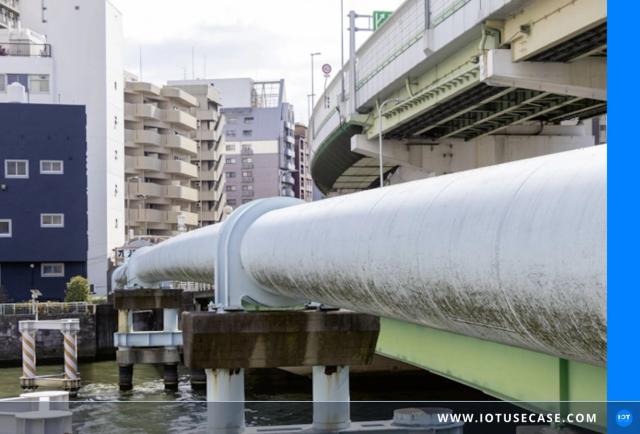
 Condition MonitoringCorrective maintenance
Maintain district heating networks via IIoT pressure monitoring
Jul 27, 2026Read more → Condition MonitoringCorrective maintenance
Filter monitoring in coal plants: manual to LoRaWAN diff-pressure sensor
Mar 30, 2026Read more →
What it is used for
What they are used for, and with what
Based on these manufacturers' solution examples: the most common use cases and the technologies their solutions speak.
Use cases
- Temperature Measurement in Condition Monitoring10 solution examples
- Early Detection of Damage in Condition Monitoring7 solution examples
- Level and Distance Measurement in Condition Monitoring7 solution examples
- Automatic Spare Parts Ordering in Corrective Maintenance6 solution examples
- Vibration Monitoring in Condition Monitoring5 solution examples
What to look for
Measuring principles: RTD, thermocouple, pyrometer
Resistance temperature detectors, or RTDs, use the fact that the electrical resistance of platinum changes almost linearly with temperature. A PT100 has exactly 100 ohms at 0 °C, a PT1000 exactly 1,000 ohms. The curve and accuracy classes are defined in IEC 60751. RTDs are precise, stable over the long term and cover typical process temperatures. Thermocouples join two dissimilar metals and, through the Seebeck effect, generate a small voltage that depends on the temperature difference between the measuring junction and the reference junction. They are rugged, respond quickly and suit high temperatures; types such as K or J are standardized in IEC 60584. Pyrometers measure the thermal radiation of a surface without contact, for example on moving or very hot parts.
From sensing element to data point
The sensing element itself supplies a resistance or a thermoelectric voltage. A temperature transmitter converts this raw signal into a standard signal such as 4–20 mA or into a digital signal. It sits in the connection head, on a DIN rail or is integrated directly into a compact sensor. Compact temperature sensors with IO-Link transmit the measured value, diagnostics and parameters digitally and make a separate analog card unnecessary. Temperature switches are a separate device type: they only switch when a limit is reached.
What matters when selecting an industrial temperature sensor
Key factors are the measuring range, accuracy class and response time, the insertion length and a suitable thermowell for pressure and flow. For RTDs, the wiring determines accuracy: a 3-wire or 4-wire connection compensates for lead resistance. Food and pharmaceutical applications add hygienic process connections, hazardous areas require explosion protection approvals. Manufacturers such as WIKA and Endress+Hauser offer temperature sensors and transmitters with IO-Link or wireless connectivity. In solution examples, they monitor cold chains, motor bearing temperatures or temperature profiles in furnaces and reactors. Combined with pressure, flow or vibration data, temperature values help identify the causes of deviations faster.
Frequently asked questions about industrial temperature sensors
PT100 vs PT1000: what is the difference?
Both are platinum resistance thermometers: the PT100 has 100 ohms at 0 °C, the PT1000 has 1,000 ohms. The higher base resistance of the PT1000 makes it less sensitive to the resistance of long leads, so a 2-wire connection is often sufficient. The PT100 is more common in the process industry and usually runs with a 3-wire or 4-wire connection. Accuracy depends on the class, not the type.
RTD vs thermocouple: which one should be used?
An RTD is the better choice for precise, stable measurements at typical process temperatures. A thermocouple is preferred for very high temperatures, fast changes or harsh mechanical conditions. RTDs offer higher accuracy and less drift, thermocouples are more robust and cover a wider range. Many plants use both: RTDs for product quality, thermocouples for furnaces, exhaust gas and hot zones.
What is a type K thermocouple used for?
A type K thermocouple pairs a nickel-chromium and a nickel-aluminum alloy and handles high temperatures up to well over 1,000 °C. It is rugged, inexpensive and responds quickly, which is why it is widely used in furnaces, exhaust systems, plastics machinery and heat treatment. Compared with a PT100, it is less accurate and drifts more. Type K is standardized in IEC 60584.
What is a 3-wire RTD?
A 3-wire RTD uses a third lead to compensate for the resistance of the connecting cable. The transmitter measures the lead resistance separately and subtracts it from the result. This is the standard connection for PT100 sensors in industry because it offers good accuracy at moderate cost. For the highest precision, a 4-wire connection eliminates lead resistance almost entirely.
What does a temperature transmitter do?
A temperature transmitter converts the raw signal of an RTD or thermocouple into an interference-resistant standard signal such as 4–20 mA or into a digital signal. It linearizes the value, provides cold junction compensation for thermocouples and reports sensor breaks. Modern transmitters also communicate via HART or IO-Link, making temperature data directly usable for IoT platforms.
On the podcast
Episodes with these manufacturers and their customers.
- #213Direct Air Capture: From Pilot to Autonomous Industrial ScaleGreenlyte Carbon Technologies · ifm-Unternehmensgruppe · May 13, 2026Listen
- #192Ensuring Quality with IoT: How RAFI and ifm Digitalize Injection Moldingifm-Unternehmensgruppe · RAFI GmbH & Co. KG · Nov 5, 2025Listen
- #12Simple, secure and without detours all sensor data via radio and NB-IoT in the cloud – no limits with the io-key | Kevin Munzert | ifmifm-Unternehmensgruppe · Sep 23, 2020Listen
Related categories
More product categories on the same layer and the technologies solutions in this category connect through.