
Industrial force sensors for IoT applications
A force sensor measures static or dynamic forces such as tension, compression or bending. The category includes force transducers, torque sensors and load cells. Most use strain gauges and output mV/V, 4–20 mA or IO-Link. In the IoT stack they supply data for process monitoring, quality records and load analysis.

CFL maintenance manager, Société Nationale des Chemins de Fer Luxembourgeois 
master gardener, Dercks Gartenbau
2 users from the network have already implemented this
Talk implementation with other users
In the user group, 300+ users discuss every month what worked in their projects and what they would do differently today. No vendors in the room, honest exchange under NDA.
Who offers it
Force sensors in practice
1 manufacturer from our partner network with 9 solution examples. Those with the most documented use in this category come first.
- Get in touch with igus SE & Co. KG

igus SE & Co. KG
Force sensors9 solution examples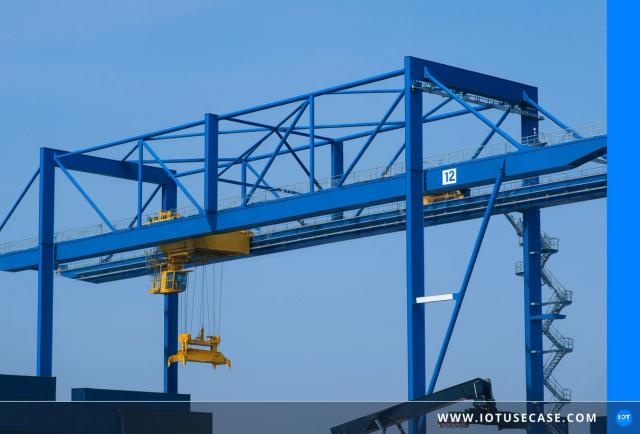


 Condition MonitoringPredictive Maintenance
Extending the service life of energy chains in RMG cranes – with condition monitoring and predictive maintenance
Sep 2, 2025Read more →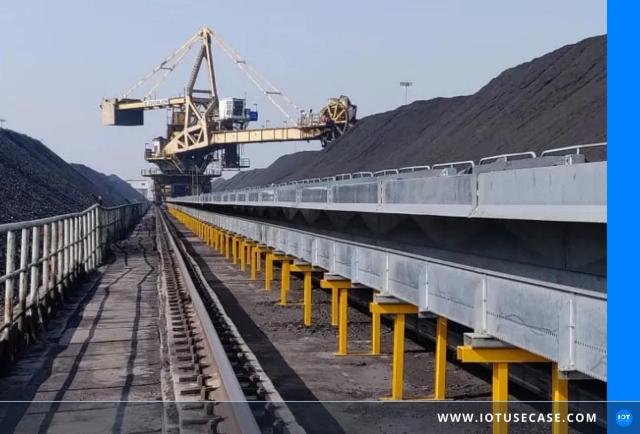
 Condition Monitoring
Safe bulk material conveying with energy chains and sensors in bucket wheel excavator
Jul 1, 2025Read more →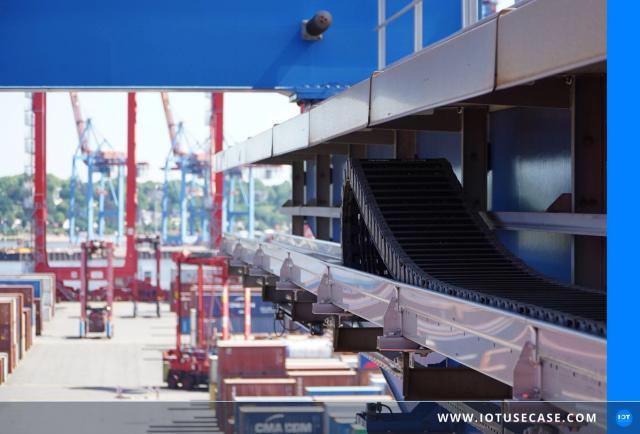
 Condition MonitoringPredictive Maintenance
Energy chains ensure continuous operation of container cranes under extreme conditions
Jun 26, 2025Read more →
What it is used for
What they are used for, and with what
Based on these manufacturers' solution examples: the most common use cases and the technologies their solutions speak.
Use cases
- Cable and Chain Monitoring in Predictive Maintenance9 solution examples
- Tension/Thrust Monitoring in Condition Monitoring9 solution examples
- Early Detection of Damage in Condition Monitoring7 solution examples
- Break Detection in Condition Monitoring6 solution examples
- Tension/Thrust Monitoring in Predictive Maintenance6 solution examples
What to look for
Measuring principle and designs
Most force sensors work with strain gauges. A deformation element made of steel or aluminum stretches minimally under load, and the bonded strain gauges change their electrical resistance. Wired in a Wheatstone bridge, they produce a signal of a few millivolts per volt of excitation voltage, which an amplifier conditions. Many sensors already include this amplifier and output 4–20 mA, 0–10 V or IO-Link. For highly dynamic processes there are piezoelectric force sensors, which are very stiff and capture rapid force curves.
Depending on the installation, there are tension and compression force transducers, ring force transducers, bending beams and shear beams. Torque sensors measure torque on rotating shafts or as reaction torque on stationary parts.
Force sensor, load cell or torque sensor
Load cells are force transducers designed and calibrated specifically for weighing. For legal-for-trade applications, OIML R 60 defines the accuracy classes. Force-proving instruments used as references for verifying materials testing machines are calibrated and classified according to ISO 376. To monitor process forces, for example in press-fitting or joining, a force transducer is the right choice. To determine weight or fill quantities, a load cell is used. For drives, screwdrivers and test benches, a torque sensor fits best.
Selection and use in practice
When selecting a sensor, it helps to ask whether the force is static or dynamic, in which direction it acts and how much space is available. Side loads and bending moments distort the measurement, so clean force introduction is part of the design. Overload protection prevents damage from misuse or collisions.
The decisive criteria are rated force, accuracy class, overload capacity, design and output signal. WIKA offers force transducers for industrial applications. With i.Sense EC.P, igus integrates a force sensor into the driver of an energy chain that continuously measures push and pull forces, detecting blockages and misalignment early. Further solution examples include press-fit monitoring in assembly, rope force measurement on hoists and vessel weighing with load cells.
Frequently asked questions about force sensors
What is the difference between a force sensor and a load cell?
A load cell is a force sensor designed and calibrated specifically for weighing. It measures the weight force of a load, usually with high accuracy and long-term stability. Force sensors in the broader sense also capture dynamic process forces, for example during press-fitting, bending or pulling. For legal-for-trade scales, load cells must meet the accuracy classes defined in OIML R 60.
How does a strain gauge force sensor work?
A strain gauge force sensor consists of a deformation element with bonded strain gauges. Under load, the element deforms minimally and the gauges stretch or compress, changing their resistance. Four gauges in a Wheatstone bridge convert this into a voltage signal specified in mV/V. An amplifier turns it into a standard signal or a digital value.
What is a force transducer?
A force transducer converts a mechanical force into an electrical signal. It is installed between two components and measures the transmitted tension or compression force, for example in presses, test benches or joining stations. Most designs use strain gauges on a deformation element. Versions with integrated amplifiers output 4–20 mA, 0–10 V or IO-Link directly.
What is a rotary torque transducer?
A rotary torque transducer measures the torque transmitted through a rotating shaft, in newton meters. It sits in the drive train between motor and load and usually transmits the signal without contact. Reaction torque sensors, in contrast, are mounted in a fixed position and measure the counter-torque. Typical applications are test benches, screwdriving systems, mixers and drives.
When is a piezoelectric force sensor the right choice?
Piezoelectric force sensors suit fast, dynamic force curves, for example in punching, press-fitting or impact processes. A crystal generates an electrical charge under load, which a charge amplifier evaluates. The sensors are very stiff and compact. For long-lasting static measurements, strain gauge sensors are better suited because the piezoelectric signal decays over time.
On the podcast
Episodes with these manufacturers and their customers.
- #204Exact Irrigation System: Saving > 60% Water through Energy Chains and Monitoringigus SE & Co. KG · Dercks Gartenbau · Feb 4, 2026Listen
- #144Condition monitoring in the crane industry: efficient cable routing and less downtime with energy chainsigus SE & Co. KG · Oct 9, 2024Listen
- #88Predictive Maintenance and Condition Monitoring for Washing Stationsigus SE & Co. KG · Société Nationale des Chemins de Fer Luxembourgeois · Feb 22, 2023Listen
Related categories
More product categories on the same layer and the technologies solutions in this category connect through.