
Methane gas detectors for industrial safety and process monitoring
Methane sensing measures the concentration of methane (CH4) in air or process gas, usually as a percentage of the lower explosive limit. Catalytic, infrared, semiconductor and laser sensors are common. They are used in gas detection systems, for process control in biogas plants and for emission monitoring. Via 4-20 mA, Modbus or wireless links, readings become IoT data.
Talk implementation with other users
In the user group, 300+ users discuss every month what worked in their projects and what they would do differently today. No vendors in the room, honest exchange under NDA.
Who offers it
Methane sensing in practice
1 manufacturer from our partner network with 3 solution examples. Those with the most documented use in this category come first.
- Get in touch with Honeywell

Honeywell
Methane sensing3 solution examples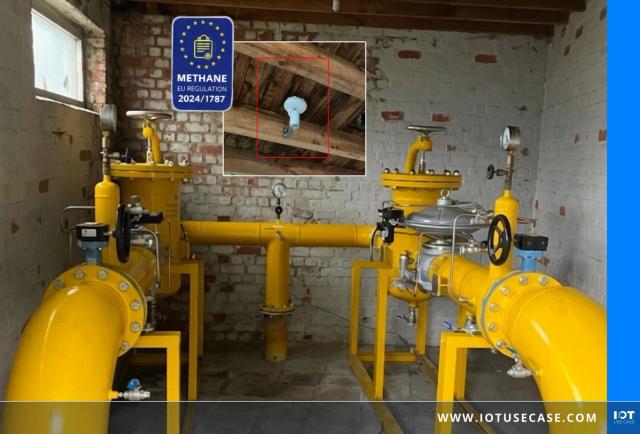



 Digital DocumentationCondition MonitoringCorrective maintenance
Detect gas leaks with continuous methane monitoring using IoT sensors
Jun 10, 2026Read more →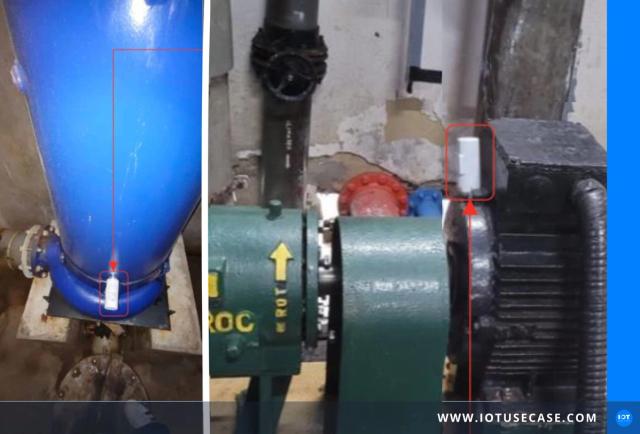 Condition MonitoringCorrective maintenancePredictive Maintenance
Early Detection of Pump Failures in Aquaculture Systems
Sep 11, 2025Read more →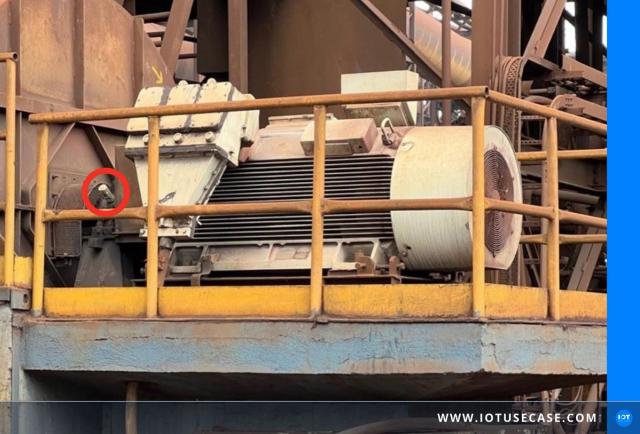 Condition MonitoringCorrective maintenancePredictive Maintenance
Condition monitoring of fans in steel manufacturing
Aug 12, 2025Read more →
What it is used for
What they are used for, and with what
Based on these manufacturers' solution examples: the most common use cases and the technologies their solutions speak.
Use cases
- Moisture Measurement in Condition Monitoring3 solution examples
- Temperature Measurement in Condition Monitoring3 solution examples
- Acoustic Monitoring in Condition Monitoring2 solution examples
- Early Detection of Damage in Condition Monitoring2 solution examples
- Early Detection of Damage in Corrective Maintenance2 solution examples
What to look for
How methane sensors work
Methane sensors measure the concentration of methane (CH4) in ambient air or process gas. Methane is flammable and forms an explosive mixture with air from about 4.4 percent by volume, the lower explosive limit (LEL). Sensors for explosion protection therefore usually report the concentration as a percentage of the LEL, while process measurements use percent by volume or ppm.
Four measuring principles are common. Catalytic sensors oxidize the gas on a heated element and measure the resulting heat. They are proven, require oxygen and are sensitive to silicones and sulfur compounds. Infrared sensors (NDIR) measure how strongly methane absorbs infrared light. They work without oxygen and offer good long-term stability. Semiconductor sensors are low-cost and sensitive but less selective. Laser-based methods detect methane remotely from a distance, for example when surveying pipelines for leaks.
Applications and scope
Methane sensing is needed wherever methane is produced, stored or transported: in biogas plants, wastewater treatment plants, landfills, gas networks and compressor stations, in mining and in boiler houses and industrial furnaces. Fixed gas detection systems protect people and assets and trigger ventilation, shutdown or alarms when defined thresholds are exceeded. Measurements also support process control, such as determining the methane content of biogas, and increasingly the verification of methane emissions. Portable gas detectors for personal protection usually measure several gases at once and complement fixed monitoring.
What to look for when selecting a detector
The key criteria are measuring principle, measuring range, response time and maintenance and calibration intervals. Gas detectors are covered by the EN 60079-29 series, and hazardous areas require ATEX-certified devices. As an IoT data source, the outputs matter: 4-20 mA and Modbus are standard, and wireless versions, for example with LoRaWAN, allow distributed measuring points to be monitored without cabling. In distributed facilities such as gas networks or wastewater plants, readings from many sites flow into a central platform that forwards alarms and keeps track of calibration and maintenance dates. Honeywell is one of the manufacturers of fixed and portable gas detectors.
Frequently asked questions about methane sensing
How do you detect methane gas?
Methane gas is detected with a gas sensor based on one of four principles: catalytic combustion, infrared absorption (NDIR), semiconductor or laser. Fixed gas detection in industrial facilities mainly uses catalytic and infrared sensors. Laser methods are suited to remote leak detection from a distance. Readings are usually shown as a percentage of the lower explosive limit.
Infrared methane detector or catalytic sensor: which is better?
An infrared methane detector is usually the better choice for continuous operation, because it works without oxygen, is not affected by silicones or sulfur compounds and allows longer calibration intervals. Catalytic sensors are proven, lower in cost and respond to many flammable gases at once. Which principle fits depends on the environment, the gas composition and the maintenance concept.
At what level does a methane gas alarm trigger?
A methane gas alarm usually works with two or more thresholds set as a percentage of the lower explosive limit. These thresholds are typically well below the LEL, for example at 10 and 20 percent, long before an explosive mixture forms. The exact values and the resulting actions, such as ventilation or shutdown, are defined by the risk assessment of the specific facility.
Fixed gas detection system or portable methane detector?
A fixed gas detection system continuously monitors a defined area, such as a compressor room or a biogas plant, and can automatically trigger ventilation or shutdown. A portable methane detector protects the person wearing it, for example during maintenance or confined space entry. Many facilities use both. For IoT applications, fixed detectors with a data output are the most relevant.
How does a laser methane leak detector work?
A laser methane leak detector emits light at a wavelength that methane specifically absorbs and measures the reflected signal. The attenuation indicates the amount of methane along the beam. This makes it possible to find leaks remotely from several meters away, for example on pipelines, digester roofs or hard-to-reach parts of a facility. The method is highly selective for methane.
On the podcast
Episodes with these manufacturers and their customers.
Related categories
More product categories on the same layer and the technologies solutions in this category connect through.