OPC UA Technology Solutions
- 23 verified partners
- 45 solution examples online
- More in our database
- 12 industries
People with OPC UA experience in the network
Users and contacts at our partners who have used this technology in their projects. Open a profile to get in touch directly.









What OPC UA is used for
Standardised, vendor-independent machine communication
Machines and controllers from different vendors deliver their data through the same interface. Instead of maintaining a separate driver per machine type, one OPC UA client is enough.
Secure IT/OT integration with certificates
Encryption, signing and authentication via X.509 certificates are part of the standard. Machine data can be passed to IT systems without opening up the production network.
Semantic data description for AI analytics
OPC UA transfers not only values but meaning: unit, data type and position in the machine. This spares analytics and AI models the tedious mapping of raw data.
What is OPC UA?
OPC UA (Open Platform Communications Unified Architecture) is a vendor-independent standard for industrial data exchange, maintained by the OPC Foundation and standardised as IEC 62541. Unlike a pure transport protocol, OPC UA also describes what the data means: a machine exposes its values as an information model, with data types, units, methods and relationships. A client can browse this model and understand the data without knowing the machine in advance.
How OPC UA is used in the IIoT
OPC UA is the common interface for getting data out of controllers, machines and plants, for example for MES, production data acquisition, OEE analysis or condition monitoring. Many current controllers from Siemens, Beckhoff, B&R or Bosch Rexroth have a built-in OPC UA server. For entire machine classes there are Companion Specifications that define how, for instance, an injection moulding machine (EUROMAP 77) or a machine tool (umati) describes its data. Machines from different vendors thus speak the same language.
OPC UA or MQTT?
OPC UA traditionally follows the client-server model: a client connects to a machine and reads or subscribes to values. This is ideal for connecting individual machines but scales less well when hundreds of machines have to feed many applications. That is where MQTT is strong. Many architectures therefore combine both: OPC UA at the machine, MQTT for distribution. With OPC UA PubSub, OPC UA can now also send its information models over MQTT itself.
How an OPC UA connection is structured
On the machine side, the OPC UA server runs either directly in the controller or in an upstream gateway. It publishes an address space with objects, variables and methods that a client can browse. The client, such as an MES, an edge platform or a visualisation tool, logs on with a certificate and subscribes to the values it needs. Changes are then pushed to it automatically instead of it having to poll cyclically. The standard connection runs over TCP on port 4840.
What to consider when choosing
First check whether your existing controllers already include an OPC UA server or whether it needs to be licensed. Older machines without OPC UA are connected through gateways that translate Profinet, Modbus or S7 protocols. Certificate management, often underestimated in operation, also matters, as does whether a Companion Specification exists for your machine class. Using one saves a lot of mapping work later.
Solution examples
62 online · more in the databaseFunctional area
Industry



Consolidating fragmented machine communication and separating IT from OT
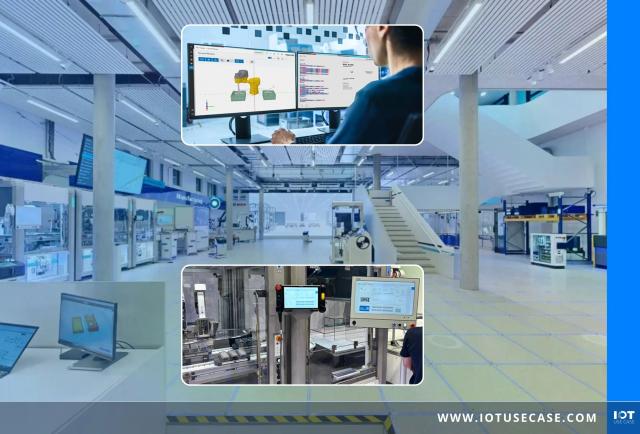


Reconfiguring production lines flexibly with the asset administration shell
At the Bosch Rexroth model factory, the Asset Administration Shell connects machines in a standardised way. XITASO adds brownfield machines with a function block.




Putting existing IO-Link data to use for condition monitoring
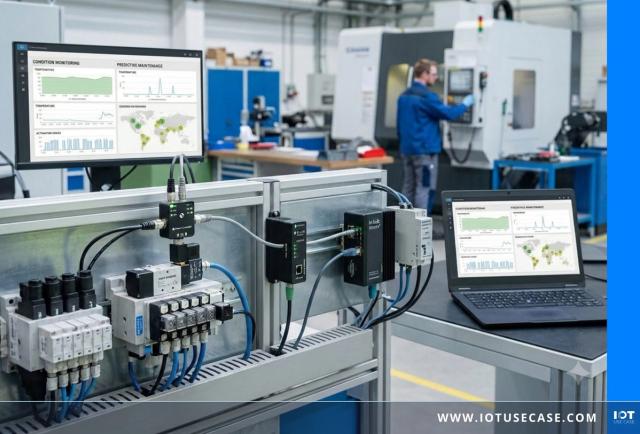
IO-Link devices deliver more than switching signals. nass magnet and in.hub carry diagnostic data from the valve into IT as a basis for condition monitoring.


Integrate CNC data via OPC UA without system redesign
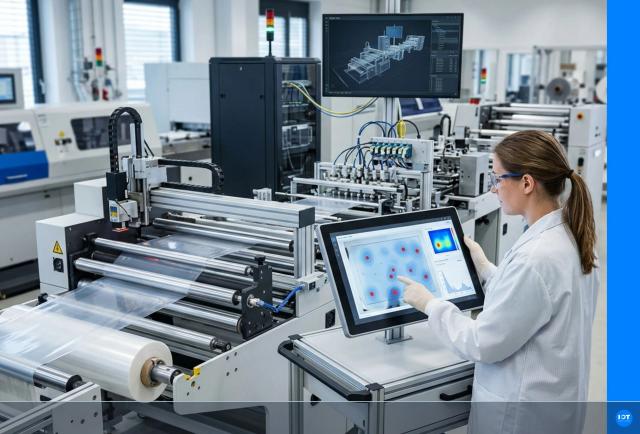

Process data analysis reveals the causes of scrap
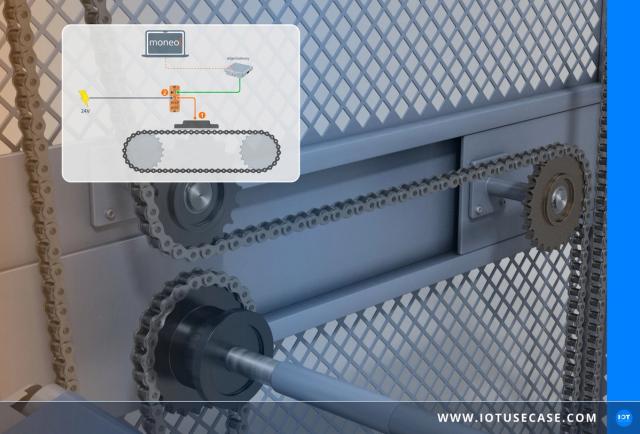

Roller chain monitoring via IO-Link to prevent downtime
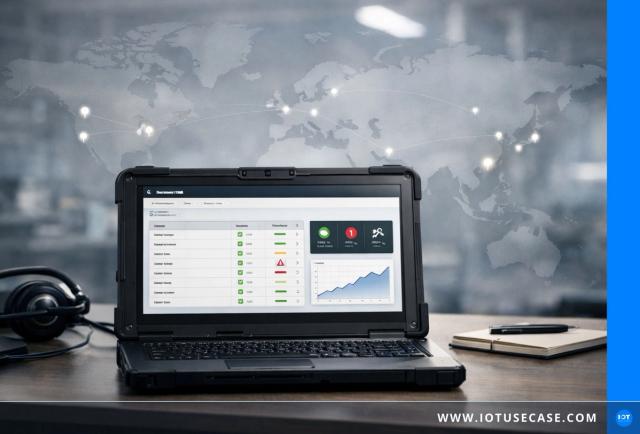





Digital service portal as a white-label solution





Interface connection for CNC machines in live operation
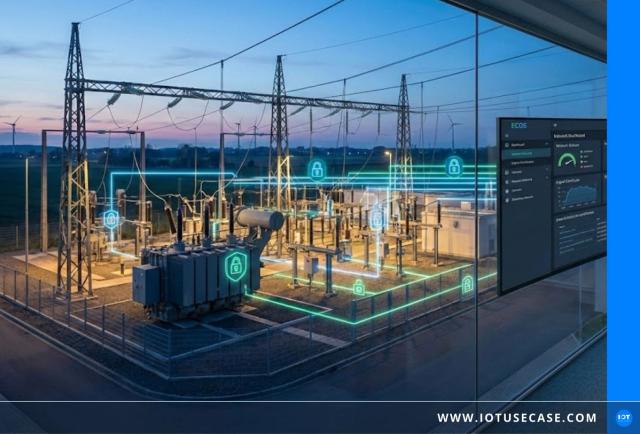


Automated PKI certificate management for secure energy infrastructure
User Group
OPC UA is a topic in the Tech Round (OT/IT/IIoT decision-makers)
300+ practitioners discuss specific questions from their projects every month, including about OPC UA. No vendors in the room, honest exchange under NDA. Personal introductory call before admission.
Join the waiting list →Use cases implemented with OPC UA
Structured access to files and documents
27 solution examples →
Digital Production Logs and Manufacturing Documents
9 solution examples →
Track cycle times, utilization, and throughput
9 solution examples →
Digital tracking of products and processes
8 solution examples →
Seamless control throughout production
8 solution examples →
Audits and Reportings
6 solution examples →
Correlation of Production Parameters
6 solution examples →
Temperature Measurement in Condition Monitoring
6 solution examples →
Early Detection of Damage in Condition Monitoring
5 solution examples →
Companies implementing OPC UA
23 verifiedVendors and integrators whose OPC UA projects you can find in our solution examples.

OPC Foundation
7 solution examples

ifm-Unternehmensgruppe
6 solution examples

Portainer.io
3 solution examples

Prosys OPC
3 solution examples

soffico GmbH
3 solution examples

ALD Vacuum Technologies GmbH
2 solution examples

Exor International SpA
2 solution examples

IXON
2 solution examples

symmedia GmbH
2 solution examples

WAGO GmbH & Co. KG
2 solution examples

XITASO GmbH
2 solution examples

BLUE-ZONE GmbH
1 solution example

Cumulocity GmbH
1 solution example

Cybus
1 solution example

ECOS Technology GmbH
1 solution example

EMQ GmbH
1 solution example

ENLYZE GmbH
1 solution example

Harting Technology Group
1 solution example

in.hub GmbH
1 solution example

Innomat-Automation AG
1 solution example

KURZ Digital Solutions GmbH & Co. KG
1 solution example

Microsoft
1 solution example

Schaeffler Digital Solutions GmbH
1 solution example
Podcast episodes on OPC UA
50 episodesFrom the IoT Use Case Podcast, newest first. Each episode opens its own page with audio, summary and transcript.
- #224Data Harmonisation with AIoT: What Do AI Agents Need for the Mapping?Cumulocity GmbH · 47 min · Sep 23, 2026To the episode
- #223IO-Link to MQTT: Connecting Sensor Data Without Touching the ControllerTURCK GmbH · 39 min · Sep 2, 2026To the episode
- #218Asset Administration Shell in the Model Factory: Reconfiguring Production Lines FlexiblyXITASO GmbH · Bosch Rexroth AG · 36 min · Jul 15, 2026To the episode
- #217Retrofit Utility Networks: Wireless Condition Data, Not Inspection TripsWIKA Alexander Wiegand SE & Co. KG · 31 min · Jul 8, 2026To the episode
- #209Earlier flood detection with radar and NB-IoTEndress+Hauser · 30 min · Mar 25, 2026To the episode
More technologies: IoT Protocols & Fieldbus
All Technology Solutions →Industrial protocols pull data from sensors, controllers and machines. Which protocol a plant speaks determines how easily existing machines can be retrofitted for the IIoT.