NB-IoT Technology Solutions
- 6 verified partners
- 10 solution examples online
- More in our database
- 11 industries
People with NB-IoT experience in the network
Users and contacts at our partners who have used this technology in their projects. Open a profile to get in touch directly.







What NB-IoT is used for
Connecting stationary battery-powered sensors via the existing cellular network
The sensor only needs a SIM card, no gateway of its own and no Wi-Fi. The mobile operator's network already exists, even at remote or third-party sites.
Deep building penetration (basements, silos)
NB-IoT achieves much deeper building penetration than conventional cellular. Meters in basements, sensors in shafts or in metal containers remain reachable where a phone has long lost reception.
Very low operating cost per device
IoT tariffs for small data volumes are inexpensive, and power-saving modes such as PSM keep batteries going for years. Even large fleets remain affordable to operate.
What is NB-IoT?
NB-IoT (Narrowband IoT) is a cellular standard for the Internet of Things, developed by 3GPP and part of the LTE and 5G family. It uses a narrow 200 kHz band in operators' licensed spectrum and is designed for small amounts of data, very low energy consumption and long range. Compared with conventional cellular, NB-IoT reaches much deeper into buildings, such as basements and shafts. Power-saving modes such as PSM and eDRX let the module sleep most of the time.
How NB-IoT is used in the IIoT
NB-IoT is designed for stationary, battery-powered devices that report small amounts of data at longer intervals, in places without network infrastructure of your own. Typical examples are smart metering for gas, water and heat, fill-level monitoring of tanks, containers and silos at customer sites, status reports from distributed assets such as pumping stations or charging points, and monitoring of containers and returnable load carriers at fixed locations. The advantage: the device is switched on and online, without a gateway and without coordinating with local IT.
NB-IoT, LTE-M or LoRaWAN?
LTE-M is the second cellular standard for IoT. It offers higher data rates, lower latency and seamless handover between cells, making it suitable for moving objects and over-the-air firmware updates. NB-IoT is more power-efficient and penetrates buildings more deeply but is only partly suitable for mobile devices. LoRaWAN, in turn, runs as your own network without per-device fees, but you must provide coverage yourself. Many modules support NB-IoT and LTE-M at the same time.
How an NB-IoT solution is structured
The device consists of sensor, microcontroller, NB-IoT module, battery and a SIM card or embedded eSIM. It wakes at fixed times or on an event, measures, sends its data via the nearest cell and goes back to sleep. The operator forwards the message to a server, usually via UDP, CoAP or MQTT-SN, from where it reaches your own IoT platform. SIM management in the provider portal shows which devices are active and how much data they use.
What to consider when choosing
Before rollout, check network coverage at the actual installation point, not just on the operator's map. Also important are the tariff model, meaning data volume, contract term and whether roaming abroad is needed, and which networks a module supports. For devices that stay in the field for many years, battery capacity, transmission interval and remote firmware updates matter. And finally: where does the data go? Operator platforms or your own backend via MQTT or CoAP are both possible.
Solution examples
26 online · more in the databaseFunctional area
Industry
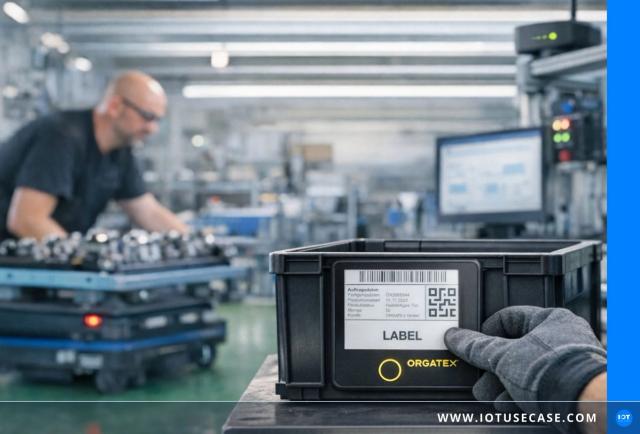






Digital job traveler closes the gap between shopfloor and IT systems
In many manufacturing environments, production control is still dominated by manual workflows and paper-based forms.
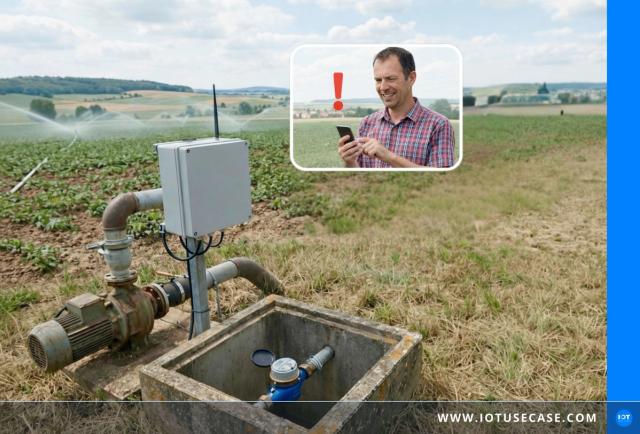


Remote monitoring in water management: district digitises irrigation
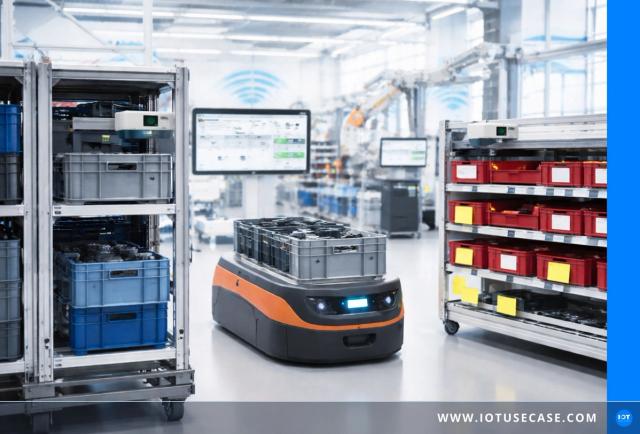

Autonomous guided vehicles (AGVs) with IoT and real-time data for efficient material flows
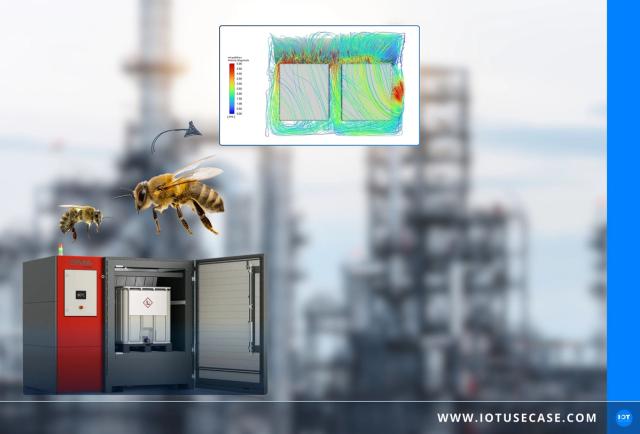



IoT-supported heat chamber for optimised chemical production and processing


Operating compressed air compressors efficiently with remote monitoring


Real-time monitoring – a Plug&Play retrofit for water networks
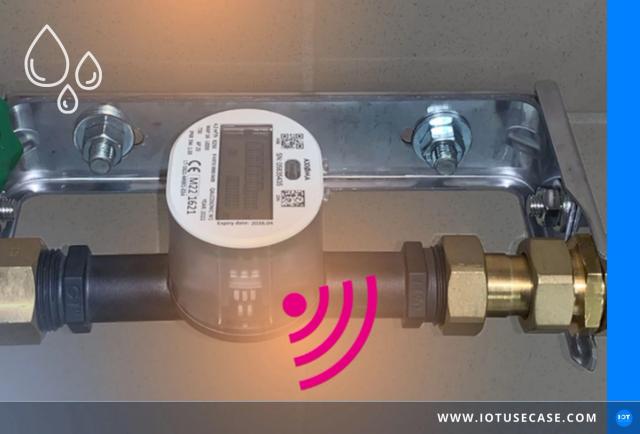

Smart Metering: Embedded Connectivity for sustainable metering solutions






MQTT broker for utilities and smart transport infrastructures



More efficient intra- and production logistics with IoT button and OX label
User Group
NB-IoT is a topic in the Tech Round (OT/IT/IIoT decision-makers)
300+ practitioners discuss specific questions from their projects every month, including about NB-IoT. No vendors in the room, honest exchange under NDA. Personal introductory call before admission.
Join the waiting list →Use cases implemented with NB-IoT
Temperature Measurement in Condition Monitoring
7 solution examples →
Temperature Measurement in Corrective Maintenance
4 solution examples →
Vibration Monitoring in Condition Monitoring
4 solution examples →
Container Management – Logistics IoT
3 solution examples →
Early Detection of Damage in Condition Monitoring
3 solution examples →
Efficient Material Supply
3 solution examples →
Inventory Management
3 solution examples →
Inventory Management and Reorders
3 solution examples →
Moisture Measurement in Condition Monitoring
3 solution examples →
Companies implementing NB-IoT
6 verifiedVendors and integrators whose NB-IoT projects you can find in our solution examples.






Podcast episodes on NB-IoT
23 episodesFrom the IoT Use Case Podcast, newest first. Each episode opens its own page with audio, summary and transcript.
- #22123 Episodes Condensed: What Really Worked and What Didn'tIIoT Use Case GmbH · 58 min · Aug 12, 2026To the episode
- #219Make or Buy in IIoT: Scaling Use Cases on One LoRaWAN PlatformCurrenta Conneqtive · Akenza AG · 34 min · Jul 22, 2026To the episode
- #217Retrofit Utility Networks: Wireless Condition Data, Not Inspection TripsWIKA Alexander Wiegand SE & Co. KG · 31 min · Jul 8, 2026To the episode
- #214No Cables, No PLC, No IT Project: Simply Connecting Decentralized Assetsautosen · 30 min · Jun 17, 2026To the episode
- #209Earlier flood detection with radar and NB-IoTEndress+Hauser · 30 min · Mar 25, 2026To the episode
More technologies: Connectivity, wireless & positioning
All Technology Solutions →These technologies get data from where it is generated onto the network and show where things are. The right choice depends on range, data volume, power consumption and positioning accuracy.