5G Technology Solutions
- 3 verified partners
- 4 solution examples online
- More in our database
- 7 industries
People with 5G experience in the network
Users and contacts at our partners who have used this technology in their projects. Open a profile to get in touch directly.





What 5G is used for in industry
Highly reliable real-time connectivity for AGVs and robotics
AGVs and mobile robots need a low-latency radio link that does not drop when moving between cells. 5G is designed for this, whereas Wi-Fi often reaches its limits.
Private 5G campus network for deterministic factory networking
In Germany, companies can apply for spectrum in the 3.7 to 3.8 GHz range for their own campus network. The network then belongs to the plant, with predictable capacity and no third-party traffic.
Secure remote maintenance over public 5G
Machines at customer sites or remote locations can be maintained via the public 5G network without using the customer's network. The service technician saves the trip, and the customer does not have to open a firewall.
What is 5G?
5G is the fifth generation of cellular networks, specified by 3GPP. For industry, the high data rates matter less than three other properties: low latency, highly reliable connections and the ability to operate very many devices in one cell. Also new compared with earlier generations: companies in Germany can apply to the Federal Network Agency for their own spectrum and run a private 5G campus network on their own site, in the 3.7 to 3.8 GHz range and at 26 GHz.
How 5G is used in the IIoT
Typical applications are automated guided vehicles and mobile robots that move freely through the hall and need a stable connection without drops when switching cells. Others include wirelessly connected machines that need to be rearranged flexibly, video analytics and quality inspection with high data rates, augmented reality for maintenance and assembly, and remote maintenance of equipment at customer sites over the public network. On large areas such as ports, industrial sites or construction sites, 5G partly replaces extensive cabling and many individual Wi-Fi access points.
How a 5G campus network is structured
A campus network consists of radio units in the hall or on site, a core network running locally in the plant or at a service provider, and SIM cards or eSIMs in the devices. Industrial routers with a 5G modem connect existing machines via Ethernet. A campus network can be run in-house, through a system integrator or as an operator service, either with its own spectrum as a standalone network or as a reserved part of the public network (network slicing).
5G or Wi-Fi?
Wi-Fi is inexpensive, widespread and entirely sufficient for many stationary applications. However, it operates in licence-free bands shared by all devices, and handover between access points is often the weak point for fast-moving vehicles. 5G offers predictable capacity in exclusive spectrum, seamless handover and better coverage of large areas, but is considerably more expensive to build and operate. In many plants the two complement each other: Wi-Fi for offices and stationary devices, 5G for mobile and critical applications.
What to consider when choosing
Start with the question of which application actually needs 5G. Without a concrete use case with requirements for latency, mobility or reliability, a campus network rarely pays off. Next come the operating model, the spectrum application, the availability of 5G-capable devices and industrial routers, and integration into existing IT security. Many projects start with a limited pilot area and take measurements there before rolling the network out across the whole plant.
Solution examples
7 online · more in the databaseFunctional area
Industry
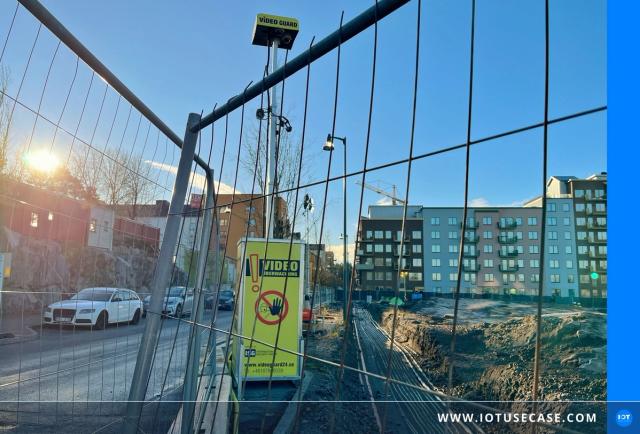




IoT monitoring with AI to reduce security costs on construction sites





5G: Secure remote access via public networks
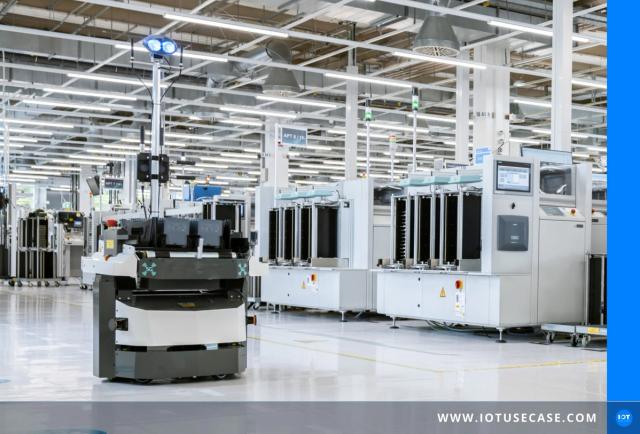

Private 5G networks as the foundation for industrial digitalization





Optimised machine tracking with industrial IoT
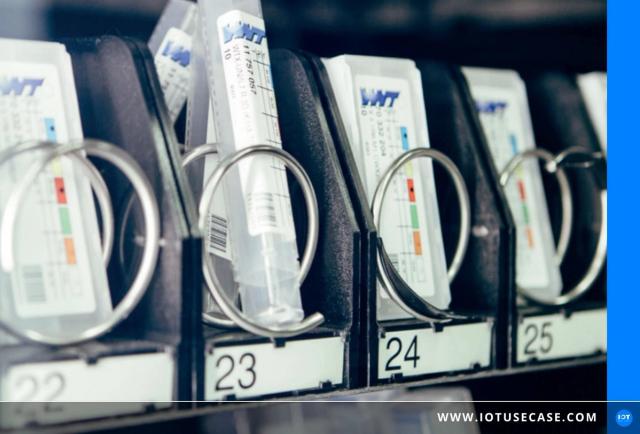




Tool dispensing from the IoT cloud








The world's largest machines enhanced with 5G monitoring


How to realise IoT solutions in private networks
User Group
5G is a topic in the Tech Round (OT/IT/IIoT decision-makers)
300+ practitioners discuss specific questions from their projects every month, including about 5G. No vendors in the room, honest exchange under NDA. Personal introductory call before admission.
Join the waiting list →Use cases implemented with 5G
Object Localization in the Industrial IoT
2 solution examples →
Structured access to files and documents
2 solution examples →
Effective Risk Management
1 solution example →
Efficient Material Supply
1 solution example →
GDPR-Compliant Video Surveillance
1 solution example →
Inventory Management
1 solution example →
Inventory Management and Reorders
1 solution example →
Remote Reading in Condition Monitoring
1 solution example →
Route Optimization and Route Planning
1 solution example →
Companies implementing 5G
3 verifiedVendors and integrators whose 5G projects you can find in our solution examples.



Podcast episodes on 5G
22 episodesFrom the IoT Use Case Podcast, newest first. Each episode opens its own page with audio, summary and transcript.
- #22123 Episodes Condensed: What Really Worked and What Didn'tIIoT Use Case GmbH · 58 min · Aug 12, 2026To the episode
- #219Make or Buy in IIoT: Scaling Use Cases on One LoRaWAN PlatformCurrenta Conneqtive · Akenza AG · 34 min · Jul 22, 2026To the episode
- #214No Cables, No PLC, No IT Project: Simply Connecting Decentralized Assetsautosen · 30 min · Jun 17, 2026To the episode
- #202Digital Intralogistics: From Visual Management to IoTORGATEX GmbH · 30 min · Jan 21, 2026To the episode
- #201Private 5G in Heavy Industry: Practical Insights from a Steel PlantSalzgitter Flachstahl · SIEMENS AG | Industrial Wireless Communication · 31 min · Jan 14, 2026To the episode
More technologies: Connectivity, wireless & positioning
All Technology Solutions →These technologies get data from where it is generated onto the network and show where things are. The right choice depends on range, data volume, power consumption and positioning accuracy.