
LTE-M Technology Solutions
- 2 verified partners
- 4 solution examples online
- More in our database
- 6 industries
People with LTE-M experience in the network
Users and contacts at our partners who have used this technology in their projects. Open a profile to get in touch directly.


What LTE-M is used for
Mobile assets with roaming (AGVs, vehicles, wearables)
LTE-M hands the connection over seamlessly from cell to cell and works abroad via roaming. This makes it suitable for trackers on vehicles, containers and load carriers that move.
Bidirectional communication
Compared with NB-IoT, LTE-M has shorter response times and higher data rates. Devices can receive commands and confirm them promptly, for example for remote shutdown or reconfiguration.
Firmware updates over the air (FOTA)
LTE-M bandwidth is sufficient to deliver firmware updates over the cellular network. Devices in the field stay secure and up to date for years without anyone having to visit each one.
What is LTE-M?
LTE-M, also known as LTE Cat-M1, is a 3GPP cellular standard designed specifically for the Internet of Things and runs on operators' existing LTE networks. It uses a narrow 1.4 MHz bandwidth, achieves data rates of up to around 1 Mbit/s and supports power-saving modes such as PSM and eDRX. Unlike NB-IoT, LTE-M supports seamless handover between cells, short response times and in some cases even voice. This makes LTE-M the cellular IoT technology for devices that move or exchange more data.
How LTE-M is used in the IIoT
Classic applications are trackers on vehicles, trailers, containers, returnable load carriers and construction machinery that report their position and status across countries. Others include devices that must receive commands and confirm them promptly, such as remotely controlled switching actuators, charging points or alarm systems, and wearables for lone worker protection. Because LTE-M has enough bandwidth for over-the-air firmware updates, it also suits devices that must stay secure and up to date in the field for many years. LTE-M is also an obvious successor for IoT devices that currently use 2G.
How an LTE-M solution is structured
The device consists of an LTE-M module, often combined with NB-IoT and GNSS for positioning, a microcontroller, sensors, battery and a SIM card or eSIM. Data travels over a mobile operator's network to an IoT platform, usually via MQTT, CoAP or HTTPS. For devices used internationally, IoT SIMs with roaming agreements in many countries are used, managed through the connectivity provider's portal.
LTE-M or NB-IoT?
NB-IoT is even more power-efficient and penetrates buildings more deeply, but is mainly suited to stationary devices with little data. LTE-M is the better choice for mobile devices, shorter response times, bidirectional communication and firmware updates. In practice, many modules support both standards and choose whichever network is available on site, which considerably improves coverage.
What to consider when choosing
First clarify in which countries the devices will operate, because LTE-M roaming and support for power-saving modes differ between networks. Then consider the tariff model, battery capacity relative to transmission interval, and whether the module also supports NB-IoT and 2G as a fallback. For trackers it also matters how often the position is determined, since GNSS often uses more energy than the radio transmission itself.
Solution examples
12 online · more in the databaseFunctional area
Industry
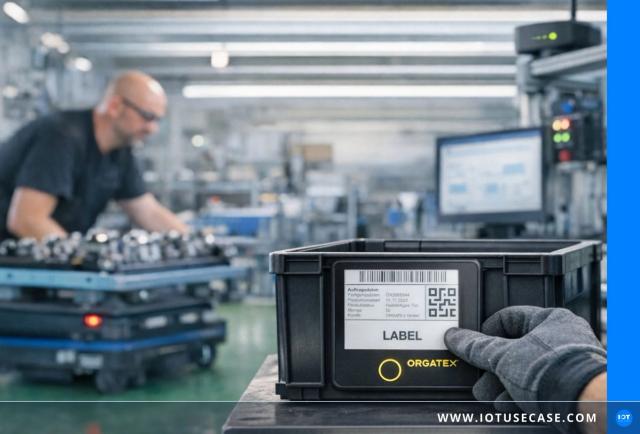







Digital job traveler closes the gap between shopfloor and IT systems
In many manufacturing environments, production control is still dominated by manual workflows and paper-based forms.
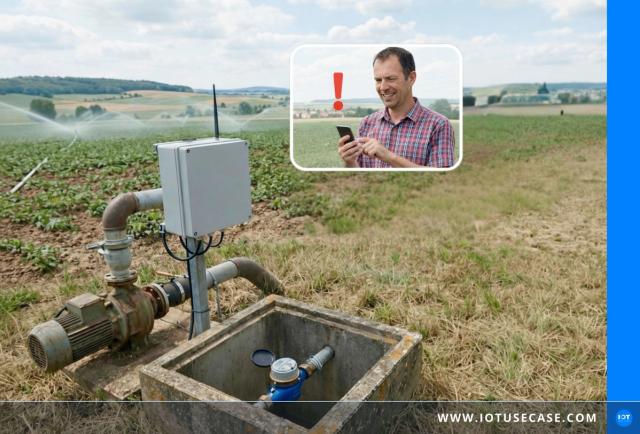


Remote monitoring in water management: district digitises irrigation
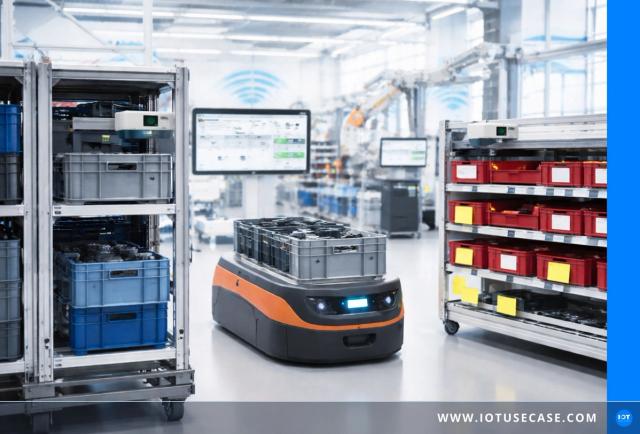

Autonomous guided vehicles (AGVs) with IoT and real-time data for efficient material flows
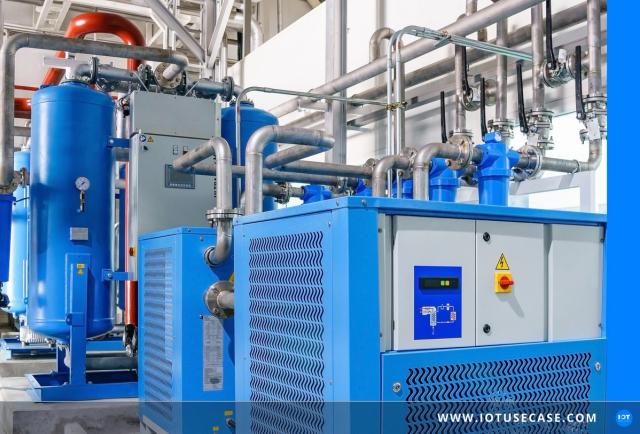

Operating compressed air compressors efficiently with remote monitoring
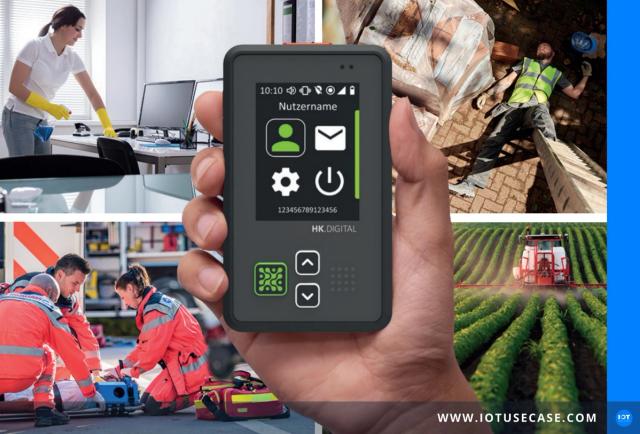


Personal Emergency System for Safety and Protection of Lone Workers



More efficient intra- and production logistics with IoT button and OX label
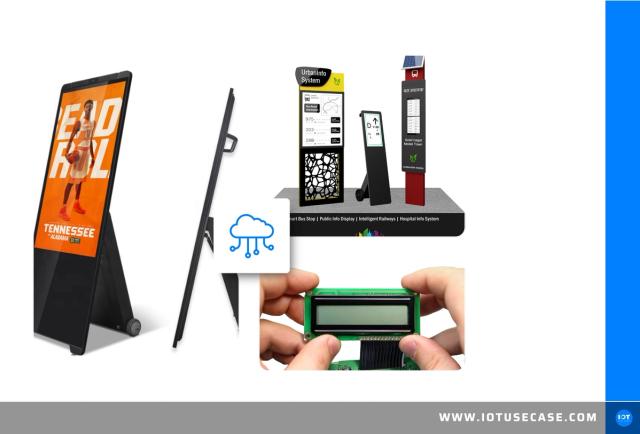




E-Paper displays: smart solutions for every environment



Hands-on Modbus Cloud Connect: reducing service and maintenance costs
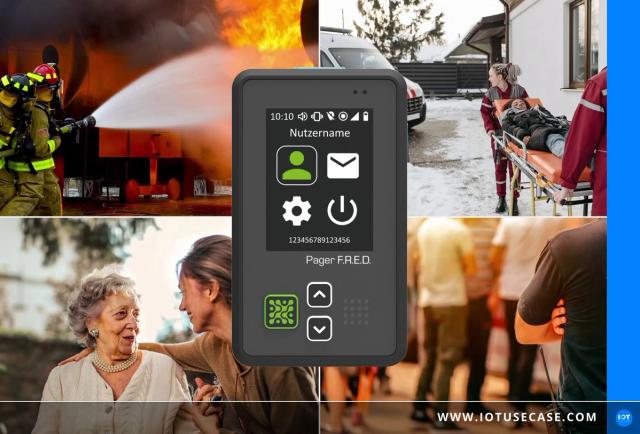
Custom hardware – individually developed for connected applications
User Group
LTE-M is a topic in the Tech Round (OT/IT/IIoT decision-makers)
300+ practitioners discuss specific questions from their projects every month, including about LTE-M. No vendors in the room, honest exchange under NDA. Personal introductory call before admission.
Join the waiting list →Use cases implemented with LTE-M
Container Management – Logistics IoT
2 solution examples →
Digital Production Logs and Manufacturing Documents
2 solution examples →
Efficient Material Supply
2 solution examples →
Identification of cargo units using IoT technologies
2 solution examples →
Immediate emergency communication
2 solution examples →
Inventory Management
2 solution examples →
Inventory Management and Reorders
2 solution examples →
Precise real-time inventory monitoring
2 solution examples →
Structured access to files and documents
2 solution examples →
Companies implementing LTE-M
2 verifiedVendors and integrators whose LTE-M projects you can find in our solution examples.


Podcast episodes on LTE-M
8 episodesFrom the IoT Use Case Podcast, newest first. Each episode opens its own page with audio, summary and transcript.
- #217Retrofit Utility Networks: Wireless Condition Data, Not Inspection TripsWIKA Alexander Wiegand SE & Co. KG · 31 min · Jul 8, 2026To the episode
- #214No Cables, No PLC, No IT Project: Simply Connecting Decentralized Assetsautosen · 30 min · Jun 17, 2026To the episode
- #186Scaling IoT Worldwide – How Telekom Solves Hidden RisksDeutsche Telekom IoT GmbH · 32 min · Sep 24, 2025To the episode
- #150The future of intralogistics: IoT-Button & Co. in applicationIOX GmbH · ORGATEX GmbH · 34 min · Nov 20, 2024To the episode
- #58Using mobile communications correctly – inspiration for the application of IoT technologiesEpsilon Telecommunications GmbH · kTel Communications · 47 min · Feb 2, 2022To the episode
More technologies: Connectivity, wireless & positioning
All Technology Solutions →These technologies get data from where it is generated onto the network and show where things are. The right choice depends on range, data volume, power consumption and positioning accuracy.