Hyperscaler Platforms for IoT: Cloud Infrastructure at Scale
Hyperscalers are cloud providers with globally distributed data centers that scale compute and storage almost without limit. For IoT, they provide building blocks such as device connectivity, messaging, data storage, analytics and AI. They supply no hardware of their own and are open to any technology and industry, so the application is built in-house or with partners.

Schmitz Cargobull 
Director Digital Transformation, FRÄNKISCHE Industrial Pipes 
Head of IT, Techem Gruppe 
Senior Vice President R&D Platform Applications & Tools at KUKA-Deutschland GmbH, KUKA
4 users from the network have already implemented this
Talk implementation with other users
In the user group, 300+ users discuss every month what worked in their projects and what they would do differently today. No vendors in the room, honest exchange under NDA.
Who offers it
Hyperscaler platforms in practice
1 manufacturer from our partner network with 46 solution examples. Those with the most documented use in this category come first.
- Get in touch with Microsoft

Microsoft
Hyperscaler platforms46 solution examples


 Asset ManagementTraceabilitySustainability (ESG)
Standardised IT/OT integration with OPC UA for scalable production
Nov 6, 2025Read more →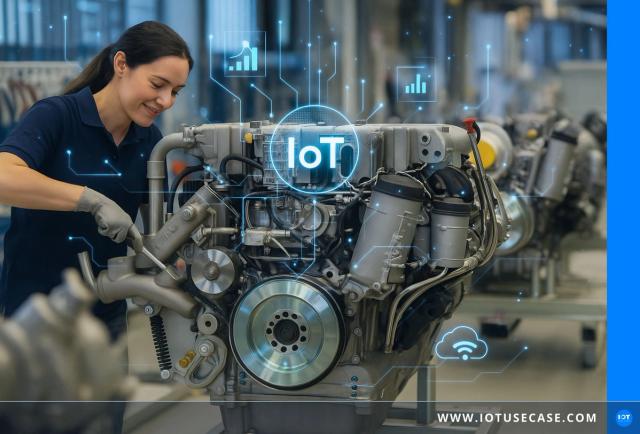



 Fleet ManagementPredictive MaintenanceDigital Documentation
Scalable IoT architecture replaces historically grown service platform
Sep 19, 2025Read more →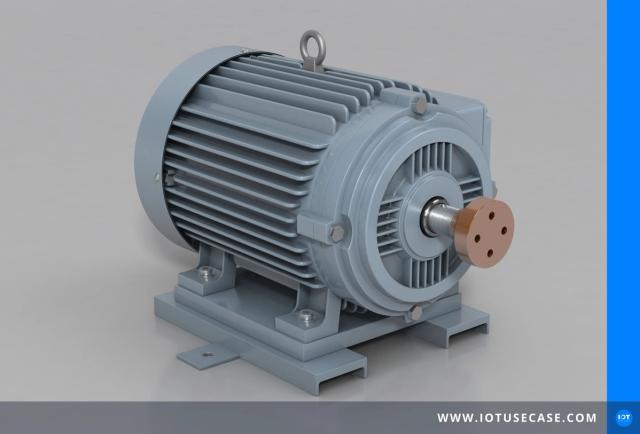

 Condition MonitoringCorrective maintenance
Condition-based maintenance of drive motors for higher plant availability
Sep 4, 2025Read more →
What it is used for
What they are used for, and with what
Based on these manufacturers' solution examples: the most common use cases and the technologies their solutions speak.
Use cases
What to look for
What hyperscaler platforms provide
Hyperscalers operate data centers in many regions of the world and offer hundreds of cloud services as building blocks. For the industrial IoT, four groups matter most: a service for securely connecting and managing devices, messaging for data transport, storage and databases for time series, and analytics, AI and visualization services. Billing is based on consumption, meaning message volume, storage and compute time. This allows pilot projects to start small and later grow to thousands of devices.
From the network, Microsoft belongs to this group. An IoT service connects devices and gateways, while other cloud services handle storage, analytics and AI. Many solution examples combine the Microsoft cloud with edge devices and integration software that prepares machine data in advance.
How it differs from other platform types
Hyperscalers are seen as neutral infrastructure: no device of their own, no sensor of their own and no focus on a single industry. Manufacturer-owned and specialized platforms, by contrast, deliver ready-made functions for specific equipment or tasks. Vendor-neutral IoT platforms often run on a hyperscaler themselves and add device management and dashboards. European platforms offer comparable infrastructure but make data sovereignty under European law their buying reason.
What to look for when choosing one
Key factors are the data center region, credentials such as the BSI C5 attestation and how the provider handles the US CLOUD Act. On the technical side, support for MQTT, OPC UA and edge runtimes matters. Because costs grow with message count and data volume, preprocessing at the edge pays off. Building a solution requires cloud expertise in your own team or an integration partner.
A typical solution example is an industrial company that wants to combine machine data from several plants worldwide. Edge devices collect values at the machine, filter them and send them via MQTT to the hyperscaler’s IoT service. There, the data lands in a time series database, is linked with ERP and quality data and becomes available for dashboards, reports and AI models. New sites are added without extra servers.
Frequently asked questions about hyperscaler platforms
What is a hyperscaler?
Hyperscalers are very large cloud providers that operate their own data centers worldwide and scale compute, storage and networking almost without limit. Customers rent these resources on demand instead of running their own servers. Beyond raw infrastructure, hyperscalers offer hundreds of ready-made services, from databases and IoT device management to AI models, which can be combined into custom applications.
What does hyperscale mean?
Hyperscale describes the ability of an IT architecture to grow very quickly and almost without limit by automatically adding more standardized servers. Hyperscale data centers often contain tens of thousands of servers. For IoT projects, this means the infrastructure grows along with the project when a pilot with a few machines becomes a rollout across many plants, without buying additional hardware.
What is an IoT hub?
An IoT hub is a cloud service that acts as the central point of contact for connected devices. It authenticates each device, receives telemetry data via MQTT or HTTPS, for example, and forwards it to storage and analytics. In the other direction, it sends commands, configurations and updates to the devices. All major hyperscalers offer such a service.
How much does an IoT solution on a hyperscaler cost?
Costs depend on consumption: the number of devices and messages, the volume of stored data, compute time for analytics and any additional services used. There is usually a free entry tier for testing. In operation, the cloud itself is often a smaller cost item than developing and maintaining the application. Preprocessing data at the edge and sending only relevant values keeps running costs down.
Can hyperscalers be used in a GDPR-compliant way?
Yes, with the right safeguards. These include an EU data center region, a data processing agreement, encryption with customer-managed keys and a review of which personal data is actually involved. With machine data, there is often very little. A residual risk remains due to the US CLOUD Act. Companies that must rule it out turn to sovereign offerings or European platforms.
On the podcast
Episodes with these manufacturers and their customers.
Related categories
More product categories on the same layer and the technologies solutions in this category connect through.