Container Orchestration and Deployment for Edge and Industry
Container orchestration software deploys, starts, updates and monitors applications packaged in containers, for example with Docker or Kubernetes. In the IoT stack it ensures that data acquisition, protocol conversion and AI models run consistently across many edge devices and servers. The target audience is IT architects and DevOps teams.

Researcher, Instituto de Telecomunicações 
Schmitz Cargobull 
Director – Software Defined Vehicle Strategy, Cummins Inc. 
Software Architect, Cummins Inc. 
Research Assistant, Instituto de Telecomunicações 
Director Digital Transformation, FRÄNKISCHE Industrial Pipes
7 users from the network have already implemented this (+1)
Talk implementation with other users
In the user group, 300+ users discuss every month what worked in their projects and what they would do differently today. No vendors in the room, honest exchange under NDA.
Who offers it
Container management & deployment in practice
2 manufacturers from our partner network with 32 solution examples. Those with the most documented use in this category come first.
- Get in touch with Microsoft

Microsoft
Container management & deployment20 solution examples



 Condition MonitoringCorrective maintenanceQuality Management
Lifetime monitoring solution for pump testing
May 27, 2025Read more →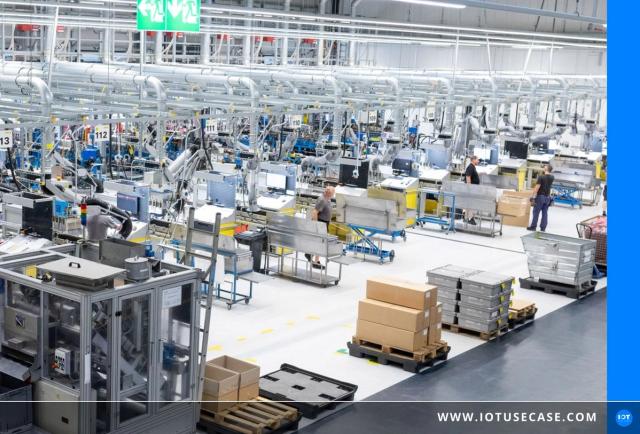



 Digital DocumentationTraceability
Smart factory solution creates efficiency and quality improvement in the production process
Mar 2, 2023Read more →


 Quality ManagementPredictive Maintenance
Digital strategy for the most sustainable food packaging in the world
Oct 6, 2021Read more → 
Portainer.io
Container management & deployment12 solution examples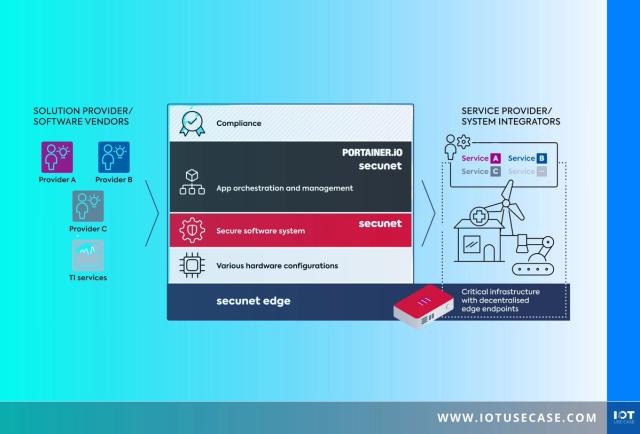




 Fraud and Loss Prevention
Operating distributed systems securely: with containers and edge platform
Aug 20, 2026Read more →
Software container rollout for quality control at a building materials manufacturer
Jul 23, 2026Read more →


 Condition MonitoringDigital DocumentationQuality Management
Efficient IoT data transmission: MQTT and container solutions for smooth IT/OT integration
Nov 5, 2024Read more →
What it is used for
What they are used for, and with what
Based on these manufacturers' solution examples: the most common use cases and the technologies their solutions speak.
What to look for
What container orchestration does
Containers package an application with all its dependencies into a standardized image that runs the same on any suitable machine. Docker and Podman are common container runtimes, and Kubernetes is the de facto standard for orchestration. Container management software sits on top: it distributes applications across many machines, restarts them after failures, manages configuration and secrets, rolls out new versions and can roll back to the previous state if something goes wrong.
In manufacturing, this is how data connectors, MQTT brokers, edge analytics or computer vision models run right at the production line, managed from one central interface instead of by hand on every device.
Container management vs. edge device, IoT platform and IT/OT integration
The edge device is the hardware the containers run on. IT/OT integration products and edge agents are applications that are often shipped as containers themselves. Container management software is the operations layer that brings these applications to many sites and keeps them running there. The main reason to buy it is reproducible, secure operation of software on a growing number of devices without maintaining each one individually.
What to look for when choosing one
Key criteria are the supported runtimes (Docker, Podman, Kubernetes and lightweight distributions for small devices), how the system handles unstable or intermittent network connections at the edge, and support for both x86 and ARM hardware. Add access control, integration with private container registries, staged rollouts to device groups, audit logs and operation in isolated networks without internet access. For regulated environments, it matters whether the management layer can run in your own data center.
From the network, Portainer offers a management platform for Docker, Podman and Kubernetes environments that can also run large fleets of edge devices centrally. b.telligent supports companies in building and operating Kubernetes environments. In solution examples, container management often provides the basis for rolling out computer vision models consistently across many sites.
Frequently asked questions about container orchestration
What is container orchestration?
Container orchestration is the automated management of many containers across multiple machines. The orchestration software decides where each container runs, restarts it after a failure, balances load, manages configuration and rolls out new versions in a controlled way. The best-known standard is Kubernetes, and lightweight distributions exist for smaller environments such as edge devices.
What is the difference between Docker and Kubernetes?
Docker packages and runs individual containers on one machine, while Kubernetes orchestrates many containers across many machines. Docker is the foundation for packaging; Kubernetes handles distribution, scaling, self-healing and rollouts. On a single edge device, Docker with central management is often sufficient, while clusters and large fleets typically use Kubernetes.
What does a Kubernetes management platform do?
A Kubernetes management platform manages several Kubernetes clusters through a single interface. It brings together users and permissions, application catalogs, cluster upgrades, monitoring and logs. Teams can deploy applications themselves without mastering the command line. A key question is whether it also covers edge sites and environments without internet access.
How are Docker containers managed across many edge devices?
Many edge devices are managed with a central platform and a small agent on each device. The agent opens the connection to the central platform itself, pulls new container versions and reports status back. This makes it possible to update device groups together, keep configurations consistent and spot problems centrally, even when individual sites are temporarily offline.
Does Kubernetes work at the edge?
Yes, with lightweight Kubernetes distributions designed for devices with limited compute and memory. They bring self-healing and consistent rollouts to the production line or remote site. For single, very small devices, Docker with central management is often simpler. The deciding factors are hardware resources, network connectivity and the number of sites to manage.
On the podcast
Episodes with these manufacturers and their customers.
- #212No laptop at the control cabinet: scaling device & application management in OTPortainer.io · WAGO GmbH & Co. KG · Apr 29, 2026Listen
- #189Inside Cummins and Portainer: Modular IoT for Software Defined VehiclesCummins Inc. · Portainer.io · Oct 15, 2025Listen
- #116Microservice-Oriented Architecture – Bridging Software and Customer BenefitsPortainer.io · Softing Industrial Automation GmbH · Actemium Deutschland · Nov 22, 2023Listen
Related categories
More product categories on the same layer and the technologies solutions in this category connect through.