

Insurance + Real Estate
IoT in insurance and real estate means wireless sensors report leaks, humidity, occupancy and consumption to a platform over LoRaWAN or wM-Bus. Property managers spot damage early and read meters remotely; insurers reduce water damage and settle claims faster. At insurer VGH, machine data cuts repair time after a loss by around 80 %.
IoT solution examples: Insurance + Real Estate
11 solution examples from our network, newest first.
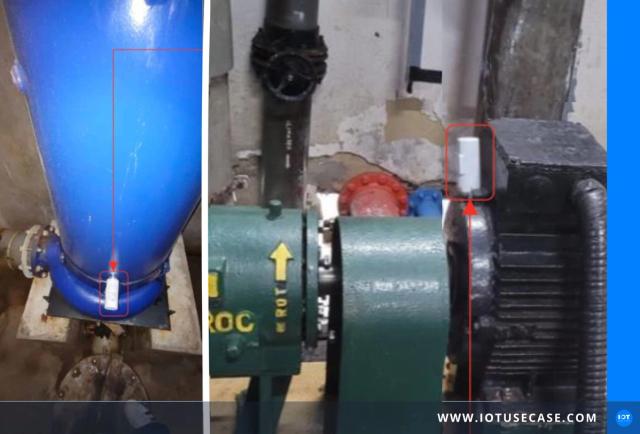




Early Detection of Pump Failures in Aquaculture Systems
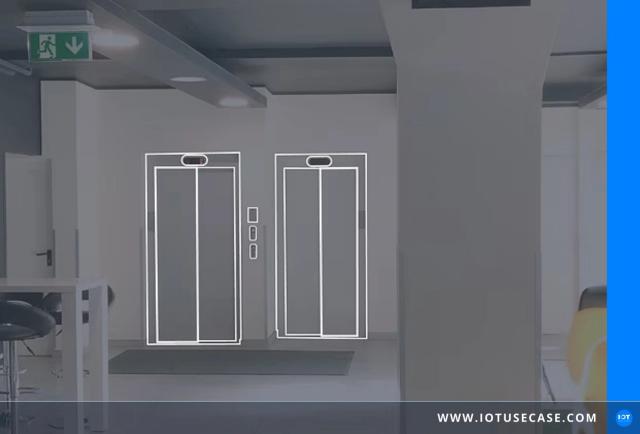



Scalable digital workplace solution for future-proof building infrastructures
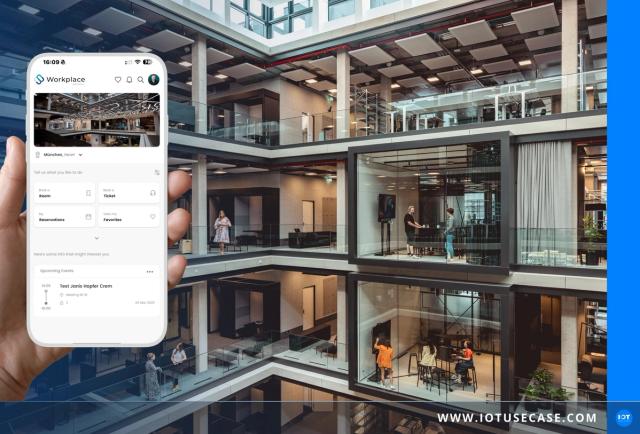


Managing (building) spaces efficiently – with sensors and smart software
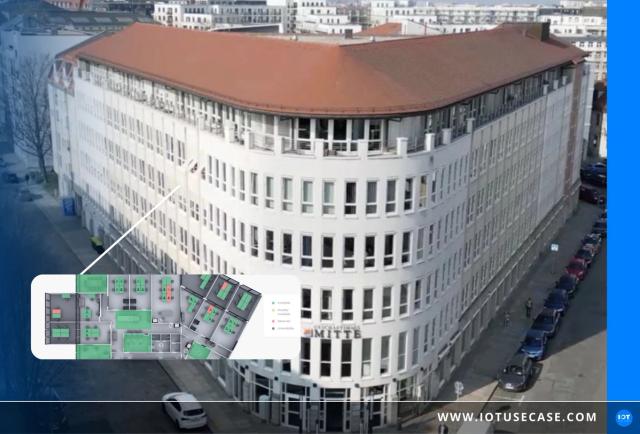


IoT, BI & Smart Buildings: how Enloc uses office space more efficiently
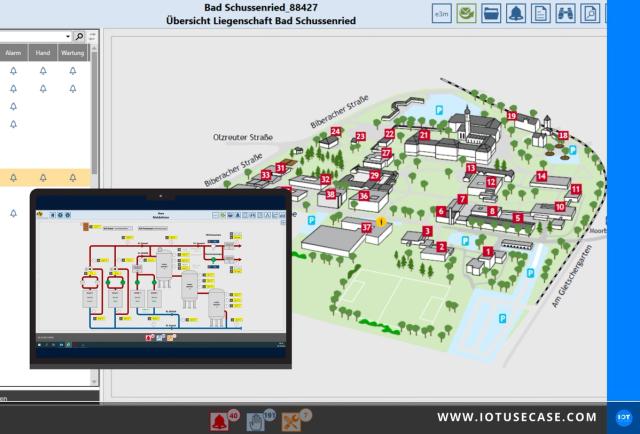


Energy-efficient facility management in healthcare: 157 buildings under control
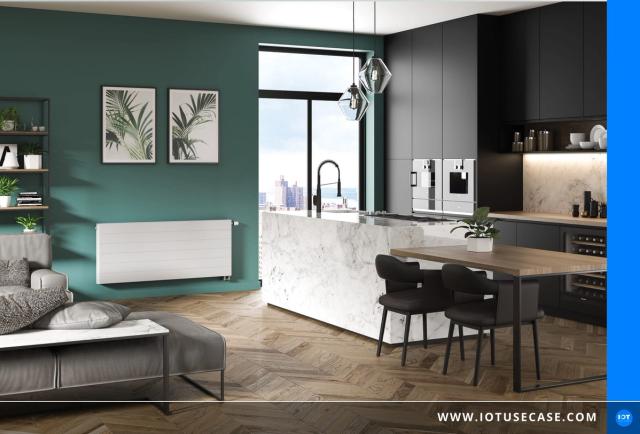


Intelligent room climate – complete solutions for heating and cooling
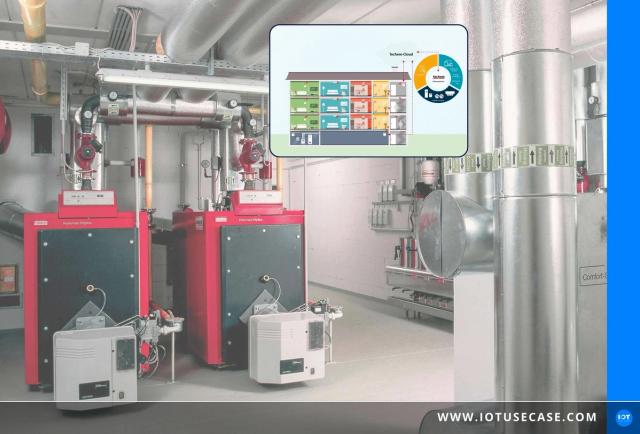




PKI in use at Techem
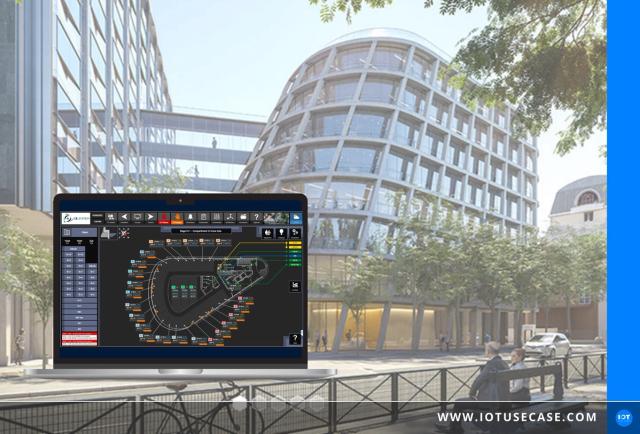


Building automation: smart control, sustainable use
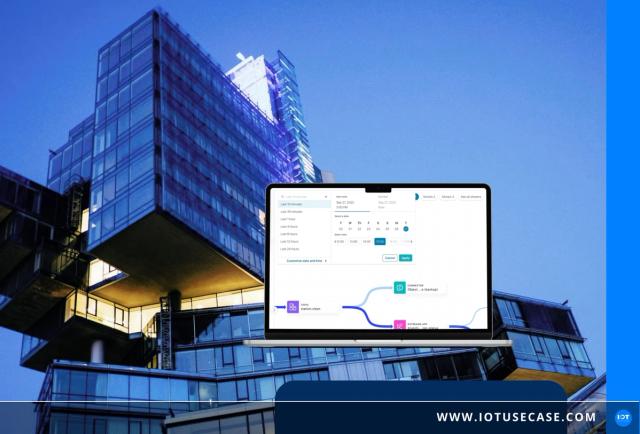






NORD/LB relies on Confluent to drive company-wide IT transformation
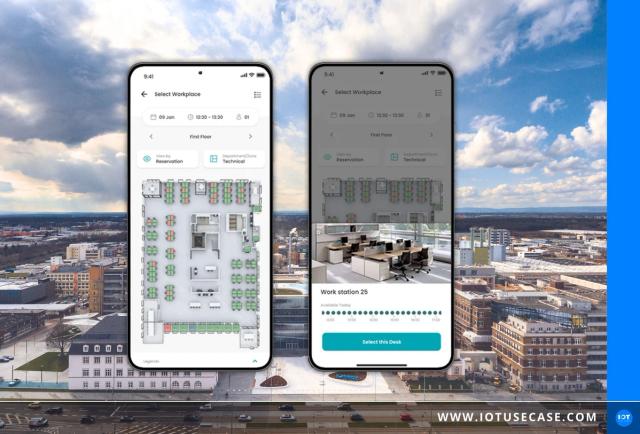


Merck Group embarks on New Work in the smart building
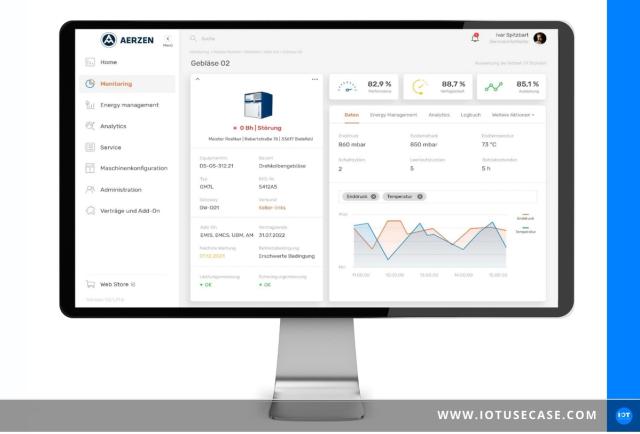




Data-driven industrial services for key partners such as insurance companies
Podcast episodes: Insurance + Real Estate
4 episodes of the IoT Use Case Podcast on this industry, newest first.






Via app: Detect water damage using IoT data




Energy-efficient buildings through IoT data analytics




Data-based services help industrial insurance and mechanical engineering


Building Lighting, Lighting Installation & Outdoor Advertising – IoT Saves Inspection Costs and Creates a Competitive Future
IoT use cases: Insurance + Real Estate
16 use cases already implemented in this industry, sorted by number of implementations.
With modern sensor technology and smart data analysis, damage can be detected before it escalates. Whether leaks in water pipes, overheating in electrical systems or mechanical wear – continuous monitoring makes problems visible early. In condition monitoring and predictive maintenance this leaves time for targeted maintenance, in corrective maintenance affected components are located quickly, and in loss prevention it protects assets and infrastructure in the long term.


Energy efficiency analysis evaluates captured energy data and assigns consumption to individual machines, shifts or production lines. On this basis, consumption structures, load profiles and deviations are analyzed, making inefficient consumption patterns and savings potential systematically visible. In energy monitoring this drives optimization in operations; for sustainability (ESG) it provides reliable key figures.

The energy management system consolidates all energy flows digitally on a single platform. IoT controllers capture data, while SCADA and cloud systems visualize it. Companies gain transparency, meet ESG requirements, and increase efficiency and supply security through data-driven decisions.
See implementationsIn supply chain management and for high-value goods, protection against counterfeiting is essential. Track-and-trace technologies and blockchain-based solutions create transparency and prevent tampering. This builds trust in your products and strengthens your brand in the market.




Detecting anomalies through sound patterns. Acoustic sensors diagnose wear and malfunctions in machines based on their sound patterns. In condition monitoring they show the machine state continuously, in predictive maintenance they make maintenance plannable, and in corrective maintenance they locate defects for targeted repairs. This reduces unplanned downtime and consequential damage.
Automated creation of reports and logs for audits and compliance requirements. Digital systems enable seamless traceability and ensure efficiency in audit processes.
- Humidity and Particle Measurement
- HVAC – Suspended Ceilings, Heating, Cooling
- Moisture Measurement
- Remote Reading
- Shift or Location Comparison
- Smart Lighting – Lighting Management
- Structured access to files and documents
- Temperature Measurement
- Tracking, visualizing, and analyzing energy consumption per unit
- Vibration Monitoring
Functional areas in this industry
Number of solution examples per entry. The number leads to exactly these examples.
Connected assets: Insurance + Real Estate
8 assets from the solution examples in this industry, sorted by number of implementations.
These challenges are driving IoT projects in insurance and real estate
Detecting water leaks early
Escape of water is the most expensive cause of loss in German residential building insurance, EUR 4.9 billion in 2024 according to GDV. Many leaks drip unnoticed for weeks. Leak, moisture and flow sensors raise the alarm before a drip turns into a refurbishment job.
Energy efficiency and ESG evidence across the portfolio
Buildings account for around 40 % of energy consumption in the EU. Rising energy prices, the EU taxonomy and investors demand verifiable consumption and CO₂ data per asset. Without metering, it stays at estimates.
Remote meter reading as a legal requirement
In Germany, heat cost allocators and heat meters must be remotely readable by 31 December 2026, otherwise tenants may cut 3 % of their heating costs. Monthly consumption information for tenants comes on top. Radio meters and secure data transmission are the prerequisite.
Faster claims handling, targeted prevention
Many building and machinery losses are preventable, and when a claim occurs, reliable facts are often missing. Sensor data shows when and why damage happened, shortens settlement and makes prevention measurable for insurers.
Avoiding building services failures
Heating systems, lifts and ventilation often fail unexpectedly, with high follow-up costs and tenant complaints. Condition monitoring and predictive maintenance schedule servicing by need and prevent costly emergency repairs.
Managing space and access efficiently
Hybrid work leaves office space half empty, and traditional key systems are laborious and insecure. Occupancy sensors and digital access show which space is actually needed and provide logs for security and insurance.
IoT in insurance and real estate is everyday practice: leak sensors report water damage before the ceiling gets wet, remotely readable meters deliver consumption data for billing and ESG reports, and in smart buildings occupancy and climate sensors control heating, lighting and space. Techem, Merck Real Estate, the insurer VGH and the Centre for Psychiatry Südwürttemberg already work this way.
The pressure comes from several sides: escape of water cost German residential building insurers EUR 4.9 billion in 2024, more than ever before. Heat meters and heat cost allocators in Germany must be remotely readable by 31 December 2026. And investors demand verifiable consumption and CO₂ data for entire portfolios.
On this page you will find solution examples from the IoT Use Case network: which sensors and wireless technology were used, how the data got into existing systems and what the result was.
IoT in insurance and real estate: what works in practice
Buildings are among the longest-lived assets there are, yet most of them run without real-time data. Whether a pipe is leaking, a room sits empty for months or the heating works against an open window, owners usually find out with the utility bill or the claim. IoT closes that gap: battery-powered wireless sensors can be retrofitted without cabling or construction work, and the data flows into one platform shared by property managers, facility management, tenants and insurers.
Unlike in manufacturing, the building stock is extremely mixed: old and new, residential and office, single assets and portfolios with hundreds of properties. There is almost never IT staff on site. Solutions therefore have to work without the tenants' Wi-Fi, run for years without a battery change and be simple enough for caretakers.
Typical IoT applications in buildings
Water leak detection: preventing escape-of-water claims
According to the German Insurance Association GDV, escape of water is the most expensive cause of loss in German residential building insurance: in 2024 it cost EUR 4.9 billion, more than half of all claims expenditure. Leak sensors under sinks, washing machines and water heaters, in plant rooms and risers report water on the floor instantly via app or text message. Flow sensors at the mains detect unusual continuous consumption and can shut off the supply automatically. Temperature probes warn of frost in vacant flats and basements. Insurers see fewer large losses, property managers fewer night-time emergency call-outs.
Building monitoring and mould prevention
Temperature, humidity and CO₂ sensors show where moisture builds up before mould appears. Room temperature and humidity reveal the dew point risk on cold exterior walls, and tenants get a concrete ventilation prompt instead of a leaflet. If a dispute arises anyway, the measurement history shows whether a building defect or the way the space is used caused the problem.
Remote meter reading, submetering and regulation
Across the EU, the Energy Efficiency Directive requires remotely readable heat meters and heat cost allocators. In Germany, existing devices must be retrofitted or replaced by 31 December 2026; otherwise tenants may cut their share of heating costs by 3 %. Landlords who read remotely must also send tenants monthly consumption information. Techem shows how this works securely at scale: the energy service provider reads consumption in more than twelve million homes by radio and protects the transmission from the meters to its data centre with its own PKI.
Energy monitoring and ESG reporting for real estate portfolios
Buildings account for around 40 % of energy consumption in the EU and roughly a third of energy-related greenhouse gas emissions. Investors, lenders and the EU taxonomy therefore expect verifiable consumption and CO₂ figures per asset instead of estimates. IoT meters deliver these figures automatically at building, floor or tenant level. Comparing similar buildings shows where refurbishment or re-commissioning pays off first. The Centre for Psychiatry Südwürttemberg monitors 157 buildings with around 15,000 data points from one control room, connected via 130 BACnet controllers.
Smart buildings: building automation, indoor climate and space management
IoT in smart buildings means heating, ventilation, lighting and shading follow actual occupancy and indoor climate rather than a fixed schedule. Société Foncière Lyonnaise runs its Paris office building BIOME with 25,000 m² on one central building automation system, from BACnet field devices and DALI lighting to presence detection. For non-residential buildings this is becoming mandatory: the recast EU Energy Performance of Buildings Directive requires building automation and control systems for heating or air conditioning above 290 kW and lowers the threshold to 70 kW by the end of 2029.
Occupancy sensors also show how much space is really used. Merck Real Estate handles more than 6,000 moves a year and measures occupancy and indoor climate over LoRaWAN to cut energy and rental costs. Serviceplan Group sees in real time which desks are occupied across around 40,000 m² of office space, and Enloc organises 73 employees on 35 desks.
Predictive maintenance for heating, lifts and ventilation
Vibration, current and temperature sensors on pumps, boilers, lifts and air handling units detect wear before the equipment fails. Maintenance happens when the condition requires it, not when the calendar says so. That reduces emergency repair costs and spares tenants a cold flat in January. Read more in the use case predictive maintenance.
Access control and building security
Digital keys on the smartphone, time-limited access for contractors and automatic logs replace the key cabinet. A lost key no longer means replacing the locking system, and insurers and authorities get traceable access records.
IoT in insurance: prevention, claims handling and new policies
Insurers use IoT in three places. Prevention: sensors in the insured property prevent losses or keep them small, which is why some property insurers subsidise leak sensors or automatic water shut-off valves. Claims handling: measurement data proves when, why and how badly damage occurred, saving loss adjuster visits and disputes. Pricing and underwriting: risks that are measured continuously can be priced more accurately, a principle well known from telematics in motor insurance.
The project by Aerzen Digital Systems with the German insurer VGH shows what this looks like with machine data: the cause of damage is available immediately in a readable form, and according to Aerzen the repair time after a loss drops by around 80 %. VGH uses the data for faster claims settlement and for new insurance models built on predictive maintenance.
Technology: wireless standards for retrofitting existing buildings
A handful of standards dominate in buildings. LoRaWAN reaches through several walls and floors, one gateway often covers a whole building, and sensors run five to ten years on one battery. Wireless M-Bus with OMS is the standard for water and heat meters and heat cost allocators. NB-IoT and LTE-M need no gateway of their own and suit scattered single assets and basements with poor reception. Existing building services connect via BACnet, KNX or Modbus. What matters is a platform with open interfaces, so data from different trades and vendors comes together and data ownership stays with the owner.
Data protection and tenancy law
Consumption, climate and occupancy data from a flat allow conclusions about its residents and are therefore personal data. IoT projects need a clear purpose, a legal basis under the GDPR and transparent information for tenants. Proven practice: sensors without cameras or microphones, aggregating data as early as possible and hosting in the EU. An insurer that wants to use data from the insured property generally needs the policyholder's consent.
How to start an IoT project in an existing portfolio
1. Pick the focus from your own numbers. Claims history, energy costs and vacancy show whether leak protection, remote reading or space utilisation offers the biggest lever.
2. Start small. A pilot in three to five typical buildings shows within a few months whether radio coverage, battery life and alarm routing work.
3. Settle processes before technology. Who responds to a leak alarm at three in the morning? Without clear responsibility, the best sensor achieves nothing.
4. Scale openly. Choose platform and radio standard so that further applications and vendors can be added without new cabling.
Real-world examples from the IoT Use Case network
Further down you will find solution examples from real estate companies and insurers, from remote meter reading at Techem and smart buildings at Merck, Serviceplan and SFL to data-driven claims settlement at VGH. Each example shows which technology was used, which hurdles came up and what the result was. Planning a project of your own? Get in touch.
No marketing fluff. Only practice.
Frequently asked questions: implementing IoT in real estate and insurance
How do I start an IoT project for my property portfolio?
Start with the biggest lever in your own numbers, such as claims history, energy costs or vacancy. Next comes a pilot in three to five typical buildings that tests radio coverage, battery life and alarm routing. Before rolling out, decide who responds to which alarm, and choose a platform and radio standard that stay open to further applications and vendors.
How do I back the ESG figures of my property portfolio with measured data?
With remotely readable meters and sensors that report electricity, heat, water and indoor climate to a platform automatically. Instead of extrapolating from annual bills, you get consumption per building, unit and month that feeds straight into ESG reports and carbon accounts. Outliers such as a badly configured heating system show up immediately and can be fixed. Start with the buildings that account for the largest share of consumption and emissions.
Do heat meters have to be remotely readable?
In the EU, the Energy Efficiency Directive requires remotely readable heat meters and heat cost allocators. In Germany, existing devices that are not remotely readable must be retrofitted or replaced by 31 December 2026; the obligation lies with the building owner. Without remote reading, tenants may reduce their share of heating costs by 3 %, and landlords with remote reading must send monthly consumption information.
What building automation obligations apply to my non-residential buildings?
Under Section 71a of the German Buildings Energy Act, non-residential buildings with heating or air-conditioning systems above 290 kilowatts rated output need a building automation system that continuously records and analyses consumption and flags inefficiencies. The deadline expired at the end of 2024. For existing buildings this usually means retrofitting meters and sensors, connecting existing systems via BACnet or Modbus and bringing the data together on one platform. First check which of your buildings exceed the threshold.
How do I protect my property portfolio from escape-of-water damage with leak monitoring?
With leak sensors on risers, in plant rooms and bathrooms, and flow sensors at the mains that detect unusual continuous consumption and shut the supply off automatically. The alert goes to the property manager or caretaker, so a leaking pipe means a bucket of water instead of a soaked floor. For owners this pays off twice: less refurbishment and lost rent, and a better negotiating position with the insurer as the claims rate falls.
How do I build an IoT loss prevention offering as an insurer?
Start with the line of business where losses are most frequent and most expensive, such as escape of water in residential buildings or machinery breakdown for commercial clients. Sensors in the insured property flag risks early, measurement data proves when and why damage occurred, and continuously measured risks can be priced more accurately. One public insurer cuts repair time after a loss by around 80 percent with processed machine data. Settle data protection, consent and alarm response early on.
How do I cut office space and energy costs with occupancy sensors?
Occupancy sensors at desks and in meeting rooms show how much space is actually used. On that basis you plan desk sharing, consolidate under-used floors and run heating, ventilation and lighting according to real occupancy. One real estate and energy services company organised 73 employees on 35 desks this way and keeps growing without additional office space. Involve the works council early; sensors without cameras and aggregated analysis make approval easier.
Which wireless technology suits retrofitting existing buildings?
LoRaWAN has become the standard for in-building sensors: long range through walls and floors, one gateway per building and battery life of several years. Meters mostly use Wireless M-Bus with OMS. For scattered single assets without their own gateway, NB-IoT or LTE-M are a good fit. Existing building automation connects via BACnet, KNX or Modbus.
Is IoT in rented homes compliant with data protection law?
Yes, as long as purpose, legal basis and tenant information are in place. Consumption and room data from a flat are personal data under the GDPR. Remotely readable meters are required by law; any sensors beyond that need their own legal basis. Proven practice includes sensors without cameras, aggregating data early and hosting in the EU.
How do I find an implementation partner for IoT in real estate or insurance?
The fastest way is through projects that are already running. The solution examples on this page name the implementation partner, the technology used and in most cases the user, from office space management and building services in large estates to data-driven services for insurers. If you briefly describe your project via the contact form, we will put you in touch with providers who have already delivered a comparable project.
Implementing IoT in insurance and real estate – we can help
Are you planning an IoT project in the insurance or real estate sector, or do you want to become visible as a solution provider in this area? We help you find the right partners, present solutions in a practical way, and reach real users.
Get in touch