

Pest trap
Digital pest monitoring connects every pest trap and reports infestations in real time. Pest controllers and businesses save inspection rounds, respond in a targeted way and need fewer pesticides because they spot infestations early.
Pest trap at a glance
Most frequent in the solution examples on this page
Industries
Technologies
Solution examples featuring Pest trap





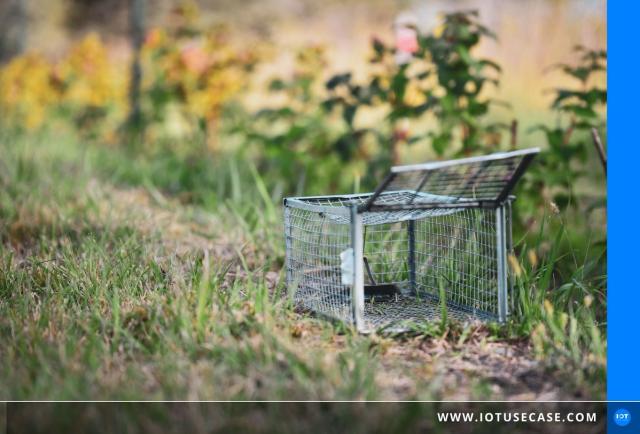


Pest monitoring: detect infestations without checking every trap
One solution based on Cumulocity consists of a monitor box with a lure or pheromone for insects and a digital unit that measures humidity and temperature and sends them to the IoT platform together with a live image of the sticky surface. An AI tool classifies the catch into pests, nuisance insects and beneficial insects. The traps connect via Wi-Fi or LoRaWAN, with LoRaWAN devices integrated through the Loriot network server without additional programming. Snap traps for rodents can be monitored digitally as well. In the Fusion IoT solution, a module in a triggered trap sends a message via a router to the server, and the pest controller receives it on a mobile device. IoT SIM cards automatically select the strongest available German mobile network.
The examples are aimed at pest controllers and their customers in logistics, hospitality, food and pharmaceutical businesses, as audit reporting and remote reading. A start-up for digital pest control offers its Cumulocity solution on a rental model; according to its managing director, routine inspections now run digitally, so warehouses no longer have to close for them. A grain mill uses traptice® to examine how temperature and humidity influence an emerging infestation. A manufacturer of pest control systems has ordered 440 SIM cards from Epsilon Telecommunications, 225 of which are active.
Pest monitoring: frequently asked questions
How does pest control software work with connected traps?
Digital pest control replaces regular inspection rounds with connected traps that report their own status. Insect traps send a live image of the sticky surface along with temperature and humidity to an IoT platform such as Cumulocity, while snap traps report as soon as they have been triggered. The pest controller sees on a dashboard or mobile device which trap needs checking and avoids rounds that find nothing.
How does a rodent monitoring system work?
A rodent monitoring system reports immediately when a snap trap has been triggered. This matters because animal welfare law sets requirements for how often traps must be checked, and traps that have caught something must be inspected on site promptly. In the Fusion IoT solution example, the message travels via router and server to the pest controller's mobile device. Mobile Wi-Fi routers keep the connection going when no Wi-Fi is available on site.
How does a pest monitoring system detect insect infestations?
A monitor box attracts insects onto a sticky surface with a lure or pheromone, and the digital unit sends a live image of it to the cloud. An AI tool automatically classifies the catch into pests, nuisance insects and beneficial insects and feeds the result back into the dashboards. Previously, depending on the customer, pest controllers had to count hundreds of pests by hand. Temperature and humidity sensors also show the conditions under which infestations develop.
What does pest monitoring bring to the food industry?
Food and pharmaceutical businesses face strict compliance requirements, and traditional inspections tie up a lot of staff. In highly automated storage facilities, halls have to close once or twice a year for inspection. With digital monitoring, routine inspections run digitally according to the provider, so this downtime disappears. Because infestations are detected early, larger outbreaks can be avoided and fewer chemicals are needed. A grain mill uses the environmental data for prevention.
More assets in “Components & Devices”

Filter
Filter monitoring with IoT measures the differential pressure across a filter and shows how dirty it is. Operators change filters when it is actually necessary, avoid clogged filters and downtime, and save energy and material.

Energy chain
An energy chain with IoT sensors continuously reports the condition of the cable management on moving machinery. Operators learn about overload, blockages or chain breakage before the machine stops, and plan chain replacement according to actual use.

Lighting
Commercial lighting control with IoT adjusts the lighting in offices, halls, shops and advertising installations according to occupancy, brightness and schedules, and monitors every luminaire remotely. Operators cut electricity consumption and learn about failures immediately.

Electricity meter
Automatic meter reading means that electricity meter readings reach a platform via radio, cellular network or pulse adapter, with no on-site reading. Operators bill more accurately and see where energy is consumed in a building or in production.

Charging station
Commercial EV charging relies on load management that distributes the available power across all charging stations at a site and monitors them remotely. Operators avoid overloading the grid connection, integrate photovoltaics and storage, and bill sessions automatically.

Power tool
Connected tools bring rivet tools, screwdrivers and cordless power tools into the networked factory. Every work step is documented, failed attempts are detected, and the data feeds into quality assurance and production control.
IIoT Use Case user group
What no solution example tells you
What did the project cost? Which sensor didn't survive in the field? How did you get maintenance on board? 300+ industrial users discuss questions like these with each other every month, openly and without vendors in the room.
Frequent topics in these examples, bring your questions:
- Condition Monitoring
- Employee Safety
- Digital Documentation
Online every month
Alternating tech and business focus
Users only
No sales pitches, exchange under NDA
300+ members
OT, IT and IIoT leads from industry