
Initial situation
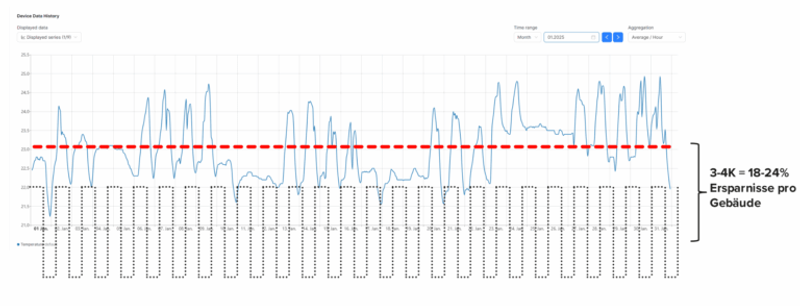
In a 300 m² CURRENTA office building, the heating operated at a high level regardless of actual room usage or outdoor temperature. The cause was a lack of transparency regarding room occupancy, indoor air quality, and energy consumption.
Challenge
- No demand-driven control
The heating systems ran continuously at 22–24 °C—regardless of time of day, weather, or occupancy. - No indoor air quality monitoring
Neither temperature trends nor CO₂ or particulate matter levels were recorded or analyzed. - High energy consumption, no awareness of CO₂ emissions
Large amounts of heating energy per year resulted in several tons of CO₂—without any means to optimize or reduce it. - Flat-rate billing
Because costs were billed as a flat rate, more heating was used than necessary, and the savings potential remained invisible.
Solution
Achieve sustainability targets through heating optimization and indoor air quality tracking in just two weeks.
- Retrofit with smart radiator actuators
16 actuators regulate heat on demand—based on temperature, occupancy, and time profiles. - Sensors for CO₂, temperature, and particulate matter
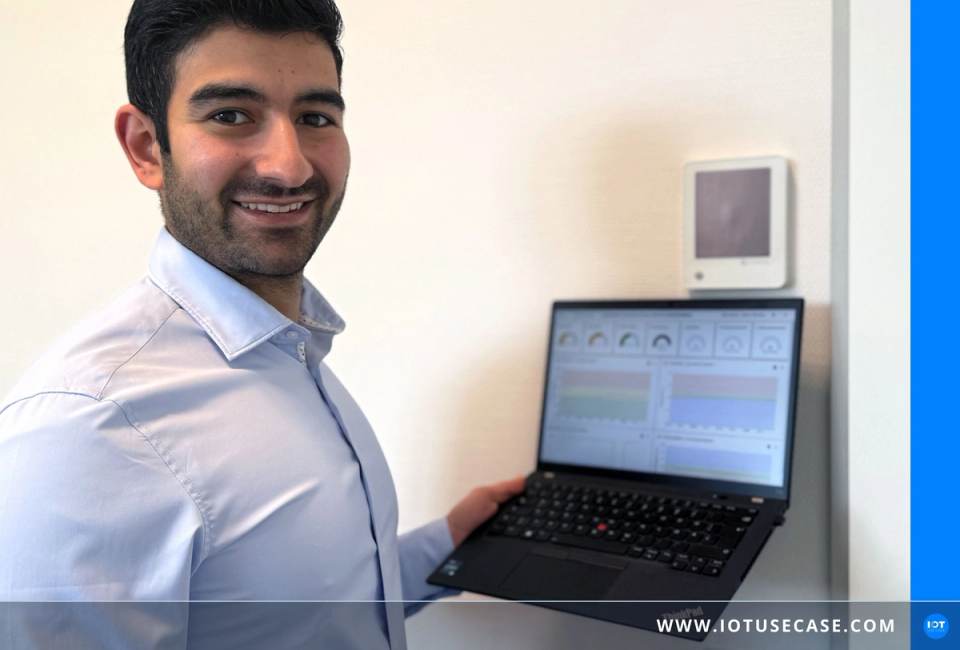
Eight networked indoor air quality sensors provide precise data for greater comfort, improved indoor climate, and targeted ventilation. - Dashboard for transparency and control
A central dashboard visualizes temperature trends, operating hours, energy consumption, and CO₂ values across the 300 m² office area. - Efficient data transmission via LoRaWAN
Integration into the existing infrastructure (Conneqtive) enables secure and scalable connectivity—also for future buildings.
Results
- Average temperature reduction of 3–4 °C, from 23–24 °C to 20 °C
- 30% lower energy consumption expected through intelligent control
- Measurable contribution to achieving ESG and sustainability targets
Source: Currenta Conneqtive – A Business Line of Currenta GmbH & Co. OHG
The LoRaWAN® trademark is used under license from the LoRa Alliance®.