Hiller GmbH and A1 Digital are developing a solution that allows Hiller to remotely monitor its decanter centrifuges and complete systems for solid-liquid separation and, in future, even control them. This paves the way for remote maintenance, diagnosis, process optimisation and prediction of maintenance intervals.
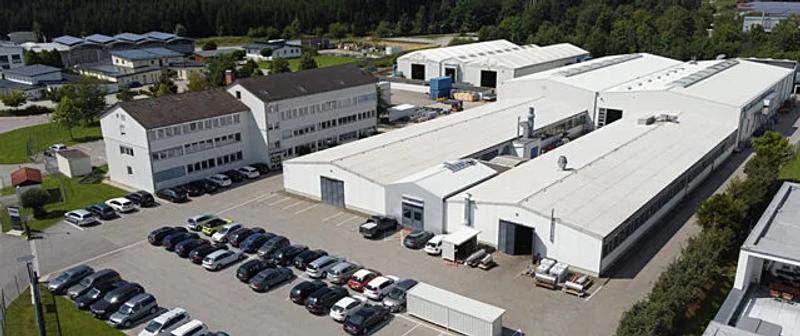
Hiller GmbH has been developing decanter centrifuges and complete systems for solid-liquid separation for over 50 years. The machines are essential components for many different applications in the environmental and wastewater sector, for food and beverages or for the extraction and separation of mineral oil, gas and renewable energies. Hiller is a member of the Swiss Ferrum Group.
Mission-critical decanter centrifuges and complete solid-liquid separation systems
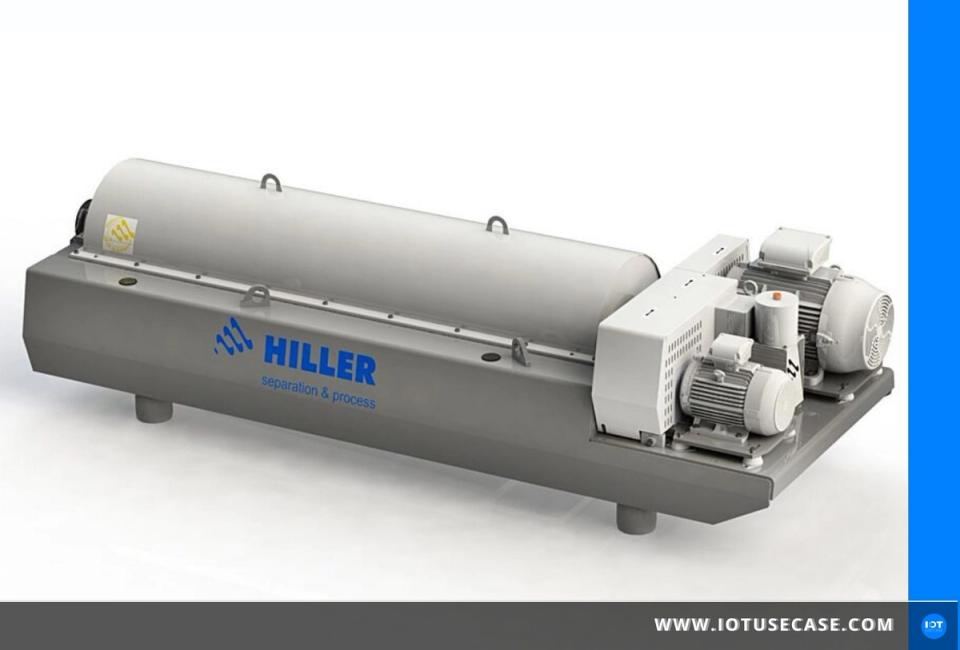
Machines such as the Hiller DP574 decanter are indispensable in the oil industry for the separation of 3-phase oil (oil contaminated with dirt and mixed with water), i.e. for the efficient separation of solids and the simultaneous separation of two liquid phases (oil, water). Such machines have many moving, interacting and adjustable components. For a successful separation process, several parameters must be monitored, including: current, drive frequency, drive vibration, voltage or torque.
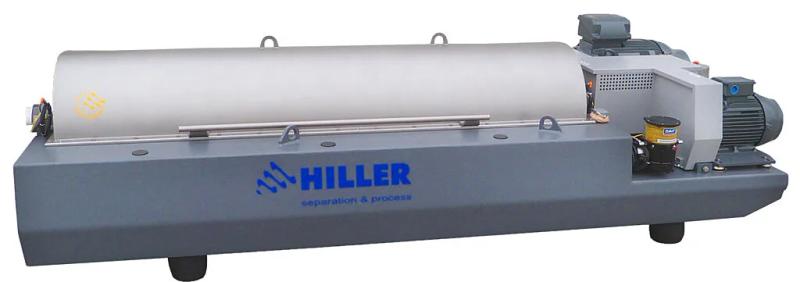
To generate the greatest possible output, different process parameters such as speeds, torques or flow rates must be set depending on the industry, product and material.
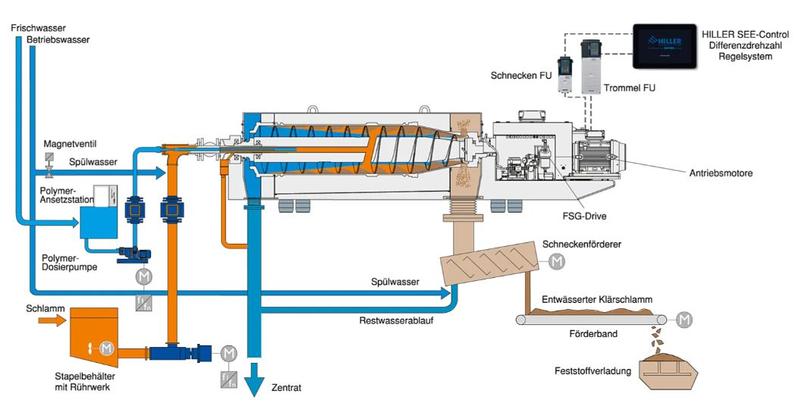
Hiller not only supplies the decanter, but also the complete system for solid-liquid separation if required. This includes, among other things, the screw conveyor, the polymer and feed pump, hoses or electronics such as the Hiller SEE-Control pro control unit. For more information on the product portfolio, please visit Hiller’s website.
Illustration: Hiller DecaPress® two-phase centrifugal dewatering system with FSG-Drive
„In order to expand and improve the service for the customers, the expansion of remote machine monitoring was the next logical step. For this, we chose A1 Digital as a partner to develop a strategy. In doing so, it was important to develop a system that could also be used to retrofit old equipment."
– Christian Schneider, Drive & Control Technology, Hiller GmbH
A new level of machine monitoring
The data from the Hiller decanters is read out using a PLC. A connected gateway sends it to the A1 Digital cloud platform with the help of A1 Digital connectivity.
Importantly, solution architects at A1 Digital have developed a special agent for the gateway that can communicate with the PLC. This agent collects data from the machine at very short intervals, translates it from the PLC standard into a readable format, and transfers it to the A1 Digital Industrial Insight IoT platform in real-time. A1 Digital has already developed similar protocols and agents for various other industries.
Hiller’s machines are critical to the company, with safety being a top priority. Therefore, cybersecurity was incorporated into the system design from the beginning.
1. Data acquisition and transmission: A special agent running on the gateway sends data in real time to the A1 Digital IoT platform.
2. Processing in the IoT platform: The IoT platform is able to visualise data for remote monitoring, set threshold values, deliver insights using advanced analytics and machine learning, and create business automations.
3. Process optimisation: The data collected makes it possible to better understand and optimise processes. With the help of subject matter experts and the use of machine learning, the maintenance status of the machines can be identified and shared with the mechanics.
The machine data is securely stored on Exoscale, A1 Digital’s GDPR-compliant European cloud. This enables Hiller and its customers to perform analyses, develop algorithms, export data and create process and business automation.
Just the beginning...
The more information is collected about the processes and machines, the greater leverage to optimize processes further and improve machine maintenance.
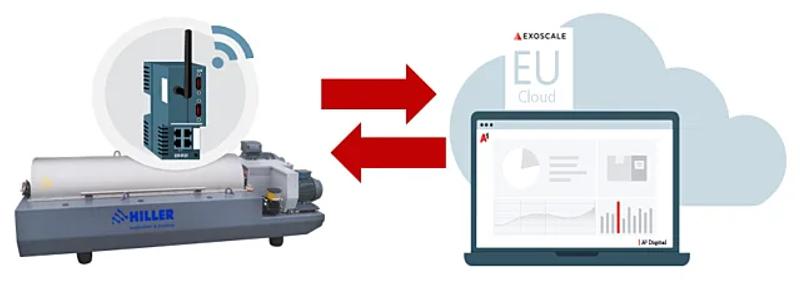
Starting point for bilateral data communication
In the future, the system will make it possible to communicate bilaterally with the control unit on the centrifuges. This will make it possible to automate processes, change process parameters remotely and analyze the effects on the data in real-time. Technical experts could view the processes and run diagnostics in case of problems.
Improving maintenance with Machine Learning
Based on the data, engineers can deduce how the mechanical properties of the machine behave over time and deduct when the machine needs maintenance or cleaning. In the future, data will be automatically analyzed in real-time. Automating monitoring tasks of all machines makes it possible to prevent unplanned machine failures. Machine learning is the perfect assistant for monitoring the immense amount of data that Hiller’s machines create. A human being could only do this to a limited extent, as the amount of data would overwhelm them. The automated monitoring of machines with the help of predictive maintenance could be another service Hiller GmbH offers its customers in the future.
Conclusion
With the remote machine monitoring developed by Hiller and A1 Digital, the user experience for Hiller’s customers has been significantly improved. It’s the first step and enables engineers and data scientists to improve processes for the applications in which Hiller’s customers use its equipment.
To further enhance the user experience of the machines, improve maintenance services and prevent breakdowns, new algorithms are being developed to monitor data and predict maintenance cycles based on input and output data.
In the future, bi-directional communication between the plant and the IoT platform could allow diagnostics to be carried out remotely to provide better service and save travel costs.
Authors: Keyanoush Razavidinani, Christian Schneider, Elvin Sebastian
Source: A1 Digital