
Get in touch with Peter Sorowka
Tell us briefly what it is about – we will pass your message on and make the introduction personally.
Solution Examples



Scalable data platforms for complex materials: achieving data-driven manufacturing in lightweight construction
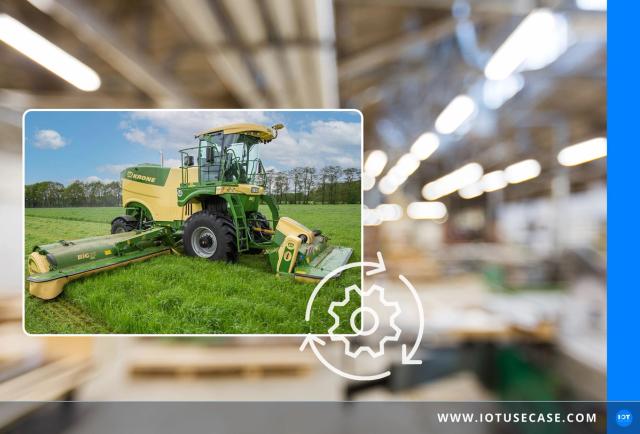
Build a smart factory – with seamless IT/OT integration and event-driven architecture
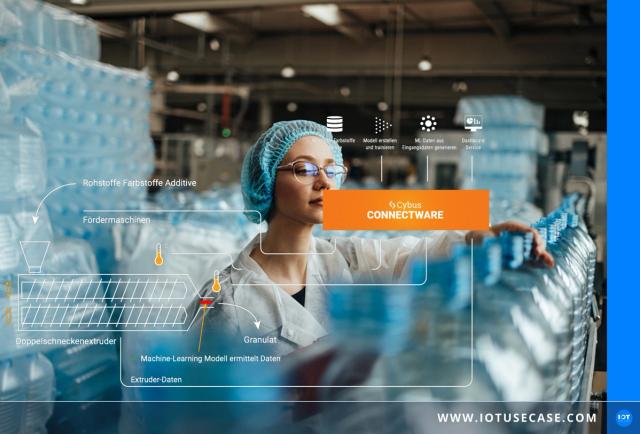
Making inaccessible machine data visible – reducing rejects, increasing quality
Podcast Episodes
Data Foundation for AI-Driven Production in Mid-Sized Manufacturing
The starting point is a sobering finding: most discrete manufacturing plants don't know in real time which machines are running and which are idle. Downtime causes end up handwritten on paper cards. Sorowka argues that technology hasn't been the problem for ten years — the bottleneck is the business follow-through: data-driven decision-making, transparency over performance, and a widespread not-invented-here mentality. With generative AI, the bottleneck shifts to IT/OT integration. Cybus itself positions Connectware, its own Factory Data Hub, as the answer to exactly this IT/OT integration challenge. Traub explains why data sovereignty becomes a competitive issue here: for many Hidden Champions, production know-how is the differentiating factor. Beyond the storage location, it's about the legal jurisdiction governing the contract and independence from any single AI model. It gets concrete in two places: Schunk describes a PCF playbook from a working group that allowed a mid-sized company to report the figure required by an automotive OEM within two hours. Sorowka presents the autonomous factory as a target vision, staged into autonomy levels 0 through 4, analogous to autonomous driving. Key takeaways If you don't know in real time which machine is idle, you don't know your bottleneck — and can hardly plan the ROI of a data project in advance. Generative AI delivers analysis ideas and prototypes within hours; the remaining bottleneck is connecting to real-world production. According to Traub, data sovereignty is a competitive issue, not a compliance one, because production know-how is the differentiating factor. A target vision built on autonomy levels makes investments justifiable, even when the ROI of an individual use case is missing.
IT/OT integration at Liebherr: How a platform strategy is accelerating digitalization in production
IoT app store: easy shop floor integration
Apps simplify a wide range of things in our everyday lives. They are simple, quick on the smartphone and have become an irreplaceable part of life for some. Now imagine an app store for industry, for everything related to the shopfloor. ADAMOS GmbH offers just such an open industry marketplace for software-as-a-service products and applications. Representing them, in today’s episode we have Marco Link, Managing Director of ADAMOS, as our guest. Peter Sorowka, app provider of ADAMOS, CEO and founder of Cybus, strives to troubleshoot and prevent outages using live monitoring, digitization processes, and a wide variety of procedures. We will also find out today how he manages to roll out pilot projects in a scalable way. SCHUNK, a global competence leader for clamping technology and gripping systems, will also play a predominant role as a user in today’s episode. With Steffen Gotzmann, the main person responsible for production we dive deeper into customer processing. Retrieving stations of ongoing orders, challenges of connectivity and the use of industrial solutions will be discussed in particular. SCHUNK uses the IoT marketplace to bring together the data from various machines and systems in its own factory centrally, thus ensuring smooth data exchange between the various apps.