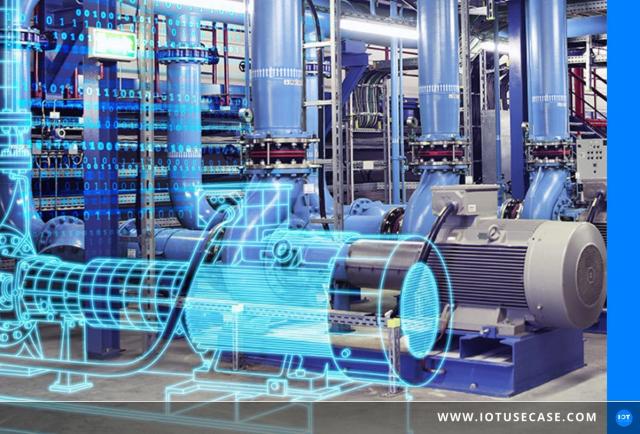
#101Asset Administration Shell – Standardized Product Descriptions as the Basis for the Digital Twin
A key problem in practice is the inconsistency of data points from different systems. Example: If a machine in China and another one in France use different names for the same data points, this leads to high engineering efforts (data transfer tasks) and time losses. Manual efforts, misunderstandings and errors can occur to make data usable for the implementation of different use cases.
Also, in many cases today, a clear classification of products and services is missing, report Thorsten Kroke(Managing Director ECLASS e.V.) and Alaettin Dogan (Technical Consultant at Neoception) in this podcast episode. As a result, products are not fully comparable and duplication and manual data transformation can occur. This costs time, money and ties up resources unnecessarily.
ECLASS, as a worldwide ISO/IEC standards-compliant data standard, solves this challenge together with Neoception. Products and services can be clearly described or classified with the industry standard – a uniform semantics emerges. Once the data has the same meaning and structure, it can be correctly interpreted and used for many different use cases in all IT and IIoT systems. The Neoception® Asset Administration Shell provides the appropriate software modules and associated professional services.
Use Cases in the Podcast
Use Case 1: Digital nameplate for machine maintenance
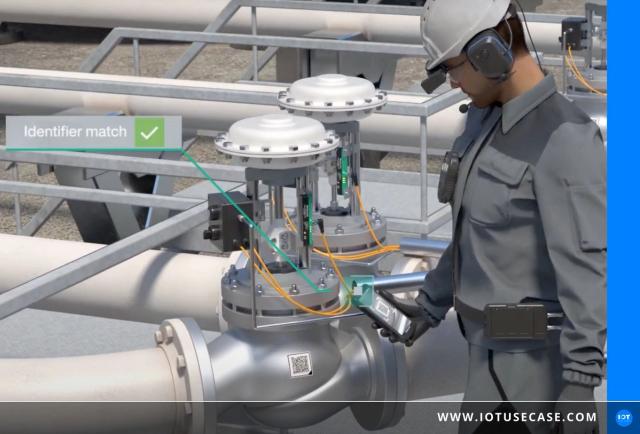
A digital nameplate is an innovative solution for improving machine maintenance. Instead of relying on physical labels and manual data entry, the digital nameplate provides instant access to important information by scanning a QR code.
Imagine a maintenance technician standing in front of a complex machine that needs to be serviced. Previously, they had to search for the necessary information in written documents or in various systems. But now they can simply scan a QR code on the digital nameplate of the machine, and a structured overview of all relevant information is immediately displayed. This overview contains all documents, certificates and maintenance information stored in the machine’s administration shell.
The added values of this use case
Increased efficiency: The technician saves time by no longer having to search for information in different systems or documents. This results in faster and more efficient maintenance and reduces machine downtime.
Consistency and reliability of data: Since all information is stored centrally in the administration shell, it is always up-to-date and consistent. This minimizes the risk of errors due to outdated or inconsistent information.
Environmental friendliness: Using digital nameplates instead of paper documents reduces paper consumption. This is a tangible contribution to sustainability, as fewer trees are needed per year for paper production, for example.
Integration: The digital nameplate is compatible with existing systems, so no additional data entry is required. This ensures that all data already maintained in the inventory system can be used efficiently.
Use Case 2: Product Carbon Footprint – Determination of the carbon footprint for a product in the context of the EU Green Deal.
Under the EU Green Deal, it is planned to record energy consumption and the carbon footprint per product. This means that every company, whether large or small and medium-sized enterprise (SME), will ultimately be required to monitor and report on these metrics.
For this use case, a company would use the ECLASS standard features to calculate the energy consumption and carbon footprint of its products. This information could then be stored in the Neoception® Asset Administration Shell used to understand the company’s overall impact on the environment and develop plans to reduce that impact.
The added values of this use case
Compliance: By calculating and reporting these metrics, a company can ensure it is compliant with EU Green Deal regulations and avoid potential fines.
Sustainability management: Determining a product’s carbon footprint and energy consumption enables the company to manage its sustainability goals more effectively and take targeted action to reduce these values.
Transparency and trust: By disclosing this information, companies can strengthen the trust of their stakeholders and customers and position their brand as environmentally conscious.
The EU Green Deal aims to make Europe carbon-neutral by 2050. It offers a range of benefits, including promoting green innovation, creating sustainable jobs, improving the health and well-being of citizens, reducing energy dependence, and strengthening Europe’s competitiveness. By recording and reducing the carbon footprint and energy consumption of their products, companies can make an active contribution to achieving these goals.
Classification of the topic: Digital twin > Asset Administration Shell > ECLASS
The Asset Administration Shell (AAS) is an important component of the concept of the digital twin of operations in the context of Industry 4.0. The first demonstrators for a core standard of a Digital Twin were presented in 2019, indicating the increasing importance of this topic.
The year 2020 was then marked by increased involvement of various companies, which approached the associations VDMA (German Engineering Federation) and ZVEI (German Electrical and Electronic Manufacturers’ Association). This movement was driven in particular by the Industry 4.0 platform, which was created as a result of the entire movement around Industrie 4.0.
Due to the growing interest, the development of a standardization of the digital twin by means of the administration shell was made a project. Founding members were sought and found to support and advance the issue. To this end, discussions were held within the VDMA and ZVEI associations and with end users to ensure a broad basis for the development and implementation of the standard.
Thus, Asset Administration Shell has its roots in the Industry 4.0 movement and is a central building block for the successful implementation of digital twin concepts. It serves to standardize and thus enable more efficient and uniform use and implementation of this technology in various industrial sectors. Read an application example from practice with VW Sachsen GmbH
The Asset Administration Shell (AAS) is now used in combination with the standardized product classification of ECLASS. ECLASS achieves the correct classification of products and services through error-free product master data. Neoception’s digital twin software expertise adds significant value to companies looking to utilize digital twins in their operations.
A partnership for the future: Neoception and ECLASS
The partnership between Neoception and ECLASS addresses these issues and offers solutions for various use cases, such as the digital nameplate, the carbon footprint per product or the digital product passport. The introduction of standards and cooperation with the IDTA will make these processes even more efficient and secure.
ECLASS serves as a global data standard that clearly describes and classifies products and services. The industry standard conforms to ISO/IEC standards and enables uniform preparation and international digital exchange of product data.
Neoception, as a partner in this equation, provides the technology and services to provide the data. With software solutions such as Core and Stream and a range of software building blocks (templates), the company enables mapping with the ECLASS data standard and closes the gap between sensor data and business processes.
Neoception was founded in 2017 as an IT consulting company by the Pepperl+Fuchs Group and has become a relevant IT service provider for the design of digital process optimization in the industrial environment.
ECLASS is a cross-industry global data standard that uniquely describes or classifies products and services. This industry standard is ISO/IEC standard compliant. With an ECLASS classification, product data can be uniformly prepared as well as translated into multiple languages and digitally exchanged internationally. Important product features and information are transmitted to the customer in a uniform data structure.
This podcast episode shows how the fruits of this partnership can lead to significant business benefits by increasing efficiencies and reducing costs while meeting the requirements of stakeholders such as legislators.
Neoception’s and ECLASS’ membership in the Industrial Digital Twin Association (IDTA).
Neoception and ECLASS are members of IDTA. IDTA is a platform committed to establishing and advancing the industrial Digital Twin concept, a concept that creates a virtual imprint of a physical object or process to perform analysis, optimization and improvement. Here, the 2 members help shape the standard, use the network, and work closely with other members to access knowledge and resources from the association. Together, they can thus sharpen market positioning and strengthen the application and further development of the industrial Digital Twin concept.
Episode 101 at a glance (and click):
[09:35] Challenges, potentials and status quo – This is what the use case looks like in practice
[19:46] Solutions, offerings and services – A look at the technologies used
[31:48] Results, Business Models and Best Practices – How Success is Measured
Jun 14, 2023