
Transparency seals the deal
PRODUCTION.SUITE from Optalio provides more data transparency, faster and more targeted planning and reduces resource consumption at Berger S2B GmbH.
The industry
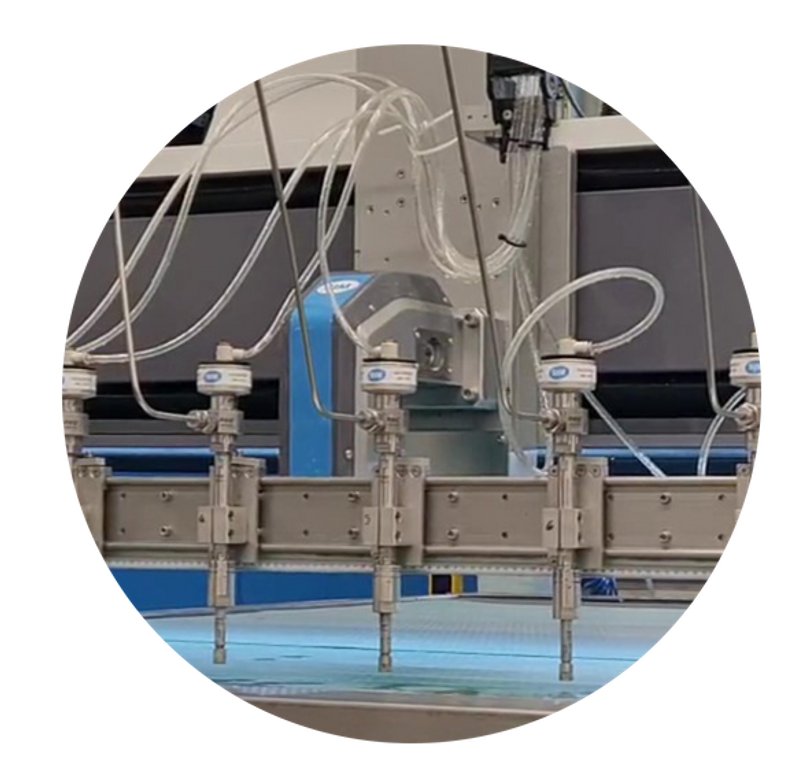
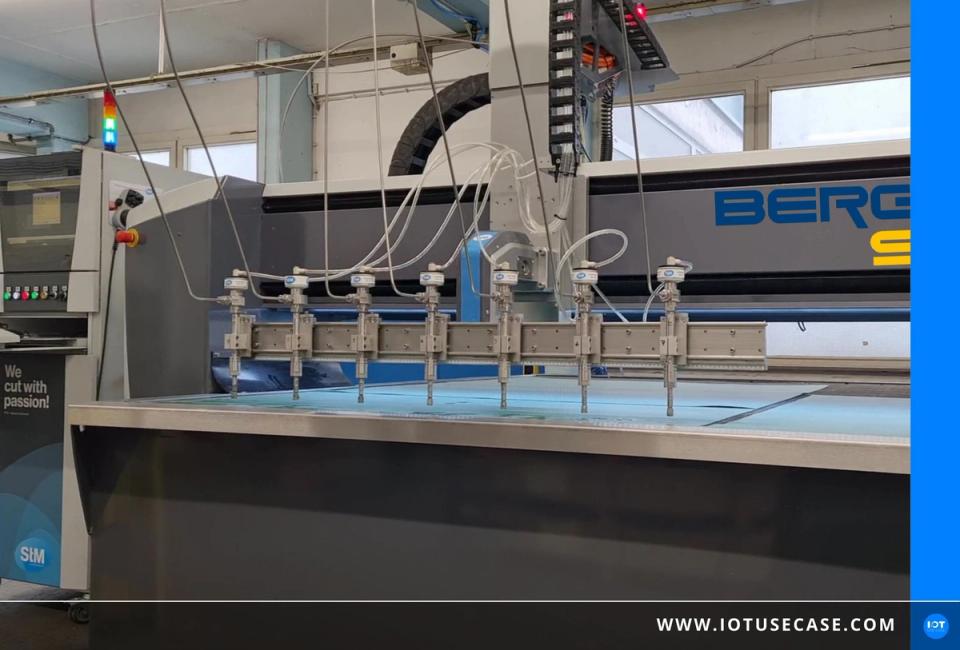
From mechanical and plant engineering to electrical engineering and agricultural and commercial vehicles: The seals and gaskets used here are indispensable because they keep brake or hydraulic fluids, for example, where they are needed.
Frequently, these are solutions that are very individually tailored to the customer, which is why both the development and production processes are characterized by high complexity and flexibility. Optalio uses a customer project to show how companies can best master the many challenges posed by process optimization.
As different as machines and plants are, so are the components that make them up. Because in addition to form and function, they also differ depending on the materials used. Seals and gaskets play a special role in the area of small parts. From commercially available household appliances to unique large-scale systems, only precisely fitting and durable seals ensure safe and trouble-free operation.
The customer
With over 90 years of experience, Berger S2B GmbH is one of the nationwide experts in the production and trade of technical polymer products and seals.
Founded in Mannheim in 1930 as Karl Berger & Co., the company has continuously expanded its product and service portfolio through the years: from an initial supplier of belts and seals made of leather and cardboard to a specialist for molded parts, flat gaskets, profiles, elbows and much more.
One of the core competencies of the OEM (Original Equipment Manufacturer) supplier is the development, manufacture and global supply of series parts, including to Brazil, the USA and Asia.
In addition, new materials are being developed with special polymer blends to meet special requirements, for example in the field of new mobility and the use of hydrogen.
The range of services, which is also illustrated by the addition of the name S2B (Solutions and Services to Business), also includes various services: among them the specially developed DichTecâ concept for optimizing company processes and individual consulting for the development of new products, including the prompt delivery of initial prototypes via 3D printing. The company, which has been based in Mannheim since its founding, develops and delivers solutions for customers from a wide range of industries.
These include the agricultural and construction machinery industry, the transport and commercial vehicle industry, mechanical and plant engineering, the comprehensive mobility sector and, in particular, storage and electrical engineering.
„“Not to be satisfied, but to continuously work on new things and the further development of processes - these are our daily tasks. This includes using the full range of digitalization to provide our employees with the right tools. This is the only way we can relieve them of cumbersome tasks so they can concentrate on what’s important: manufacturing high-quality products. In this context, we had also been looking into the automation of production planning for some time - and then came into contact with Optalio GmbH.”"
– Simon Treiber, Managing Director and Shareholder of Berger S2B GmbH
A second requirements profile
„“We realized very quickly that we were on the same wavelength. In a highly specialized industry like ours, we are also feeling the shortage of skilled workers and therefore know how important it is to involve our colleagues when introducing new technologies. We therefore want to make sure we provide them with a solution that is easy to use and intuitively understandable. After all, it should really make their work easier. This is exactly the understanding that prevails at Optalio. They clearly communicated this to us when they presented their PRODUCTION.SUITE.”"
– Alfonso Sica, Project Manager and Production Employee at Berger S2B
During the consolidation discussions, Optalio’s experts first worked with the customer to determine the pain points of production in order to establish which challenges the new solution should meet. In addition to the simple operation and overview, this also included the mix of large-scale production or fast single-item production.
The latter has very customer-specific requirements. For example, short-term orders often include special requests regarding the shape and material of seals, which requires far-reaching flexibility in production planning in order to be able to deliver high-quality products in a timely manner. In combination with the usual planning uncertainties – for example, personnel or material bottlenecks – this repeatedly leads to gaps in the form of underutilized machines or workstations, for example. Thus, in the past, opportunity costs arose that were unavoidable due to the complicated analog planning.
Connection of the production data
To connect PRODUCTION.SUITE to Berger S2B’s IT infrastructure, a few small adjustments were necessary first. Since Optalio’s solution in this case runs on the Software-as-a-Service (SaaS) model and is thus obtained from a secure cloud, some new interfaces were added. Additional VPN (Virtual Private Network) connections were also set up to further increase the level of security when connecting the company network to the cloud.
Thanks to the active support from Optalio and partner companies within the digital ecosystem of data specialists, the adaptation of the IT infrastructure proceeded smoothly – and the necessary investment for this remained manageable.
Since the solution went live, production planning data from ERP, archive and SQL database systems, among others, has been collected, synchronized, consolidated and finally analyzed by Optalio’s proprietary AI. The time recording of the employees is also included in the analysis. It will be used later on to get a better sense of one’s own work through the more comprehensive overview of activities. This makes it easier for employees to increase their efficiency on their own, to increase value creation, and to recognize their own individual contribution to this more quickly and easily. This helps employees to identify even more with their own tasks and increases motivation.
From the current state to a view of the future
Training in the use of PRODUCTION.SUITE is currently taking place on-site at the plant in Mannheim. “The clear presentation of the dashboards makes it immediately apparent where the production process is faltering,” says Alfonso Sica. “The same applies to adjustments that can be made directly via the solution, and it is immediately shown what effects they have. This of course also helps with the training of employees. Because even the introduction is perceived as very intuitive, the feedback has been consistently positive so far.”

“We can already say that, thanks to the significantly higher transparency we get from analyzing the data, we will be better able to respond to unforeseen events such as cases of illness or supply bottlenecks in the future,” says Simon Treiber. “Before the introduction, we had to spend an average of ten to fifteen hours per week on scheduling, controlling and maintaining inventories from the orders.
How Optalio helped
Based on Optalio’s experience and the impression we have gained so far, we expect a time saving of 70 to 75 percent – in the best case even up to 80 percent.”
The company also expects that the more efficient planning will also have a positive impact on material management.
The more precisely production management aligns order requirements with the available work resources, the better the quantity of polymer residues can be forecast in advance so that they can be specifically reused. This not only has a positive effect on costs and thus competitiveness. It also makes it possible to reduce the material outlay and thus make an important contribution to sustainability.
Making a difference together
For the managing director, the good cooperation with Optalio and the results that are already emerging are reasons to think about further steps: “We have always felt very well looked after – from the first meeting through to implementation and training. Everything always went very constructively and our wishes were documented in precise detail, which meant that every decision was on point. We are therefore already planning the introduction of Optalio’s MONITORING.SUITE at the end of 2024 in order to also analyze the data from our machines and further optimize production,” was Simon Treiber’s conclusion.

Source: Optalio