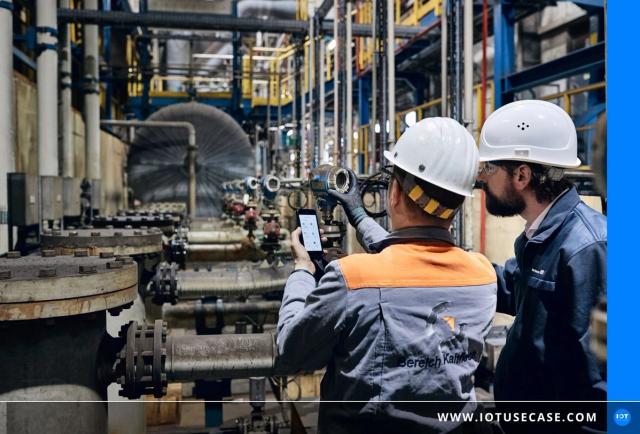

This episode of the IIoT Use Case Podcast is all about IoT networking of already highly automated steel production. Endress+Hauser, a company based in industrial measurement instrumentation, presents its IIoT pilot project with crude steel producer Salzgitter Flachstahl. One of the key takeaways: Only with digital infrastructure and corresponding digital tools is it possible to meet plant availability requirements in such a complex, highly automated area. The focus on two different types of data makes the customer requirements of this use case clear: From the point of view of the pure automation process, measurement data are elementarily important. In the past, these could already be viewed via a dashboard, the HMI (Human Machine Interface). From the perspective of the maintenance engineer and availability, the focus is on the status data of the sensors and actuators. It is intended to provide a comprehensive overview of measurement instrumentation: How is my engine doing, how is my sensor doing, how is my measurement instrumentation doing? Without IoT, this previously required going to the machine. Salzgitter Flachstahl says: Further data was already there due to the fieldbus system already in place, but it was not used. Today, there is Internet connectivity all the way to the fieldbus and transfers the data to the cloud. This requirement has been a focus of the two companies’ cooperation to date. Initially, there were security concerns, coupled with the request to retain control over one’s own data. The architecture of the Endress+Hauser IoT solution addressed these customer requirements and built the solution to be certified to the international ISO 27001 standard, thus meeting globally recognized IT security standards. In addition, there is a read-only channel that allows read-only access without primarily interfering with the control. In the podcast episode, this IoT implementation process is described using Kontibeize II – a plant that produces about 2,500 tons of steel per work shift and is one of the centerpieces of steel production. The podcast episode also explains in more detail what other advantages are associated with process and condition monitoring for Salzgitter Flachstahl, and how this use case can be transferred to other use cases.
We use cookies and similar technologies to improve our website and show you relevant content. You can decide which categories you allow. For more information, please read our privacy policy. Privacy Policy