

Alexey Pavlov

    Alexey Pavlov

    Founder & CEO

    Solution Examples

    Trained pick-and-place robot with camera eyes reduces complaint and energy costs
    IDS Imaging Development Systems GmbH Logo
    urobots Logo

    Trained pick-and-place robot with camera eyes reduces complaint and energy costs

    05.08.2021Read more →

    Podcast Episodes

    AI expertise built right into the camera | From image to result

    #48
    Ing. Madeleine Mickeleit
    IIoT Use Case GmbH Logo
    Patrick Schick
    IDS Imaging Development Systems GmbH Logo
    Alexey Pavlov
    urobots Logo
    #48

    AI expertise built right into the camera | From image to result

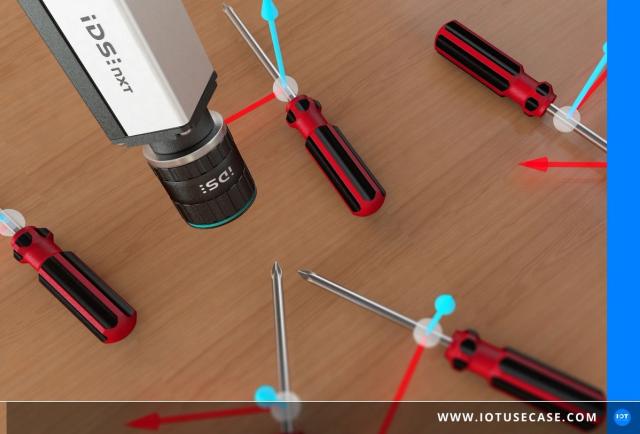
    IDS Imaging Development Systems presents IDS NXT, a platform for industrial applications ranging from classical to AI-based image processing. With its industrial cameras, IDS delivers not only images, but directly viewable results. Thanks to integrated image processing and a wide range of communication interfaces such as OPCUA, the cameras are able to visualize the results of a process and control machines and systems – without being connected to a PC. What does a process in which the IDS NXT cameras are used look like? One example described in the podcast is the final inspection in the production of sealing rings. A product expert assigns the sealing rings a label, e.g. good or bad part, based on their condition in the AI training process. Images are taken of these labeled parts, with 10 to 20 images already being enough to train the AI and lead it to success. This means that the expertise of the person at the final inspection is poured into the AI so that the robot can work independently in the final inspection and distinguish good parts from bad. The big advantage is that no in-house knowledge of artificial intelligence is required to work with and on the camera. The only knowledge required is expertise in the relevant products. But there is another way: In this podcast episode, IDS brought along its customer urobots, which has already developed its own image processing AI and uses the AI accelerator running on the IDS NXT camera. Knowledge is shared on an open platform. IDS thus serves two different types of customers – those with prior knowledge of AI and those without. What are the benefits of the cameras? An accuracy of 99.9% in quality control and thus the reduction of complaint costs. By having robots take over monotonous tasks, employees can be deployed more efficiently in other areas. In addition, users incur fewer investment costs in their own hardware, partly because the IDS NXT does not require a PC. Users also don’t need their own image processing department, as the AI does the whole job. In addition, the cameras work very quickly: urobots speaks of approximately 200 milliseconds in which the software captures the positions of all objects on the camera image. That is, five acquisitions per second. The accuracy of the detection is +- 2 degrees and +- 2 pixels. Faster computing time means faster decisions can be made, which in turn increases the clock speed.

    Aug 5, 2021
    IoT Use Case

    We use cookies

    We use cookies and similar technologies to improve our website and show you relevant content. You can decide which categories you allow. For more information, please read our privacy policy. Privacy Policy