Ing. Madeleine Mickeleit

    Ing. Madeleine Mickeleit

    Founder & Managing Director

    About Ing.

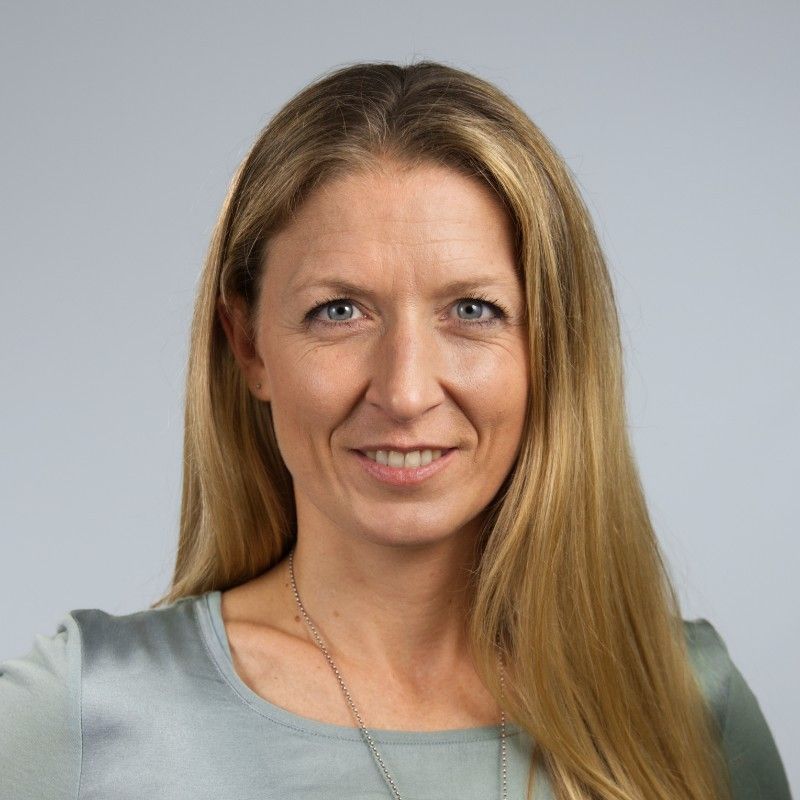
    “Let’s think outside the box!” – As a mechanical engineer and expert in IoT business development, I’ve seen virtually every relevant use case in the industry. Every day, I engage with companies to understand their specific challenges and work with them to identify the best IoT technologies and partner solutions. My focus is on developing tailored approaches that are not only innovative but also practical and scalable.

    Podcast Episodes

    Implementing IoT Successfully: Use Cases, Impact, Partnerships

    #196
    Ing. Madeleine Mickeleit
    IIoT Use Case GmbH Logo
    Dr. Peter Schopf
    IIoT Use Case GmbH Logo
    Jens Petri
    GMN Paul Müller Industrie GmbH & Co. KG Logo
    #196

    Implementing IoT Successfully: Use Cases, Impact, Partnerships

    Implementing IoT Successfully: Why Purpose, Partnerships and Small Use Cases Matter In this episode, Ing. Madeleine Mickeleit, Dr. Peter Schopf and Jens Petri discuss the key success factors in IoT projects. At the center is the question of why so many initiatives stall and how companies can shift their focus from a technology driven start to a clear value driven approach. A defined purpose becomes the foundation for decisions related to sensor technology, data models and platforms. With concrete examples from steel plants and machine building, Jens shows how small and well defined use cases create fast and measurable impact, for example through early detection of wear or by monitoring critical components. These approaches build trust, simplify scaling and prevent costly missteps. Another focus is the importance of partnerships. IoT projects thrive on interoperable solutions. Sensor technology, connectivity, gateways and software must work together. Examples such as the Franconian alliance around GMN illustrate how technological cooperation enables real innovation and softens traditional competitive boundaries. Listeners also learn why Dr. Peter Schopf will take over as the host of the podcast and which perspectives and experiences he brings to the role. This episode offers clear guidance for everyone who wants to implement IoT projects pragmatically, in a scalable way and with a strong focus on real business value.

    Nov 28, 2025

    PASM and PSsystec: IoT fault management for 3000 sites

    #195
    Ing. Madeleine Mickeleit
    IIoT Use Case GmbH Logo
    Alexander Barnstorf Brandes
    PASM Power & Air Solutions Logo
    Michael Knöpfle
    PSsystec Logo
    #195

    PASM and PSsystec: IoT fault management for 3000 sites

    How can faults, energy consumption and equipment conditions be monitored reliably across thousands of distributed buildings? PASM and PSsystec provide deep insights into the modernization of Telekom’s internal building technology in this episode. The challenge was a heterogeneous infrastructure with outdated signaling, in some cases still based on ISDN, and high costs for traditional building control systems. At the same time, there was a lack of transparency regarding devices and availability at over 3,000 locations. The solution is a cellular based IoT architecture built with the SMARTbox from PSsystec and Telekom’s Cloud of Things. The gateways can be installed noninvasively, connected via cellular networks and fully configured remotely. Functions such as hysteresis based measurement values, flexible transmission cycles, over the air updates and remote parameterization enable scalable device management across large fleets. PASM uses this setup to monitor cooling and heating systems, compressed air units and mobile power generators and gains a unified cloud-based view of states and alarms. The business value is clear: PASM reduces hardware costs by a factor of ten and increases operational reliability through greater transparency. PSsystec reports up to fifty percent fewer service deployments in other projects thanks to smarter data logic. At the same time the flexibility of IoT becomes evident, from single small buildings to large decentralized fleets.

    Nov 26, 2025

    Digital Machine File with Edge Device and Equipment Cloud

    #194
    Ing. Madeleine Mickeleit
    IIoT Use Case GmbH Logo
    Martin Falsner
    Kontron AIS GmbH Logo
    Stefan Köhler
    PVA TePla Logo
    Thorsten Hardt
    PVA TePla Logo
    #194

    Digital Machine File with Edge Device and Equipment Cloud

    The episode shows how the PVA Group is enabling its machines from the field of high vacuum and heat treatment to become data capable and how digital services are built on top of that. The starting point was the internal challenge of making knowledge centrally available, creating transparency and standardizing service processes. In parallel, customers required a secure way to integrate machine data into existing IT and MES systems without disclosing sensitive process data. Together with Kontron AIS, an edge device using the OPC UA for Machinery model and a digital customer portal were implemented. The hardware enables secure and standards-compliant provisioning of machine data. The portal serves as a central platform for master data, documentation, maintenance plans, tickets and customer communication. In the future, this will form the basis for a digital twin including lifecycle data. The modular solution addresses internal efficiency and scalable customer services and enables future use cases such as preventive maintenance, automated spare part diagnostics or AI supported recommendations. The episode is particularly relevant for machine builders, industrial operators, service managers and companies that want to develop their own IoT product strategy. It explains why data access, standardization, platform logic, trust and iterative implementation are key.

    Nov 19, 2025

    Energy Efficiency with IO-Link and AI – Practical Insights from achtBytes

    #193
    Ing. Madeleine Mickeleit
    IIoT Use Case GmbH Logo
    Alwin Jung
    achtBytes GmbH Logo
    #193

    Energy Efficiency with IO-Link and AI – Practical Insights from achtBytes

    Energy and compressed air monitoring in practice: How achtBytes connects IoT, AI, and IO-Link In this episode, achtBytes demonstrates how energy efficiency in production can be implemented in practice – with IoT sensors, intelligent data processing, and an AI assistant called MIA. The starting point for many customers is the lack of transparency regarding the actual energy consumption of individual machines and production areas. Often, only a main meter is available, while detailed measurements are missing. The solution: a modular system based on IO-Link sensors that collects, analyzes, and visualizes power, compressed air, and CO₂ data via the cloud. Existing plants can be retrofitted step by step, enabling companies to make data-driven decisions without major interventions – for example, when investing in new machines or comparing production lines. A special highlight is the AI assistant MIA, which automatically creates dashboards and visualizes energy KPIs on demand. This turns data analysis into an intuitive tool – without complex configuration. This episode provides practical insights for production managers, energy managers, and digitalization leads who want to reduce energy consumption, implement retrofit projects, or bring AI-powered transparency to their production environments.

    Nov 12, 2025

    Ensuring Quality with IoT: How RAFI and ifm Digitalize Injection Molding

    #192
    Ing. Madeleine Mickeleit
    IIoT Use Case GmbH Logo
    Christoph Schneider
    ifm-Unternehmensgruppe Logo
    Guido Zoll
    RAFI GmbH & Co. KG Logo
    #192

    Ensuring Quality with IoT: How RAFI and ifm Digitalize Injection Molding

    How can manufacturers measurably improve quality, energy efficiency, and process stability in injection molding without disrupting production? RAFI and ifm share a hands-on example. They start with typical challenges: fluctuating mold temperatures, unclear cooling-water volumes, and rising compressed-air consumption. The goal is a stable process with clear quality metrics, shorter cycles, and lower energy demand. The solution combines ifm sensor technology with the moneo platform. Data on pressure, temperature, and flow are collected via IO-Link, aggregated in moneo, visualized, and analyzed. Dashboards and alarms make deviations visible, while early insights reveal concrete levers for optimization. Looking ahead, Asset Health modules for actionable recommendations and Remote Connect features will further enhance the setup. A must-listen for production managers, process engineers, and quality specialists aiming to advance data-driven quality assurance and energy monitoring in plastics manufacturing. If you want to learn which parameters really make the difference in practice—and how to move from raw signals to informed decisions—this episode is for you.

    Nov 5, 2025

    Predictive Maintenance with LoRaWAN: How Honeywell Makes Industrial Equipment Smart

    #191
    Ing. Madeleine Mickeleit
    IIoT Use Case GmbH Logo
    Martin A. Kühne
    Honeywell Logo
    #191

    Predictive Maintenance with LoRaWAN: How Honeywell Makes Industrial Equipment Smart

    Predictive Maintenance with LoRaWAN in Practice Unplanned downtime of pumps, fans, and motors costs time and money. Martin Kühne explains how Honeywell uses robust LoRaWAN sensors to measure vibration, acoustics, and temperature—detecting anomalies at an early stage. This enables continuous monitoring, targeted maintenance planning, and compliance with safety standards. The solution integrates seamlessly into existing environments. Data flows via gateways and MQTT into customer systems or existing LoRaWAN networks. Real-world examples range from ventilation systems at Mercedes-Benz production sites to kerosene pumps connected to Frankfurt Airport, where condition-based maintenance optimizes replacement cycles and reduces costs. Honeywell brings decades of experience from process control technology, ensuring full industrial readiness with IP67 protection, Ex-certified versions, and NAMUR-compliant testing. Scaling is supported by partners who cover the full chain—from sensor deployment to IT/OT integration. For operators of rotating equipment aiming to improve production quality and workplace safety, this episode offers a clear roadmap for adopting condition-based maintenance with IoT. Tune in to learn how monitoring, data integration, and maintenance workflows come together in practice.

    Oct 29, 2025

    Retrofit under EU requirements: How Perinet securely connects legacy systems

    #190
    Ing. Madeleine Mickeleit
    IIoT Use Case GmbH Logo
    Dr.-Ing Karsten Walther
    Perinet GmbH Logo
    #190

    Retrofit under EU requirements: How Perinet securely connects legacy systems

    EU Data Act in practice. How manufacturers and operators can retrofit legacy installations securely and make device data usable. The challenge often starts in the field. Many controllers were conceived in the eighties, speak Modbus or RS485, and have no network interface. Data access is still required, transparency and security as well. At the same time, processes must not stop and investments must remain plannable. The solution is a step by step retrofit with clear priorities. First, secure communication over the existing line. Adapters placed between field devices and controllers translate Modbus into the IP world, enable encryption, and ensure clean device management. Network security is designed so that installers in the field can work safely. In the next step, individual devices become independent network participants, with a perspective toward virtualized control and centralized software rollout. Perinet provides suitable IoT hardware such as smart adapters and contributes consulting for integration and security. The result is secure, economical, and EU Data Act compliant solutions with a clear roadmap for brownfield installations. This is especially relevant for manufacturers, operators, and system integrators who want to combine data sovereignty, scalability, and investment security. Listen now and take away concrete steps for your own retrofit strategy.

    Oct 22, 2025

    Inside Cummins and Portainer: Modular IoT for Software Defined Vehicles

    #189
    Ing. Madeleine Mickeleit
    IIoT Use Case GmbH Logo
    Carlton Bale
    Cummins Inc. Logo
    Martin Brown
    Cummins Inc. Logo
    Neil Cresswell
    Portainer.io Logo
    #189

    Inside Cummins and Portainer: Modular IoT for Software Defined Vehicles

    Updating vehicle software once required costly workshop visits and manual intervention. Today, Cummins is changing that — using IoT, container technology, and over-the-air (OTA) updates to deliver software securely and efficiently to assets in the field. In this episode, Cummins explains why its traditional telematics stack could no longer scale across more than 20 OEMs and 35 partner systems, and how a new modular software architecture built on OCI containers is helping unify these fragmented environments. With Portainer.io as a technology partner, Cummins explored how to orchestrate containers remotely, manage limited bandwidth and security requirements, and scale deployments from pilot projects to fleets of hundreds of thousands of devices. The conversation also dives into open-source collaboration through Eclipse SDV and COVESA, standardization efforts, and what the future of the Software Defined Vehicle could look like. Tune in to learn how Cummins and Portainer are shaping the next generation of connected, software-driven vehicles — and what other industries can take away from it.

    Oct 15, 2025

    From machine to CO₂ report: how Manufacturing-X works for SMEs

    #188
    Ing. Madeleine Mickeleit
    IIoT Use Case GmbH Logo
    Jens Viertel
    SITEC Industrietechnologie GmbH Logo
    Michael Kaiser
    Smart Systems Hub GmbH Logo
    #188

    From machine to CO₂ report: how Manufacturing-X works for SMEs

    How can companies successfully get started with Manufacturing-X while achieving clear business impact? SITEC and Smart Systems Hub demonstrate this using the example of CO₂ reporting in mechanical engineering. The starting point: heterogeneous machines, limited internal resources, and high initial complexity. At the same time, the demands for data sovereignty, ESG reporting, and collaboration within supply networks are increasing. The solution combines Smart Systems Hub’s experimental environment and infrastructure with SITEC’s hands-on experience as a machine builder and operator. Production data such as energy consumption and unit counts are securely transferred via EDC connectors into a standardized data space, where they are provided to an analytics service and aggregated into reliable key figures. SITEC integrates the results into its connACT SERVICES, creating reusable building blocks instead of isolated one-off solutions. The result is rapid proofs, a scalable IT/OT integration, and a reliable foundation for further applications such as digital product passports. This episode is aimed at decision-makers in mechanical engineering as well as OT and IT teams who want to implement Manufacturing-X pragmatically, reduce implementation efforts, and reliably meet ESG requirements. Tune in to learn how raw data becomes a productive service.

    Oct 8, 2025

    Plan IoT security the right way: SIM ID, private APN and traffic analysis

    #187
    Ing. Madeleine Mickeleit
    IIoT Use Case GmbH Logo
    Peter Gaspar
    A1 Digital Logo
    #187

    Plan IoT security the right way: SIM ID, private APN and traffic analysis

    How do companies secure connected devices in a cost effective and scalable way? This episode is for IT and OT leaders who deploy many devices in the field and move PoCs into operations. The central question is how to balance risk, cost, and device constraints such as battery operation and limited compute. Peter shows how to use existing network functions deliberately. SIM based authentication provides a unique device identity; private APN, IP filtering, static IP addresses, MPLS or IPsec protect communication into your own network; network side anomaly detection flags irregularities and prevents misuse of removed SIM cards. In critical applications such as smart metering you add certificate management, end to end encryption, secured firmware updates, and tamper detection on the device. Looking ahead, 5G opens options such as network slicing for separate security domains and the SIM as a secure element. The design also prepares you for NIS2 requirements. The result is a security concept that fits the use case, protects devices and budgets, and scales. Note: Meet A1 Digital in person. Smart Country Convention Berlin 2025, 30 Sep to 02 Oct. it-sa Expo & Congress, 07 Oct to 09 Oct. RecyclingAKTIV and TiefbauLIVE 2025, 09 Oct to 11 Oct. Free tickets are available for all three events via the A1 Digital landing pages.

    Oct 1, 2025

    Scaling IoT Worldwide – How Telekom Solves Hidden Risks

    #186
    Ing. Madeleine Mickeleit
    IIoT Use Case GmbH Logo
    Salvator Kenndler
    Deutsche Telekom IoT GmbH Logo
    #186

    Scaling IoT Worldwide – How Telekom Solves Hidden Risks

    How can companies scale IoT projects across borders while keeping connectivity secure, reliable and cost-efficient? In this episode, Salvator Kenndler from Deutsche Telekom IoT explains the key challenges and solutions for global IoT connectivity. The biggest hurdles are technology choices, international regulations and hidden costs in SIM management. A wrong decision on NB-IoT, LTE-M or 5G can delay rollouts for months, while unused SIMs and roaming restrictions drive up costs. Regulatory differences and incomplete standards add further complexity when scaling across Europe or worldwide. Deutsche Telekom IoT addresses these issues with a comprehensive portfolio: from NB-IoT and LTE-M to 5G standalone and satellite fallback for remote or critical use cases. With more than 500 global roaming agreements, industrial-grade SIM, eSIM and iSIM technologies, and a proven Connectivity Management Platform (CMP), Telekom ensures secure and scalable deployments. Hardware certification, strong APIs for ERP and logistics integration, and RTK-based precise positioning services further simplify complex IoT projects. The message is clear: connectivity is a small but crucial part of every IoT solution. Choosing the right technology early and relying on expert consultation prevents costly mistakes and accelerates time-to-market. Tune in to discover how Deutsche Telekom IoT enables global IoT rollouts, reduces risk and helps companies unlock the full potential of connected devices worldwide.

    Sep 24, 2025

    Food Production Saves Energy with autinityE3

    #185
    Ing. Madeleine Mickeleit
    IIoT Use Case GmbH Logo
    Raphael Elm
    Kohrener Landmolkerei GmbH Logo
    Adrian Buettner
    Schaeffler Digital Solutions GmbH Logo
    Maximilian Adam
    Schaeffler Digital Solutions GmbH Logo
    #185

    Food Production Saves Energy with autinityE3

    How can a mid-sized dairy implement energy management with heterogeneous legacy equipment, rising energy costs, and the need for transparency for Controlling and Quality Management? This episode provides hands-on answers. Raphael Elm from Kohrener Landmolkerei describes the starting point: a lack of transparency, only utility bill values, and the need to make concrete savings potential visible. Together with Maximilian Adam and Adrian Büttner from Schaeffler Digital Solutions GmbH, the autinityE3 software was introduced to capture and visualize energy data from electricity, steam, water, and compressed air. The guests discuss typical challenges such as old meters without network connections or machines equipped with sensors whose data was never used. Early “aha” moments came from comparing runtimes – for example, compressors running longer than the associated equipment – as well as by including additional parameters such as wastewater pH. Today, different departments use dashboards with customized views, from Controlling to Quality Assurance. The project began small with autinityE3 Starter and is now being expanded step by step. Future plans include AI-supported analytics and active peak load management. This episode is aimed at production managers, energy managers, and IT/OT leaders who want to implement energy monitoring in practice and unlock tangible savings potential.

    Sep 17, 2025

    From Measurement to Maintenance: IoT in Practice with Ethernet-APL

    #184
    Ing. Madeleine Mickeleit
    IIoT Use Case GmbH Logo
    Pirmin Lickert
    Endress+Hauser Logo
    #184

    From Measurement to Maintenance: IoT in Practice with Ethernet-APL

    How can raw measurements be turned into concrete maintenance recommendations? In this episode, Madeleine Mickeleit and Pirmin Lickert from Endress+Hauser discuss a digitalization project at Merck and how the Netilion Cloud enables the step from simple data collection to smart device management. The challenge: existing plants with 4–20 mA signals only deliver simple values without diagnostics. Errors are only noticed once devices fail. At the same time, hurdles arise at the interface between OT and IT when data needs to be securely transferred to the cloud. The solution: through gateways and edge devices, measurements and diagnostic data are visualized centrally in the Netilion Cloud, including error codes and recommended actions. Apps such as Netilion Health (device diagnostics), Netilion Value (measurements), and Netilion Library (documentation) provide additional value. Heartbeat Technology makes it possible to track drifts and paves the way toward predictive maintenance. What makes it especially exciting: Ethernet-APL introduces a new standard that integrates devices directly into the smart network and enables significantly higher data quality and speed. This episode delivers practical insights for anyone driving condition monitoring, device management, and cloud integration in the process industry, and for those who want to make their maintenance processes future-proof.

    Sep 3, 2025

    Saving Energy at Sea: How IoT Is Making Pump Systems More Efficient

    #183
    Ing. Madeleine Mickeleit
    IIoT Use Case GmbH Logo
    Thomas Hollasch
    Exor International SpA Logo
    Thomas Priebe
    BESI Marine Systems GmbH Logo
    #183

    Saving Energy at Sea: How IoT Is Making Pump Systems More Efficient

    Smart pump control, energy savings, and IMO compliance – with IoT on board This episode explores how BESI Marine Systems GmbH, a specialized provider of automated flow management solutions for ships, teamed up with EXOR Deutschland GmbH to develop a data-driven Pump Energy Saving System (PES). The goal: reduce energy consumption and wear, while meeting international CO₂ regulations from the IMO (e.g., EEXI). BESI is responsible for the system-level implementation – from pump and valve control to integration into the ship’s power grid. EXOR provides the IoT infrastructure via its X Platform: rugged panels, local data storage, and the JMobile software framework for visualization and data processing. The challenge: Relevant operating data must be captured securely and without manipulation under the strict security requirements of maritime systems – without direct cloud connectivity. All data is stored locally on board and made available for analysis onshore. This enables documentation of operating conditions and transparent proof of energy savings. Looking ahead, condition monitoring features are also planned – so maintenance can shift from fixed schedules to a condition-based approach. This episode offers real-world insights for decision-makers in maritime industries and mechanical engineering who want to implement IoT solutions under real operating conditions – with a focus on energy efficiency, data sovereignty, and pragmatic execution. Tune in now to discover how true partnership-driven IoT projects succeed in the maritime world.

    Aug 27, 2025

    IoT in Manufacturing: EXOR and AIRCO Connect Brownfield Environments

    #182
    Ing. Madeleine Mickeleit
    IIoT Use Case GmbH Logo
    Udo Richter
    Exor International SpA Logo
    Falk Recknagel
    Airco Systems GmbH Logo
    #182

    IoT in Manufacturing: EXOR and AIRCO Connect Brownfield Environments

    Digital services for nitrogen and compressed air systems: AIRCO leverages EXOR’s platform for scalable IoT solutions In this podcast episode, AIRCO and EXOR demonstrate how traditional machines can be transformed into data-driven services – improving efficiency, availability and reducing CO₂ emissions in manufacturing. AIRCO is digitizing its systems using EXOR’s open X Platform, which provides all the essential building blocks – from hardware and VPN connectivity to data visualization. The challenge: Many brownfield systems, a wide variety of controllers and highly customized setups for each customer. The solution: An interoperable system supporting over 200 protocols, capable of reading data from legacy machines, analyzing it and displaying it in custom dashboards. Customers receive ready-to-use insights into energy efficiency, condition monitoring and CO₂ reporting. What’s special: AIRCO offers these services as a white-label solution – with custom branding for OEMs and end customers. The focus is on simple entry points that can scale over time. EXOR not only provides the technology, but also best practices and preconfigured apps for a fast go-live. This episode is for OEMs, operators and digital transformation leaders looking to build smart services on existing machines and offer real added value to their customers. Tune in to learn how IoT projects become market-ready service offerings.

    Aug 20, 2025

    WISAG & ICONICS: How IoT Makes Building Management Modular and Flexible

    #181
    Ing. Madeleine Mickeleit
    IIoT Use Case GmbH Logo
    André Lange
    ICONICS Logo
    Markus Paluszkiewicz
    WISAG Automatisierungstechnik GmbH & Co. KG Logo
    #181

    WISAG & ICONICS: How IoT Makes Building Management Modular and Flexible

    How can complex buildings – from critical industrial environments to zoos – be operated efficiently, sustainably, and securely? WISAG Automation Technology and ICONICS provide hands-on insights in this episode. The challenge: Diverse customer groups must comply with regulations such as the Building Energy Act and ESG reporting while reducing costs and ensuring comfort – all under increasing complexity from new technologies, security requirements, and heterogeneous legacy systems. The solution: WISAG, acting as a system integrator, relies on the GENESIS64 platform from ICONICS, marketed under its own brand name, INSCONTROL 5.0. It offers universal connectivity to 98% of all common devices and protocols (including BACnet, OPC, KNX), low-code/no-code configuration, and flexible modules for visualization, historization, business intelligence, and more. Projects range from retrofitting outdated software to refrigeration solutions achieving up to 90% energy savings, to networking LoRaWAN sensors for special applications such as penguin enclosures. The result: Energy and maintenance costs can be significantly reduced – proven by reference projects such as the Microsoft Campus, which saved 100 million USD in ten years. At the same time, the platform creates a foundation for new digital business models such as control quality monitoring. For decision-makers in facility management, industry, and critical infrastructure, this episode offers concrete use cases and strategies on how IoT technology and building automation can deliver real business value. Tune in now and get inspired for your own projects.

    Aug 13, 2025

    Smart Building with Climate Goals – WAGO’s Practical Approach

    #180
    Ing. Madeleine Mickeleit
    IIoT Use Case GmbH Logo
    Achim Zerbst
    WAGO GmbH & Co. KG Logo
    Jannis Held
    WAGO GmbH & Co. KG Logo
    #180

    Smart Building with Climate Goals – WAGO’s Practical Approach

    Smart Building with Climate Goals: How WAGO is making a new site energy-efficient and future-ready In this episode, Achim Zerbst and Jannis Held share insights into the development of WAGO’s new logistics hub in Sondershausen – and how a holistic energy management system was integrated right from the start. The goal: not just to control electricity flows, but to actively reduce CO₂, avoid peak loads, and meet ESG requirements. At the heart of the approach is a modular system: from detecting significant energy users (SEUs) and intelligent load management for EV charging infrastructure, to integrating photovoltaics, battery storage, and building automation. WAGO focuses on interoperability – with open interfaces to SCADA systems, third-party sensors, and existing building management systems. What makes this project stand out: Energy management was already considered in the planning phase – supported by simulation models, a master’s thesis on energy flexibility, and a clear target vision: efficient, climate-friendly, and reliable operations. This episode provides valuable insights for anyone planning new sites, modernizing existing buildings, or looking to achieve concrete climate targets with IoT technologies. Tune in to discover how WAGO combines digitalization and climate protection in practice.

    Aug 6, 2025

    ALD Vacuum’s EXPERT GRID – Smart Furnace Monitoring in Practice

    #179
    Ing. Madeleine Mickeleit
    IIoT Use Case GmbH Logo
    Frederic Schum
    ALD Vacuum Technologies GmbH Logo
    #179

    ALD Vacuum’s EXPERT GRID – Smart Furnace Monitoring in Practice

    In this short episode, Frederi Schum from ALD Vacuum Technologies shares how the company is driving digital transformation in industrial heat treatment and vacuum metallurgy. At the heart of their approach is the ALD EXPERT GRID platform, which enables connectivity to both new and decades-old furnaces. Frederic explains how this platform serves as a foundation for real-time monitoring, data visualization, and integration with existing MES and ERP systems. A key example discussed is the “golden batch” principle—a method of comparing live process values against an ideal reference curve based on historical production data. The conversation also covers how ALD overcomes technical challenges such as legacy PLCs, missing interfaces, and global equipment heterogeneity. The EXPERT GRID’s modular architecture allows ALD to adapt to individual customer setups and build reliable, future-proof solutions. This episode offers a clear and practical look at how platform-based IoT is being applied in the heavy industry sector—starting with transparency and evolving toward intelligent process control.

    Jul 30, 2025

    Central Service Platform: Murrelektronik & elunic digitize product data

    #178
    Ing. Madeleine Mickeleit
    IIoT Use Case GmbH Logo
    Jonas Schaub
    elunic AG Logo
    Fabian Distel
    Murrelektronik GmbH Logo
    #178

    Central Service Platform: Murrelektronik & elunic digitize product data

    How can product information and digital services be provided more efficiently – internally and externally? Murrelektronik and elunic demonstrate how standardization and a platform approach can transform scattered data silos into a scalable system. The challenge: Sales, support, and other internal departments had to manually collect product data and documentation from various sources – web shop, CRM, internal tools. These fragmented systems led to duplicated work, broken information flows, and an inconsistent data landscape. The solution: Murrelektronik chose a modular white-label solution based on shopfloor.io by elunic. The aim was to make all digital services – from the product catalog to user administration – centrally accessible via one platform. The technical foundation is based on Asset Administration Shells (AAS), which provide structured and versioned data for various applications. Next step: An AI-powered assistant (ShopfloorGPT) is set to further simplify access to the platform – via a chat window that understands natural language. Initial modules have already been integrated, with further development progressing iteratively and in close alignment with real-world needs. The result: Fewer manual processes, a centralized data structure, and a modern platform that increases internal efficiency and lays the foundation for future customer services. A concrete example of how digitalization can be implemented through clean data structures and modular technology – beyond the buzzwords.

    Jul 23, 2025

    Lifetime Monitoring: KNF & b.telligent digitize testing

    #177
    Ing. Madeleine Mickeleit
    IIoT Use Case GmbH Logo
    Florian Stein
    b.telligent Logo
    Soroush Khandouzi
    KNF Logo
    #177

    Lifetime Monitoring: KNF & b.telligent digitize testing

    Lifetime monitoring, predictive maintenance, and edge integration – how KNF is driving digitalization in mechanical engineering This episode explores a real-world digitalization project by pump manufacturer KNF, developed together with IoT partner b.telligent. The goal: replace manual testing and documentation with an automated system for long-term pump monitoring – powered by an edge-to-cloud architecture based on Azure IoT and custom-built Data Acquisition Controllers (DAC). The challenge: Until now, key parameters like pressure, temperature, and current were recorded manually – sometimes daily, and over several years. With four production sites worldwide, fragmented systems made consistent evaluation nearly impossible. The solution: A scalable IoT infrastructure built on Azure IoT Edge, near-real-time data transmission, a burst mode for high-frequency measurements (up to 10 kHz), and visualization in Grafana. In addition to automating centralized testing for more than 1,500 pumps, the system enables cross-site monitoring, AI-driven analysis, and predictive maintenance. The key insight: Data is not just collected – it’s made actionable in real time, enabling faster development cycles, higher product quality, and entirely new service offerings. This episode is a must-listen for anyone looking to scale IIoT projects – from R&D to testing and production. Tune in and discover practical best practices.

    Jul 16, 2025

    Smart Building & Workplace IoT with ICONICS

    #176
    Ing. Madeleine Mickeleit
    IIoT Use Case GmbH Logo
    André Lange
    ICONICS Logo
    Sebastian Creischer
    ICONICS Logo
    #176

    Smart Building & Workplace IoT with ICONICS

    Smart buildings aren’t just found in new construction. In this episode, André Lange and Sebastian Creischer from ICONICS explain how even older office and industrial buildings can be intelligently connected using IoT – without extensive retrofitting. There are two approaches in focus: Building-centric applications for energy, climate, and HVAC systems – and people-centric solutions for desk booking, navigation, and space utilization. Both can be modularly integrated using ICONICS software, such as Genesis64 and the Intelligent Building Software Stack (IBSS). The guests explain how diverse systems and sensors – including BACnet, Modbus, OPC UA, and MQTT – can be securely connected via an integration platform. Even challenges like listed buildings can be smartly overcome with this. Exciting use cases include digital room booking, ad-hoc navigation via app, or presence tracking for space management. Everything can be integrated wirelessly, scalably, and without disrupting ongoing operations. Looking ahead, the future is clear: AI-powered anomaly detection, colleague finders via Bluetooth, and smart parcel services in the office show where things are heading. Tune in now to learn how IoT creates measurable value in buildings – from energy efficiency and CO₂ reduction to a better workplace experience.

    Jul 9, 2025

    Remote Monitoring meets Smart Maintenance – with mtu Go by Rolls-Royce

    #175
    Ing. Madeleine Mickeleit
    IIoT Use Case GmbH Logo
    Daniel Eberle
    Rolls-Royce Power Systems AG Logo
    Laura Mangold
    Rolls-Royce Power Systems AG Logo
    #175

    Remote Monitoring meets Smart Maintenance – with mtu Go by Rolls-Royce

    How Rolls-Royce Power Systems is digitalizing service with mtu Go – from maintenance planning to a digital assistant How can service processes for industrial propulsion systems be made more efficient, scalable, and future-proof? In this episode of the IoT Use Case Podcast, Laura Mangold and Daniel Eberle talk about the development and application of the IoT platform mtu Go – a digital solution for data-driven maintenance, ticketing, and knowledge management. The platform links operating data from globally deployed engines with ERP-based maintenance schedules, analyzes system conditions, and automatically generates maintenance recommendations. This enables maintenance operations to be planned and executed more efficiently – including integration with existing ticketing systems. A special highlight: The upcoming “Service Assist” feature will offer a digital assistant that guides technicians step by step through repair procedures in the field. The goal is to preserve expert knowledge and efficiently onboard new staff – a strategic response to the looming service technician shortage known as the “silver tsunami.” Also featured in this episode: Building a scalable IoT architecture (Azure, Edge, Telemetry) Internal data models to meet regulatory requirements (e.g., EU Data Act) Change management and training formats in service organizations Iterative product development with a focus on user adoption This episode offers practical insights for anyone looking to scale digital services in industry – from fleet operators and maintenance leads to IT and product owners.

    Jul 2, 2025

    KUNBUS & Wendeware: Scaling Energy Management with IIoT

    #174
    Ing. Madeleine Mickeleit
    IIoT Use Case GmbH Logo
    Boris Crismancich
    Revolution Pi - a KUNBUS brand Logo
    Jochen Marwede
    Wendeware AG Logo
    #174

    KUNBUS & Wendeware: Scaling Energy Management with IIoT

    In the industrial energy transition, every kilowatt-hour – and every reliable data point – counts. But distributed sites, incompatible devices, and lack of maintenance strategies make it hard to scale IoT solutions efficiently. In this episode, Jochen Marwede (Wendeware) and Boris Crismancich (KUNBUS) share how they tackle these challenges: with a well-architected system design, robust industrial hardware, and a flexible platform that integrates seamlessly into existing IT/OT environments. The core of the solution is the AMPERIX IoT platform, which connects and controls large electrical assets like EV chargers, heat pumps, and hydrogen systems in real time – with secure remote updates. It’s already being used in modular battery storage projects, including those by TESVOLT. The hardware foundation is the Revolution Pi by KUNBUS: open, robust, and equipped with features such as containerization, secure boot via TPM, and OTA rollback – making it ideal for transitioning from prototype to full-scale industrial deployment. This episode offers actionable best practices on architecture, integration, and maintenance – and reveals how to avoid costly second iterations. It also covers upcoming regulatory requirements such as the Cyber Resilience Act. Tune in now to learn how scalable, secure, and future-ready IIoT energy systems are being built in practice.

    Jun 25, 2025

    IT/OT Integration - Building the System Landscape

    #173
    Ing. Madeleine Mickeleit
    IIoT Use Case GmbH Logo
    Daniel Wache
    KSG GmbH Logo
    Ronny Förster
    KSG GmbH Logo
    Daniel Kobel
    Schaeffler Digital Solutions GmbH Logo
    #173

    IT/OT Integration - Building the System Landscape

    In episode 173, Madeleine Mickeleit talks with KSG and Schaeffler Digital Solutions about IT/OT integration in PCB manufacturing. The focus is on implementing the IIoT platform autinityDAP Starter to intelligently network ERP systems, PLCs, and a heterogeneous machine park. The goal is a scalable system landscape that enables data acquisition, recipe management, and feedback to machine controls – all the way to automated parameterization via proprietary KSG apps on the edge device. Thanks to over 50 connectors for protocols like OPC UA, MQTT, and Profinet, as well as the use of open-source tools (Node-RED, Grafana, PostgreSQL), a flexible data architecture is created. Use cases range from line speed in the etching bath to automatic error prevention due to incorrect recipes, to OEE calculation. This use case is a prime example of data-driven manufacturing in SMEs, including batch size 1 and energy monitoring via app.

    Jun 18, 2025

    NIS2 compliance and cyber security: experts from secunet and the cyberintelligence.institute share insights

    #172
    Ing. Madeleine Mickeleit
    IIoT Use Case GmbH Logo
    Prof. Dr. Dennis-Kenji Kipker
    cyberintelligence.institute Logo
    Frank Sauber
    secunet Security Networks AG Logo
    Marlitt Julika Stolz
    secunet Security Networks AG Logo
    #172

    NIS2 compliance and cyber security: experts from secunet and the cyberintelligence.institute share insights

    This episode covers the NIS2 directive and its effects on businesses, particularly in the industrial sector and digitally connected supply chains. Host Ing. Madeleine Mickeleit speaks with Prof. Dr. Dennis-Kenji Kipker, Frank Sauber, and Marlitt Stolz about challenges and solutions for improving cybersecurity. The experts explain how companies can implement NIS2 in practice – from initial assessments and risk management to measures such as penetration testing. A clear accountability structure is also crucial, especially in complex organizations with multiple locations. The episode also provides valuable insights into the necessary collaboration between companies and partners to ensure information security across the supply chain. If you want to know how to protect your business against the risks of a digital future while ensuring compliance, tune in – this episode offers hands-on recommendations for implementing cybersecurity in your company.

    Jun 11, 2025

    Industrial IT/OT Integration with Kubernetes – ayedo shows how

    #171
    Ing. Madeleine Mickeleit
    IIoT Use Case GmbH Logo
    Fabian Peter
    Ayedo Cloud Solutions GmbH Logo
    #171

    Industrial IT/OT Integration with Kubernetes – ayedo shows how

    Kubernetes has long since moved beyond being just an IT team topic—it’s becoming a key technology to take industrial use cases from prototype to rollout. In this episode, Fabian Peter, CEO of ayedo, talks about real-world challenges in manufacturing: distributed machines, complex update processes, lack of standardization, and growing compliance demands. He explains how Kubernetes can serve as an operational platform for containerized applications—such as for predictive maintenance, OPC UA-based data connectivity, or API-based manufacturer integrations. The advantage: updates run automatically, changes go live within minutes, and applications remain resilient—even in complex infrastructure environments. According to Fabian, many companies underestimate the initial hurdles—especially in the midmarket, where expertise is often lacking. That’s why ayedo offers managed services to help companies run their software on Kubernetes—whether for third-party apps or proprietary solutions. What matters most: a European stack that’s GDPR-compliant, flexible, and backed by personal 24/7 support. This episode is geared toward digitalization leaders in industry, mechanical engineering, and the energy sector who want to standardize and future-proof their IT/OT systems—without getting lost in the complexity of hyperscalers.

    Jun 4, 2025

    Epple Druckfarben & Innomat: Digital Batch Traceability with Kalisto IoT

    #170
    Ing. Madeleine Mickeleit
    IIoT Use Case GmbH Logo
    Tobias Friedrich
    Epple Druckfarben AG Logo
    Marco Müller
    Innomat-Automation AG Logo
    #170

    Epple Druckfarben & Innomat: Digital Batch Traceability with Kalisto IoT

    Digitizing Batch Traceability: How Epple Druckfarben and Innomat Future-Proof Production This episode takes a deep dive into a real-world project from the chemical industry – specifically, the digital transformation of batch traceability at Epple Druckfarben, a family-owned company with over 150 years of history. In partnership with IoT specialist Innomat Automation AG, they launched a central digitalization initiative that goes far beyond off-the-shelf solutions. The challenge: Previously, batch traceability at Epple – from raw materials to intermediates and finished goods – was partly manual, relying on paper and Excel. Investigating deviations or preparing for audits was time-consuming, error-prone, and lacked scalability. To make things worse, inconsistent weighing systems and siloed interfaces limited effective data use. The solution: Using Kalisto IoT by Innomat, a unified, highly integrated solution was implemented: existing dosing systems and manual workstations were connected via custom-built interfaces. Weighing data is now automatically recorded, validated, and reported in real time to the cloud-based ERP (Microsoft Dynamics 365 Business Central). A standout feature: even batch splits and multi-source mixing processes are digitally documented end-to-end. The result: A seamless data flow, consistent user interfaces, improved process reliability – and a strong foundation for future IoT use cases like status tracking and automated monitoring. This episode is a must-listen for anyone looking to turn digitalization into real-world value – whether in chemical production, packaging, or any high-compliance industry.

    May 28, 2025

    Transmitting IoT Data with EMQ: MQTT Broker in Industrial Practice Explained

    #169
    Ing. Madeleine Mickeleit
    IIoT Use Case GmbH Logo
    Stefano Marmonti
    EMQ GmbH Logo
    #169

    Transmitting IoT Data with EMQ: MQTT Broker in Industrial Practice Explained

    Efficient IoT data flows – how to get MQTT right in industrial practice In this episode, Stefano Marmonti (EMQ GmbH) explains why MQTT—being a lightweight and efficient protocol—plays a central role in industrial IoT. He shares how clear topic structures and ready-to-use integrations can save both time and costs. Whether it’s sensors, machines, or gateways – anyone operating hundreds to millions of field devices faces the challenge of bringing data efficiently into the backend. The EMQX broker offers more than 45 out-of-the-box connectors, including Kafka, SAP, and Snowflake – helping many teams avoid building custom connectors from scratch. What to expect in this episode: How an agricultural sensor manufacturer saved 60% in telecom costs using MQTT Why MQTT is ideal for use cases like smart metering, predictive maintenance, and bidirectional communication How Store-and-Forward, lightweight data formats, and structured topics ensure reliability What’s behind the Unified Namespace – and how Sparkplug enables plug-and-play connectivity Which trends – from data pipelines to AI-based data routing – will shape the future This episode is for anyone building or operating professional IIoT systems – from OT teams and platform architects to IT strategists across industrial and infrastructure sectors. Tune in now to learn how MQTT + EMQX help deliver data exactly where it’s needed – securely, efficiently, and at scale.

    May 21, 2025

    Real-Time Data with Apache Flink: How Ververica and Steadforce Drive IIoT Success

    #168
    Ing. Madeleine Mickeleit
    IIoT Use Case GmbH Logo
    Stephan Schiffner
    Steadforce Logo
    Ben Gamble
    Ververica Logo
    #168

    Real-Time Data with Apache Flink: How Ververica and Steadforce Drive IIoT Success

    Real-Time over Downtime – Why Apache Flink Is Becoming a Key Technology for Industrial Data Projects Whether it’s predictive maintenance, anomaly detection, or adaptive production control – modern industrial companies face the challenge of not just collecting data, but acting on it in real time. Apache Flink has emerged as the leading tool for stream processing. This episode dives into real-world applications in manufacturing, logistics, and infrastructure – from reducing work-in-progress and monitoring temperature trends to optimizing complex supply chains. You’ll learn how companies gradually extend their existing IT/OT architectures with Flink, what common mistakes to avoid, and why “evolution over revolution” is often the smarter strategy. Also in focus: Why investments in streaming technologies often pay off before the ROI becomes measurable in monetary terms – and how projects can get started efficiently using starter kits, Flink SQL, and the Ververica Cloud. For OT/IT leaders, data architects, and decision-makers in Industrial IoT who want to build scalable, secure, and maintainable streaming use cases.

    May 14, 2025

    Bringing Energy Usage to Light – with GELSENWASSER AG & CREM SOLUTIONS

    #167
    Ing. Madeleine Mickeleit
    IIoT Use Case GmbH Logo
    Daniel Will
    CREM SOLUTIONS GmbH & Co. KG Logo
    Benjamin Schminke
    GELSENWASSER AG Logo
    #167

    Bringing Energy Usage to Light – with GELSENWASSER AG & CREM SOLUTIONS

    Energy providers are undergoing a transformation — from pure suppliers to digital enablers of efficiency, sustainability, and new business models. Many cities and municipal utilities now face the challenge of operating their buildings, facilities, and infrastructure in a data-driven and climate-friendly way. Manual meter readings, a lack of transparency in consumption, and high effort in data evaluation slow down progress and make it harder to meet the 2035 or 2045 climate goals. In this episode, Benjamin Schminke (GELSENWASSER AG) and Daniel Will (CREM SOLUTIONS) show how a partnership between infrastructure operators and technology providers can bridge exactly that gap. The cloud-based Energy platform enables consumption data to be recorded every 15 minutes, visualized, and analyzed using AI – for example, to uncover inefficient operating conditions such as continuously running air conditioning systems or undetected leaks. The solution is fully hardware-agnostic, uses open interfaces (e.g. REST API), and integrates with existing IoT infrastructures like LoRaWAN or NB-IoT. Over 200,000 digital water meters are currently being rolled out – supplemented by smart sensors for heat, electricity, and gas, as well as initial projects for groundwater monitoring. Core takeaways from this episode: Energy management only works with continuous, automated data collection. AI helps identify relevant patterns and allocate limited resources more effectively. Scalable platforms enable municipalities to meet regulatory requirements efficiently. Sustainability comes from acting on data-driven insights – not from data collection alone. Tune in now to learn more about scalable IoT solutions for the public sector!

    May 7, 2025

    Scaling Industrial IoT: Cumulocity as Strategic Growth Partner

    #166
    Ing. Madeleine Mickeleit
    IIoT Use Case GmbH Logo
    Dr. Jürgen Krämer
    Cumulocity GmbH Logo
    #166

    Scaling Industrial IoT: Cumulocity as Strategic Growth Partner

    When companies attempt to build their own IoT platforms, scalability often fails due to complexity and high costs. In the podcast, Dr. Jürgen Krämer from Cumulocity explains how a platform-based approach overcomes these barriers – and why standardization is the key to efficiency. Cumulocity provides a scalable IoT solution that runs seamlessly on hyperscalers like AWS and Azure, helping companies become productive faster. Live data, device management, edge integration, and AI-driven analytics enable companies to shift maintenance from reactive to proactive – saving millions in service and downtime costs. Real-world examples like Enercon (30,000 connected wind turbines) and Flexco (real-time data for conveyor belts) demonstrate how businesses can boost efficiency and develop new digital services. If you want to scale your IoT projects successfully and make smart use of your data, you’ll find concrete answers here – straight from practice, for practice. Tune in now to learn how Cumulocity is taking industrial digitalization to the next level!

    Apr 30, 2025

    Protecting Digital Products – Security Best Practices from XITASO

    #165
    Ing. Madeleine Mickeleit
    IIoT Use Case GmbH Logo
    Michael Buchenberg
    XITASO GmbH Logo
    #165

    Protecting Digital Products – Security Best Practices from XITASO

    How secure are my digital products in the field? This is a question many manufacturers ask themselves—especially when it comes to connected machines, IoT platforms, or customer portals. That’s exactly what this episode with Michael Buchenberg, Head of IT Security at XITASO, dives into. Using a project with DMG MORI and the CELOS X platform as a practical example, the episode shows how penetration tests help identify real vulnerabilities at an early stage—whether in machines, cloud connections, or standard interfaces like OPC UA or MQTT. Testing is done under realistic conditions—directly on the machine, on the shop floor. Key challenges include: Legacy code (e.g., old PLC programs) not originally designed for connectivity Lack of transparency regarding system-wide risks—from machine to cloud Missing vulnerability management during product development End customers’ concerns when handling sensitive production data The solution: Beyond classical penetration testing, Michael introduces the DevSecOps approach—embedding security considerations early in software and product development. The key takeaway: Identifying potential vulnerabilities during the architecture phase can significantly reduce time and cost later on. Regulatory relevance: With the Cyber Resilience Act and the NIS-2 Directive, security is no longer optional. Manufacturers will be required to proactively search for vulnerabilities, provide regular updates, and ensure security throughout the entire product lifecycle. This episode delivers clear best practices and a reality check for anyone developing or operating IoT solutions—especially in mechanical and plant engineering, but also far beyond.

    Apr 23, 2025

    Middleware, Not Isolated Solutions – How Paul Horn & soffico Connect Legacy and Modern Systems

    #164
    Ing. Madeleine Mickeleit
    IIoT Use Case GmbH Logo
    Sarah Blomeier
    soffico GmbH Logo
    André Hoettgen
    Hartmetall-Werkzeugfabrik Paul Horn GmbH Logo
    #164

    Middleware, Not Isolated Solutions – How Paul Horn & soffico Connect Legacy and Modern Systems

    This episode focuses on integrating IT and OT data in the manufacturing industry—exemplified by Paul Horn GmbH, recognized with the VDMA Award for their innovative IoT and service concept. It explores how to efficiently network legacy systems, break down silos, and enable data-driven decision-making—without having to replace entire machine fleets. A key success factor: Orchestra, the middleware from soffico, acts as a data hub. It connects IT systems like SAP or CAD with OT components via OPC UA—forming the backbone of a modern, service-oriented IT architecture. This episode offers valuable insights: Why connectivity isn’t a one-time project, but a strategic asset How Paul Horn sets standards to ensure scalability How specific use cases (e.g. digitalized tool returns in service) boost efficiency Why choosing a strong partner in a make-or-buy decision is often the more sustainable path And how AI-driven data mappings will shape the future A must-listen for anyone looking to implement scalable and strategic digitalization—with best practices straight from the factory floor.

    Apr 16, 2025

    Beyond Predictive: IoT Architectures with SoftServe

    #163
    Ing. Madeleine Mickeleit
    IIoT Use Case GmbH Logo
    Scott Kemp
    SoftServe Logo
    #163

    Beyond Predictive: IoT Architectures with SoftServe

    How can smart maintenance, AI, and global IoT infrastructures be put into practice – despite labor shortages and complex machinery? Scott Kemp, Head of Manufacturing Services, EMEA, at SoftServe discusses these challenges with Ing. Madeleine Mickeleit, sharing insights from projects with Schunk, Continental, and NVIDIA. SoftServe demonstrates how scalable IoT backbones and AI applications deliver real value – for example, an AI assistant at Continental that reduces MTTR and boosts OEE by 10%. With Schunk, SoftServe co-developed an IoT backbone spanning the entire machine portfolio, enabling end customers to perform maintenance with the help of assistive functions. This comes to life in the practical example from OptoTech: Product Owner Vineeth Vellappatt offers a look into an AI-supported grinding process on the SM80 machine – including error detection, parameter analysis, and concrete recommendations for action. Technologically, SoftServe combines structured sensor data with unstructured knowledge (e.g. SOPs), embedded into a RAG model for fast information delivery – implemented across Microsoft Azure, NVIDIA Omniverse, AWS, and more. Standards like OPC UA and Unified Namespace lay the foundation for scalability. At the core: compensating for knowledge loss, empowering new workers, monetizing services – and turning AI from a buzzword into productive reality. SoftServe follows practical frameworks like “Double Diamond Thinking” and Proofs of Technology instead of just POCs. The episode kicks off with a short impulse from Onuora Ogbukagu (Deutsche Messe AG).

    Apr 9, 2025

    Digital maintenance made easy – how self-service works in the MyUNTHA portal

    #162
    Ing. Madeleine Mickeleit
    IIoT Use Case GmbH Logo
    Markus Eibl
    UNTHA shredding technology Logo
    #162

    Digital maintenance made easy – how self-service works in the MyUNTHA portal

    This episode focuses on digital transformation in mechanical engineering and asks the key question: How can costly unplanned downtime be avoided? The starting point: UNTHA’s industrial shredders process up to 50 tons of material per hour. Any unexpected machine downtime leads to significant costs. Often, wear and tear or unforeseen issues go undetected with traditional maintenance intervals. The challenges: Machines deliver over 100 data points – but how can these be reduced to comprehensible recommendations for action? Maintenance processes are often inefficient, and finding the right spare parts can be complex. Customers range from small craft businesses to large international recycling companies, with very different levels of digital maturity. The solution: The MyUNTHA customer portal combines three core modules: GENIUS: Condition monitoring and reporting in real-time. Maintenance Manager: Digital maintenance schedules with reminders and step-by-step instructions — designed even for untrained staff. Spare Parts Catalog with 3D models: Quickly identify parts and order them directly. In the future, these modules will become even more connected — turning condition data directly into action recommendations and spare parts suggestions. Looking ahead: UNTHA plans to launch its own app store for flexible add-on features, and an AI-powered service desk to streamline global support. Key takeaways from UNTHA: Keep it simple — in pricing, communication, and user guidance. Continuous monitoring is key for ongoing development. Digitalization only works when all processes run seamlessly together. Tune in to discover how data-driven maintenance can future-proof your operations!

    Apr 2, 2025

    95% of critical infrastructure operators overlook these three vulnerabilities — are you one of them?

    #161
    Ing. Madeleine Mickeleit
    IIoT Use Case GmbH Logo
    Klaus Mochalski
    Rhebo OT & IIoT Security Logo
    #161

    95% of critical infrastructure operators overlook these three vulnerabilities — are you one of them?

    This podcast episode focuses on OT and IIoT security in the context of renewable energy. Use Case Focus Klaus explains how companies with thousands of decentralized units — from wind plants to PV installations — can build secure infrastructure and the challenges they face. NIS2 — Coming Soon! Klaus outlines what the NIS2 directive means for energy plant operators, municipal utilities, and mid-sized companies. Businesses will need to identify risks and define clear processes and responsibilities. Three common vulnerabilities (identified in 95% of companies): Unnecessary protocols and services Atypical communication patterns in OT systems Outdated software and insecure authentication methods How Rhebo supports: Starting with a two-week passive security analysis Evaluation by experts, including manual analysis Concrete recommendations for network segmentation, patching, or component replacement Platform and service offering, including SOC functionality Looking ahead — Artificial Intelligence as support Rhebo will increasingly use AI-based pre-filtering to highlight relevant alerts — but the final assessment will always be made by a human.

    Mar 26, 2025

    How mioty Ensures Reliable IoT Data Transmission — Even in Challenging Signal Environments

    #160
    Ing. Madeleine Mickeleit
    IIoT Use Case GmbH Logo
    Annalena Zottmann
    mioty alliance Logo
    Peter Hedberg
    mioty alliance Logo
    #160

    How mioty Ensures Reliable IoT Data Transmission — Even in Challenging Signal Environments

    Efficient and secure wireless communication remains one of the biggest challenges in IoT. Diehl Metering and the mioty alliance rely on mioty, an LPWAN technology developed by Fraunhofer IIS, which stands out for its robustness and scalability through Telegram Splitting. This method splits data packets into smaller sub-packets and transmits them with a time delay. As a result, network load remains low, and even if up to 50% of the packets were lost, the message could still be fully reconstructed. Applications & Real-World Use Cases Smart Metering: A Diehl Metering field test in Prague demonstrated that mioty can transmit data from underground pits over 2 km, whereas LoRa failed after just 200 m. Industry & Smart Cities: Ford uses mioty for secure data transmission in production, while Olympus applies the technology to transmit data from shielded operating rooms. Future-Proofing: mioty is already being tested for satellite IoT and indoor positioning, achieving an accuracy of up to 10 meters. Conclusion mioty is a scalable, energy-efficient, and future-proof solution for IoT applications with high network traffic. More information and contact details for Diehl Metering and the mioty alliance can be found in the show notes!

    Mar 19, 2025

    GF Machining Solutions relies on the symmedia Hub for high-frequency data in its My rConnect portal

    #159
    Ing. Madeleine Mickeleit
    IIoT Use Case GmbH Logo
    Andreas Rauch
    GF Machining Solutions Logo
    Andreas Thal
    symmedia GmbH Logo
    #159

    GF Machining Solutions relies on the symmedia Hub for high-frequency data in its My rConnect portal

    GF Machining Solutions connects milling, EDM, and laser machines to enable remote support, predictive maintenance, and real-time data analytics. Vibration, noise, and temperature data play a key role in minimizing maintenance efforts and optimizing production processes. While machine manufacturers previously operated their own portals, the symmedia Hub now enables a flexible IoT integration where data ownership remains entirely with the customer—a crucial advantage in light of regulatory frameworks such as the EU Data Act. Beyond the technical implementation, this shift represents a strategic transformation: The industry is moving away from one-time investments (CapEx) toward continuous digital services (OpEx). Artificial intelligence and digital twins will play an increasingly important role in enabling predictive maintenance and preventing downtime. For companies looking to advance their IoT strategy, this development presents significant opportunities—provided that network infrastructure is prepared in advance.

    Mar 12, 2025

    IIoT for smart door systems: How Novoferm and Smartsquare are digitalizing service and maintenance

    #158
    Ing. Madeleine Mickeleit
    IIoT Use Case GmbH Logo
    Nabil Souita
    Novoferm Logo
    Alexander Niemann
    Smartsquare GmbH Logo
    #158

    IIoT for smart door systems: How Novoferm and Smartsquare are digitalizing service and maintenance

    Smartsquare and Novoferm show how IoT technology is revolutionizing the service for industrial doors. With a smart service cloud and predictive maintenance solutions, they help companies to minimize downtimes, plan maintenance work more efficiently and increase the availability of systems. Live data & more efficient maintenance The NovoServiceHub platform monitors the doors in real time. A Bluetooth mesh network transmits the data directly to the cloud so that faults can be detected at an early stage and targeted maintenance measures can be initiated. The NovoAssist app helps technicians to identify the right spare parts directly on site and prepare service calls in the best possible way. Added value for operators: – Shorter downtimes thanks to early fault detection – More efficient service assignments through targeted planning – Faster spare parts procurement thanks to digital spare parts lists Predictive maintenance & data integration The solution makes it possible to centrally record and analyze operating data such as cycles, error codes or power consumption. This allows failures to be predicted, spare parts to be provided in good time and the efficiency of the systems to be sustainably increased. The combination of Smartsquare’s service cloud and Novoferm’s intelligent control system creates a future-proof solution for smart, efficient maintenance processes – with direct added value for operators worldwide.

    Feb 26, 2025

    IT/OT integration at Liebherr: How a platform strategy is accelerating digitalization in production

    #157
    Ing. Madeleine Mickeleit
    IIoT Use Case GmbH Logo
    Peter Sorowka
    Cybus Logo
    Lukas Scholze
    Liebherr-IT Services GmbH Logo
    #157

    IT/OT integration at Liebherr: How a platform strategy is accelerating digitalization in production

    Feb 19, 2025

    From data to added value: How SITEC & in.hub are driving digitalization in mechanical engineering

    #156
    Ing. Madeleine Mickeleit
    IIoT Use Case GmbH Logo
    Christian Groß
    in.hub GmbH Logo
    Jens Viertel
    SITEC Industrietechnologie GmbH Logo
    #156

    From data to added value: How SITEC & in.hub are driving digitalization in mechanical engineering

    How SITEC and in.hub Use IoT Technologies to Optimize the Shopfloor With digital services for energy monitoring and predictive maintenance, they enable companies like Webasto to lower operating costs, avoid unplanned downtime, and maximize machine efficiency. Energy Monitoring & Cost Optimization SITEC leverages the connACT platform to capture and analyze machine energy consumption in real time. in.hub’s IoT gateways ensure seamless connectivity and smart data evaluation, enabling companies to identify savings potential and optimize operating times. in.hub’s IoT gateways ensure seamless connectivity and smart data evaluation, enabling companies to identify savings potential and optimize operating times. Value for Webasto and other customers: – Lower energy costs through data-driven optimization – More sustainable production through efficient resource utilization Predictive Maintenance & Condition Monitoring Continuous machine condition monitoring detects anomalies early. Combined with in.hub’s IoT gateways, maintenance measures can be planned proactively before failures occur. Value for Webasto and other customers: – Reduction of unplanned downtime and production losses – Increased machine availability and lower maintenance costs The combination of SITEC’s connACT platform, in.hub’s IoT gateways, and SIINEOS as the operating system provides a powerful, easily integrable solution. The collaboration with Webasto illustrates how IoT technology can be practically implemented in production—delivering direct cost savings and increased process reliability. Tune in now to learn more about data-driven production optimization!

    Feb 12, 2025

    Learning from the furniture industry: Nolte Küchen’s success factors for digital product passports & master data.

    #155
    Ing. Madeleine Mickeleit
    IIoT Use Case GmbH Logo
    Thorsten Kroke
    ECLASS e.V. Logo
    Stefan Willms
    morphe* Information Design Logo
    #155

    Learning from the furniture industry: Nolte Küchen’s success factors for digital product passports & master data.

    The growing importance of standardized product data presents new challenges for businesses—especially in the context of the European Union Deforestation Regulation (EUDR). This regulation requires transparent proof of material origins across the entire supply chain to support sustainability goals and ensure compliance with regulatory requirements. A key topic of discussion is the need for semantic standards like ECLASS, which create a unified structure for product and material data. Without such standards, companies face inefficient processes, manual data mapping, and a lack of interoperability between systems. Solutions like the Digital Product Passport (DPP) and the Asset Administration Shell (AAS) enable structured tracking and availability of product information throughout its entire lifecycle. Beyond regulatory compliance, standardized master data offer economic benefits: automated data exchange and structured data containers save both time and costs. The experts emphasize that digitalization is not just an obligation—it’s an opportunity—especially in times of skilled labor shortages, increasing efficiency demands, and ambitious sustainability goals. For those looking to learn more about successful implementation strategies, best practices, and technical solutions, this episode provides valuable real-world insights.

    Feb 5, 2025

    10 years of IoT trends: What has really changed?

    #154
    Ing. Madeleine Mickeleit
    IIoT Use Case GmbH Logo
    Tobias Mühlnikel
    Portainer.io Logo
    Knud Lasse Lueth
    IoT Analytics Logo
    #154

    10 years of IoT trends: What has really changed?

    A central topic is IT-OT convergence, which presents significant challenges for companies: How can IT and OT worlds be successfully connected? The discussion explores approaches such as specialized teams or interdisciplinary collaboration to build bridges between these two domains. Other key topics in this episode include: The role of AI in IoT: AI has evolved from a fringe technology to a key factor, especially in areas like predictive maintenance, quality monitoring, and industrial co-pilots. Edge computing: Shifting computing power closer to the data source reduces latency and enables real-time analysis—a crucial step for many industrial applications. Industrial Data Ops: Modern IoT platforms are evolving by not only collecting data but also seamlessly contextualizing and analyzing it. Change management challenges: Many companies struggle to scale IoT use cases across locations due to isolated knowledge silos. Prioritizing use cases: How can companies set the right focus? What role do managed services play in facilitating entry and scaling? A look into the future: Generative AI and more user-friendly interfaces are expected to fundamentally change how we interact with IoT data. At the same time, the standardization of hardware remains a key driver for the market’s continued development.

    Jan 29, 2025

    Smart Manufacturing: How ALPS Inspection Uses IoT for Leak Detection

    #153
    Ing. Madeleine Mickeleit
    IIoT Use Case GmbH Logo
    Adam Thibert
    ALPS Inspection Logo
    Ken Kamlowsky
    Exor International SpA Logo
    #153

    Smart Manufacturing: How ALPS Inspection Uses IoT for Leak Detection

    Digitalization in mechanical engineering is opening up new opportunities to increase efficiency and better meet customer needs. ALPS Inspection, a medium-sized company specializing in non-destructive leak testing of plastic containers, was looking for a modern solution to make machines more efficient, utilize data more effectively, and provide flexible remote support for customers. With the support of EXOR, a system was developed that combines hardware, software, and IoT integration. At the core of this solution are JSmart HMIs, which capture data directly at the machine, the versatile JMobile software for analysis and reporting, and the IoT platform CORVINA Cloud for remote access. The implementation of this IoT solution has successfully enabled several key use cases: Data-driven optimization of test processes: With new tools, customers receive a graphical representation of machine processes in real time, allowing them to optimize test and production settings precisely. Read more Generation of automated reports: Diagnostic data is compiled directly on the HMI into a 12-page PDF report, which can be sent via email or accessed remotely via the CORVINA Cloud. Read more Improved response times and service efficiency: Instead of waiting for an on-site service technician, maintenance personnel can now gain immediate remote access to machines via a hotspot. Read more Integration of real-time data for predictive maintenance: A predictive maintenance model is currently in development to help customers identify and prevent potential issues early on. Data analysis for efficiency improvement: ALPS now has the capability to store data directly on the HMI, visualize it graphically, and use it for improved troubleshooting. The implementation has led to significant improvements: service costs have been greatly reduced through remote diagnostics, production processes run more efficiently, and customers benefit from real-time insights and automated reports. A key highlight is the close collaboration between ALPS and customers to tailor the system to their specific needs. Looking ahead, both companies aim to leverage AI and machine learning based on IoT data to further optimize machines. EXOR is focusing on its “Micro Edge” solutions, which aim to bring data processing even closer to the machines. This project demonstrates the importance of a clear strategy, open platforms, and collaborative partnerships for the successful implementation of IoT projects.

    Jan 22, 2025

    More Than Just Emergency Medicine – An Insight into the IoT Connectivity Solution

    #152
    Ing. Madeleine Mickeleit
    IIoT Use Case GmbH Logo
    Alexander Djemaa
    A1 Digital Logo
    Gunter Ernst
    medDV GmbH Logo
    #152

    More Than Just Emergency Medicine – An Insight into the IoT Connectivity Solution

    A1 Digital and medDV explain how targeted networking and data integration can enhance the efficiency and quality of emergency operations. The digital emergency service protocol NIDAmobile from medDV, which standardizes operational documentation and sustainably optimizes processes. This is supported by A1 Digital’s IoT connectivity solutions, which ensure stable data connections even in remote areas thanks to multi-network SIM technology. This technology enables seamless real-time communication between ambulances, control centers, and hospitals, significantly improving processes such as early patient registration and handovers. Operational data such as vital signs, location information, and insurance details are seamlessly integrated into existing IT systems, supporting the entire process from first aid to billing. The highest security standards are a top priority: encrypted data transmission via VPN and APN ensures the protection of sensitive patient data. The presented solution offers significant advantages for quality assurance and billing processes, as digital workflows enhance both transparency and speed. The traceability of operational and treatment data also increases patient safety and helps minimize errors. The implementation addresses industry-specific challenges, including the diverse requirements of stakeholders such as municipalities, hospitals, and emergency services. A fascinating look into the future reveals that telemedicine and remote monitoring of vital signs offer additional applications for these technologies. The presented approaches have the potential to sustainably transform not only emergency services but also other areas of the healthcare sector. A1 Digital and medDV present a comprehensive solution that elevates the digitization of emergency services to a new level and sets the stage for future developments.

    Jan 15, 2025

    Illuminating Dark Data, Mastering Retrofit: Enhancing Plant Efficiency and Safety

    #151
    Ing. Madeleine Mickeleit
    IIoT Use Case GmbH Logo
    Wolfgang Laufmann
    WAGO GmbH & Co. KG Logo
    Hans Otto Weinhold
    AVEVA Logo
    #151

    Illuminating Dark Data, Mastering Retrofit: Enhancing Plant Efficiency and Safety

    Wolfgang Laufmann, Business Developer Smart Factory at WAGO, and Hans-Otto Weinhold, Principal Solution Architect at AVEVA, discuss the challenges and solutions for digitalizing existing systems. The focus is on how companies can unlock previously unused data sources—so-called “dark data”—using retrofit solutions and modern IoT technologies. A key use case is the optimization of tank loading and monitoring. Technologies such as the WAGO I/O System and the AVEVA PI System are used to capture data from existing systems, securely transmit it, and integrate it into ERP or cloud systems. Security mechanisms, such as cameras for anomaly detection, ensure a high level of operational safety. The combination of modular hardware and flexible interfaces bridges the gap between OT and IT worlds, enhancing efficiency, reducing costs, and significantly decreasing manual labor. Customers also benefit from quickly available KPIs and improved data utilization, enabling informed decision-making. The guests emphasize that such retrofit solutions allow companies to launch pilot projects with a small budget and gradually scale them up upon success. The outlook reveals that WAGO and AVEVA plan to offer pre-configured solution packages in the future to simplify and accelerate IoT implementations. This approach not only optimizes plant availability but also establishes a foundation for long-term digital innovation.

    Jan 8, 2025

    The future of intralogistics: IoT-Button & Co. in application

    #150
    Ing. Madeleine Mickeleit
    IIoT Use Case GmbH Logo
    Daniel Radermacher
    IOX GmbH Logo
    Philipp Smolke
    ORGATEX GmbH Logo
    #150

    The future of intralogistics: IoT-Button & Co. in application

    A key focus is on the IoT button, an innovative solution that significantly simplifies material requirements in production processes. Employees can reorder materials at the touch of a button without having to travel. This reduces downtime, increases productivity and ensures smooth coordination between production and logistics. In addition, the guests will explain how digital container labeling using e-ink displays and narrowband IoT technology is replacing paper-based processes. This changeover minimizes sources of error, saves resources and enables up-to-date information to be displayed directly on the corresponding small load carriers. Another focus is on technology. The partners rely on low-power wide-area network technologies such as NB-IoT and LTE Cat-M1 to make their solutions ready for immediate use without complex infrastructure. These technologies are a clear advantage, especially in large industrial halls with challenging environments such as lots of metal or separate factory halls. The guests also shed light on their customers’ business challenges, such as reducing paper processes, shortening search times and meeting sustainability targets such as CO₂ neutrality. One example shows how one customer replaced up to 90 pages of paper per order with digital solutions, which not only saves time but also reduces the susceptibility to errors. Simple residual API interfaces and modern no-code approaches are used for integration into existing systems such as ERP in order to keep the implementation effort as low as possible. ORGATEX and IOX combine their strengths in a hybrid development model: while ORGATEX contributes its expertise in intralogistics, IOX provides the technological know-how and relies on agile development methods such as Scrum. This collaboration makes it possible to develop customized solutions that are quickly tailored to the customer’s individual requirements. The episode concludes with valuable best practices: The success of such projects depends largely on involving all employees at an early stage and clearly communicating the added value of new technologies. This is the only way for companies to see digitalization as an opportunity and implement it successfully.

    Nov 20, 2024

    Secure Data Service and NIS2 as Components of the Digital Service Portfolio – How Machine and Plant Manufacturers Can Digitalize

    #149
    Ing. Madeleine Mickeleit
    IIoT Use Case GmbH Logo
    Holger Wußmann
    Kontron AIS GmbH Logo
    Vanessa Kluge
    Kontron Logo
    #149

    Secure Data Service and NIS2 as Components of the Digital Service Portfolio – How Machine and Plant Manufacturers Can Digitalize

    A practical example of this is the digitalization solution for VOLLMER, a specialist in grinding machines. To future-proof their machines, VOLLMER relies on Kontron’s IoT starter kit, which enables data processing and analysis via OPC UA and MQTT. The solution helps to finally evaluate machine data meaningfully and generate tangible added value – a must for any company that relies on smart machines. The two Kontron products, KontronOS and KontronGrid, play a central role in this. They not only provide the necessary infrastructure for condition monitoring, fleet management, and update management but also secure the machines against unauthorized access. This is particularly crucial in light of the EU-wide NIS2 Directive, which imposes new security requirements on supply chains in IoT. For machine builders, this means: With Kontron’s solutions, maintenance and updates can be controlled cost-effectively and securely from a distance. Instead of regular on-site maintenance and unused data potential, companies receive a comprehensive package that provides them with continuous uptime and long-term cost savings. The episode also gives exciting insights into how Kontron manages to solve complex challenges for the machine building industry through a flexible, scalable setup and thus ensures secure data processing and networking.

    Nov 13, 2024

    OPC UA integration of 70 stormwater pump stations and IT/OT security.

    #148
    Ing. Madeleine Mickeleit
    IIoT Use Case GmbH Logo
    Jürgen Grauer
    Red Lion Logo
    #148

    OPC UA integration of 70 stormwater pump stations and IT/OT security.

    This episode focuses on the modernization of 70 stormwater pumping stations for the Würzburg Drainage Operations in collaboration with Red Lion Controls. Originally operated on a 3G basis, these pumping stations were upgraded with modern communication standards and 5G compatibility to ensure future-proof, uninterrupted monitoring and control of the infrastructure. Key Topics and Challenges: Technology upgrade for critical infrastructure: Red Lion supports the transition from outdated controllers and 3G modems to a modern system that integrates 4G/5G and OPC UA. OPC UA and DNP3 Integration: These protocols enable seamless communication between OT (Operational Technology) and IT (Information Technology), a key for data acquisition and real-time monitoring. Using Crimson®: Red Lion’s low-code software, Crimson®, provides an intuitive, graphical interface for configuring and converting protocols. The software is free to download and supports OPC UA server and client functions without additional licensing fees. Data security and real-time data collection: Buffering via the FlexEdge® platform ensures that no data is lost in the event of connection interruptions. OpenVPN and other security features protect the data. Flexible Cloud Connectivity: The solution enables easy integration with leading cloud platforms like AWS, Azure, and AVEVA via MQTT and REST API, simplifying data analysis and optimization. The modernization of these pumping stations demonstrates how targeted upgrades can avoid the high costs of full system replacements. With Red Lion’s recent integration into the HMS Group, more comprehensive security and networking solutions are anticipated, which are especially important for critical infrastructures.

    Oct 30, 2024

    Securing and Efficiently Managing IoT Devices – Avoid Costly Errors and Security Risks

    #147
    Ing. Madeleine Mickeleit
    IIoT Use Case GmbH Logo
    Sebastian Fischer
    conplement AG Logo
    Gerald Richter
    ECOS Technology GmbH Logo
    #147

    Securing and Efficiently Managing IoT Devices – Avoid Costly Errors and Security Risks

    In this episode, the challenges and solutions for device management and security in IIoT devices are discussed. Gerald Richter, CEO of ECOS Technology, and Sebastian Fischer, Device Management Product Manager at conplement AG, explain how companies can efficiently manage and secure their IoT devices. The experts share insights from various projects, demonstrating how security certificates, automated updates, and secure device management help mitigate risks such as cyberattacks and tampering. The episode presents use cases that illustrate how companies save time and costs by avoiding manual processes while ensuring the security of their connected devices. A central theme is the challenge of updating devices throughout their entire lifecycle and meeting compliance requirements, which is especially critical for regulated industries like medical technology. Finally, the guests discuss specific technologies used in these contexts and provide insights into successful projects as well as upcoming developments in IIoT and security solutions.

    Oct 24, 2024

    CLAAS - Digital agriculture with secure identities for networked machines

    #146
    Ing. Madeleine Mickeleit
    IIoT Use Case GmbH Logo
    Lars Wältermann
    Claas KGaA mbH Logo
    Björn Jansen
    secunet Security Networks AG Logo
    Friedemann Wulff-Woesten
    secunet Security Networks AG Logo
    #146

    CLAAS - Digital agriculture with secure identities for networked machines

    This episode focuses on how CLAAS, one of the leading manufacturers of agricultural machinery, enhances the security and efficiency of its machines through the use of digital identities and PKI (Public Key Infrastructure). Lars Wältermann, IoT Security Manager at CLAAS, discusses the challenges of ensuring secure machine communication and avoiding risks such as unauthorized access, manipulation, and costly manual processes. Together with Friedemann Wulff-Woesten and Björn Jansen from secunet, he explains how the implementation of secunet’s “eID PKI Suite” creates automated and secure identity management processes for CLAAS machines. This ensures that communication between machines and backend systems is secure and efficient. The podcast provides examples of how machines are equipped with digital certificates during production, which confirm their identity. Another key focus is the lifecycle management of these certificates, enabled by the secunet platform, to ensure the machines’ continued secure use. Additionally, the vision of CLAAS is discussed, which aims to offer their customers secure and data-driven agriculture through platforms like CLAAS Connect. This platform helps farmers manage their fleets and analyze field data. The episode concludes with a look into the future of secure machine communication and the need for standardization across the industry.

    Oct 23, 2024

    Big deployments, big risks: Why anomaly detection and cyber regulations are essential

    #145
    Ing. Madeleine Mickeleit
    IIoT Use Case GmbH Logo
    Dr. André Egners
    Landis+Gyr Logo
    Oliver Kleindienst
    Rhebo OT & IIoT Security Logo
    #145

    Big deployments, big risks: Why anomaly detection and cyber regulations are essential

    In this episode of the IoT Use Case Podcast, the focus is on securing critical infrastructures and energy grids—an increasingly important issue in the connected energy sector. The experts explore how modern security solutions help combat the growing threat of cyberattacks. At the heart of the discussion is the need for a comprehensive security strategy that goes beyond the “Secure by Design” principle, incorporating ongoing threat detection and anomaly monitoring. Technologies like Deep Packet Inspection, employed by Rhebo, monitor OT communication to identify suspicious activities before any damage can occur. The episode also addresses new regulatory requirements, particularly the Cyber Resilience Act. Companies are challenged to implement cybersecurity effectively while avoiding bureaucratic pitfalls. Unified protocols like DLMS in smart metering play a key role in ensuring secure and standardized network communication. Real-world examples, such as Rhebo’s collaboration with battery storage provider Sonnen and Landis+Gyr’s protection of 4.5 million smart meters, illustrate these solutions in practice. The importance of structured risk management processes and monitoring technologies in detecting threats early and closing security gaps is made clear. This episode provides valuable insights into cybersecurity practices and highlights how companies can protect their critical systems in an increasingly digital world.

    Oct 16, 2024

    Condition monitoring in the crane industry: efficient cable routing and less downtime with energy chains

    #144
    Ing. Madeleine Mickeleit
    IIoT Use Case GmbH Logo
    Richard Habering
    igus SE & Co. KG Logo
    #144

    Condition monitoring in the crane industry: efficient cable routing and less downtime with energy chains

    In this episode, we dive into the world of predictive maintenance for energy chains – a critical component in modern industrial systems. Smart sensors and intelligent algorithms continuously monitor the condition of these chains, helping to prevent failures before they happen. A key practical example comes from container ports, where crane downtimes are extremely costly. Richard explains how igus energy chains are equipped with sensors that check for anomalies in real-time, allowing companies to avoid unplanned outages. The challenges of implementing IoT solutions and the often hesitant acceptance at the production level are also openly discussed. In addition to fascinating insights into real-world applications, Richard shares his lessons from three years of IoT experience at igus and explains the role of artificial intelligence. He will also explain how AI-supported evaluations can help to further improve maintenance strategies. #superwise The Superwise system is a smart maintenance solution from igus that combines intelligent sensor technology with the internal CRM to enable proactive maintenance measures. This episode makes it clear: Predictive maintenance is no distant future concept—it’s already a reality, providing companies with significant advantages in terms of efficiency and cost savings.

    Oct 9, 2024

    LoRaWAN® in Practice: Vibration Monitoring and Valve Monitoring in the Oil & Gas Industry

    #143
    Ing. Madeleine Mickeleit
    IIoT Use Case GmbH Logo
    Julian Studer
    LORIOT Logo
    Philipp Lausberger
    WIKA Alexander Wiegand SE & Co. KG Logo
    #143

    LoRaWAN® in Practice: Vibration Monitoring and Valve Monitoring in the Oil & Gas Industry

    This podcast episode explores the diverse applications of LPWAN technologies, particularly in the oil and gas industry. The guests explain how these technologies contribute to increased efficiency in process monitoring, such as monitoring valve positions and vibrations. Through the digitization and remote monitoring of equipment in challenging environments like desert regions, companies can not only achieve significant cost savings but also enhance safety. LORIOT provides the communication infrastructure, while WIKA supplies the appropriate sensors to enable a comprehensive IoT solution. A key topic of discussion is the challenge of integrating various sensors, APIs, and communication protocols like LoRaWAN and mioty. Additionally, they discuss how these technologies are scalable to efficiently manage large industrial networks. A particular use case is the monitoring of pressure values at oil wells to ensure equipment integrity and avoid costly failures. Furthermore, they explain how these technologies can be applied to other industries, such as geothermal energy, food, and pharmaceuticals. Finally, the guests provide a preview of upcoming trade shows, such as the SPS in Nuremberg and ADIPEC in the Middle East, where interested parties can gain further insights into their work.

    Oct 2, 2024

    IoT as the key to safely handling hazardous substances and protecting the environment

    #142
    Ing. Madeleine Mickeleit
    IIoT Use Case GmbH Logo
    Dr. Jan Regtmeier
    DENIOS SE Logo
    Thomas Hollasch
    Exor International SpA Logo
    #142

    IoT as the key to safely handling hazardous substances and protecting the environment

    Industrial companies are often faced with the problem of storing and tempering hazardous substances under extreme conditions, while at the same time having to ensure the safety of employees and the smooth running of processes. This is exactly where the solution from EXOR and DENIOS comes in. The smart heating chamber from DENIOS, in combination with the IoT solutions from EXOR, enables precise monitoring and control of processes – even in harsh industrial environments. Challenges that are addressed in episode 142: Safe temperature control of hazardous substances: How can hazardous substances be handled efficiently and safely under strict regulations? Minimizing downtimes: How can it be ensured that the systems run stably and without interruptions? Increasing energy efficiency: How can energy costs be reduced while maintaining high safety standards? Reducing complexity: How can companies use IoT technology without systems becoming too complicated or vulnerable? Solutions provided by EXOR and DENIOS: 24/7 monitoring: With integrated edge devices and cloud solutions, hazardous substance temperatures can be monitored at all times, ensuring greater safety and efficiency. Time and cost savings: By automating processes and reducing system complexity, companies save time when developing and implementing their solutions. Long-term partnership: The cooperation between EXOR and DENIOS enables a future-proof solution that can be continuously developed and addresses future challenges.

    Sep 25, 2024

    Via app: Detect water damage using IoT data

    #141
    Ing. Madeleine Mickeleit
    IIoT Use Case GmbH Logo
    Tias-A. Krügel
    grandcentrix Logo
    Michael Rehm
    REHAU Logo
    Toni Felsner
    REHAU Logo
    #141

    Via app: Detect water damage using IoT data

    Water damage in buildings, whether caused by sudden pipe bursts or difficult to detect micro-leaks, causes billions in repair costs worldwide every year. For facility managers and building operators, this not only means high costs and time-consuming damage repairs, but also long-term problems such as mold growth, which can lead to serious health risks. In collaboration with grandcentrix, REHAU has developed a water management system that is specifically designed to solve these problems. The focus here is on preventive measures such as the early detection of leaks and monitoring water quality. By using smart sensors and a user-friendly app, building operators can be alerted to potential hazards in real time and take immediate action to prevent major damage. In addition, the system enables a detailed analysis of water consumption, which is becoming increasingly important in view of rising water costs and the growing need for sustainable resource management. The integration of IoT technology into building technology not only offers immediate security benefits, but also supports efficient, cost-saving real estate management in the long term. In this episode, REHAU and grandcentrix show how they are enabling the transition from reactive measures to proactive, data-driven water management.

    Sep 18, 2024

    Future-Ready Connectivity Solutions – How to Revolutionize Industrial Printing

    #140
    Ing. Madeleine Mickeleit
    IIoT Use Case GmbH Logo
    John Browett
    CC-Link Partner Association Europe Logo
    Piotr Rogacki
    KELLER Industrial Printing Solutions Logo
    Michał Cydzik
    Mitsubishi Electric Europe Logo
    #140

    Future-Ready Connectivity Solutions – How to Revolutionize Industrial Printing

    This episode centers on the innovative capabilities that Time-Sensitive Networking (TSN) offers for industrial manufacturing. It highlights the cooperation between Keller, a leading manufacturer of printing machines; Mitsubishi Electric, a global provider of automation technologies; and the CC-Link Partner Association (CLPA), which supports the CC-Link IE TSN technology. Keller, known for its highly modular printing machines, utilizes cutting-edge TSN technology to maximize flexibility, productivity, and safety. This networking solution allows the company to precisely control machines with up to 70 synchronized motion axes, ensuring consistent high product quality. It also enhances efficiency by running multiple processes simultaneously without compromising speed or accuracy. Mitsubishi Electric supports Keller with powerful automation solutions tailored to the demands of complex machinery. By integrating CC-Link IE TSN with Mitsubishi’s advanced automation components, machines can be flexibly adapted to new requirements and production processes can be accelerated. The CC-Link IE TSN technology from CLPA serves as the backbone of these developments. It enables seamless and time-critical communication between individual machine modules, ensuring highly precise control. Combining gigabit bandwidth with Time-Sensitive Networking ensures reliable, deterministic performance that is well-prepared for both current needs and future innovations. This episode highlights how companies can optimize their production and future-proof their operations by integrating TSN and modern automation technologies. Keller, Mitsubishi Electric, and the CLPA demonstrate how close partnerships and the use of advanced network technologies pave the way to Industry 4.0.

    Sep 11, 2024

    Data Acquisition Made Efficient: Single Pair Ethernet (SPE) as a Gamechanger for System Integrators

    #139
    Ing. Madeleine Mickeleit
    IIoT Use Case GmbH Logo
    Björn Engelbert
    Perinet GmbH Logo
    Jordi Cruz
    Zentinel MDS Logo
    #139

    Data Acquisition Made Efficient: Single Pair Ethernet (SPE) as a Gamechanger for System Integrators

    In this episode Björn and Jordi detail their partnership where Perinet supplies the hardware, while Zentinel adds value through software and integration. They explain that Perinet’s technology involves Single Pair Ethernet (SPE), which allows for data communication and power over a single cable, facilitating easier and more flexible data acquisition. Their periNODEs, small adapters attached to field devices, locally process signals and transmit data in real-time using MQTT, either to local or cloud-based systems. This approach bypasses traditional PLC and SCADA systems, making digitalization simpler and less invasive. Zentinel leverages Perinet’s technology to offer tailored solutions, particularly focusing on calculating metrics like Overall Equipment Efficiency (OEE) in real-time directly at the machine level. This eliminates the need for extensive data processing infrastructure and provides immediate, actionable insights. The discussion concludes with information on upcoming trade fairs and an invitation for new partners to collaborate with Perinet and Zentinel.

    Sep 4, 2024

    UWB: Real-Time Localization and Tracking of Goods Carriers – Inside and Outside of Electroplating

    #138
    Ing. Madeleine Mickeleit
    IIoT Use Case GmbH Logo
    Timm Asprion
    SICK AG Logo
    Marcel Scheidig
    C. Jentner GmbH Logo
    #138

    UWB: Real-Time Localization and Tracking of Goods Carriers – Inside and Outside of Electroplating

    This episode is all about the application of real-time localization technologies in production and logistics and how these processes can be revolutionized. Marcel Scheidig from C. Jentner explains how they are using ultra-wideband (UWB) technology to accurately track their goods carriers and industrial trucks in the electroplating plant. This significantly improves the transparency and efficiency of production processes, especially in an environment where traditional technologies such as RFID are reaching their limits. The Tag-LOC system implemented by SICK, combined with the Asset Analytics software, provides precise real-time data and offers the ability to integrate this data directly into ERP systems and further process it via JSON interfaces. Spaghetti diagrams and capacity planning are key features that help production managers further enhance efficiency. Timm Asprion from SICK explains the technical implementation and the flexibility of their solution, which operates with just a few antennas and delivers robust, precise results. It is also emphasized that SICK’s broad portfolio, ranging from RFID to LIDAR sensors, was crucial for the successful implementation. The discussion highlights the importance of integrating digital solutions to optimize processes and maintain oversight of production resources. It is emphasized how the project at C. Jentner contributes to better capacity planning and optimization of production routes. The episode concludes with a look at future expansions and the importance of a gradual approach to digitalization.

    Aug 28, 2024

    Factory-X and the realization of use cases in the data ecosystem

    #137
    Ing. Madeleine Mickeleit
    IIoT Use Case GmbH Logo
    Dr. Sebastian Heger
    soffico GmbH Logo
    Bastian Brinkmann
    Uhlmann Group Holding GmbH & Co. KG Logo
    #137

    Factory-X and the realization of use cases in the data ecosystem

    This episode focuses on the implementation of use cases through the integration of existing standards and the importance of strong partnerships. Factory-X, a consortium project with 47 partners launched in February 2024, aims to design data spaces and ecosystems for factory equipment suppliers, machine builders and their supply chains. Guests are Bastian Brinkmann, Head of Corporate Future Lab and Sustainability Management at the Uhlmann Group, and Dr. Sebastian Heger from soffico. They discuss the further technical development of Factory-X, how companies such as packaging machine manufacturer Uhlmann Group are adapting their business models to the digital age and how standards and cooperation can strengthen SMEs. They explain how the Uhlmann Group and soffico are working together to improve connectivity in production environments and develop new digital business models. A key topic of the podcast is the challenge of ensuring scalable and interoperable connectivity, especially in the pharmaceutical sector where strict traceability and documentation requirements apply. Factory-X relies on technologies such as the Asset Administration Shell, OPC UA and ECLASS to create an open, interoperable infrastructure that enables flexible and sustainable production.

    Aug 21, 2024

    Investing in renewable energies and infrastructure – but intelligently!

    #136
    Ing. Madeleine Mickeleit
    IIoT Use Case GmbH Logo
    Joshua Kuepper
    RIZM Logo
    #136

    Investing in renewable energies and infrastructure – but intelligently!

    This podcast episode with RIZM addresses the challenge that companies are increasingly confronted with price volatility on the energy markets. At the same time, many are under pressure to produce in a climate-neutral way in order to achieve the climate targets they have set themselves. #Commitment At best, this requires a strategy that maximizes energy consumption when energy is cheap and green and minimizes it when it is not. However, this poses a difficulty, as production cannot be geared solely to the availability of energy. RIZM’s software helps to develop business cases that address these challenges. RIZM combines data from different areas such as production and energy supply in order to make more efficient decisions with the help of algorithms. The aim is to reduce energy costs and minimize CO2 emissions by identifying and exploiting energy synergies. In this way, RIZM helps companies to maximize their energy efficiency and operate more sustainably. Two practical projects are presented in the podcast: Schaeffler: Production at optimal energy prices Challenge: Schaeffler wanted to reduce production costs by shifting energy consumption to times when energy is cheap and available. Solution: The RIZM software was used to create a digital twin of the energy system. Improved production planning and active load management enable production when energy is cheap. Result: Without additional investment, Schaeffler achieved monthly savings of around 50,000 euros at one location. BMW: Optimization of investments in energy systems Challenge: BMW had high capital costs to achieve its climate targets and was looking for cost-efficient solutions. Solution: The RIZM software helped BMW to identify more cost-effective energy systems within their roadmaps and avoid unnecessary investments. The result: BMW was able to save a high three-digit million amount, which made it easier to achieve the climate targets.

    Aug 14, 2024

    Vulnerability detection and risk management: IT security using the example of a hospital

    #135
    Ing. Madeleine Mickeleit
    IIoT Use Case GmbH Logo
    Holger Hartwig
    A1 Digital Logo
    Arne Trittelvitz
    Asimily Logo
    #135

    Vulnerability detection and risk management: IT security using the example of a hospital

    The partnership between Asimily and A1 Digital relieves the burden on IT departments in companies, hospitals and administration by providing a system that offers security without requiring additional manpower. This collaboration arose from a request from a large hospital for better protection of medical devices in its network. Arne Trittelvitz from Asimily provides his expertise in network security and risk management for IoT devices, while Holger Hartwig from A1 Digital promotes the digitalization and security of IoT devices. Arne Trittelvitz from Asimily provides his expertise in network security and risk management for IoT devices, while Holger Hartwig from A1 Digital drives forward digitalization and security of IoT devices. In contrast to standard IT, IoT devices are often in operation for a long time and difficult to update, which makes them particularly vulnerable. An example from the healthcare sector shows that medical devices in the IT network require special security measures. Asimily’s approach includes visibility and inventory of IoT devices, vulnerability mitigation, threat detection and risk modeling. Network segmentation is used to monitor and analyze device communication in order to minimize risks. Practical examples include surveillance cameras, medical devices and building technology. A1 Digital plays a key role in the implementation and integration of the Asimily solution, taking care of the IoT environment, cloud services and cybersecurity services. Legal requirements and future developments also play an important role. NIS2 and security requirements for critical infrastructures require close cooperation between IT and other areas of the company for a comprehensive security strategy.

    Jun 26, 2024

    How IoT embedded software development works with the Rust programming language

    #134
    Ing. Madeleine Mickeleit
    IIoT Use Case GmbH Logo
    Felix Herrmann
    ITK Engineering GmbH Logo
    Matthias Götz
    ITK Engineering GmbH Logo
    #134

    How IoT embedded software development works with the Rust programming language

    In episode 134, we’re getting technical. This podcast episode is particularly for all application developers out there – or people who work with development teams. Rust is a modern programming language distinguished by innovative approaches such as the ownership model. These features ensure memory safety and efficient resource control, making it especially suitable for developing secure and reliable embedded software. Compared to traditional languages like C and C++, Rust offers higher safety through its strict memory management and the absence of null pointers. The Rust compiler helps to avoid many typical errors during development. IoT use cases: Rust is used for both embedded and application software. A specific example is the monitoring of vibrations in industrial motors for early anomaly detection. ITK Engineering explains how Rust can be implemented in IoT projects to speed up development processes and reduce the likelihood of errors. They emphasize the importance of integrating Rust into existing systems and using Rust’s extensive toolchain. Business case and challenges: Rust offers solutions to common problems in software development, such as memory errors and complex testing processes. The language contributes to shorter development cycles and increases efficiency through faster feedback loops and fewer necessary additional tools. Compliance with industry standards: Rust supports compliance with safety standards such as ISO 26262 and MISRA. Institutions like the CISA and NSA increasingly recommend the use of memory-safe languages like Rust.

    Jun 19, 2024

    Metallurgy and Heat Treatment Digital with ALD Expert

    #133
    Ing. Madeleine Mickeleit
    IIoT Use Case GmbH Logo
    Frederic Schum
    ALD Vacuum Technologies GmbH Logo
    #133

    Metallurgy and Heat Treatment Digital with ALD Expert

    ALD Vacuum Technologies is a company with 900 employees in 10 countries, active in two strategic business areas: vacuum metallurgy and vacuum heat treatment. Frederic Schum introduces its new “Digital Solutions” product area, which is managed under the ALD Expert brand and offers digitalization solutions for all ALD system segments. These solutions are highly specialized and designed to meet the specific requirements of the industry. A particular focus is on three specific use cases that ALD has already successfully implemented: Camera-based process monitoring and image recognition (module: AOS): Enables visual monitoring and anomaly detection to ensure the coating quality of turbine blades. Process data visualization and monitoring of KPIs (module: combination): Visualizes and monitors key performance indicators to optimize plant control. Melt review sheets and connection to IT systems: Improves documentation and traceability through melt review sheets and IT integration. Frederic explains the challenges their customers face on a day-to-day basis, such as the obligation to provide proof of quality, susceptibility to errors and the need for traceability and quality assurance. He emphasizes that ALD Expert offers a modular platform that enables web-based access and an open system architecture that can also be integrated with existing customer systems. A central aspect of the discussion is the technological implementation of the solutions. Frederic explains how ALD Expert is based on Docker to deploy applications in containers and how special Python scripts are used for data analysis. The data is stored in INFLUX DB and visualized with Grafana.

    Jun 12, 2024

    Digital batch card and batch tracing: a successful project from the medical technology sector

    #132
    Ing. Madeleine Mickeleit
    IIoT Use Case GmbH Logo
    Marco Müller
    Innomat-Automation AG Logo
    Roman Kuster
    Weidmann Medical Technology Logo
    #132

    Digital batch card and batch tracing: a successful project from the medical technology sector

    Weidmann Medical Technology AG is a leading Swiss injection moulding system supplier for the medical technology and pharmaceutical industries, while Innomat-Automation AG specializes in the development of IoT software solutions. The project includes the introduction of a digital batch card and a driverless transportation system. These technologies improve the efficiency and transparency of production processes by automatically managing transport orders and ensuring that all production data is fully documented. Innomat has developed various interfaces to enable communication between machines, the ERP system and the transport system. These interfaces include OPC UA, a REST API and IDoc for SAP. The solutions ensure a high level of data integrity and minimize manual processes. By automating and digitalizing production processes, Weidmann and Innomat can achieve significant time and cost savings. The increased transparency and quality assurance strengthen competitiveness and meet the high demands of the medical technology industry. Marco Müller and Roman Kuster share their experiences and best practices from the project. They emphasize the importance of clear objectives, flexibility and a step-by-step approach when implementing IoT projects. Both companies see the digital transformation as an opportunity for future innovation and sustainable development.

    Jun 5, 2024

    Drivers of Success for IoT Projects in the CRITIS Energy Sector – Securing Digital Infrastructures

    #131
    Ing. Madeleine Mickeleit
    IIoT Use Case GmbH Logo
    Joan Entringer
    doubleSlash Net-Business GmbH Logo
    Markus Haist
    secunet Security Networks AG Logo
    #131

    Drivers of Success for IoT Projects in the CRITIS Energy Sector – Securing Digital Infrastructures

    Episode 131 of the IoT Use Case Podcast offers a comprehensive insight into the successful implementation of an IoT project in the critical infrastructure sector. secunet and doubeSlash talk about a project for sustainable energy generation in which the combined heat and power plants of an anonymous customer are used for local heating supply and in agriculture. These are CHP units that are often located in places that are difficult to access or in remote locations. The podcast discusses the challenge of this decentralized energy supply and the need to connect these CHPs to the Azure Cloud to enable central management and remote maintenance. This should increase efficiency and reduce downtime. The solution includes the integration of secure edge technologies from secunet and doubleSlash’s IoT and IT expertise to ensure a secure and reliable connection of the machines to the cloud. Key topics covered in the episode include the benefits of centralized data management, predictive maintenance, technological challenges, and the importance of partnerships in IoT projects.

    May 29, 2024

    IoT in the application of intelligent waste management | Thermal waste treatment & emissions

    #130
    Ing. Madeleine Mickeleit
    IIoT Use Case GmbH Logo
    Florian Stein
    b.telligent Logo
    Max Schönsteiner
    MARTIN GmbH für Umwelt- und Energietechnik Logo
    #130

    IoT in the application of intelligent waste management | Thermal waste treatment & emissions

    MARTIN GmbH für Umwelt- und Energietechnik is one of the world’s leading suppliers of plants for thermal waste recycling. With its innovative technologies, the family-owned company contributes to sustainable and efficient waste recycling. The episode is about the joint project between b.telligent and MARTIN, more precisely about specific use cases in the service and aftersales area with the aim of increasing the availability of the plants. In this episode, challenges and solutions, such as the integration of IoT technologies for optimizing plant management and data analysis, will be discussed. The focus is on the benefits of these technologies for the management and maintenance of waste incineration plants, including data processing and visualization using modern tools such as MQTT and Power BI. Two specific topics from the field of IoT applications are discussed: Waste incineration plants – This use case, implemented in collaboration with MARTIN GmbH, focuses on the application of IoT technologies to monitor and optimize waste incineration processes. Approaches to data collection and analysis are discussed with the aim of improving the efficiency and environmental compatibility of the systems. Traceability Portal – Another use case discussed in the podcast is the Traceability Portal. This system is used for the traceability of components and processes, which is particularly important in industrial and production-oriented environments to ensure quality assurance and compliance. Both topcis illustrate the practical application of IoT technologies in the industrial and environmental landscape and show how companies can use digital innovations to optimize their processes and make them more sustainable.

    May 8, 2024

    IoT-Data Science – how scalable implementation and integration works

    #129
    Ing. Madeleine Mickeleit
    IIoT Use Case GmbH Logo
    Andreas Lehner
    BLUE-ZONE GmbH Logo
    #129

    IoT-Data Science – how scalable implementation and integration works

    The episode is about the revolutionary fusion of IoT and AI, which opens up new possibilities for optimizing processes and improving interaction in industry. Experts such as Jakob Procher and Andreas Lehner share their valuable insights into the implementation and potential of these technologies, backed up by practical examples from their own experiences. Projects such as shopfloor.GPT illustrate how Large Language Models can be used in industry to increase efficiency and identify and rectify faults more quickly. A central point of discussion is the indispensable role of data quality and integration for the success of AI applications. Specific use cases, such as the optimization of forging machines and heavy-duty transporters, illustrate how specific problems can be solved through the use of AI and IoT. The episode also highlights the importance of cloud technologies, which serve as a catalyst for effective data connectivity and the realization of AI projects. Another important aspect is the principles of MLOps and DevOps, which support the automation and efficiency of AI projects. Looking to the future, the podcast episode discusses trends such as Explainable AI and Responsible AI as future focal points in AI development. These developments have the potential to increase the transparency and accountability of AI models and facilitate their integration into the industry. The economic benefits of such technologies, including the reduction of reject rates and the optimization of production processes, are highlighted as decisive added value for companies. In conclusion, the episode emphasizes the need for strategic implementation of AI technologies to effectively address real business problems and ensure long-term success.

    Apr 24, 2024

    New strategies for the circular economy – sustainability and the Digital Product Passport (DPP) in the EU Green Deal

    #128
    Ing. Madeleine Mickeleit
    IIoT Use Case GmbH Logo
    Thorsten Kroke
    ECLASS e.V. Logo
    Dr. Adriana Neligan
    Institut der deutschen Wirtschaft (IW) Logo
    #128

    New strategies for the circular economy – sustainability and the Digital Product Passport (DPP) in the EU Green Deal

    This episode discusses the fact that many companies do not yet meet the technical and organizational requirements to implement a system like the DPP. The guests discuss the difficulties of bringing together relevant information from thousands of databases and how the fragmentation of data storage makes it difficult to use data in a uniform way. In the podcast, the use of ECLASS is presented as a solution approach, as an established digital standard for product descriptions that provides clear and classified information about product characteristics. This standard can serve as the basis for implementing the DPP, as it offers clear structures and uniform data formats. The guests emphasize that ECLASS offers a fee-exempt license to lower the barriers to entry, making it easier for companies to access this standard without incurring high costs immediately. The exchange and cooperation between different stakeholders, such as industry associations and technology providers, are emphasized as important elements to support the dissemination and acceptance of standards such as ECLASS. Furthermore, the need for investments in digital education and technological infrastructure is emphasized to enhance companies’ data readiness. The podcast guests state that companies need to invest in the skills of their employees in order to meet the technical requirements of the DPP. These and other questions are answered in episode 128: What is a Digital Product Passport and what role does it play in the European Green Deal? How ready are companies to implement such a system and what support do they need? What are the technical and content requirements of a DPP and how can it contribute to the circular economy? What is the political and economic significance of the DPP and how is it applied in different use cases?

    Apr 17, 2024

    Traceability in practice – using the example of conveyor belt components

    #127
    Ing. Madeleine Mickeleit
    IIoT Use Case GmbH Logo
    Thomas Dreyer
    Kontron AIS GmbH Logo
    Benedikt Sturm
    Optalio Logo
    #127

    Traceability in practice – using the example of conveyor belt components

    In this episode of the IoT Use Case Podcast, Benedikt from Optalio and Thomas from GURTEC discuss their collaboration on optimizing production processes through advanced data analysis and artificial intelligence. Optalio, a German SaaS provider, specializes in PLM and AI-based production optimization and supports companies in the manufacturing industry. GURTEC, a 55-year-old German company, is part of the NEPEAN Group and manufactures conveyor belt rollers. The episode sheds light on how GURTEC is mastering the challenges of digital transformation. This involves undergoing a transformation in which analog processes are replaced by digital solutions. This covers various areas of the company, from production to personnel management. Optalio’s Production.Suite is used for this, which uses data analytics and machine learning to improve the production process and make manufacturing processes more efficient. Complex production challenges: Production at GURTEC is characterized by a high level of complexity due to different product types, colour changes and customer requirements. Production.Suite helps to manage this complexity and create more efficient production plans. In this podcast episode, we learn how the family business with 50 years of tradition has experienced strong growth and how it is mastering its digitalization strategy and the worldwide deliveries of over 50 million rolls.

    Apr 10, 2024

    WIKA: From traditional measurement technology manufacturer to holistic IIoT solution provider

    #126
    Ing. Madeleine Mickeleit
    IIoT Use Case GmbH Logo
    Philipp Lausberger
    WIKA Alexander Wiegand SE & Co. KG Logo
    #126

    WIKA: From traditional measurement technology manufacturer to holistic IIoT solution provider

    WIKA, with over 75 years of experience and 11,000 employees, produces more than 50 million measurement points annually, underscoring their expertise and customer trust in their measurement technology. Philipp Lausberger emphasizes that WIKA’s solutions are used across all sectors, from energy technology to the process industry. Its broad customer base ranges from small businesses to global corporations. WIKA develops individual solutions ranging from sensor installations to data transmission, offering more than just hardware, but valuable, data-based solutions for various areas of application. Megatrends such as decarbonization, demographic change and digitalization are driving WIKA’s strategic direction. In this episode, use cases and application areas such as specific IoT solutions, e.g. tank telemetry and energy optimization, are presented. One focus of this episode is the monitoring of gas-insulated switchgear. Philipp Lausberger talks about a use case that emphasizes predictive maintenance and plant safety by monitoring SF6-filled switchgear. We are also talking about: Technological foundations and challenges: Technical aspects of IoT solutions, including sensor technology, connectivity and data analysis Integration and customer requirements: Customization of IIoT solutions to specific customer needs and challenges of integration into existing plants Data acquisition and processing: Various technologies and methods for data acquisition and transmission as well as their integration into analysis and prediction models At the end of the episode, there is an outlook on new solutions and technologies that WIKA is planning for the future. WIKA once again emphasizes the added value that IIoT solutions can bring to companies, especially in terms of increased efficiency, cost reduction and safety.

    Apr 3, 2024

    Pioneers in the construction industry: IoT-controlled fleet management

    #125
    Ing. Madeleine Mickeleit
    IIoT Use Case GmbH Logo
    Martin Craul
    DeDeNet Logo
    #125

    Pioneers in the construction industry: IoT-controlled fleet management

    In this podcast episode, we discover how SCHIELICKE BAU, a fifth-generation family business from Beelitz, is leading the digital transformation in the construction industry with the support of DeDeNet. Sascha Wolf and Martin Craul show how the integration of more than 100 digitally networked vehicles and construction machines enables an innovative fleet management system and real-time monitoring of locations, capacity utilization and availability. This not only promotes the efficient use of resources and cost savings, but also addresses major industry challenges such as skills shortages and sustainability. The episode highlights DeDeNet’s open system architecture and the strategic Telekom partnership that ensures seamless data transmission. It also highlights the importance of data analysis and providing information proactively for future-oriented management. As a dynamic player in the construction industry, specializing in development, road construction and civil engineering, SCHIELICKE BAU relies on state-of-the-art technologies. With a fully equipped fleet of vehicles and a dedicated team, the company implements projects from conception to execution and conducts research into wind energy. This episode is not only an insight into the advanced application of IoT technologies, but also an inspiration for everyone in the construction industry. It shows how the sector is changing and what role innovative IT solutions play in this. It is a must-read for anyone interested in the future of the construction industry, IT innovation and the transformation of traditional family businesses through digital technology.

    Mar 20, 2024

    Connecting "passive elements" using the practical example of an industrial door – why it's worth it

    #124
    Ing. Madeleine Mickeleit
    IIoT Use Case GmbH Logo
    Raphael Heinrich
    grandcentrix Logo
    #124

    Connecting "passive elements" using the practical example of an industrial door – why it's worth it

    In this episode, the advances in IoT integration in the manufacturing industry are discussed using the example of the fire protection and security gates from Jansen Tore. Raphael Heinrich explains the strategic vision and the practical steps that Jansen Tore has taken to make their products smarter and to offer digital services that go beyond the traditional gate. The networking of “passive” industrial doors, which now act as active elements in the IoT ecosystem, leads to improved service, optimized maintenance processes, and creates new opportunities for data analysis and utilization. Jansen Tore is exemplary of many grandcentrix customers who want to optimize their service processes with the help of IoT technologies while ensuring that their products meet the latest safety standards. The solution developed by grandcentrix, the Modbus Cloud Connect, allows Jansen Tore to effectively network even old and remote doors, thus offering their customers added value that goes far beyond the physical product. At the end of the discussion, Raphael emphasizes the importance of iterative development processes and achieving visible results early on to win customers for innovative IoT projects.

    Mar 13, 2024

    Making diagnostics easy for valuable assets

    #123
    Ing. Madeleine Mickeleit
    IIoT Use Case GmbH Logo
    Alexander Görbing
    ITK Engineering GmbH Logo
    Stefan Schmitt
    SEW-EURODRIVE Logo
    #123

    Making diagnostics easy for valuable assets

    Increasing digitalization and networking in industry pose new challenges for cyber security, particularly in the form of ransomware and industrial espionage. In this podcast episode, ITK Engineering and SEW-EURODRIVE talk about their joint project in the field of cyber security and their roles in it. The project covers the entire spectrum of the security engineering process – from risk analysis to penetration testing. The guests are the two experts Alexander Görbing (Cyber Security Engineer, Tech Lead, ITK Engineering) and Stefan Schmitt (Chief Product Owner, SEW-EURODRIVE). The two experts discuss how they work together within the MAXOLUTION® software framework to overcome the challenges of digitalization and protect industrial processes against industrial espionage and manipulation. They emphasize the importance of risk analysis, compliance with current standards and the benefits of improved diagnostics in order to offer customers real added value. This episode is about: the importance of preventive measures against industrial espionage and sabotage the diagnosability of systems and the benefits of comprehensive data analysis for customers are highlighted the analysis and protective measures for different types of data and the classification of valuable assets the use of attack trees and specialized tools such as CycurRISK for a structured risk analysis the importance of standards and regulations, including the EU’s Cyber Resilience Act, for product and process security continuously reviewing and adapting the cyber security strategy in light of new requirements and developments

    Mar 6, 2024

    Investor Frank Thelen on Unified Namespace – New data standard for the industry with UMH

    #122
    Ing. Madeleine Mickeleit
    IIoT Use Case GmbH Logo
    Frank Thelen
    Freigeist Capital Logo
    Alexander Krüger
    United Manufacturing Hub Logo
    #122

    Investor Frank Thelen on Unified Namespace – New data standard for the industry with UMH

    The Cologne-based start-up United Manufacturing Hub has set itself the goal of establishing a new data standard in the industry. The company is supported by Frank Thelen’s venture capital fund Freigeist and the existing investor DnA Ventures. The open source platform they have developed enables engineers to seamlessly integrate all data sources in the factory to promote data-driven, more efficient and more sustainable production. The Unified Namespace plays a central role in the United Manufacturing Hub concept. It is described as a kind of central data hub or message broker through which all work orders, data points and temperatures within a factory are routed. This architecture enables uniform access to data from different sources, which forms the basis for standardized data communication. The Unified Namespace enables the separation and targeted routing of data, making it an important tool for integrating and analyzing production data. United Manufacturing Hub uses this approach to enable efficient and comprehensive use of data in production environments, creating the basis for data-driven decisions and process optimization United Manufacturing Hub was founded in 2021 by Jeremy Theocharis, Alexander Krüger and Christian Proch. The team has set itself the goal of making the best IT and OT tools accessible to engineers and providing a basis for the exchange of knowledge and experience. To date, the company has worked at over 50 customer locations and is active on six continents. With the seed funding from Freigeist and the support of DnA Ventures, the company plans to further expand its product and engineering team to meet the growing needs of large enterprises. In addition, investments are being made in the rapidly growing community around the United Manufacturing Hub, which already comprises more than 2,000 developers and engineers.

    Feb 14, 2024

    Digital Foam: Service packages for cutting machines plus more efficient production | IXON & Bäumer

    #121
    Ing. Madeleine Mickeleit
    IIoT Use Case GmbH Logo
    Lukas Neuenhausen
    Albrecht Bäumer GmbH & Co. KG Logo
    Lukas Schattenberg
    IXON Logo
    #121

    Digital Foam: Service packages for cutting machines plus more efficient production | IXON & Bäumer

    This podcast episode is about the central role of IoT in optimizing machine performance and customer services. Lukas Neuenhausen and Lukas Schattenberg talk about the use of the IXON Cloud platform for remote maintenance and data integration, which is tailored to specific customer needs. The business case for the collaboration between Albrecht Bäumer and IXON Cloud includes the digitalization of processes and the expansion of service offerings. By connecting their machines to the IXON Cloud platform, production processes can be optimized and machine availability increased, resulting in significant cost savings. In addition, it enables Bäumer to offer its customers enhanced digital services such as remote maintenance and preventive maintenance, which opens up new revenue streams through subscriptions and service packages. They discuss the technological challenges and solutions for implementing IoT and provide an overview of the business benefits that IoT brings. Future prospects, including new hardware and the expansion of the IoT marketplace, as well as Albrecht Bäumer’s vision and strategic direction with regard to digitalization and IoT will also be discussed.

    Feb 7, 2024

    Sensor2Cloud integration – how to save costs in engineering and product development

    #120
    Ing. Madeleine Mickeleit
    IIoT Use Case GmbH Logo
    Dr.-Ing Karsten Walther
    Perinet GmbH Logo
    #120

    Sensor2Cloud integration – how to save costs in engineering and product development

    One of the main problems highlighted in the episode is the high level of effort involved in assigning IP addresses, integrating and connecting sensors and handling data in different IT systems. Dr. Walther explains how simplifying access to data can save engineering costs by reducing the complexity and costs associated with integrating different sensors and connecting to various IT systems. He shares insights into the seamless connection of sensors and actuators to IT systems, discusses the importance of IoT products such as the periCORE SPE communication module and discusses the operational, technological and business use cases that Perinet offers its customers. Perinet works closely with IoT partners and system integrators to expand the application of its technology in various industries.

    Jan 31, 2024

    The journey towards Data Mesh - Exploring the available options

    #119
    Ing. Madeleine Mickeleit
    IIoT Use Case GmbH Logo
    Stephan Schiffner
    Steadforce Logo
    Roland Mackert
    Starburst Data Logo
    #119

    The journey towards Data Mesh - Exploring the available options

    A central topic of the podcast episode is the concept of the data mesh, developed by Zhamak Dehghani. Data Mesh breaks down traditional, monolithic and centralized data structures and looks at data from a new perspective. The concept is based on four principles: Domain ownership, viewing data as a product, promoting self-service and supported governance. Both experts discuss various use cases that are made possible by this type of data integration. One example is the correlation of sales and production data in order to compare customer information and carry out analyses. Another example is the “product carbon footprint”, where data from various sources such as ERP systems and production data must be merged. Finally, Stephan Schiffner and Roland Mackert emphasize the advantages of decentralized data approaches. These enable companies to access their data flexibly and efficiently and use it for business decisions and analyses. Starburst Data’s technology, which is based on the Trino SQL query engine, plays a decisive role in this.

    Dec 13, 2023

    Smart Manufacturing Kaizen Level (SMKL) – data acquisition, visualization, analysis and optimization for customers

    #118
    Ing. Madeleine Mickeleit
    IIoT Use Case GmbH Logo
    Sebastian Creischer
    ICONICS Logo
    Stefan Knauf
    Mitsubishi Electric Europe Logo
    #118

    Smart Manufacturing Kaizen Level (SMKL) – data acquisition, visualization, analysis and optimization for customers

    Sebastian Creischer describes how ICONICS, as part of the Mitsubishi Electric Group, acts as a link between ICONICS and Mitsubishi Electric in the DACH region. The focus here is on the realization of smart factory projects and the connection of a wide range of devices in production environments. The data provided by ICONICS is used for visualization, historization and analysis in order to map various applications on all end devices. Stefan Knauf emphasizes the strategic importance of the acquisition of ICONICS by Mitsubishi Electric. This acquisition marked the start of a new strategy aimed at transforming Mitsubishi Electric into a digital-oriented company. By combining hardware expertise and software solutions, new solutions are created for customers, particularly in the area of smart factories and digitalization. Both guests emphasize that the collaboration between ICONICS and Mitsubishi Electric covers a wide range of industries, with projects ranging from visualization and control of machine processes to the establishment of paperless factories. The efforts in the area of energy efficiency and quality improvement are also particularly noteworthy. The discussion will also highlight the challenges and solutions associated with the integration of different hardware and software components, as well as the importance of partnerships and customer involvement in the realization of projects.

    Dec 6, 2023

    IoT & Data Science: Practical insights into industry projects

    #117
    Ing. Madeleine Mickeleit
    IIoT Use Case GmbH Logo
    Cornelia Volaucnik
    ACP Digital Logo
    Dr. Mario Schnalzenberger
    ACP Digital Logo
    #117

    IoT & Data Science: Practical insights into industry projects

    The episode starts with a discussion about the intersection between data science and IoT and how it applies to different business cases. Dr. Mario Schnalzenberger and Cornelia Volaucnik use three specific projects from the mining and metal products industries to explain how data science can help improve product quality and optimize data preparation and integration into existing systems such as data warehouses. ACP CUBIDO Digital Solutions offers cross-industry digitalization solutions ranging from analytics and software development to licensing and implementation of hardware infrastructures. The customer projects presented are particularly interesting, including ÖBB with a use case for precise electricity consumption forecasts and AMAG (Austria Metall GmbH), a leading international supplier of primary aluminum and semi-finished aluminum products, which is increasing its process efficiency through innovative IoT applications. AMAG (Austria Metall GmbH): Focused on optimizing production data management, which led to significant time savings in DWH loading and improved data quality. SAG Innovation GmbH: The aim was to integrate data science into the production lines in order to increase productivity and product quality, which led to an increase in productivity of up to 30%. Energie Steiermark: The focus here was on improving the accuracy of energy demand forecasts, which led to more accurate forecasts and cost reductions. The episode concludes with a discussion about the future of IoT and data analytics in the customer context and provides insights into the challenges and potentials that ACP CUBIDO has identified in its projects. This makes the episode a valuable resource for anyone interested in the intersection of IoT, data science and cross-industry digitalization.

    Nov 29, 2023

    Microservice-Oriented Architecture – Bridging Software and Customer Benefits

    #116
    Ing. Madeleine Mickeleit
    IIoT Use Case GmbH Logo
    Tobias Mühlnikel
    Portainer.io Logo
    Christopher Anhalt
    Softing Industrial Automation GmbH Logo
    Jürgen Kasperek
    Actemium Deutschland Logo
    #116

    Microservice-Oriented Architecture – Bridging Software and Customer Benefits

    The episode is about the importance of integration and scalability of IoT solutions in various industries, especially in the manufacturing and automotive industries. A key focus is on the need to avoid getting entangled in an ecosystem, but rather to maintain independence and flexibility in choosing technology providers and solutions. WAGO partners Portainer, Actemium and Softing highlighted how collaborations help to develop comprehensive and specialized solutions for specific industry requirements in order to implement flexible and scalable solutions that enable efficient production control and cost reduction: Tobias Mühlnikel talks about his work at Portainer, a platform for the management of software containers, which is becoming increasingly important in automation technology. He emphasizes the importance of holistic, dynamic solutions and highlights how Portainer helps in accessing and making data available from various sources. Christopher Anhalt talks about industrial communication and explains how Softing is helping to make data from controllers, devices, sensors and actuators available to the IT world by developing and marketing standard products for IT/OT integration. Jürgen from Actemium, part of the VINCI Group, explains how his company offers innovative industrial solutions for electrical engineering, measurement and control technology and automation technology. Actemium sees itself as a strategic partner for customers in areas such as energy technology, automation and digitalization in production. The three guests discuss use cases in the areas of smart manufacturing, device management and administration, data integration in the automotive sector and container-based software development. For example, it is about acquiring data from machines using products such as those from Softing, which are supplied as containers. These can run on hardware such as WAGO’s and then be transferred to the cloud or to MES/SCADA systems. The management of these software components to keep them up to date and the initial roll-out is a central aspect of this use case. The 116th IoT Use Case podcast episode highlights the importance of strong partnerships and networks in the IoT industry using WAGO as an example.

    Nov 22, 2023

    Connector for machines - digital service using the example of water treatment

    #115
    Ing. Madeleine Mickeleit
    IIoT Use Case GmbH Logo
    Aline Defranceski
    Data Coffee GmbH Logo
    Matthias Guth
    INNOWATECH GmbH Logo
    #115

    Connector for machines - digital service using the example of water treatment

    The episode highlights how Data Coffee GmbH and INNOWATECH are working together to realize digital services in mechanical engineering and how machine data can be made available to the machine builder themselves. Data Coffee GmbH is characterized by the Data Coffee Connector, a software that simplifies and standardizes the collection of data from production facilities and sensor systems. INNOWATECH, on the other hand, is known for its Anolyte technology and sets new standards in the production of disinfectants without hazardous substances. Two specific use cases are discussed in the podcast: Digital service in mechanical engineering:This use case focuses on maintenance contracts and direct customer service. Product development:Product development is discussed here, in particular how machine data can be made available to the machine manufacturer. Matthias Guth explains that INNOWATECH has been active in the field of water treatment for over 20 years and offers everything from a single source – from development and production to sales and maintenance of its plant systems. Its customers range from water suppliers and waterworks to the food industry and breweries. Digitalization is a central topic of the episode. INNOWATECH uses digital twins in the ERP system for the After Sales and Service business and offers customers real-time data via mobile devices, which gives them security in their processes and enables optimized coordination of service and maintenance tasks. Aline Defranceski emphasizes the trend towards simpler solutions and a higher density of data analysis in the data stream. She talks about the importance of automation and providing real-time service data to give customers more control and understanding of their assets.

    Nov 15, 2023

    From cable breaks to predictive maintenance: solutions with SmartMod

    #114
    Ing. Madeleine Mickeleit
    IIoT Use Case GmbH Logo
    Anastasia Falkenstern
    IMS Connector Systems GmbH Logo
    Thomas Ulrich
    MP-Sensor GmbH Logo
    #114

    From cable breaks to predictive maintenance: solutions with SmartMod

    In this episode, we look at the latest advances and challenges in the field of IoT connectors and sensor technology. We discuss the importance of SmartMod technology and its influence in modern industry. MS Connector Systems GmbH and MP-Sensor combine their expertise and products to create innovative solutions in the field of IoT connectors and sensor technology. IMS Connector Systems is providing a pioneering solution for IoT connectors with “SmartMod”, while MP-Sensor is contributing its expertise in sensor technology, particularly in the measurement of various parameters and vacuum technology. In the podcast, the two companies discuss how they are jointly tackling challenges such as cable damage and the wireless transmission of measurement signals. The SmartMod products offer innovative functions such as touch operation and wireless communication. The role of MP-Sensor: MP-Sensor, known for its high-quality sensors for measuring various parameters, is a key player when it comes to the integration of smart technologies in sensor technology. With a vision to integrate the latest technologies into sensor functionality, MP-Sensor is driving digitalization and IoT in the field of production automation. The two use cases in detail: Detection of cable damage in machines and systems:Early detection of cable damage prevents downtime Wireless transmission of measurement signals for sensors:Wireless signal transmission simplifies the integration and maintenance of sensors. Points for discussion:What challenges do sensor manufacturers like MP-Sensor and their customers face today? How can partnerships such as the one between MP-Sensor and IMS Connector Systems offer advantages in these use cases? The episode also emphasizes the importance of predictive maintenance and the role of Single Pair Ethernet (SPE) in data processing and transmission to the cloud. The guests will discuss how these technologies help to save time and costs and improve efficiency and reliability in various industries.

    Nov 8, 2023

    Digital service for hazardous materials storage – a leakage warning system

    #113
    Ing. Madeleine Mickeleit
    IIoT Use Case GmbH Logo
    Thomas Krekeler
    HK.DIGITAL GmbH Logo
    Dr. Jan Regtmeier
    DENIOS SE Logo
    #113

    Digital service for hazardous materials storage – a leakage warning system

    The episode begins with an introduction to ROBIOTIC’s partnership with Hoffmann + Krippner and TK-World and DENIOS SE’s commitment to safe hazardous materials storage and occupational safety. Thomas and Jan discuss the specific technology challenges, such as battery life and mobile penetration, and how their joint solution addresses them. Their solution includes hardware, a customer cloud, and a portal where customers can set data and rules. Data acquisition and analysis: we will discuss how sensors measure various parameters such as temperature and leakage, and how this data is processed in a customer cloud and portal. This data analysis enables customers to generate reports at the touch of a button. Business case and challenges: Jan talks about the benefits of digitalization for DENIOS customers, such as replacing manual routines, and the challenges related to regulations and audits. HK.SYSTEMS and DENIOS provide deep insights into their project as well as an outlook on future IoT innovations in the field of hazardous materials storage.

    Nov 1, 2023

    Industrial Wireless Communication - Real-time communication via 5G with Profinet

    #112
    Ing. Madeleine Mickeleit
    IIoT Use Case GmbH Logo
    Daniel Mai
    SIEMENS AG | Industrial Wireless Communication Logo
    #112

    Industrial Wireless Communication - Real-time communication via 5G with Profinet

    This podcast episode is a stimulating dialogue that sheds light on current trends and developments in industrial wireless communications. In this interview, 5G expert Daniel Mai explains the difference between public and private networks and how 5G technology is revolutionizing this area. Among other things, the benefits of private networks are addressed, where companies have full control and responsibility over their infrastructure. This not only provides flexibility in terms of network coverage, but also security benefits as the data does not leave the company premises. Another advantage cited is independence from third-party vendors, which leads to higher availability and faster problem resolution. Siemens presents exciting use cases in this podcast episode, e.g. driverless transport systems, mobile robots with specific tasks, smart tools and augmented reality as well as EDGE applications such as camera streaming.

    Oct 25, 2023

    OEE determination in the Bosch Rexroth plant – the ITK Transparency Toolkit in use

    #111
    Ing. Madeleine Mickeleit
    IIoT Use Case GmbH Logo
    Philipp Merklinger
    ITK Engineering GmbH Logo
    #111

    OEE determination in the Bosch Rexroth plant – the ITK Transparency Toolkit in use

    Philipp Merklinger and Madeleine Mickeleit talk about how companies can manage to filter out the really relevant information in the flood of data. Philipp Merklinger and Madeleine Mickeleit discuss how companies can manage to filter out the truly relevant information in the flood of data. Philipp Merklinger sheds light on the importance of Overall Equipment Effectiveness (OEE) as a key indicator of production efficiency and addresses the daily challenges and potential solutions his customers face in their operations. They also take a look at the technologies used, data collection and analysis, and discuss the challenges that arise when their machine data is not digital or in the right format. This episode concludes with a look at the future, including topics such as 5G connectivity, IoT platform development, and AI requirements for training datasets.

    Oct 18, 2023

    ContiTech’s solution strategy for 80 plants with central department at its heart

    #110
    Ing. Madeleine Mickeleit
    IIoT Use Case GmbH Logo
    Sebastian Creischer
    ICONICS Logo
    Maren Beckmann
    Continental Business Unit ContiTech Logo
    #110

    ContiTech’s solution strategy for 80 plants with central department at its heart

    Sebastian Creischer from ICONICS and Maren Beckmann from ContiTech share exciting insights into their collaboration in this podcast episode. When ContiTech was looking for an advanced MDA/PDA solution, they came across ICONICS, a company known for its global presence and universal software solution – from commercial to critical infrastructure. A focus of this episode is on data collection and analysis. Local buffering and compression of data minimizes network utilization. Data analysis, supported by statistics and special formulas, makes it possible to calculate important key figures such as OEE or CO2 per manufactured part in real time. Maren emphasizes the crucial role of key users, who not only analyze data, but also recognize complex relationships and identify problems. Sebastian highlights ICONICS’ capabilities in real-time analytics and universal connectivity, while Maren looks at practical application and implementation from ContiTech’s perspective.

    Oct 11, 2023

    Water crisis 2030 and IoT: Digital solutions to scarce resources and infrastructure

    #109
    Ing. Madeleine Mickeleit
    IIoT Use Case GmbH Logo
    Ricardo Wehrbein
    Aerzen Digital Systems GmbH Logo
    Antoine Walter
    GF Piping Systems Logo
    #109

    Water crisis 2030 and IoT: Digital solutions to scarce resources and infrastructure

    The latest episode of the IoT Use Case Podcast focused on the growing demand for fresh water, which is expected to exceed supply by about 40% by 2030. Guest Antoine, Senior Business Developer at GF Piping Systems and host of the “(don’t) Waste Water” podcast, shed light on how the pressing fresh water issue is always a wastewater treatment issue. Most significantly, 70% of all freshwater supplies are currently used for agricultural purposes, and purified and filtered water could provide an alternative to make more freshwater globally available. Antoine pointed out that today 75% of energy is wasted in the water network. This could be made more efficient through decentralized water treatment and the use of IoT and machine learning. But the shortage of skilled workers poses a hurdle in this regard. Digitalization and IoT could remedy the situation by supporting the operator. It also showed that the 10,000 wastewater treatment plants in Germany consume 4,400 gigawatt hours annually. The machines of Aerzen are main consumers of this electricity. Optimization, e.g. in ventilation and the intake temperature influenced by it, could save up to 180 million euros per year, with the positive impact on CO2 emissions not to be neglected. The podcast provides in-depth insights into the water sector and how technology and innovation can help solve current challenges.

    Sep 20, 2023

    New customer requirements for manufacturers: Developing the business case with the SIINEOS operating system

    #108
    Ing. Madeleine Mickeleit
    IIoT Use Case GmbH Logo
    Christian Groß
    in.hub GmbH Logo
    Sven Kunze
    ipf electronic gmbh Logo
    #108

    New customer requirements for manufacturers: Developing the business case with the SIINEOS operating system

    In this episode, Madeleine welcomes Christian Groß, Managing Director of in.hub and Sven Kunze, Key Account Manager at ipf electronic. The discussion focuses on SIINEOS, an innovative operating system for free programming that is already preinstalled on IoT gateways from in.hub. The guests explain how SIINEOS helps to acquire and analyze data from machines and systems, for example to determine the remaining cutting reserve of a saw blade or to detect vibrations during operation. An example case shows how a company can use technology from in.huband sensors fromipc electronic and achieved significant savings in compressed air costs by detecting unnoticed leaks and adjusting the production process. The podcast highlights the importance of implementing solutions that are easy to use and versatile, so customers can manage their projects independently and confidently. Our guests emphasized the importance of creating transparency and integrating existing systems to enable effective and deliberate management of projects. In addition, the role of SIINEOS as a central analytics tool and data collection point, as well as the ability to send alerts and connect to existing systems, will be discussed. Finally, the user-friendliness of the technology is emphasized, as the data is initially stored on the device as delivered and the analysis can be performed easily and intuitively via application using the Grafana analytics tool.

    Aug 30, 2023

    EU Data Act, NIS2 Regulation and Cyber Resilience Act – new challenges for Industry 4.0

    #107
    Ing. Madeleine Mickeleit
    IIoT Use Case GmbH Logo
    Sebastian Fischer
    colenio Logo
    Sven-Christian Dethlefsen
    colenio Logo
    #107

    EU Data Act, NIS2 Regulation and Cyber Resilience Act – new challenges for Industry 4.0

    In an exciting discussion, Sebastian Fischer and Sven-Christian Dethlefsen of colenio, shed light on the far-reaching impact of the EU Data Act on mechanical engineering, including the consequence of making data available to third parties. Sven-Christian, with his legal background, sheds light on the EU’s ambitions to create a single market for data and how this could affect trade or business secrets. Sebastian explains why data is now considered a valuable business asset and the implications for monetizing and protecting it. The episode also focuses on the cyber security and compliance challenges posed by the introduction of the “NIS2” regulation and the Cyber Resilience Act. This episode provides an in-depth overview of the new policies and how organizations can adapt to these new realities.

    Aug 23, 2023

    More efficient shopfloor: OEE and productivity management in extrusion

    #106
    Ing. Madeleine Mickeleit
    IIoT Use Case GmbH Logo
    Henning Wilms
    ENLYZE GmbH Logo
    Benjamin Schlüter
    Storopack Hans Reichenecker GmbH Logo
    #106

    More efficient shopfloor: OEE and productivity management in extrusion

    ENLYZE GmbH offers a standardized product solution called “ENLYZE Shop Floor BI” that helps companies make data-driven decisions and optimize their production processes. In this podcast episode, we answer questions like: – How can data be captured in a scalable way? – How can a system be programmed to communicate? – How can data preprocessing and utilization be standardized to determine which product can be manufactured best? Henning Wilms explains some of the use cases they implement with their customers, including optimizing overall equipment effectiveness (OEE), recording machine downtime, and product traceability. The main goal is to improve process understanding and enable productivity and OEE management. Benjamin Schlüter gives an insight into Storopack and its production facility in Wildau, where they manufacture bubble film in various models. He emphasizes the importance of tradition and innovation for the company and talks about the challenges they face, especially in relation to the digitalization of their processes. Some of these challenges are the fact that one employee has to operate several plants at the same time, the different skills of the employees and the increased complexity of the production process due to the use of recycled granulate. The business case is discussed and also how ENLYZE’s solution helps to overcome these challenges. They talk about the importance of real-time data, employee training, quality improvement and problem analysis. ENLYZE emphasizes the ability of its software to collect and preprocess data from various machines and systems, while Storopack highlights the benefits of the solution from a plant manager’s perspective. Overall, this podcast episode offers a deep dive into the importance of data and digitalization in modern manufacturing and how companies like ENLYZE and Storopack are working together to optimize their processes and get the most value from their data.

    Aug 16, 2023

    Innovation through collaboration: This is mechanical and plant engineering today

    #105
    Ing. Madeleine Mickeleit
    IIoT Use Case GmbH Logo
    Thomas Dreyer
    Kontron AIS GmbH Logo
    Richard Stegmann
    MackSmaTec GmbH Logo
    Stefan Huber
    RAMPF Group Logo
    #105

    Innovation through collaboration: This is mechanical and plant engineering today

    The episode offers a deep dive into how these three companies are uniquely collaborating in the field of IoT. Our guests share their collective visions of how they use IoT to create value for their customers and discuss the impact of the EU Data Act on their businesses. Some highlights of the episode: An in-depth discussion on business models, organization and how IoT impacts the value chain Insights into specific use cases and how they add value for customers Considerations for customer centricity and IT solutions that fit the described use cases Insights into EquipmentCloud®, a cloud-based service platform with integrated knowledge database A discussion about their vision and meaning of their collaboration An analysis of the EU Data Act and its implications Finally, the guests share their thoughts on the future of IoT, monetization and business models for OEMs and what developments they expect to see in the coming years. This episode offers valuable insights for anyone working at or interested in the IoT, mechanical engineering and software development.

    Aug 9, 2023

    New LoRaWAN Sensor System – Uncovering Energy Waste in Existing Plants

    #104
    Ing. Madeleine Mickeleit
    IIoT Use Case GmbH Logo
    Johannes Fürst
    IFOX Systems GmbH Logo
    Uli Hurzlmeier
    Thomas-Krenn.AG Logo
    #104

    New LoRaWAN Sensor System – Uncovering Energy Waste in Existing Plants

    Thomas-Krenn.AG is Europe’s leading manufacturer of individual server and storage systems and a true hardware specialist. Its customers include medium-sized companies, large corporations, small and large system houses, public institutions and data center operators. Technology partner IFOX Systems has made it its business to show industrial companies how much money they are unnecessarily spending and where. And not only that: they provide concrete solutions for process optimization. The two have teamed up to implement a complete energy solution – with hardware and software platform providing data on energy consumption at the individual component level. The aim is to uncover energy wastage – especially in existing plants in the field. Thomas-Krenn also says: “We are our own business case! It affected us ourselves with an old gas heating system – 2,500 EUR because of an incorrect heating setting!”. The digital house connection meter was equipped with a LoRaWAN sensor. In this podcast episode, you will hear about how the data analysis works in detail, the various technological challenges involved, and a comprehensive explanation of the solution. Click here for the configurator: Smart Meter | Thomas-Krenn.AG

    Jul 5, 2023

    How Epsilon Utilizes NB-IoT Trackers to Enhance Asset Tracking

    #103
    Ing. Madeleine Mickeleit
    IIoT Use Case GmbH Logo
    Volker Mahler
    Epsilon Telecommunications GmbH Logo
    Florian Sonntag
    Epsilon Telecommunications GmbH Logo
    #103

    How Epsilon Utilizes NB-IoT Trackers to Enhance Asset Tracking

    When Epsilon refers to customers, it means classic German medium-sized companies, which typically consists of companies with around 5,000-6,000 employees. In this episode, we are joined by two IoT experts from Epsilon who give us practical insights into their connectivity use cases – Volker Mahler and Florian Sonntag. In detail, a specific project is examined that revolves around asset tracking, specifically tracking of containers. Epsilon’s focus in this regard is not on 2G or similar technologies, but on pure Narrowband IoT tracking. If you want to keep track of a container – and do so worldwide with coverage of different countries – you are faced with many challenges: What hardware to choose? What are the suitable radio systems? How to ensure the power supply? Epsilon draws on a large network to provide its customers with comprehensive advice on these topics. All of this information about what the connectivity specialist does, how their solutions work and are structured in detail, what current projects they have, and how they envision the future of IoT can be found in this podcast episode.

    Jun 28, 2023

    PIA Maintenance App – How Proactive Service and Demand-Based Maintenance Is Done

    #102
    Ing. Madeleine Mickeleit
    IIoT Use Case GmbH Logo
    Stephan Verclas
    Digital Enabler GmbH Logo
    Tobias Weber
    PIA Automation Logo
    #102

    PIA Maintenance App – How Proactive Service and Demand-Based Maintenance Is Done

    “Every company needs to focus more and more on its core competence – that’s why the future will depend on more collaborations and partnerships. We are already living this credo today – on the customer and supplier side,” says Tobias Weber of PIA Automation in episode 102 of the IoT Use Case Podcast. Digital Enabler helped PIA Automation develop a software package that supports and simplifies its customers’ maintenance and repair activities. PIA Automation has been working with IoT for several years now. Many will be familiar with the so-called “PIA Industrial App Suite”. This podcast episode discusses how their vision with IoT has evolved since then and what use cases they see in practice in the area of service for their customers. Digital Enabler helped PIA Automation develop a software package that supports and simplifies its customers’ maintenance and repair activities. Also: What does a day-to-day production of an assembly line of a customer of PIA actually look like? What challenges do customers face here? Which use cases really take customer service to a qualitatively higher level? Keyword IoT and strong partners – Digital Enabler! Event note: If you would like to see the whole thing LIVE and have it explained, you can do so from June 27-30, 2023 at the automatica trade fair in Munich at booth A6.302!

    Jun 21, 2023

    Asset Administration Shell – Standardized Product Descriptions as the Basis for the Digital Twin

    #101
    Ing. Madeleine Mickeleit
    IIoT Use Case GmbH Logo
    Thorsten Kroke
    ECLASS e.V. Logo
    Alaettin Dogan
    Neoception GmbH Logo
    #101

    Asset Administration Shell – Standardized Product Descriptions as the Basis for the Digital Twin

    A key problem in practice is the inconsistency of data points from different systems. Example: If a machine in China and another one in France use different names for the same data points, this leads to high engineering efforts (data transfer tasks) and time losses. Manual efforts, misunderstandings and errors can occur to make data usable for the implementation of different use cases. Also, in many cases today, a clear classification of products and services is missing, report Thorsten Kroke(Managing Director ECLASS e.V.) and Alaettin Dogan (Technical Consultant at Neoception) in this podcast episode. As a result, products are not fully comparable and duplication and manual data transformation can occur. This costs time, money and ties up resources unnecessarily. ECLASS, as a worldwide ISO/IEC standards-compliant data standard, solves this challenge together with Neoception. Products and services can be clearly described or classified with the industry standard – a uniform semantics emerges. Once the data has the same meaning and structure, it can be correctly interpreted and used for many different use cases in all IT and IIoT systems. The Neoception® Asset Administration Shell provides the appropriate software modules and associated professional services. Use Cases in the Podcast Use Case 1: Digital nameplate for machine maintenance A digital nameplate is an innovative solution for improving machine maintenance. Instead of relying on physical labels and manual data entry, the digital nameplate provides instant access to important information by scanning a QR code. Imagine a maintenance technician standing in front of a complex machine that needs to be serviced. Previously, they had to search for the necessary information in written documents or in various systems. But now they can simply scan a QR code on the digital nameplate of the machine, and a structured overview of all relevant information is immediately displayed. This overview contains all documents, certificates and maintenance information stored in the machine’s administration shell. The added values of this use case Increased efficiency: The technician saves time by no longer having to search for information in different systems or documents. This results in faster and more efficient maintenance and reduces machine downtime. Consistency and reliability of data: Since all information is stored centrally in the administration shell, it is always up-to-date and consistent. This minimizes the risk of errors due to outdated or inconsistent information. Environmental friendliness: Using digital nameplates instead of paper documents reduces paper consumption. This is a tangible contribution to sustainability, as fewer trees are needed per year for paper production, for example. Integration: The digital nameplate is compatible with existing systems, so no additional data entry is required. This ensures that all data already maintained in the inventory system can be used efficiently. Use Case 2: Product Carbon Footprint – Determination of the carbon footprint for a product in the context of the EU Green Deal. Under the EU Green Deal, it is planned to record energy consumption and the carbon footprint per product. This means that every company, whether large or small and medium-sized enterprise (SME), will ultimately be required to monitor and report on these metrics. For this use case, a company would use the ECLASS standard features to calculate the energy consumption and carbon footprint of its products. This information could then be stored in the Neoception® Asset Administration Shell used to understand the company’s overall impact on the environment and develop plans to reduce that impact. The added values of this use case Compliance: By calculating and reporting these metrics, a company can ensure it is compliant with EU Green Deal regulations and avoid potential fines. Sustainability management: Determining a product’s carbon footprint and energy consumption enables the company to manage its sustainability goals more effectively and take targeted action to reduce these values. Transparency and trust: By disclosing this information, companies can strengthen the trust of their stakeholders and customers and position their brand as environmentally conscious. The EU Green Deal aims to make Europe carbon-neutral by 2050. It offers a range of benefits, including promoting green innovation, creating sustainable jobs, improving the health and well-being of citizens, reducing energy dependence, and strengthening Europe’s competitiveness. By recording and reducing the carbon footprint and energy consumption of their products, companies can make an active contribution to achieving these goals. Classification of the topic: Digital twin > Asset Administration Shell > ECLASS The Asset Administration Shell (AAS) is an important component of the concept of the digital twin of operations in the context of Industry 4.0. The first demonstrators for a core standard of a Digital Twin were presented in 2019, indicating the increasing importance of this topic. The year 2020 was then marked by increased involvement of various companies, which approached the associations VDMA (German Engineering Federation) and ZVEI (German Electrical and Electronic Manufacturers’ Association). This movement was driven in particular by the Industry 4.0 platform, which was created as a result of the entire movement around Industrie 4.0. Due to the growing interest, the development of a standardization of the digital twin by means of the administration shell was made a project. Founding members were sought and found to support and advance the issue. To this end, discussions were held within the VDMA and ZVEI associations and with end users to ensure a broad basis for the development and implementation of the standard. Thus, Asset Administration Shell has its roots in the Industry 4.0 movement and is a central building block for the successful implementation of digital twin concepts. It serves to standardize and thus enable more efficient and uniform use and implementation of this technology in various industrial sectors. Read an application example from practice with VW Sachsen GmbH The Asset Administration Shell (AAS) is now used in combination with the standardized product classification of ECLASS. ECLASS achieves the correct classification of products and services through error-free product master data. Neoception’s digital twin software expertise adds significant value to companies looking to utilize digital twins in their operations. A partnership for the future: Neoception and ECLASS The partnership between Neoception and ECLASS addresses these issues and offers solutions for various use cases, such as the digital nameplate, the carbon footprint per product or the digital product passport. The introduction of standards and cooperation with the IDTA will make these processes even more efficient and secure. ECLASS serves as a global data standard that clearly describes and classifies products and services. The industry standard conforms to ISO/IEC standards and enables uniform preparation and international digital exchange of product data. Neoception, as a partner in this equation, provides the technology and services to provide the data. With software solutions such as Core and Stream and a range of software building blocks (templates), the company enables mapping with the ECLASS data standard and closes the gap between sensor data and business processes. Neoception was founded in 2017 as an IT consulting company by the Pepperl+Fuchs Group and has become a relevant IT service provider for the design of digital process optimization in the industrial environment. ECLASS is a cross-industry global data standard that uniquely describes or classifies products and services. This industry standard is ISO/IEC standard compliant. With an ECLASS classification, product data can be uniformly prepared as well as translated into multiple languages and digitally exchanged internationally. Important product features and information are transmitted to the customer in a uniform data structure. This podcast episode shows how the fruits of this partnership can lead to significant business benefits by increasing efficiencies and reducing costs while meeting the requirements of stakeholders such as legislators. Neoception’s and ECLASS’ membership in the Industrial Digital Twin Association (IDTA). Neoception and ECLASS are members of IDTA. IDTA is a platform committed to establishing and advancing the industrial Digital Twin concept, a concept that creates a virtual imprint of a physical object or process to perform analysis, optimization and improvement. Here, the 2 members help shape the standard, use the network, and work closely with other members to access knowledge and resources from the association. Together, they can thus sharpen market positioning and strengthen the application and further development of the industrial Digital Twin concept. Episode 101 at a glance (and click): [09:35] Challenges, potentials and status quo – This is what the use case looks like in practice [19:46] Solutions, offerings and services – A look at the technologies used [31:48] Results, Business Models and Best Practices – How Success is Measured

    Jun 14, 2023

    (EN) Unlocking Pump Potential with Data-Driven Decision Support

    #100
    Ing. Madeleine Mickeleit
    IIoT Use Case GmbH Logo
    Sebastian Winkler von Mohrenfels
    Innomotics GmbH Logo
    Marc Heggemann
    Sulzer Logo
    #100

    (EN) Unlocking Pump Potential with Data-Driven Decision Support

    Pump operators traditionally focus on four main business drivers: ensuring availability and uptime enabling risk-based maintenance for reliability optimizing throughput for performance minimizing LCC and CO2 footprints for efficiency In order to effectively shift from preventive maintenance to predictive or condition-based maintenance, it is not enough to solely focus on the pumps, as mentioned in the podcast. A more sophisticated approach is needed, one that leverages Digital Solutions, IoT, and AI. This approach, termed by Sulzer and Innomotics as data-driven decision support, uses a digital pump monitoring and analytics platform and expert support to translate analytics findings into tangible business value for the customer. In our jubilee episode Dr. Marc Heggemann, Head Digital Solutions Sulzer Services, gives us insights about the benefits of the partnership with Innomotics. Sebastian Winkler von Mohrenfels, Vice President of Digitalization & Software at Innomotics, shows us insights about the integration and exchange of data between Sulzer and Innomotics IoT platforms. How this cooperation contributes to reducing the carbon footprint and how you can become part of this journey – you can find out in this episode! Episode 100 at a glance (and click): [11:19] Challenges, potentials and status quo – This is what the use case looks like in practice [23:50] Solutions, offerings and services – A look at the technologies used [34:00] Results, Business Models and Best Practices – How Success is Measured Under the name Innomotics, Siemens is combining its business activities in the areas of low- to high-voltage motors, geared motors, medium-voltage converters and motor spindles and is forming a new, leading motors and large drives company. The portfolio includes an innovative solutions and digitalization portfolio and a broad range of service offerings. The related businesses were previously assigned to the units Large Drives Applications and Digital Industries and to the legally separate Siemens companies Sykatec and Weiss Spindeltechnologie.

    May 24, 2023

    Energy Efficiency and New Work – Merck KGaA embarks on the workplace of tomorrow

    #99
    Ing. Madeleine Mickeleit
    IIoT Use Case GmbH Logo
    Daniel Mihaljevic
    Merck KGaA Logo
    #99

    Energy Efficiency and New Work – Merck KGaA embarks on the workplace of tomorrow

    Daniel Mihaljevic, IT Manager at Merck Real Estate, talks about the challenges of effectively integrating large amounts of data and how they succeeded in implementing building automation using sensor data. We also discuss how Merck Real Estate utilizes an IoT-based smart building platform from CREM SOLUTIONS to efficiently manage spaces and organize workplace reservations. Another guest in this episode is Artur Wiederkehr, Senior Consultant at CREM SOLUTIONS. He shares about the close collaboration between the project teams of both companies and how they ensured data security and sovereignty. He also discusses the different user data and how it is analyzed and processed into various levels of complexity. In this episode, we also take a look at the achieved results, particularly how the Merck Real Estate team is now able to make better-informed decisions, optimize processes, and simultaneously save energy and rental costs. Episode 99 at a glance (and click): [06:00] Challenges, potentials and status quo – This is what the use case looks like in practice [13:50] Solutions, offerings and services – A look at the technologies used [30:45] Results, Business Models and Best Practices – How Success is Measured

    May 17, 2023

    Use cases for System Integrators – Automators rely on new IoT services

    #98
    Ing. Madeleine Mickeleit
    IIoT Use Case GmbH Logo
    Didier Kärst
    Schildknecht AG Logo
    Elena Eberhardt
    Schildknecht AG Logo
    #98

    Use cases for System Integrators – Automators rely on new IoT services

    In Episode 98, we delve into a specific case study where a major beverage manufacturer in Nigeria installed a sensor-based tank level monitor to capture real-time data such as fill level and flow rate. This solution, provided by Schildknecht AG, utilized cellular-based IoT technology to monitor the supply chain. Schildknecht AG is a family-owned company that has been developing data transmission solutions for over 40 years. Many of their customers are system integrators. We delve into the technical details and explain how the DATAEAGLE 7000 series cellular gateway and the DATAEAGLE Portal device cloud work together to ensure secure data transmission. Furthermore, we discuss how the data can be analyzed to calculate daily consumption or issue alerts for specific fill levels. Finally, we discuss how this IoT solution saves costs and reduces personnel effort, eliminates sources of error, and helps identify anomalies automatically. Together with Elena Eberhardt (Member of Advisory Board, Business Development & Marketing Manager, Schildknecht AG) and Didier Kärst (Product Manager Wireless & IoT, Schildknecht AG), we embark on an exciting journey into the world of digitalized supply chain monitoring. "Thomas Schildknecht (CEO, Schildknecht AG) on the uniqueness of the featured project (not included in the podcast)." Can you summarize again what makes the project, let’s say, special? You just mentioned the “Bastler Bude” where you had an exchange with a competitor, highlighting what makes you special there. Can you maybe emphasize briefly what makes the project special in Nigeria? What makes this project special is that it is through the complete functionality that we enable, including the SIM card, that we are able to implement any project worldwide remotely, from Germany, without even knowing the customer on-site, without having to fly down there to negotiate and implement the project. And that’s what they experience every day. They have to transmit the low costs for the cellular network to us in real-time, but nonetheless, the costs are transferred in real-time, and normally they would require a trusting relationship. The alternative, and this became apparent to me during a discussion with a competitor at the Hanover Fair, is that they generally say: “We leave the entire SIM card issue to our end customers.” Our beverage manufacturer, who ultimately uses the data, wouldn’t do that. The automation company, a small company with ten people, who specialize more in control technology, couldn’t do it either. Der könnte das nicht tun. We can’t buy and use a Nigerian SIM card in Germany. So, we really needed the functionality down to the smallest detail. And in this case, the smallest detail is also performing real-time data billing. What if the customer doesn’t pay? We cannot be left with the costs because it is a European cellular contract running in the background through what Didier mentioned, this “unsteered roaming.” So, costs do accumulate, and over the past years, there was even a month where the automatic monitoring kicked in because the costs hadn’t been paid into that prepaid account. And then for just one day, the data logger was not read, and once the money was received again, the process automatically resumed. So, one has to consider such small things when covering a project of this scale, and speaking of scale, I explicitly say: there are only ten stations. So, we don’t have a large project where we have a project manager managing thousands of stations, but we can do something like this with just a single unit. We also say IoT starts with a single device. It can be a proof of concept for us, but it can also be the final expansion with ten stations in this application, and we manage it without having to have personnel here on-site.

    May 10, 2023

    Retrofit of the steepest rack railway in Austria – A steam locomotive goes digital

    #97
    Ing. Madeleine Mickeleit
    IIoT Use Case GmbH Logo
    Dr.-Ing. Jens-Achim Kessel
    optiMEAS Measurement and Automation Systems GmbH Logo
    Mario Mischelin
    Salzburg AG Tourismus GmbH Logo
    Bernhard Knapp
    Zugkraft-kN GmbH Logo
    #97

    Retrofit of the steepest rack railway in Austria – A steam locomotive goes digital

    Since 1893 it has been the steepest steam rack railway in Austria – the Schafbergbahn. With its characteristic rack and pinion, the Schafbergbahn can take on inclines that would be insurmountable for conventional railways. With gradients of up to 255 ‰, it tackles a height difference of 1190 meters. The line, which is used by steam and diesel locomotives, is not electrified. In this episode, we uncover the connection between the Schafbergbahn and the topics of IoT and retrofitting. Everything revolves around the digitalization of this ÖBB steam locomotive. How new conclusions are drawn about effective and efficient operations, where there is potential for savings, and how processes can be optimized and downtime reduced is what these podcast guests from the project tell us directly from the field. In Episode 97 of the IoT Use Case Podcast: Jens-Achim Kessel (co-founder and shareholder of optiMEAS GmbH) optiMEAS implements cloud-based solutions for monitoring any industrial asset – construction and agricultural machinery, rail and commercial vehicles, production plants and power generation. They deliver everything from sensor connectivity and rugged edge devices to cloud solutions and business model development. In the foreground: the human being. Bernhard Knapp (Managing Director at Zugkraft-kN.at) Zugkraft-kN was founded to support companies like railway workshops, production companies, up to companies in the ropeway business with a clean and functional software solution. Mario Mischelin Managing Director – SchafbergBahn / Salzburg AG Tourismus GmbH (Guest) Salzburg AG is the energy provider for the state of Salzburg and also supplies customers with gas, telecommunications, Internet and TV. “Salzburg Tourismus AG” was founded to integrate the tourism units of Salzburg AG into one company.

    May 3, 2023

    Network anomaly detection: a security solution for the connected industry

    #96
    Ing. Madeleine Mickeleit
    IIoT Use Case GmbH Logo
    Dr. Frank Stummer
    Rhebo OT & IIoT Security Logo
    Hans Michael Krause
    Bosch Rexroth AG Logo
    #96

    Network anomaly detection: a security solution for the connected industry

    The increasing interconnectivity of industrial plants is leading to a rising number of cyber attacks and security risks. To effectively address these threats and ensure production security, Rhebo and Bosch Rexroth AG have developed an integrated solution, which is comprehensively explained in this podcast episode. The focus is on a cybersecurity solution for the connected industry and how innovations in industrial automation can contribute to safeguarding businesses and valuable resources. Rhebo is a leading provider of solutions for monitoring industrial control systems and detecting anomalies in real-time. Cybersecurity, as well as the availability and stability of production processes, are central topics for this hardware-independent security specialist. Bosch Rexroth AG is a global provider of drive and control technology, specializing in factory automation. They assist machine engineering customers in engineering machines faster and help machine operators minimize production risks and achieve higher availabilities. Additionally, their goal is to reduce energy consumption and environmental impact. The partnership between Rhebo and Bosch Rexroth AG offers companies an integrated solution that combines the benefits of both technologies. The cybersecurity from Rhebo and the stability of Bosch Rexroth AG’s industrial control systems ensure optimal protection and efficient monitoring of production processes.

    Apr 21, 2023

    Energy Monitoring as a Service Component in Production Automation

    #95
    Ing. Madeleine Mickeleit
    IIoT Use Case GmbH Logo
    Oliver Prang
    Visualys GmbH Logo
    Thomas Baumann
    HEITEC PTS GmbH Logo
    #95

    Energy Monitoring as a Service Component in Production Automation

    Today we have concrete answers from an internationally active machine and plant manufacturer belonging to the HEITEC Group, HEITEC PTS GmbH – represented today by Thomas Baumann (Head of Service). With IoT partner SMC Germany – a leading manufacturer of pneumatic and electric automation technology and a true expert in IoT. In various industries such as the automotive, electrical, medical, packaging and food industries as well as machine tool manufacturing, SMC uses its product range of more than 12,000 basic models with over 700,000 variants for individual customer solutions. SMC understands exactly how its customers use components and equipment today and can use this knowledge to generate real added value for its customers. How exactly? That’s what Oliver Prang (Digital Business Development at SMC) tells us in this podcast episode with user HEITEC PTS. SMC Germany has installed its monitoring solution in a machine from HEITEC PTS. Specifically, this episode is about monitoring the compressed air consumption of existing machines at a German manufacturer of alloy wheels. Since 2010, HEITEC PTS, as a regional and owner-managed company, has been the largest machine builder within the internationally operating HEITEC Group. The company’s expertise is in standard automation, software development and industrial X-ray technology, as well as robot handling and plant engineering. This podcast episode impressively shows how digitalization is changing service departments at machine builders.

    Apr 12, 2023

    OPC UA in Practice – About Connecting Old and New Systems and the Context of Data

    #94
    Ing. Madeleine Mickeleit
    IIoT Use Case GmbH Logo
    Stefan Hoppe
    OPC Foundation Logo
    #94

    OPC UA in Practice – About Connecting Old and New Systems and the Context of Data

    In this episode, the Executive Director of the OPC Foundation – Stefan Hoppe – reports on how OPC UA is used in practice in the context of IoT. A rare insight in an otherwise technical subject. Because: OPC UA is much more than just a protocol! “The future of automotive production lies in the control, optimization and profitability of cross-site manufacturing based on secure, real-time data” – Renault Group recognized this several years ago and actively pushed the integration of OPC UA-enabled components and systems. In this podcast episode, you will learn how these companies apply and implement OPC UA with which use cases on the basis of 6 further projects from Miele, Equinor and Rosendahl, among others. Not just an issue for manufacturing companies! “Connecting old and new plants today really costs work” The tasks for many companies is the connection of old and new plants as well as machines and components. That costs a lot of time and work today. Keyword: Brownfield. Some of the machines are from 1970 – the other machines just acquired last year in the factory. Many of the older machines are still equipped with old Siemens S5 controllers or other controllers from Beckhoff, FANUC, Heidenhain, Allen-Bradley (Rockwell Automation) or WAGO controllers. Today, for many manufacturing companies, there is often still no uniform access to data from different control types! That’s why companies are working to make the data available across the board. Because: In the best case, the controls or other data sources should only be handled once and then made available throughout. In practice, this means that not every machine should have 30 applications and interfaces. “It’s not like every car has its own new fuel nozzle.” Standard tools and standardized connectivity are needed here, because this is the only way to scale digitalization. Today, interfaces and information are often not available identically across manufacturers! Today, the information models behind them are also often not designed across industries so that a provider can seamlessly use the same interface and information model. The answer to that? In the podcast! “Data without any context is pretty useless” In simple terms, OPC UA is the modernization of data communication according to the latest state of knowledge. Data is useless without context. Sensors provide values such as vibration, temperature and associated time stamps. However, humans and software cannot know whether the data is attributable to a pump, motor or valve. Most importantly, whether the data point refers to hydrocarbons at the inlet or outlet. A data exchange where a human “translation” must be interposed. This results in a correspondingly high time expenditure for adaptations or the integration of devices and systems. The answer to that? In the podcast! But how can data be made available consistently? How does standardized connectivity work? What role does OPC UA play for the IIoT? For which use cases is this relevant?

    Mar 30, 2023

    Customer Satisfaction in Mechanical Engineering through Digital Services and Business Models

    #93
    Ing. Madeleine Mickeleit
    IIoT Use Case GmbH Logo
    Martin Falsner
    Kontron AIS GmbH Logo
    Sandra Oerter
    HESS GROUP Logo
    #93

    Customer Satisfaction in Mechanical Engineering through Digital Services and Business Models

    Sandra Oerter (Commercial Head of Service, HESS GROUP) and Martin Falsner (Digitalization Service and After Sales, Kontron AIS) will report on their collaboration and their experiences directly from practice. Together with Kontron AIS, the HESS GROUP has set up a cloud-based service platform with an integrated knowledge database that provides customers with a comprehensive overview of all relevant data of the concrete block and mixing plants: from production data to the dynamic maintenance calendar to the digital spare parts catalog. In this way, an important challenge is met: making the knowledge from the heads of experienced employees tangible in order to enable a structured transfer of know-how. Training phases can thus be simplified and fluctuation efficiently countered. Other interesting added values that have emerged in the course of this digitalization will be discussed – for the company’s own service and support as well as management (HESS GROUP) and for their end customers. Among others: OEE increase and knowledge database for machine users as well as digitalization in service and after sales for machine manufacturers. For whom is this podcast episode particularly exciting? for production / machine operators and maintenance personnel for management / operations management and executive management for all those involved in the manufacturing chain / value chain (production of end products)

    Mar 29, 2023

    From product development to digital service management

    #92
    Ing. Madeleine Mickeleit
    IIoT Use Case GmbH Logo
    Roland Hänel
    grandcentrix Logo
    Ralph Jeschabek
    ALMiG Kompressoren GmbH Logo
    #92

    From product development to digital service management

    Compressed air is a hidden form of energy that few will really be aware of. But modern everyday life does not function without it: Brewers use compressed air to fill beverages into bottles, compressed air makes dental instruments work, sets ship engines in motion and drives the machines on conveyor belts in industrial plants. A defective compressor can bring a factory to a standstill, and the effects are similar to those of a power outage. Therefore, it is important for the manufacturer and the customer to have an overview of the operating conditions and to be able to act at an early stage. ALMiG Kompressoren GmbH is one of the leading system suppliers in compressed air technology and serves customers all over the world. grandcentrix is on the one hand a development service provider for a broad range of competencies from embedded hard software projects to backends, apps and frontends, and on the other hand also a product developer for the parent company. That means: grandcentrix develops IoT devices and IT systems that can eventually be bought as finished products from Vodafone. One of these products – the Modbus Cloud Connect – was developed together with the company ALMiG and is presented in this podcast episode. Manufacturer ALMiG is now using Modbus Cloud Connect for IoT connectivity of its air compressors. By networking the compressors, extensive applications such as status monitoring and asset management or the visualization of machine usage and utilization are possible. ALMiG can offer its customers a new, digital service management and thus increase satisfaction. In episode 92 of the IoT Use Case Podcast, Roland Hänel (CTO, grandcentrix) and Ralph Jeschabek (Head of Marketing, ALMiG) talk to Madeleine Mickeleit about this collaboration.

    Mar 22, 2023

    All About Automation (LIVE) | IoT news at the trade show and current lighthouse projects from the field

    #91
    Ing. Madeleine Mickeleit
    IIoT Use Case GmbH Logo
    Dennis Jansen
    autosen Logo
    Jörg Wolf
    A1 Digital Logo
    #91

    All About Automation (LIVE) | IoT news at the trade show and current lighthouse projects from the field

    Monday morning 11:00 a.m. in a bread factory: Suddenly the packaging line breaks down.  The reason: a small component defect that results in a long downtime and high repair costs. The annoying part: The plant was not connected to the Internet: A small investment in digitization and networking would have been enough for the plant to warn the operator of the defect via the Internet of Things. An example use case that was identified early on by GHD Georg Hartmann Maschinenbau together with igus and implemented through a smart condition monitoring project. It is practical examples like this that show us the relevance and potential of the IIoT topic. And that’s exactly what Madeleine Mickeleit, Christoph Müller and Jörg Wolf do in this live podcast episode.  For example, with this use case from A1 Digital: The company Hiller manufactures decanter centrifuges and complete systems for solid-liquid separation for the food industry and other sectors. Wherever substances need to be separated from each other, their centrifuges come into play. Such a centrifuge has a weight of 2 to 6 tons and rotates at thousands of revolutions per minute. When A1 Digital became involved, Hiller had already implemented an IoT platform, through which they should actually be able to collect the data relevant to them, such as engine speed, power consumption or vibrations. However, the performance in reality looked different and was not satisfactory for the centrifuge manufacturer. That’s why they took the step of approaching A1 Digital. How they overcame the challenge of accessing the data and what Hiller had planned with the data – key words: customer loyalty, after-sales, predictive maintenance – A1 Digital tells us directly from the field. autosen is an expert in all aspects of hardware and data acquisition with its nearly 21,000 different sensors and the io-key IoT gateway. “There is a sensor for every use case,” says Müller of autosen.  For example, he reports on a use case from agriculture or livestock farming: horses are prone to colic. Therefore, there are laser distance sensors above the feeders. Through them it is detected how often the horse eats. Every time the horse puts its head in, the distance of the laser sensor changes. You know exactly when the horse has not eaten or eaten too much and whether there is a need for action in this regard. A great added value for the welfare of the animals, among other things. No automation engineer is needed to install the equipment. autosen explains in the podcast how quick and easy it is to get started.  Many more exciting practical examples and lighthouse projects can be found in episode 91 of the IoT Use Case Podcast.

    Mar 15, 2023

    Energy-efficient buildings through IoT data analytics

    #90
    Ing. Madeleine Mickeleit
    IIoT Use Case GmbH Logo
    Malte Schulenburg
    Microsoft Logo
    Dr. Roland Werner
    Techem Gruppe Logo
    #90

    Energy-efficient buildings through IoT data analytics

    Techem is one of the leading energy service providers for all aspects of real estate. Intelligent metering technology can be found in almost every third German rental apartment. But not only here in Germany: Techem is “out in the field” with a total of more than 50 million end devices in 19 countries. For many years, bulk processing has been day-to-day business for the energy service provider. But how do they collect these masses of data? Energy is generated, distributed and then consumed. The path of energy leads us to some of the questions of this podcast: Generation: How can it be matched to consumption? Grid distribution: How can I optimize power grids? How can I monitor a system with a wide variety of connectors and asset interfaces in such a way that I can detect anomalies at an early stage so that interventions can be made under predictive maintenance? How can the downtimes in the networks be reduced? Consumption: How do energy management solutions for end customers work (e.g. via dashboards)? The podcast explores the specific use case that Microsoft has implemented together with Techem: The IoT data is read from the meters and transmitted as a stream to the Azure Data Explorer using the Azure IoT Hub. This is a fully managed Big Data analytics platform. It enables the analysis of large amounts of data in near real time. Whenever the device sends out the data, it can be processed immediately. That means you don’t have any time delays or latencies. More about this and many exciting insights into the project from Techem and the selected partner Microsoft can be found in episode 90 of the IoT Use Case Podcast. Guest at the microphone: Malte Schulenburg (Senior Client Executive, Microsoft) and Dr. Roland Werner (Head of IT, Techem).

    Mar 8, 2023

    Family-owned business manages production processes via Microsoft Azure IoT

    #89
    Ing. Madeleine Mickeleit
    IIoT Use Case GmbH Logo
    Damir Dobric
    ACP Digital Logo
    Stefan Endorff
    FRÄNKISCHE Industrial Pipes Logo
    #89

    Family-owned business manages production processes via Microsoft Azure IoT

    Like ACP Digital, daenet GmbH is part of the ACP Group and consists of approximately 160 employees who are exclusively dedicated to the topics of digitization and digital technologies. They develop solutions in the emerging technologies field. In close cooperation with Microsoft, daenet is working on the latest technologies that are on their way to becoming established on the market. They then help their (and Microsoft’s) customers to successfully implement these technologies in their products. This is also the case with the project with FRÄNKISCHE Rohrwerke that is the subject of this podcast episode. FRÄNKISCHE’s business revolves around the development and production of a wide variety of pipes, accessories and system components made of plastic and metal. Customers come from the building construction, underground engineering, automotive and industrial sectors. The desire for direct access to telemetry data is playing an ever-increasing role for them. Every single component produced should be precisely tracked. In this episode, you will learn how FRÄNKISCHE built a modern IoT platform for planning, monitoring and recording production processes. Reporting: Stefan Endorff(Teamleader Digital Transformation Office at Fränkische Industrial Pipes) and Damir Dobric (CEO and Lead SoftwareArchitectat ACP Digital –daenetGmbH).

    Mar 1, 2023

    Predictive Maintenance and Condition Monitoring for Washing Stations

    #88
    Ing. Madeleine Mickeleit
    IIoT Use Case GmbH Logo
    Richard Habering
    igus SE & Co. KG Logo
    Mike Feinen
    Société Nationale des Chemins de Fer Luxembourgeois Logo
    #88

    Predictive Maintenance and Condition Monitoring for Washing Stations

    The train wash station of Luxembourg’s national railroad company (french abbreviation: CFL) cleans local and long-distance trains daily in its 200-meter-long wash hall. So-called energy chains are used so that the wash trolleys can travel on both sides of a train. These energy chains safely guide all hoses and lines for energy, compressed air, water and cleaning agents back and forth. Malfunctions and failures of these chains are extremely costly and lead to interruptions in the operating process or even to plant breakdowns. Train runs have to be postponed or cancelled. In this podcast episode, we talk about how CFL is now applying a solution that overcomes this challenge. Today, energy chains from igus are used together with intelligent sensor technology that monitors the condition of the system and maintains it in a predictive manner. How exactly are these failures prevented? Which components were to blame for the failure? How and with which tools was the whole project approached? And how are things going at the moment? Episode 88 of the IoT Use Case Podcast features these answers directly from CFL Maintenance Manager Mike Feinen. He tells how the team initiated a modernization program and implemented it together with their chosen partner igus – represented here by Richard Habering, Head of Business Unit igus® smart plastics. Smart solutions for condition monitoring and predictive maintenance – extending product runtimes & maintenance costs – a more efficient and environmentally friendly train wash station.

    Feb 22, 2023

    Smart Factory at ZEISS – integration platform bridges IT and OT

    #87
    Ing. Madeleine Mickeleit
    IIoT Use Case GmbH Logo
    Rica Holzmann
    soffico GmbH Logo
    Jochen Scheuerer
    Carl Zeiss AG Logo
    #87

    Smart Factory at ZEISS – integration platform bridges IT and OT

    Orchestra is essentially used at ZEISS for comprehensive data transformation and integration to bridge the gap between IT and OT. Orchestra acts as an integration platform in the architecture across all levels, through which all methods for data communication are provided and executed. ZEISS is thus in a position to constantly connect or replace new applications as well as machines and systems. In episode 87 of the IoT Use Case Podcast, the Head of Connected Smart Factory at the ZEISS Group, Jochen Scheuerer, explains the approach he has chosen for the factories of the business units and how, together with their partner soffico, they have set up a so-called “data hub” with a wide variety of templates. This data hub can be used for a wide variety of use cases for data connection and integration – without having to “reinvent the wheel” every time. Rica Holzmann (Team Leader International Partner Management & Sales) will be representing soffico here. There will also be an in-depth discussion on how other manufacturing companies can address the issue – with real best practices and lessons learned directly from the field. Here’s the whitepaper to the use case of this podcast – Download now!

    Feb 15, 2023

    Data-based services help industrial insurance and mechanical engineering

    #86
    Ing. Madeleine Mickeleit
    IIoT Use Case GmbH Logo
    Florian Breker
    Aerzen Digital Systems GmbH Logo
    Carl Robert Brand
    VGH Versicherungen Logo
    #86

    Data-based services help industrial insurance and mechanical engineering

    Every ten minutes, an insured machine damage occurs in Germany. Whether unforeseen operational damage due to operating or material errors, short circuits and overvoltage, or damage due to frost and ice: the fact is, in the event of a failure there is a risk of high losses, which in the worst case can also mean the end of the company. Anyone who depends on the proper functioning of their machinery and equipment in their daily business operations should therefore always protect themselves with insurance. In this way, damage can be covered by repair, the replacement purchase or, in the case of a total loss, the current value. Furthermore, live data from machines and systems is increasingly being used to detect dangerous situations in advance, to monitor them seamlessly and thus, for example, to initiate necessary maintenance work in good time – before damage occurs! Sharing this data with the insurer now also brings some advantages. What is the concept in the industry here? Is there such a thing as discounts, bonus miles, or better premiums by reducing risk? We clarify these questions and more in today’s episode of the IoT Use Case Podcast with Madeleine Mickeleit. Aerzen Digital Systems is the digital unit of the AERZEN Group and subsidiary of Aerzener Maschinenfabrik GmbH. Florian Breker (Business Consultant IoT & Data Science, AERZEN Digital Systems) will be the company’s guest speaker. He brought along Carl Brand, claims adjuster at VGH Insurance. Among other things, the two explain what new technology trends are emerging and what added value data-driven services and services bring to a wide range of stakeholders.

    Feb 7, 2023

    Material flow simulation: Fact-based decision-making in the production environment

    #85
    Ing. Madeleine Mickeleit
    IIoT Use Case GmbH Logo
    Jens Hetzler
    ITK Engineering GmbH Logo
    #85

    Material flow simulation: Fact-based decision-making in the production environment

    Jens Hetzler (Expert Engineer Factory Simulation), representing the development service provider ITK Engineering, tells us which use cases they bring from the field of production and logistics and how questions such as those mentioned above are developed into recurring simulation products. Use Case 1: Harmonization of the IT landscape Use Case 2: Test benches Use Case 3: Factory and material flow simulation For example, it is about decisions in the production environment that are made consciously and based on comprehensible data and facts. By mapping the entire value chain as digital twins, the so-called bottlenecks are also identified. Bottlenecks are processes or resources that represent capacity limits for the overall system. ITK Engineering is a 100% Bosch subsidiary and serves customers from a wide range of segments. Many customers are manufacturing companies, such as @TRUMPF as a machine tool manufacturer. ITK acts as a kind of all-in-one development service provider and pursues the “white box” idea. This means that when, for example, source codes are developed, the solution belongs holistically to the customer.

    Feb 1, 2023

    Automotive: Maintenance and condition monitoring

    #84
    Ing. Madeleine Mickeleit
    IIoT Use Case GmbH Logo
    Tilo Haug
    ifm-Unternehmensgruppe Logo
    Sebastian Schlicht
    Magna Logo
    #84

    Automotive: Maintenance and condition monitoring

    In this podcast episode, Sebastian Schlicht, head of automation at Magna International, reports from the Meerane site, near Zwickau in western Saxony. Primarily, exterior trim, bumpers, sill trim, but also support parts installed in the bumper are manufactured there – from injection molding, to painting, to final assembly “Just in Sequence” directly to the assembly line. The goal of digitalization at Magna International is to make production processes as transparent as possible so that the company knows exactly how resources are being used, can design processes more efficiently, and thus save resources. This episode, for example, deals with the vibration analysis of a paint shop. The solution provider is ifm electronic – represented here by Tilo Haug, Senior Manager Automotive. ifm is a developer, producer and supplier of sensors, controllers, software and systems for industrial automation and digitalization. With the ifm moneo solution, a digital toolbox in the form of an IIoT platform consisting of basic software and applications, ifm provides an open, manufacturer-independent system. It easily reads and processes the sensor data generated in the production facilities. How exactly ifm moneo works, why Magna International relies on the ifm solution, how it is structured and what productive results the implementation has brought, can be heard in podcast episode 84 of the IoT Use Case Podcast.

    Jan 25, 2023

    Zoom into the WAGO Plant & Partner Ecosystem Enables Predictive Maintenance of a Material Distribution System

    #83
    Ing. Madeleine Mickeleit
    IIoT Use Case GmbH Logo
    Jürgen Pfeifer
    WAGO GmbH & Co. KG Logo
    Jan Jenke
    WAGO GmbH & Co. KG Logo
    #83

    Zoom into the WAGO Plant & Partner Ecosystem Enables Predictive Maintenance of a Material Distribution System

    We encounter plastics everywhere in life. How exactly their production takes place, few people know. This takes place in the so-called plastic injection molding process. In this process, molten plastic is injected into a molding cavity of a mold, compacted under pressure and then ejected as a molded part. This podcast episode is about a material distribution system at WAGO, where this process has been optimized using IoT and the filters are serviced at the ideal time – error cases are detected, scrap is reduced and unplanned downtime is avoided. Because: In the manufacturing process itself and in the upstream and downstream process, there are often errors in the plant that lead to downtimes and at the same time an enormous potential in maintenance and cleaning processes. To understand this in more detail, in episode 83 we go to a WAGO plant – which manufactures components for electrical connection technology as well as electronic components for automation technology – and take a look at what use cases exist here and what added value the data provides. For this, we have two experts with us who know the use cases inside out and have also built up the associated ecosystem in order to implement solutions– Jan Jenke (Product Manager / Project Manager Analytics) and Jürgen Pfeifer (IoT & Cloud Partner Manager).

    Dec 14, 2022

    This is how production at Würth Elektronik is networked – MES as IIoT preliminary stage

    #82
    Ing. Madeleine Mickeleit
    IIoT Use Case GmbH Logo
    Klaus Faller
    Würth Elektronik GmbH & Co. KG Logo
    Robin Schubert
    Kontron AIS GmbH Logo
    Frank Tannhäuser
    Kontron AIS GmbH Logo
    #82

    This is how production at Würth Elektronik is networked – MES as IIoT preliminary stage

    The MES provides the data and distributes it so that production can be optimally planned and continuously optimized. Since the topic “MES” affects many manufacturing companies, episode 82 of the IoT Use Case Podcast is a special episode only on this topic. The company “Würth Elektronik” talks about their use cases, challenges and vision towards IoT, together with their partner “Kontron AIS”. Klaus Faller (Würth Elektronik), Robin Schubert and Frank Tannhäuser (Kontron AIS) are the guests of Madeleine Mickeleit. As Europe’s leading PCB manufacturer, Würth Elektronik serves the needs of its customers from the initial design idea to the production of prototypes in the online store and the manufacture of medium and large series. Kontron AIS is Würth’s partner in the field of automation technology. As a systems and software company, Kontron offers solutions in factory and manufacturing automation as well as plant integration and control. The PCB manufacturer creates its digital twin of the PCB through Kontron AIS’ MES – with connectivity of existing and new equipment plus standardization of equipment integration.

    Dec 5, 2022

    Digital Twin Volkswagen Sachsen GmbH: Uniform Data Models Create Transparency & Energy Monitoring

    #80
    Ing. Madeleine Mickeleit
    IIoT Use Case GmbH Logo
    Dr. Christian Mosch
    Industrial Digital Twin Association e. V. (IDTA) Logo
    Dr. Dirk Thieme
    Volkswagen Sachsen GmbH Logo
    #80

    Digital Twin Volkswagen Sachsen GmbH: Uniform Data Models Create Transparency & Energy Monitoring

    This special episode LIVE from the SPS in Nuremberg revolves around the Digital Twin as a key technology of Industry 4.0. The Digital Twin connects physical industrial products with the digital world. For the successful practical implementation and international dissemination of this core technology, a common understanding among all stakeholders in industry, associations and research is necessary. This is the task that the IDTA has taken on. Production landscapes – including those at Volkswagen Sachsen GmbH – are characterized by new and existing plants with varying degrees of networking. In order to carry out an energy demand-based optimization for the entire plant, data from many plants and, up to now, the implementation of several use cases have been necessary. In order to save engineering efforts, a data foundation with the same information models for all devices is needed – energy efficiency through standards! With the so-called Asset Administration Shell, IDTA as a user organization now opens this technology for every company. The administration shell enables the digitization of energy demand-oriented production in the Green- and Brownfield. It is the information basis for digital twins and can reduce costs on the shopfloor in terms of planning, commissioning and operation as part of energy demand measurement. But what exactly is this so-called administration shell, how does it work and what other added value does it provide? Dr. Christian Mosch (Managing Director, IDTA) and Dr. Dirk Thieme (Head of New Mobility and Innovations, Volkswagen Sachsen GmbH) explain this in episode 80 of the IoT Use Case Podcast.

    Nov 23, 2022

    Operational excellence with real-time dashboard

    #81
    Ing. Madeleine Mickeleit
    IIoT Use Case GmbH Logo
    Matthias Lunz
    Peakboard Logo
    Mario Pichler
    Pankl Racing Systems AG Logo
    #81

    Operational excellence with real-time dashboard

    The challenge: Production with machines for machining or heat treatment has grown over the years from approximately 15,000 motorcycle transmissions to 160,000 per year. This corresponds to two million individual parts and the number of production managers stayed the same. You can already guess where the journey is headed. Everything that runs manually today will be shuffled around. No more printed lists and flipcharts for shift managers, in which employees have to enter production progress by hand every two hours, and no more reactive target/actual planning; everything will be cast in digital processes, because every minute counts on the shop floor. Like the industry itself, the associated IoT solution provider is also moving fast. The company “Peakboard” from Baden-Württemberg is an expert for such all-in-one solutions and reports on the project together with its customer “Pankl Racing Systems”.

    Nov 23, 2022

    Sustainability as a Market Driver: IoT for ESG (Environmental, Social, Governance) | Software AG

    #79
    Ing. Madeleine Mickeleit
    IIoT Use Case GmbH Logo
    Bernd Gross
    Cumulocity GmbH Logo
    #79

    Sustainability as a Market Driver: IoT for ESG (Environmental, Social, Governance) | Software AG

    Software AG connects people and technology for a smarter future. Software AG’s goal is to take a leading role in the search for technical solutions and pressing social and environmental challenges, and to support its customers and partners in their efforts with regard to sustainability and ESG (Environment, Social, Governance) goals. To this end, Software AG has been committed to the UN Global Compact corporate responsibility initiative and its principles in the areas of human rights, labor, the environment and anti-corruption since March 2022. Around the world, Software AG has built a network with renowned universities and research institutes, companies, government institutions and customers with whom new technologies are being researched – and from which our planet can benefit. Software AG’s CTO and also CEO of Cumulocity, Bernd Gross, introduces with personal conviction in the podcast exactly what Software AG’s contribution to sustainable IT solutions looks like and which ecological and social values contribute to Software AG’s economic success. We learn from practical experiences from the world of truly networked companies, such as: 1. Nordex – use case for wind turbine management 2. SMC 3. Electric Racing Academy (ERA) Because the business case of these customers is good and they care about cultural diversity and the people behind it, our current publicly traded IoT partner, Software AG, also continues to grow. How IoT and digitalization can advance sustainability goals – that’s what we answer in the 79th episode of the IoT Use Case Podcast directly from practice.

    Nov 2, 2022

    The opportunity for the Electrical Industry – IoT Devices Capture, Process and Analyze Data with Use Cases from the Control Cabinet | in.hub & Turck

    #78
    Ing. Madeleine Mickeleit
    IIoT Use Case GmbH Logo
    Christian Groß
    in.hub GmbH Logo
    Sai Seidel-Sridhaven
    Turck Logo
    #78

    The opportunity for the Electrical Industry – IoT Devices Capture, Process and Analyze Data with Use Cases from the Control Cabinet | in.hub & Turck

    It is Tuesday noon, 12:30 p.m. – due to the failure of a system, the entire production has been at a standstill for 1.5 hours … The trigger: the temperature of a critical component in the control cabinet has risen massively. Where does the error come from? Are my components okay? The causes of machine downtime sometimes lie in the “stress” exerted on components in the control cabinet. One reason for this is the shift from centralized to decentralized automation – for the automation world, this represents both a major challenge and a great opportunity. Episode 78 of the IoT Use Case Podcast is about the control cabinet guard from Turck. Turck, formerly at home in the pure hardware business, is talking about one of its add-ons to its previous core business today. With intelligent interfaces to the interfaces, to the PLCs that are installed in a control cabinet, they now monitor data for their customers such as temperature fluctuations, door conditions, current or water condensate deposits that can lead to short circuits. Collecting, processing and analyzing data with IoT devices not only prevents unplanned machine downtime in production and increases energy efficiency – it also opens up new business models for suppliers and automation companies like Turck. The key is to feed existing expertise – sensor knowledge, for example – with strong partners and IoT technology. One of these partners is the expert for condition monitoring: in.hub. in.hub monitors components in the control cabinet through its condition monitoring platform, in the Linux-based IoT operating system, and are thus enablers of the automation world. More and more, we are seeing that OT is shifting towards IT. Control cabinets must fulfill a higher protection function, this goes as far as cyber security to create non-manipulable authorizations. An important keyword at this point: CRITIS.

    Oct 26, 2022

    What is Real-Time Stream Processing and how can it help your business? PaaS (Platform-as-a-Service) based on Python with Quix

    #77
    Ing. Madeleine Mickeleit
    IIoT Use Case GmbH Logo
    Clara Hennecke
    Quix Logo
    #77

    What is Real-Time Stream Processing and how can it help your business? PaaS (Platform-as-a-Service) based on Python with Quix

    What is event streaming and how can companies benefit from it? How does it help developers like Data Engineers of IT Operations or Mechanical Engineers? What role does Kafka* play? And what does Kubernetes, the open source system developed by Google for managing container applications, have to do with it? The guest on this episode of the IoT Use Case Podcast is Clara Hennecke (Streaming Advocate, Quix), who answers these very questions. Quix helps customers from a wide range of industries with a tool that enables developers to load real-time data from a wide range of infrastructure, transform data and, in the process, make data available in a wide range of systems, even without prior IoT knowledge. The Quix solution relies on Python and not only provides the technology itself, but lets entire workflows manage themselves. We dive into three use cases in more detail in this episode: 1. eMan intelligent stethoscope from the field of medicine. 2. Mobility IoT in racing 3. Component business of a British company for CNC milling machines. *More about Kafka in this episode!

    Sep 22, 2022

    More acceptance for wind energy: Minimum light pollution with maximum air traffic safety

    #75
    Ing. Madeleine Mickeleit
    IIoT Use Case GmbH Logo
    Christian Hammer
    Lanthan Safe Sky Logo
    Marcus Neudecker
    Telefónica Logo
    #75

    More acceptance for wind energy: Minimum light pollution with maximum air traffic safety

    This episode is about a system that can increase the acceptance of wind energy. Wind turbines are a thorn in the side of many nowadays – they blink almost all night, which not only comes at the expense of the environment and energy, but also costs residents their sleep. Episode 75 revolves around the only system approved to date that uses a transponder system to automatically detect when an aircraft is approaching and only then switches on the lights to avoid collisions in the airspace. The podcast guests for this episode are Telefónica Germany and Lanthan Safe Sky – represented by Marcus Neudecker (Senior Business Development Manager IoT, Telefónica) and Christian Hammer (Chief Operations Officer, Lanthan).

    Sep 15, 2022

    Why Apache Kafka® and for which IIoT use cases? – Confluent Cloud, Kafka and event streaming explained simply

    #74
    Ing. Madeleine Mickeleit
    IIoT Use Case GmbH Logo
    Kai Waehner
    Confluent Logo
    #74

    Why Apache Kafka® and for which IIoT use cases? – Confluent Cloud, Kafka and event streaming explained simply

    Confluent is the IoT tech partner for today’s episode and co-developed the Apache Kafka® standard. The standard is already used by 100,000 organizations worldwide to handle large data volumes in real-time. Looking at the word “fluent”, the goal is obvious: Efficient data flow – the data should flow and not be pushed into datalakes! We’re talking about this data hub, a toolbox that allows me to consume and process data streams openly into all systems in a flexible way. Data engineering can be simple: In this podcast, Field CTO at Confluent, Kai Waehner, explains in detail from the field how data volumes are filtered, ingested, processed and reused. In addition, topics addressed include: – Real-time data handling – The Business Impact of Data in Motion – Data streaming at customer BMW – Brownfields at customers – Functions of the data hub – Coupling of system data with IT data (SAP) – Data connection to the data hub

    Sep 15, 2022

    Route optimization & fleet management: Telekom and DeDeNet move the future

    #76
    Ing. Madeleine Mickeleit
    IIoT Use Case GmbH Logo
    Martin Craul
    DeDeNet Logo
    Andreas Tanzer
    Deutsche Telekom IoT GmbH Logo
    #76

    Route optimization & fleet management: Telekom and DeDeNet move the future

    Picking up dirty laundry and textiles, bringing clean ones back – cleaning is the core business of the traditional Bardusch company. For more than one hundred and fifty years, the company has been dealing with protective, professional and special clothing or with textiles for hospitals or laboratories. However, cleaning alone is not enough: the laundry must then arrive back at the right place, exactly when it is needed. This is a constant challenge for the textile company, which demands a lot from their employees. To counter this, Bardusch has enlisted the support of the company DeDeNet. DeDeNet is a long-standing partner of Deutsche Telekom and supports companies in the digitization of business processes. Specifically, it is about paperless, digital working to optimize operational workflows, with DeDeNet offering industry-independent, mobile software solutions for customers with mobile employees. Together with Deutsche Telekom IoT, they have developed a solution for Bardusch that allows tours to be planned and implemented smartly. The processes that need to be optimized are extremely small-scale, and a lot needs to be taken into account. In this episode, Martin Craul and Andreas Tanzer (Expert Sales IoT, Deutsche Telekom IoT) talk about the challenges of this “micromobility” and which technologies they have used to solve them. Some results mentioned in the podcast: The number of empty runs has dropped dramatically, vehicles are more available, fuel consumption has been reduced, orders are processed faster and with fewer errors, and most importantly: Bardusch employees can appear competent in front of their customers and give them the best possible advice with digital services. This episode’s podcast host this time is IoT use case co-founder Fabian Mattheis.

    Sep 15, 2022

    Digital Transformation in the Supply Chain – With SAP and omlox to Open Source and Technology-Independent Solutions

    #73
    Ing. Madeleine Mickeleit
    IIoT Use Case GmbH Logo
    Roland Avar
    SICK AG Logo
    #73

    Digital Transformation in the Supply Chain – With SAP and omlox to Open Source and Technology-Independent Solutions

    Technology is one thing – the business case is something else. Logistics managers, warehouse experts and maintenance managers want to reduce their search efforts (Visibility), create process transparency (OEE) and reduce non-productive times (Notify) – both in greenfield logistics planning and in the implementation in the brownfield of existing infrastructures. Logistics expert Roland Avar, Head of Product Management at SICK, can help with the use of technologies such as RTLS, omlox, UBB, RFID or SAP integration. He is a specialist in the field of RTLS (real-time locating systems) and uses real-life use cases to show how the digitization of intralogistics can realize significant cost savings for a company. In episode number 73, he explains IIoT business cases using real-world examples: the tracking of load carriers and pallets the support of FIFO storage space utilization seamless tracking of forklifts indoors and outdoors By the way: SICK is open for IoT partnerships (example: system integrators) to jointly help customers in the projects. How important is real-time localization with regard to business processes and how can supply chains also be optimized as a result? Listen to the podcast episode now to learn exactly that!

    Jul 27, 2022

    The Amazon for cutting tools delivers tools from the IoT cloud 24/7

    #72
    Ing. Madeleine Mickeleit
    IIoT Use Case GmbH Logo
    Tobias Baur
    CERATIZIT Logo
    Marcus Götting
    Materna Logo
    #72

    The Amazon for cutting tools delivers tools from the IoT cloud 24/7

    We are familiar with vending machines that deliver products at the push of a button. In this podcast episode, however, there’s no Snickers, but high-quality tools like drills and cutting inserts. How this special automatic tooling machine works and how the right tool is delivered at the right time is the core topic of episode 72. The experts on board are Marcus Götting and Tobias Baur, who together with Ing. Madeleine Mickeleit explain how CERATIZIT’s IoT-enabled vending machines enable optimal availability, material filling and remote support. The focus of the project: The tool expert is taking the next technological step in their vending machine connection with their IT service provider Materna Information & Communications SE and scaling it for the future. With 1000+ connected devices worldwide, service calls can now also be carried out, for example, in the field. in Mexico can be carried out in a cost- and time-optimized manner and directly from Kempten – a CERATIZIT site with more than 350 employees. In SAP, the allocation to customers and projects takes place and enables the optimal administration, inventory and billing of the vending machines centrally. – Tools always available – Transparent usage – Usage-based billing – Remote Support – Process optimization – Sustainable Innovation in “Aftersales & Service” based on IoT data with optimized supply chain for 24/7 availability.

    Jul 12, 2022

    Data protection & contract design - access to machine and personal data

    #71
    Ing. Madeleine Mickeleit
    IIoT Use Case GmbH Logo
    Ulf Könekamp
    MindSphere World e.V. Logo
    Boris Scharinger
    Siemens AG Logo
    #71

    Data protection & contract design - access to machine and personal data

    Companies are reluctant to share data within a supply chain or with commercial customers because of the complexities of clarifying rights and obligations. How can data exchange between companies work best? What are the requirements and what to look for? Boris Scharinger, Senior Innovation Manager at Siemens Digital Industries, is addressing precisely these questions and how cross-vendor collaboration can be made possible and standardized. In doing so, he sheds light on both legal and organizational perspectives and presents possible solutions, as many companies fear the loss of trade secrets – especially in the case of overlapping data pools in AI projects. He also shows how the initiation process of IoT projects should be accelerated and simplified. CEO of MindSphere World e.V., Ulf Könekamp, aims to help shape the future of the IIoT. He realizes this with experts from a wide range of industries. With the help of a wide variety of working groups, complementary further improvements in performance can be achieved. Where the limits of a single company are reached, further progress can be made through collaboration with other companies. In the 70th episode of the IoT Use Case Podcast, we learn how a multilateral relationship between companies can be legally regulated and how the Ecosystem Manager can provide a remedy for possible consequences.

    Jul 6, 2022

    Medium-sized machinery and plant engineering – This is the cornerstone for predictive maintenance

    #70
    Ing. Madeleine Mickeleit
    IIoT Use Case GmbH Logo
    Sebastian Fischer
    colenio Logo
    David Schreckenberg
    elastic Logo
    #70

    Medium-sized machinery and plant engineering – This is the cornerstone for predictive maintenance

    More and more companies in the mechanical and plant engineering sector are focusing on further development and on finding and expanding new areas of business. The IT service provider consileo has made it its business to create, design, provide and support software. Both in the IoT and in the cloud environment. As a further segment, consileo deals with the topics of security and compliance. New technologies, co-developed by machine engineer and managing director Sebastian Fischer, are intended to provide customers with noticeable and measurable results. On the other hand, there is Elastic, a kind of “booster” for search queries or even analytics platform. Elastic supports businesses and individuals, providing them with software solutions to process data volumes at the largest scale in near real-time. David Schreckenberg, Enterprise Account Executive, will explain to us in detail which tools are used to process data. In today’s episode of the IoT Use Case Podcast, we find out how these two companies came together, what special machinery manufacturer Tracto-Technik has developed together with Elastic for an IoT platform, and how data ingestion, processing, evaluation and analysis work in this context.

    Jun 29, 2022

    IoT app store: easy store floor integration

    #69
    Ing. Madeleine Mickeleit
    IIoT Use Case GmbH Logo
    Dr. Marco Link
    ADAMOS Logo
    Peter Sorowka
    Cybus Logo
    #69

    IoT app store: easy store floor integration

    Apps simplify a wide range of things in our everyday lives. They are simple, quick on the smartphone and have become an irreplaceable part of life for some. Now imagine an app store for industry, for everything related to the shopfloor. ADAMOS GmbH offers just such an open industry marketplace for software-as-a-service products and applications. Representing them, in today’s episode we have Marco Link, Managing Director of ADAMOS, as our guest. Peter Sorowka, app provider of ADAMOS, CEO and founder of Cybus, strives to troubleshoot and prevent outages using live monitoring, digitization processes, and a wide variety of procedures. We will also find out today how he manages to roll out pilot projects in a scalable way. SCHUNK, a global competence leader for clamping technology and gripping systems, will also play a predominant role as a user in today’s episode. With Steffen Gotzmann, the main person responsible for production we dive deeper into customer processing. Retrieving stations of ongoing orders, challenges of connectivity and the use of industrial solutions will be discussed in particular. SCHUNK uses the IoT marketplace to bring together the data from various machines and systems in its own factory centrally, thus ensuring smooth data exchange between the various apps.

    Jun 15, 2022

    (EN) Predictive maintenance based on machine data – optimizing process efficiency using the metal industry as an example

    #68
    Ing. Madeleine Mickeleit
    IIoT Use Case GmbH Logo
    Yanni Apers
    Aurubis AG Logo
    Florian Hönigschmid
    azeti GmbH Logo
    #68

    (EN) Predictive maintenance based on machine data – optimizing process efficiency using the metal industry as an example

    In this podcast episode, we dive into the day-to-day job of someone in charge of production. This person must meet production goals, as well as schedule maintenance downtime in coordination with production planning. One of the world’s largest copper recyclers – Aurubis AG – explains the challenges and strategic objectives of digitization today. One of the leading suppliers of non-ferrous metals is supported by its partner azeti, which enables fast and scalable solutions for the implementation of Internet-of-Things projects. Together, they will present their flagship IoT project, which revolves around the copper smelting furnace, the electric inductor. This inductor and the associated production equipment must run 24/7 over a long period of time. Planning production shutdowns is not always easy – especially when unforeseen production downtime occurs. This podcast episode shows how azeti helps their customer Aurubis in this point and realizes the condition monitoring of the inductor. This includes, for example, the monitoring of electrical parameters, process temperatures and pressures. azeti’s goal: to achieve a higher level of transparency, cost efficiency, resilience and sustainability in production for its customers. Madeleine Mickeleit’s guests on this podcast episode: Florian Hönigschmid (Vice President Strategy & Sales, azeti) Yanni Apers (Production Manager Aurubis Olen)

    Jun 14, 2022

    Controller in the cloud – future or reality? | #HM22 Special

    #67
    Ing. Madeleine Mickeleit
    IIoT Use Case GmbH Logo
    Pierre Emanuel Kehl
    Fraunhofer IPT Logo
    Dr.-Ing. Markus Obdenbusch
    Saint Gobain Glass Logo
    Axel Lorenz
    Siemens AG Logo
    #67

    Controller in the cloud – future or reality? | #HM22 Special

    Virtual PLC – What is it? What are the use cases that end customers see? What are the potentials compared to conventional controls? Podcast episode 67 discusses what virtual PLCs are and why this technology building block can be valuable to manufacturing operations. The views and possible use cases come from Saint-Gobain Glass. Saint-Gobain Glass is one of the most important European glass manufacturers and the global market leader for coated glass. In this podcast trio, Siemens shows how the market is preparing for this with which business models and products. To that end, the panel talks about performance evaluation of a virtual PLC. In addition to technological challenges such as latencies and security, the dependencies are also highlighted here. Science and business often speak a different language – also on this topic? In the following, it becomes clear how the cooperation between industry and science takes place and which research questions move the Fraunhofer IPT, representing science, in this regard. Madeleine Mickeleit’s guests in this special episode of Hannover Messe 2022: Dr.-Ing. Markus Obdenbusch (Head of Production Float Herzogenrath / Head of Industrie 4.0 GLASS Industry Germany, Saint Gobain Glass) Axel Lorenz (Vice President Control, Siemens) Pierre Emanuel Kehl (Group Leader Digital Infrastructures, Fraunhofer IPT)

    Jun 3, 2022

    Search less – find more | Open source technology masters cost pressure in logistics

    #66
    Ing. Madeleine Mickeleit
    IIoT Use Case GmbH Logo
    Ersan Guenes
    INTRANAV an Inpixon company Logo
    Johannes Rudenko
    TB International GmbH Logo
    #66

    Search less – find more | Open source technology masters cost pressure in logistics

    This podcast episode is about an e-commerce logistics use case in smart warehousing. The challenge is the classic processes such as inbound, storage and outbound, which are very personnel-intensive. There are a lot of manual operations, such as sorting, searching, scanning and moving boxes to the different logistics zones. Incorrect bookings, packing errors and empty runs must be avoided in order to withstand the high cost pressure. Textile wholesaler TB International is supported in these processes by INTRANAV. INTRANAV (an Inpixon company) is an expert in the field of industrial IoT real-time localization systems (RTLS), the location of a wide variety of objects via wireless technologies. TB International is one of the most successful textile wholesalers for major fashion brands, such as Urban Classics, and carries a total of 15 textile and accessory brands with approximately 15,000 retailers worldwide. This podcast episode is about efficiency improvements in intralogistics, open sources, live data, heatmaps, RFID, human-technology interfaces, hybrid cloud, MQTT, SAP, WIREPAS, MESH, tags, BLE, UBB and much more. Madeleine Mickeleit’s guests on this podcast episode: Ersan Guenes (Senior Vice President IIoT for Logistics & Manufacturing (DSC), INTRANAV). Johannes Rudenko (Managing Director Logistics & IT, TB International GmbH)

    May 25, 2022

    KUKA platform iiQoT: Cloud-based IIoT software enables visualization and troubleshooting

    #65
    Ing. Madeleine Mickeleit
    IIoT Use Case GmbH Logo
    Thomas Stammeier
    Device Insight GmbH Logo
    Richard Zunke
    KUKA Logo
    #65

    KUKA platform iiQoT: Cloud-based IIoT software enables visualization and troubleshooting

    May 18, 2022

    CO2 & Energy Management with IIoT Software

    #64
    Ing. Madeleine Mickeleit
    IIoT Use Case GmbH Logo
    Arvin Arora
    AIM - Agile IT Management GmbH Logo
    Werner Schlembach
    BSH Logo
    Nils Beckmann
    Emerson Logo
    #64

    CO2 & Energy Management with IIoT Software

    Podcast episode number 64 is about detecting and locating air leaks in pneumatic systems and how IoT can be used to prevent energy and power loss. AIM, Emerson Automation Solutions and BSH will show how predictive maintenance really works in practice and which top 3 business potentials are hidden here. How are the three companies related? Emerson is a global technology company with over 140,000 employees in the mechanical and industrial engineering sectors. For this episode, they brought a project from their Automation Solution business on IoT-enabled pneumatic components. IoT implementation partner of choice is AIM, an expert in industrial AI solutions with a focus on predictive maintenance. Together they are realizing a project with BSH. In this project, the subsidiary of the Bosch Group is supplying real live data from the shop floor of its engine production facility in Bad Neustadt. 500 employees work there and produce three million engines a year. They are already using Emerson’s components and solutions for energy data collection. At the end of the episode, Madeleine Mickeleit dives into an exciting discussion with her guests in the direction of the IoT app store. The three podcast guests are: Arvin Arora (General Manager, AIM) Nils Beckmann (Product Manager, Emerson Automation Solutions) Werner Schlembach (Production Manager, BSH)

    May 11, 2022

    IoT product development made easy - WÜRTH Industrie Service IoT scales as a logistics revolution & DENIOS hazardous materials storage technology

    #63
    Ing. Madeleine Mickeleit
    IIoT Use Case GmbH Logo
    Viktor Giesbrecht
    HELICOM Logo
    Thomas Krekeler
    HK.DIGITAL GmbH Logo
    #63

    IoT product development made easy - WÜRTH Industrie Service IoT scales as a logistics revolution & DENIOS hazardous materials storage technology

    Many manufacturers of devices, industrial automation or components are nowadays taking the path of making the data from the hardware usable for customers and developing new services! Why? Up to now, traditional hardware sales have sold these in large quantities – according to the core business – but today end customers want to use the data from the devices and components more and more and integrate them into their processes – this calls for new competencies and digital solutions. It is precisely these new business models and services that are presented in this episode using the example of three realized use cases: including a use case with the company WÜRTH – the specialist for assembly and fastening materials – with the company Würth Industrie Service GmbH & Co. KG and a use case from the area of “hazardous materials” (DENIOS). It shows what is important for customers here, what business models arise, and how to get to the first IoT product in six weeks. The topics and competencies at a glance: – Speed of implementation: from idea to functional sample in 6 weeks – Development expertise from the hardware to the operation of the solution – Self-sufficient and flexible solution through mobile radio transmission WITHOUT involvement of local IT (e.g. WLAN) – Long runtime by using NB-IoT radio standard and intelligent algorithm of transmission Madeleine Mickeleit’s podcast guests in episode 63: Sven Ehrmann (CEO & Head of Digital Business, HK. SYSTEMS) Thomas Krekeler (CEO, ROBIOTIC GmbH) Viktor Giesbrecht (Company Management, HELICOM)

    Apr 27, 2022

    IIoT in heavy industry: mining, oil, gas, iron and steel - L&H Industrial sets new standards with 5G monitoring, tracking and IoT core

    #62
    Ing. Madeleine Mickeleit
    IIoT Use Case GmbH Logo
    Juan Carlos Martinez
    Amazon Web Services Logo
    Ben Hoelke
    Roundsolutions GmbH Logo
    #62

    IIoT in heavy industry: mining, oil, gas, iron and steel - L&H Industrial sets new standards with 5G monitoring, tracking and IoT core

    Episode 62 of the IoT Use Case Podcast is about an IIoT project from the rough industry of “Heavy Machinery” – presented by Roundsolutions and their partner Amazon Web Services (AWS). L&H Industrial helps customers design, build, deploy and operate large-scale machinery. With their 24/7 global field service and over 50 years of real-world experience, they are now using IoT technology to set new standards in service. Their goal: to constantly support their customers in troubleshooting, repairs, rebuilds, installations and relocation of heavy machinery. Based on valuable data, engineers and technicians can use the findings to save costs for customers in operations. With the help of sensor and camera data, signs of wear and possible downtimes are detected and prevented at an early stage. – the leading supplier of LTE, NB1, CatM1, 5G, NB-IoT, GSM/GPRS, UMTS/HSPA(+), GNSS and BLE/WiFi modules in Europe. They bring the necessary “plug and play” hardware with robust housing, which meets the IP67 safety standard. For cloud and software expertise, Round Solutions selected its partner Amazon Web Services (AWS) as the world’s most comprehensive cloud platform, with more than 200 fully functional services around the world. In this episode, we discuss the top 3 use cases: L&H Industrial: The world’s largest machines enhanced with 5G monitoring Volkswagen Group: Increase plant efficiency and availability to improve production flexibility and enhance vehicle quality with AWS-IoT Amazon mail order: monitoring for renewable energies The interview guests of the 62nd episode are: Ben Hoelke (Founder & CEO, RoundSolutions) Juan Carlos Martinez (Business Development Manager IoT & Robotics, Amazon Web Services (AWS)).

    Apr 20, 2022

    Making huge amounts of data manageable for seamless monitoring in CNC production

    #61
    Ing. Madeleine Mickeleit
    IIoT Use Case GmbH Logo
    Bjoern Rosenbaum
    Siemens AG Logo
    Oliver Eckstein
    Siemens AG Logo
    #61

    Making huge amounts of data manageable for seamless monitoring in CNC production

    Episode 61 of the IoT Use Case Podcast is about digitizing the machining of metallic workpieces with CNC-controlled machine tools. Two practical examples are discussed in this episode: one use case from the monitoring of single-part production and one from repetitive manufacturing. The application example from series production comes from the automotive sector. It will be shown how processes are monitored and quality management is optimized with IIoT at Siemens’ own engine factory in Bad Neustadt. Have the components been correctly inserted into the clamping device? Is the quality of the gear right? Does the torque of the tool spindle fit or are there anomalies? – these are all processes that can be seamlessly mapped. The second use case comes from single-part production in the aerospace industry. This is about titanium machining of aircraft landing legs. This complex milling process is mapped completely digitally in order to detect errors in the part program and deviations from the nominal geometry and avoid them before costly iteration loops occur. Mapping the huge component in the virtual world helps to search (for causes) of quality defects and reduces immense costs. The linchpin of the solution is the so-called Industrial Edge for Machine Tools – an IPC that’s directly in the machine’s control cabinet and preprocesses the data. It enables high-frequency data access and analysis to optimize workpiece quality and productivity. For example, old machines can be retrofitted with connectivity by having the tool act as a kind of converter, turning old interfaces into new ones, such as OPC UA. Madeleine Mickeleit’s guests in this episode: Oliver Eckstein (Product Manager Industry Software for Machine Tool Digitalization, Siemens) Bjoern Rosenbaum (Product Manager Industry Software, Siemens)

    Apr 13, 2022

    3D data streaming of the entire process chain: Any size, any data, any device

    #60
    Ing. Madeleine Mickeleit
    IIoT Use Case GmbH Logo
    Thomas Barthel
    Threedy GmbH Logo
    Klaus Bergner
    4SOFT Logo
    #60

    3D data streaming of the entire process chain: Any size, any data, any device

    This podcast episode is about how 3D information is brought into the process chain. With Siemens Large Drives, we are operating in an area where a lot of power and drive force is needed: large pump systems, compressors, ventilation systems, rolling mills or ships. 3D streaming is expected to improve the efficiency of these plants and reduce emissions. 4Soft GmbH develops custom-fit software systems in the course of digital transformation. Threedy GmbH is a spin-off of the Fraunhofer Institute for Computer Graphics in Darmstadt. Threedy develops and markets the visual computing-as-a-service platform instant3Dhub. Together with Siemens Large Drives, they are rethinking industrial 3D applications with a focus on service. Three use cases are discussed in this episode: Collaboration on the 3D model: enabling different users across the process chain to work together and directly The live visualization, especially also of IoT data: not just a product view, but also the data that is linked to it Aftersales with 3D data: “guided” repair by maintenance specialists The interview guests for the 60th episode are: Thomas Barthel (Director Business Development, Threedy), Klaus Bergner (Managing Director, 4Soft) and Alexander Santiago (Product Owner @ Immsersive Experiences, Siemens AG).

    Mar 30, 2022

    Pay-per-use platform for robots: Wandelbots, SAP and Infineon in the "Digital Product Factory" innovation process

    #59
    Ing. Madeleine Mickeleit
    IIoT Use Case GmbH Logo
    Mathias Kaldenhoff
    SAP Logo
    Hans Klingstedt
    Smart Systems Hub GmbH Logo
    Georg Püschel
    wandelbots Logo
    #59

    Pay-per-use platform for robots: Wandelbots, SAP and Infineon in the "Digital Product Factory" innovation process

    What do the companies that present their project in this episode do? Smart Systems Hub helps SMEs integrate IoT technologies with a focus on process optimization in the production environment. Wandelbots is all about intuitive and simplified access to robots with the help of software. The start-up is at the forefront of “no-code” for robots – programming robots without having to write any program code. With SAP, they have the unique USP of making this data usable in the ERP as well. The featured project of this podcast is part of the “Digital Product Factory” format of the Smart Systems Hub. Here, project approaches are discussed together with key partners in an initiation and initialization phase – a very large network of knowledge and know-how. This episode revolves around a testbed for increasing the efficiency of robots and developing an asset-as-a-service business model based on a software solution. Despite a high degree of automation, robots often still have potential – especially in their interaction with humans. How can a robot learn to understand which work step a human wants to do next? SAP Germany and semiconductor manufacturer Infineon jointly addressed this challenge at Smart Systems Hub. What the solution and the result looks like and what (transferable) added values there are can be heard in this podcast episode.

    Mar 23, 2022

    Using mobile communications correctly – inspiration for the application of IoT technologies

    #58
    Ing. Madeleine Mickeleit
    IIoT Use Case GmbH Logo
    Christian Krug
    Epsilon Telecommunications GmbH Logo
    Boris Krell
    kTel Communications Logo
    #58

    Using mobile communications correctly – inspiration for the application of IoT technologies

    Episode 58 is a guide for decision-makers and implementers of communications infrastructures in small and medium-sized enterprises in the manufacturing sector and also in logistics. 3G, 4G, LoRa, NarrowBand IoT (NB-IoT), LTE-M, private networks – no IoT without connectivity. In this episode, we take another look at the buzzwords surrounding mobile communications and the Internet of Things. Which mobile radio is suitable for which IoT project and why? What are the customers’ pain points and what added value can the right connectivity offer? Epsilon and its partner K-TEL – both represented by their respective managing directors – will be on hand to answer any questions: Christian Krug (Managing Director, Epsilon Telecommunications GmbH) Boris Krell (Managing Director, K-TEL Communications GmbH) Epsilon is the most successful German service provider for telecommunications in the business customer segment with over 800 sales partners. K-TEL is an expert in the solutions business for private 5G networks. More episodes about IoT and mobile communications can be found in our podcast gallery.

    Feb 2, 2022

    Service strategy sets new standards for customer communication

    #57
    Ing. Madeleine Mickeleit
    IIoT Use Case GmbH Logo
    Andreas Lehner
    BLUE-ZONE GmbH Logo
    Maximilian Stadlbauer
    Frauscher Sensortechnik GmbH Logo
    #57

    Service strategy sets new standards for customer communication

    We take it for granted that the train we board will take us safely to our destination. But behind this seemingly self-evident fact lies complex technology – like the signal components from Frauscher Sensor Technology. Frauscher is a specialist in the field of railroad operation, and here in particular for the so-called axle counters and wheel sensors. The All for One Group is one of the leading digitization partners in the German-speaking SME sector. In this podcast episode, Madeleine Mickeleit talks to All for One and its subsidiary CDE Engineering about their collaboration with Frauscher. CDE is an expert in smart products, SAP-related, MES-light, smart factory products, but also predictive maintenance. Frauscher Sensor Technology is one of its 2,500 customers from the DACH region. In this episode, the two partners show how sensor data and components from Frauscher are connected to the cloud and how digital networking integrates intelligently and smoothly into existing business processes. Episode number 57 of the IoT Use Case Podcast deals with exactly how this also optimizes maintenance work, makes trains more punctual, and what added value the All for One Group offers Frauscher. The podcast guests: Andreas Lehner (Head of Web Development, CDE GmbH) Maximilian Stadlbauer (Product Management, Frauscher Sensor Technology)

    Jan 19, 2022

    OEE key figures at a glance – easy connection of brownfield with existing machines

    #56
    Ing. Madeleine Mickeleit
    IIoT Use Case GmbH Logo
    Uwe Richter
    Ziehl-Abegg Logo
    Robert Tilch
    Balluff GmbH Logo
    #56

    OEE key figures at a glance – easy connection of brownfield with existing machines

    Condition monitoring with a commissioning time of less than 10 minutes – this is what Balluff GmbH promises with its shop floor solution. The user – in this use case Ziehl-Abegg SE – receives a turnkey product. A few cables that need to be connected, the step into the cloud where a user account needs to be created, and off you go. No intervention in the control system is required to implement the solution. Balluff GmbH is known worldwide as a supplier for all areas of automation, one of the largest manufacturers of sensor technology, and a digital expert for the use and integration of valuable industrial data. Ziehl-Abegg is one of the leading international companies in the field of air, control and drive technology: “Wherever air is moved, we are at home”. The high-tech company employs 2,400 people in production plants in southern Germany. Worldwide, 4,300 employees work for the company. Agriculture, wind turbines or data center cooling are application areas of their technology. How does Balluff support Ziehl-Abegg in this use case? With complete monitoring over their assets, regardless of global location. Not only do long distances on the map have to be overcome, but also the heterogeneous plant landscapes. The challenge was to create a system that would function completely autonomously from the prevailing structure and IT infrastructure. Whether and how this was mastered can be heard in this podcast. This episode’s expert guests: Robert Tilch (Strategic Incubation Manager (Startup), Balluff) Uwe Richter (Head of Quality Management International and Technology Scout, Ziehl-Abegg) If you’ve been following along for a while, you know there’s already a podcast episode with Balluff on IoT Use Case. In episode 26. At that time, everything revolved around the sensor-based condition monitoring of so-called punching machines and transport carriage tracking with RFID in intralogistics. It’s also worth listening here! Happy Birthday 100th birthday, Balluff!

    Jan 12, 2022

    Mechanical engineering service business model: globally available MyUNTHA customer portal

    #55
    Ing. Madeleine Mickeleit
    IIoT Use Case GmbH Logo
    Philipp König
    A1 Digital Logo
    Robert Diosi
    UNTHA shredding technology Logo
    Florian Krcma
    A1 Digital Logo
    #55

    Mechanical engineering service business model: globally available MyUNTHA customer portal

    The A1 Telekom Austria Group is an internationally active expert in mobile connectivity and digitization. The global IoT business includes application fields such as predictive maintenance, asset management or machine learning. The base of 24 customers in Central and Eastern Europe is diverse: companies from the construction and mobility sectors, but also from the manufacturing industry. A1 Digital brought an important customer to this podcast episode and explains its industry-specific solutions with a success story from practice. UNTHA shredding technology has been developing customized shredding machines in the premium segment for the industrial sector for 50 years. The machines are used in landfills or recycling plants. Topics that move the company: the recovery of valuable materials in recycling, the utilization of waste wood through to the processing of waste – all in the interests of sustainable resource conservation. The aim is to achieve the best possible use of energy while increasing machine availability and reducing downtime for the customer. For this purpose, there are now up to a hundred measuring channels on the shredders, which make data available in real time, such as the speed of the rotor, temperatures in the oil or in the gearbox, vibrations, oil quality or the quality of the power supply. An important KPI of this business is also the cost per ton of crushed material. To hear how A1 Digital helped UNTHA shredding technology create a new business model and new services, listen to this podcast episode. The guests talking about this on Madeleine Mickeleit‘s microphone are: • Florian Krcma (Presales Consultant Digital Business Solutions, A1 Digital) • Philipp König (Product Marketing Manager IoT, A1 Digital) • Robert Diosi (Product Manager, UNTHA shredding technology)

    Dec 1, 2021

    High Speed Manufacturing for Metal Processing

    #54
    Ing. Madeleine Mickeleit
    IIoT Use Case GmbH Logo
    Johannes Strobel
    CHIRON Group Logo
    #54

    High Speed Manufacturing for Metal Processing

    Important keywords in this podcast episode: routers, gateways, device management and condition services. On behalf of the two participating companies, host Madeleine Mickeleit welcomed two experts in their field: Daniel Fritz, Head of Key Account Management at INSYS icom and Johannes Strobel, Service Specialist at CHIRON Group. What challenges there are in the specific use case, how they are overcome and how the solution works exactly in practice – that’s what you can hear in this podcast episode.

    Nov 23, 2021

    Computer vision and real-time object detection with underwater acoustic modems – What we can learn from dolphins for IoT.

    #53
    Ing. Madeleine Mickeleit
    IIoT Use Case GmbH Logo
    Philipp Bannasch
    EvoLogics Logo
    Stephan Schiffner
    Steadforce Logo
    #53

    Computer vision and real-time object detection with underwater acoustic modems – What we can learn from dolphins for IoT.

    Stephan Schiffner (CTO, Steadforce) develops such digital solutions and platforms with Steadforce. They are scalable, secure and sustainable – like those for underwater experts EvoLogics GmbH. A major challenge in this podcast episode: In water, only a data rate and transmission of a few kilobits per second is possible. Philipp Bannasch (Team Leader Sensor Integration, EvoLogics) talks about how the challenges of data transmission are overcome, how the Steadforce solution makes life easier for users in image evaluation, and how workflows are automated. This podcast episode gets to the heart of how it all works in detail. Rather like to read? No problem: Here you can read the use case. By the way: The use case is transferable and also applicable above water! Who can benefit from it? Companies across industries – automotive, chemicals & pharmaceuticals, metalworking, mining, etc.

    Oct 27, 2021

    Shopfloor networking strategy: Schaeffler Group creates messaging infrastructure with Schaeffler Digital Solutions

    #52
    Ing. Madeleine Mickeleit
    IIoT Use Case GmbH Logo
    Matthias Hafner
    Schaeffler Digital Solutions GmbH Logo
    Stefan Soutschek
    Schaeffler Gruppe Logo
    #52

    Shopfloor networking strategy: Schaeffler Group creates messaging infrastructure with Schaeffler Digital Solutions

    The use case discussed revolves around connectivity on the shopfloor. At Schaeffler, a major German supplier to the automotive and mechanical engineering industries, this means over 10,000 machines in 70 plants worldwide. In total, there are many more – around 20,000 machines – but not all of them will enter the digital world. A job for Schaeffler Digital Solutions GmbH, the internal and technology supplier. The subsidiary is a software expert in the field of machine data acquisition and analysis as well as predictive maintenance. Its focus is on machine connectivity and condition and real-time process monitoring. In this podcast episode, it becomes clear that the heterogeneity of the plant landscape is the biggest challenge when it comes to networking machines. On the shopfloor, there are machines from a wide variety of manufacturers, of different ages and with diverse interface types. There are also machines that have no interfaces at all. OPC UA is already widely used, but the so-called brownfield has many stumbling blocks. Nor, according to Schaeffler, is it just a matter of networking the machines; it is also important to include the various perspectives of the shopfloor and to look at machines comprehensively in order to gain new data insights – Overall Equipment Effectiveness (OEE), the mapping of overall equipment effectiveness. The goal is not to create data garbage, but still to collect so much data that additional, relevant KPIs such as energy efficiencies can be derived for new use cases even without major conversions. With the help of Schaeffler Digital Solutions’ messaging infrastructure, which is used alongside the gateways, this data is made available worldwide. Every Schaeffler employee who has the need and, above all, the authorization to use certain data for a use case can use it quickly and easily. How the new infrastructure works in detail and how the brownfield is successfully networked – this is explained in detail in the podcast.

    Oct 13, 2021

    Cross-system and cross-site PLM data connection with business case

    #51
    Ing. Madeleine Mickeleit
    IIoT Use Case GmbH Logo
    Matthias Morath
    Liebherr-IT Services GmbH Logo
    Jürgen Pfeifer
    WAGO GmbH & Co. KG Logo
    #51

    Cross-system and cross-site PLM data connection with business case

    Companies that want or want to be fit for the future are above all one thing, they are already extensively networked or are working on it. The problem is that everything that has not yet been connected to IT will have to be connected at some point in the future. This is especially true for machines. Most companies today are not prepared for this. Thus, the existing machines and equipment are not able to send data. For this purpose, the WAGO company has developed the IoT Box, which integrates the machines into the Internet of Things. It is a complete system that includes all the functions a company needs for digitization. The range extends from signal acquisition to cloud connectivity. However, today’s use case focuses not only on WAGO, but also on a customer, Liebherr-IT Services. They develop organizational and programming IT solutions for the entire Liebherr Group. They currently support 31 development and production sites with more than 13,000 users. The focus of this podcast is the IoT box. No hardware needs to be planned for the IoT box, because it is designed according to the ready-to-use principle. This gets the data into the IoT application quickly. Depending on how the IoT box is to be used, flexible I/O cards can be retrofitted. This allows each system to be customized to the required specifications. But there are other options available. The IoT box is a prefabricated solution that can be retrofitted to any machine or system without much effort. The trick here is that the production process does not have to be interrupted. This means that the IoT box can not only be used universally, but also optimally records data streams, production cycles and voltages.

    Oct 6, 2021

    Manufacturer-independent sensor networking with CloudRail.Box and Azure IoT Hub | Schmitz Cargobull

    #50
    Ing. Madeleine Mickeleit
    IIoT Use Case GmbH Logo
    Philip Weber
    CloudRail Logo
    Thomas Frahler
    Microsoft Logo
    Michael Schöller
    Schmitz Cargobull Logo
    #50

    Manufacturer-independent sensor networking with CloudRail.Box and Azure IoT Hub | Schmitz Cargobull

    This podcast episode presents two use cases built on Azure, Microsoft’s cloud service that can be used to collect information on a large scale, analyze it, but also process it directly for further use and trigger appropriate actions. Michael Schöller brings along a practical application from Schmitz Cargobull: Using IoT in road transport, sensors and a cloud connection can be used to permanently record and transmit, among other things, the temperature and global position of the valuable freight, but also the maintenance status of the vehicles. This makes it possible to monitor compliance with cold chains without having to resort to time-consuming and error-prone manual processes. They were so enthusiastic about their set cloud partner Microsoft in the process that they have since dispensed with local data centers and switched all internal processes to the cloud universe. “We are pursuing a cloud-first strategy!” – All in the name of the end of data silos, as Philip Weber also sees coming, who describes CloudRail’s services as a second use case: They specialize in making machines IoT-ready and bringing them into Microsoft’s Azure cloud. Different requirements in different industries, a wide variety of technologies, older systems (retrofit) – thanks to abstraction, all this is no problem for CloudRail. With a uniform data model, the use of the IODD database and strict reliance on standards, such as the IO-Link protocol, they manage to effectively implement the IoT plug-and-play idea. The first proofs of concept can be shown in just a few hours. Those who then want to expand the result further into the enterprise additionally benefit from CloudRail’s centralization strategy. If the machines are already connected to the cloud for the purpose of IoT, then – not least in terms of data protection – the regular updates, for example, can be controlled centrally. For the user, IoT thus brings numerous advantages. Predictive maintenance: I know at all times how my machines are doing and when and where they need to be upgraded. Manual tracing is no longer necessary. It also reduces downtime due to any unforeseen incidents between maintenance intervals. This applies to the exemplary transport vehicles equipped with Cargobull’s telematics sensor technology as well as to the software status of any machines connected by CloudRail. The ability to manage its assets remotely also eliminates travel time in many cases. The capital freed up in this way can be used for new investments. In order to easily convince themselves that the use cases also work in their own company, both Schmitz Cargobull and CloudRail have suitably packages ready for the first steps, which can then be built on if desired. Microsoft’s Thomas Frahler also agrees that offering bundles, packaged services, is essential to fully address growth and market needs.

    Sep 29, 2021

    Data-driven services in mechanical engineering - optimizing sawmill production and reducing downtime

    #49
    Ing. Madeleine Mickeleit
    IIoT Use Case GmbH Logo
    Sven Fischer
    logicline GmbH Logo
    Thomas Johnsen
    logicline GmbH Logo
    #49

    Data-driven services in mechanical engineering - optimizing sawmill production and reducing downtime

    This podcast episode is about a use case from the field of the timber industry, in which a globally operating machine and plant manufacturer for sawmills is accompanied on its way to digitization. The company logicline accompanies and prepares the way for the digital transformation by implementing a mobile app, cloud application and digital platform for the customer and cleverly networking it with its products and employees. There is no “one-size-fits-all solution” for this – according to logicline, it relies on customized solutions and operates according to the principle: technology is a means to an end and not an end in itself. The user that the use case is about manufactures sawmill technology, such as band saws or cut-in saws. His goal was to expand his product portfolio to include digital offerings and services, and to stop being “just” a machine builder in order to create digital added value for his customers. Added values, such as: Inventory (“Where is machine X in use?”), Condition Monitoring (“How is the condition of my machine right now?”) or Predictive Maintenance (“When might the condition of my machine get worse and when do I need to intervene?”). Other relevant keywords are: Customer proximity, customer loyalty and profitability. The data is transported to a cloud via an edge gateway, ensuring maximum data integrity: Only those who are relevant for the respective data get access to it. A major concern of all digitization newcomers is thus eliminated and no external actor in the value chain can derive production or company-relevant information. Via a mobile app, which can be easily downloaded via smartphone, specific data such as downtimes, productivity, and causes of faults can be accessed from anywhere. In this podcast episode, it becomes clear that Sales, Service and I(o)T are moving closer together. New business models are being conceived across all industries – away from the seller of machines and systems to the all-round service provider. Digital solution provider logicline takes companies by the hand on this journey or helps already digitized service providers to achieve even better performance.

    Aug 11, 2021

    AI expertise built right into the camera | From image to result

    #48
    Ing. Madeleine Mickeleit
    IIoT Use Case GmbH Logo
    Patrick Schick
    IDS Imaging Development Systems GmbH Logo
    Alexey Pavlov
    urobots Logo
    #48

    AI expertise built right into the camera | From image to result

    IDS Imaging Development Systems presents IDS NXT, a platform for industrial applications ranging from classical to AI-based image processing. With its industrial cameras, IDS delivers not only images, but directly viewable results. Thanks to integrated image processing and a wide range of communication interfaces such as OPCUA, the cameras are able to visualize the results of a process and control machines and systems – without being connected to a PC. What does a process in which the IDS NXT cameras are used look like? One example described in the podcast is the final inspection in the production of sealing rings. A product expert assigns the sealing rings a label, e.g. good or bad part, based on their condition in the AI training process. Images are taken of these labeled parts, with 10 to 20 images already being enough to train the AI and lead it to success. This means that the expertise of the person at the final inspection is poured into the AI so that the robot can work independently in the final inspection and distinguish good parts from bad. The big advantage is that no in-house knowledge of artificial intelligence is required to work with and on the camera. The only knowledge required is expertise in the relevant products. But there is another way: In this podcast episode, IDS brought along its customer urobots, which has already developed its own image processing AI and uses the AI accelerator running on the IDS NXT camera. Knowledge is shared on an open platform. IDS thus serves two different types of customers – those with prior knowledge of AI and those without. What are the benefits of the cameras? An accuracy of 99.9% in quality control and thus the reduction of complaint costs. By having robots take over monotonous tasks, employees can be deployed more efficiently in other areas. In addition, users incur fewer investment costs in their own hardware, partly because the IDS NXT does not require a PC. Users also don’t need their own image processing department, as the AI does the whole job. In addition, the cameras work very quickly: urobots speaks of approximately 200 milliseconds in which the software captures the positions of all objects on the camera image. That is, five acquisitions per second. The accuracy of the detection is +- 2 degrees and +- 2 pixels. Faster computing time means faster decisions can be made, which in turn increases the clock speed.

    Aug 5, 2021

    Salzgitter AG & Endress+Hauser – Steel Production of the Future

    #47
    Ing. Madeleine Mickeleit
    IIoT Use Case GmbH Logo
    Jan-Marten Claus
    Salzgitter Flachstahl Logo
    Hans Jürgen Huber
    Endress+Hauser Logo
    #47

    Salzgitter AG & Endress+Hauser – Steel Production of the Future

    This episode of the IIoT Use Case Podcast is all about IoT networking of already highly automated steel production. Endress+Hauser, a company based in industrial measurement instrumentation, presents its IIoT pilot project with crude steel producer Salzgitter Flachstahl. One of the key takeaways: Only with digital infrastructure and corresponding digital tools is it possible to meet plant availability requirements in such a complex, highly automated area. The focus on two different types of data makes the customer requirements of this use case clear: From the point of view of the pure automation process, measurement data are elementarily important. In the past, these could already be viewed via a dashboard, the HMI (Human Machine Interface). From the perspective of the maintenance engineer and availability, the focus is on the status data of the sensors and actuators. It is intended to provide a comprehensive overview of measurement instrumentation: How is my engine doing, how is my sensor doing, how is my measurement instrumentation doing? Without IoT, this previously required going to the machine. Salzgitter Flachstahl says: Further data was already there due to the fieldbus system already in place, but it was not used. Today, there is Internet connectivity all the way to the fieldbus and transfers the data to the cloud. This requirement has been a focus of the two companies’ cooperation to date. Initially, there were security concerns, coupled with the request to retain control over one’s own data. The architecture of the Endress+Hauser IoT solution addressed these customer requirements and built the solution to be certified to the international ISO 27001 standard, thus meeting globally recognized IT security standards. In addition, there is a read-only channel that allows read-only access without primarily interfering with the control. In the podcast episode, this IoT implementation process is described using Kontibeize II – a plant that produces about 2,500 tons of steel per work shift and is one of the centerpieces of steel production. The podcast episode also explains in more detail what other advantages are associated with process and condition monitoring for Salzgitter Flachstahl, and how this use case can be transferred to other use cases.

    Jul 21, 2021

    Siemens & AUDI AG – Digital building technology: Control system recognizes potentials in plant operation

    #46
    Ing. Madeleine Mickeleit
    IIoT Use Case GmbH Logo
    Rainer Walter
    Audi AG Logo
    Marc Richter
    Siemens AG Logo
    Sebastian Witt
    Siemens AG Logo
    #46

    Siemens & AUDI AG – Digital building technology: Control system recognizes potentials in plant operation

    The topic of this podcast episode is today’s building technology and how digitalization and IoT technology are sustainably changing plant availability as well as energy and cost efficiency and creating synergies across trades. The focus of the concrete use case is the Audi site in Neckarsulm near Heilbronn with its approximately 70 buildings covering an area of over one million square meters. Production buildings, paint shops, body shops, assembly, as well as administrative and office buildings are turned into smart buildings with the help of Siemens Smart Infrastructure and Audi master of 70,000 data points. The focus of this podcast is on ventilation systems. What are the tasks of such a site? It is about ensuring the supply of energy and media in the right quality and quantity. The provision of electricity, water, air, cooling and gases must be carried out in accordance with applicable laws and guidelines and in the spirit of economic efficiency and sustainability. It is about monitoring plants, ensuring security of supply and identifying potential. Production control technology and building control technology are already being linked together today. The plant is controlled depending on the production. Deviations from standards with regard to maintenance, user behavior or energy efficiency can be detected using an optimized digital twin. It also works with a web-based cloud platform that has both an import and export interface. On the one hand, a wide variety of trades and data can be imported, and on the other hand, the data can be clearly visualized and evaluated and optimized with the help of data analysis and montoring. The key to success here is the constantly growing set of control parameters and algorithms for error analysis and efficiency optimization, which Siemens is expanding across customers. The focus is not only on the individual device, but on the entire system functionality of the many complex individual devices and their holistic monitoring.

    Jul 15, 2021

    Industry 4.0: holistic digitalization of intralogistics and manufacturing

    #45
    Ing. Madeleine Mickeleit
    IIoT Use Case GmbH Logo
    Julia Hayer
    Bosch Connected Industry Logo
    Fabian Utz
    Bosch Connected Industry Logo
    #45

    Industry 4.0: holistic digitalization of intralogistics and manufacturing

    Bosch Connected Industry is the IIoT software house of Bosch. In line with Bosch’s lead user and lead provider strategy, the software and services under the NEXEED name are in use at Bosch plants as well as by international customers. The goal is the efficient digitalization of manufacturing and intralogistics. This podcast episode illustrates how this is implemented in detail using two digitalization projects from practice. Use Case 1 – Intralogistics: The discussed use case is about transport management in the internal material flow. Especially in intralogistics, paper-heavy and manual processes predominate. Fluctuating transport requirements and capacities constantly present employees with new challenges. Here, automated transport management brings light into the darkness and makes the material flow transparent, optimizing loading states and transport routes. Based on real-time data of current transport needs and available vehicles, the routes of the milkruns are calculated and sent to a tablet. The milkrun driver is informed and instructed on what to do and in what order. This makes intralogistics processes much more efficient and simplifies employees’ daily work. Use Case 2 – Manufacturing: Manufacturing is still a step ahead of intralogistics in terms of digitalization. However, according to our podcast guests, it is important to harmonize data so that all parties can access the same file formats and transparent, understandable information. An application from the automotive sector is described. The challenge: Information and data can often only be viewed decentrally on one line and are not available across the board. This often stands in the way of a transparent, efficient and error-free production process. Which digital approaches are used here and how condition-based maintenance can be implemented is described in detail in this podcast episode. Who are the digitalization solutions from Bosch Connected Industry aimed at? The customers are operators of all kinds of production facilities, e.g. manufacturers of materials, spare parts, of complete products or also machine and plant manufacturers. The NEXEED portfolio is used in a wide range of industries – from automotive to electronics and measurement technology to sensor technology. One decisive advantage is that Bosch is its own customer and can extensively test and optimize all solutions in practice at its own plants before offering them to customers on the external market. The extensive experience gained from internal application thus benefits customers and their employees both in technological implementation and in further project support.

    Jul 9, 2021

    Growth market e-mobility - charging infrastructure, data analysis & cloud connectivity

    #44
    Ing. Madeleine Mickeleit
    IIoT Use Case GmbH Logo
    Ben Hoelke
    Roundsolutions GmbH Logo
    Paul Shelley
    Telit Communications PLC Logo
    Checrallah Kachouh
    Compleo Logo
    #44

    Growth market e-mobility - charging infrastructure, data analysis & cloud connectivity

    Round Solutions is Europe’s leading supplier of modules such as LTE, NB-IoT or WiFi. Telit is known worldwide for its wireless solutions in machine-to-machine (M2M) communications. For more than 20 years, the two companies have combined their know-how and developed innovative products in the M2M sector based on wireless technologies. A common customer is Compleo Charging Solutions, a provider of charging solutions for electric vehicles. The products are AC and DC charging stations and wallboxes for companies, energy suppliers and operators. The use case revolves around the integration of the Telit module into the e-charging stations and the benefits this creates for providers and end users. The Compleo charging stations are equipped with a cellular module from Telit, which – if you were to compare it to a car – acts like the engine of the whole thing. Integrated on a circuit board in the controller or in a modem, it allows sending the data to the cloud, which is recorded by a (micro) controller or processor. What data is relevant here and for whom? Mainly there are two types of data: Availability data and billing data. The availability of the charging infrastructure is the be-all and end-all – is the charging station free, is there perhaps an error message and if so, what is not working properly? In addition to the end user, this data is particularly important for the so-called charge point operator, the CPO. Billing data is primarily critical for the electric mobility provider, the EMP, as it enters into the charging contract with the end user and provides them with an RFID card or access app for charging authorization. A charging station is only as good as its connectivity: That is why permanent network availability must be guaranteed. It is usually impossible to predict where a charging station will be placed, which is why flexible and automatic network changes are essential. The solution: Telit NExT. In collaboration with mobile network providers, this web-based management tool closes network gaps and offers round-the-clock service, among other things. Telit is in the midst of a transformation: from a pure hardware manufacturer to a hardware software and service provider.

    Jul 7, 2021

    Digital business models: From hardware provider to IoT solution provider with licensing model

    #43
    Ing. Madeleine Mickeleit
    IIoT Use Case GmbH Logo
    Frank Fleischer
    RAFI GmbH & Co. KG Logo
    Fabian Habermeier
    Device Insight GmbH Logo
    #43

    Digital business models: From hardware provider to IoT solution provider with licensing model

    This podcast episode is about the efficient digital transformation of manual industrial processes with the help of IoT. In production and logistics, there are still a large number of human-machine interfaces today. Designing these as efficiently as possible is a constant challenge for machine and plant manufacturers. RAFI and Device Insight use networked signal lights and switches to optimize previously isolated, manual processes. The switches and signal lamps from RAFI are primarily used in the area of operating, monitoring and controlling systems, machines and processes – across all industries. The podcast takes a closer look at two customer applications: One use case from intralogistics and one use case from waste management. In order to optimize throughput and cycle times as well as distances, and to enable faster material transport, RAFI networks pushbuttons and signal lamps with each other. Transporters receive immediate (visual) notification from the KIS.LIGHT as soon as an employee presses a button on the so-called KIS.BOX and an action is required. This logistics on demand also leads to better workforce planning and resource allocation. Use Case 2 revolves around digitized waste emptying and how digital mapping of process chains enables more efficient work. KIS.ME users get a comprehensive overview by mirroring their assets and processes as a digital twin in the cloud. Another key to success: no programming efforts or complex installations for the customer. The solution can be integrated into existing processes in a lean and easy way without interfering. By combining Microsoft Azure Cloud, proprietary IoT building blocks and years of experience, Device Insight provides RAFI with the foundation for this scalable IoT solution. The systems integration expert serves customers from a wide range of sectors – from automotive to smart vending – from business case analysis to solution application, thereby also helping to create new business models.

    Jun 23, 2021

    Pay-as-you-use principle in the energy industry and smart connectivity

    #42
    Ing. Madeleine Mickeleit
    IIoT Use Case GmbH Logo
    Sven Koltermann
    Telefónica Logo
    #42

    Pay-as-you-use principle in the energy industry and smart connectivity

    The first use case is about a prepaid solution in power supply, which Telefónica implemented together with Lackmann, a leading system provider of energy metering. With an intelligent IT infrastructure for metering point operation and prepaid payment instead of the usual advance payments, energy suppliers no longer have to make advance payments and can thus reduce their financial risk enormously. Time-consuming and costly on-site electricity blockages are no longer necessary, as the digitization and connection of the electricity meter via mobile communications and a global IoT SIM card not only enables monitoring, but also remote access to the meter. This is not only advantageous for the energy supplier, but also for the end customer: Delinquent electricity payers, for example, can still draw electricity in emergency mode for the time being. They can also view their electricity consumption on an app and calculate their costs. How exactly the meters are connected and how the data transfer and connection to the cloud takes place is explained in detail in this podcast episode by Sven Koltermann. Telefónica also brought along a customer from the energy sector for the second use case: co.met is one of the largest metering service providers in Germany and a partner of many municipal utilities and energy supply companies. The company offers flexible and digital solutions to support measurement processes. The focus is on data, system and process services along the entire metering value chain. Keyword: Smart Metering. It is about smart meters that are integrated into a communication network and generate added value by receiving and sending data. Other topics in this podcast episode are: E-mobility, wallboxes and the energy transition.

    Jun 9, 2021

    Business model in wholesale – added value through IoT for electrical, heating and sanitary installations

    #41
    Ing. Madeleine Mickeleit
    IIoT Use Case GmbH Logo
    Philipp Mayer
    Codestryke GmbH Logo
    Patrick Egloff
    Zander Logo
    #41

    Business model in wholesale – added value through IoT for electrical, heating and sanitary installations

    In this podcast episode, Zander, a B2B electrical, heating and plumbing wholesaler, explains the use of its codestryke IoT solution for customers and how they can save costs and profit in the long term by using data from purchased end devices. Nowadays, products and building technology are not only sold, but additionally networked to ensure energy efficiency and sustainability. The discussed use case is about energy meters, how they are connected, which pain points of the customers are alleviated and which additional benefits arise from their connectivity. How does the networking of energy meters and other products work? The overall solution from IoT service provider codestryke consists of a hardware component and a software component. The premise in the development of the IoT solution was, in addition to long-term scalable connectivity, simple commissioning in the style of a vacuum cleaning robot, as codestryke director Philipp Mayer makes the comparison. The result is a three-click commissioning process that takes just a few minutes and can be carried out without any IT knowledge. The application is also intuitive and simple: If, for example, the lighting system in a building has been converted to LED, a timestamp can be set in the so-called energy monitor with one click and from that point onwards it is possible to track how much electricity is saved from now on. Data from load profiles, load curves or energy consumption per square meter are used to visualize further savings potential. The whole thing is supported by Siemens MindSphere. What the hardware component of the solution looks like, how the data from the energy meters is tapped, as well as tips on developing and implementing IoT solutions, can be found in the 41st episode of the IIoT Use Case Podcast all about the “IoT-sification” of the wholesale business.

    Jun 2, 2021

    A Digital Data Collector – Multitool for the Shop floor

    #40
    Ing. Madeleine Mickeleit
    IIoT Use Case GmbH Logo
    Stephan Lausterer
    Manz AG Logo
    Wolfram Schäfer
    iT Engineering Software Innovations GmbH Logo
    #40

    A Digital Data Collector – Multitool for the Shop floor

    “Collect”, “Explore” and “Improve” – the IoT building blocks, the IIoT Building Blocks, from iT Engineering Software Innovations (iTE SI) work according to this three-stage principle. In this podcast episode, they demonstrate the use of their Data Collector using Manz as a practical example. Step 1: Data collection – even with a heterogeneous plant landscape. Step 2: Visualization and first derivations. Step 3: Learn from the data and add value through optimizations. The users of iTE SI’s solution are spread across the mechanical engineering sector, regardless of industry. The software company has been at the interface between machines and IT for over 20 years and accompanies the digital transformation of mechanical engineering and the manufacturing industry on the way to Industry 4.0 with its solutions and products in the manufacturing environment. They also help the Swabian engineering company Manz with the commissioning of special-purpose machines. Manz is active in lithium-ion battery technology, solar and photovoltaic cells, wet chemistry, laser processing, inspection systems, and the manufacture of various electronic components. iTE SI was brought on board with the goal of shortening the duration of special-purpose machine development up to final use on the shop floor and, once there, generating added value from data. The digitization solution collects raw data in a minimally invasive way without affecting the controls themselves. The data collector works with various interfaces and can therefore be used on a wide range of devices and machine controls, such as PLC or NC controls. The data is first pre-processed on an edge device and then cleaned and “harmonized” before being sent to the cloud – creating an all-round clean data picture. As a result, the data can be viewed visualized on a dashboard of an app. The discussed use case is about high frequency data as well as image processing data from axis positions of laser robots – drive data in control real time or laser data like pulse duration. Among other things, they enable targeted fault analysis, predictive fault avoidance and cycle time optimization. What makes the data even more valuable is that it is enriched with existing process knowledge from the customer and manufacturer. “In the end, it’s about bringing everyone’s knowledge together,” is summarized in this podcast episode.

    May 26, 2021

    Cloud service for builders - digitized construction sites through smart service intervals

    #39
    Ing. Madeleine Mickeleit
    IIoT Use Case GmbH Logo
    Sai Seidel-Sridhaven
    Turck Logo
    Olaf Ophoff
    Turck Logo
    Christoph Kehe
    Hüdig GmbH & Co. KG Logo
    #39

    Cloud service for builders - digitized construction sites through smart service intervals

    “In the IT world, anything is possible: once the data is digitally available, the possibilities are endless.” The use case is about the groundwater lowering process and how it is optimized in multiple ways through a holistic digital solution. When do you need groundwater lowering? In short, whenever you undertake a construction project where you may encounter groundwater. The classic application target group includes larger construction companies, civil engineering companies or water drainage service providers. Different systems can be used to keep the excavation pit dry. Hüdig’s system is a pump unit that pumps out the water via vacuum solution. The practical users of these pumps wanted the manufacturer to provide monitoring, a way to digitally monitor the groundwater drawdown – even remotely. Thus, the use of the smart cloud solution was born in collaboration with Turck. Turck’s core business is the automation world. The medium-sized company sees itself as an enabler of digital solutions by offering its customers cross-industry electronics, control technology, software and platforms, allowing them to assemble their applications according to a modular design. In the case of the use case in this podcast episode, a technology was used that makes it possible to mount components directly on the machine that previously had to be located in the control cabinet – a decentralization at the plant with many added values that will be discussed in detail in the course of this episode. The device is equipped with a touch display that directly visualizes the data obtained, and the control technology is also already integrated. Additional modules, such as serial interfaces or wireless connections for the cloud, can be added virtually “piggyback”. Digital data acquisition enables early detection of faults and immediately prevents major water damage by automatically notifying affected users. This is important, because the pumps for lowering groundwater must perform 24/7, but are usually connected to the construction power distributor, which does not always shine with a stable power grid. In this way, high costs can be prevented. Maintenance also becomes predictive by monitoring service intervals and pump conditions based on data such as operating hours or vacuum values. However, the goal of automation should not be to get as much data as possible into the cloud, but only the data that is really meaningful, says Turck. Other topics in this podcast episode: pay per use as the method of choice for cloud solutions, smart data instead of big data, optimization of information chains and added value in intralogistics.

    May 21, 2021

    Security for IoT - a secure thing! Logging and legal security for critical infrastructures

    #38
    Ing. Madeleine Mickeleit
    IIoT Use Case GmbH Logo
    Corinna Weiss
    CyProtect AG Logo
    Michael Walser
    sematicon AG Logo
    André Neumann
    sematicon AG Logo
    #38

    Security for IoT - a secure thing! Logging and legal security for critical infrastructures

    CyProtect is an expert in the field of cyber security and offers its predominantly medium-sized customers holistic IT and industrial security solutions. Through a development partnership with the industrial security specialist sematicon AG, the OT security know-how was bundled. With concentrated security power, the two service providers implement a wide variety of security-relevant projects – such as the use case of a waterworks discussed in the podcast. Waterworks are among the so-called critical infrastructures (CRITIS) that guarantee and maintain important social functions. While it used to be predominantly banks, today it is increasingly CRITIS facilities that are being targeted by hackers. The Achilles’ heel here is often the VPN connection, which enables external access and thus remote maintenance. Hackers use this “extended cable” into the system to identify potential software bugs or inject malware. “Throw in some Bitcoins, and maybe I’ll let you access your machine again” – dialogs between hackers and ransomware negotiators of attacked companies actually start like this or something similar in practice. According to CyProtect and sematicon, in order to prevent this from the outset, the primary goal must be to ensure uniform and secure access with complete isolation of the machine network. In the course of this, a product was developed that does just that, hiding the entire plant system under a kind of “digital glass pane”. With regard to data security, the podcast also talks about the so-called security triad – the CIA triad. This construct has less to do with American intelligence than with the buzzwords: Confidentiality, Integrity and Availability. Confidentiality means that the data is encrypted. Integrity means they are unchanged. Availability means you can always access them. However, the three security specialists also state with regard to data: It should be questioned more often which data is actually needed and, in particular, which data is shared – and with whom. The podcast emphasizes the value of data that enables predictive maintenance and thus prevents production downtimes. Predictive maintenance coupled with traceable electronic maintenance log and audit functions offers the industry enormous added value and prevents production downtime, according to the tenor.

    May 17, 2021

    A Corona traffic light as a total IoT solution

    #37
    Ing. Madeleine Mickeleit
    IIoT Use Case GmbH Logo
    Manuel Hart
    Sentinum Logo
    Denis Knake
    1NCE GmbH Logo
    #37

    A Corona traffic light as a total IoT solution

    The use case in this podcast episode revolves around a Corona traffic light that helps optimize indoor air monitoring and makes manual documenation a thing of the past. Sentinum’s traffic light is part of an overall IoT solution and works with the smart 1NCE SIM card. This is integrated directly on a circuit board and enables mobile connectivity. Users of the solution can directly access the data on different devices and react accordingly. The traffic light is a sensor, the so-called Febris sensor, which is ideally placed in the center of indoor spaces to determine the air values in the best possible way. The sensor determines the measure of exhaled air via the CO2 content. The data obtained is used to infer the amount of aerosols present in the air. An elevated CO2 level indicates an increased aerosol load and, conversely, an increased risk of infection. According to the measured values, the Corona traffic light reacts with green, yellow or red light and – in the last two cases – requests ventilation. The field of application? Wherever people come together and ventilation is necessary – whether in offices, schools, hospitals, restaurants or even industry. Commissioning takes only a few seconds: Attach the traffic light, insert the battery and you’re ready to go. No integration into other networks or intervention in local IT and communications infrastructure is necessary. However, the sensor can also be easily coupled with existing ventilation infrastructures. Both the Sentinum sensor and 1NCE’s smart connectivity solution are versatile and can be easily transferred to a wide range of hardware. In this use case, the linking of things is associated with immediate, tangible added value for the end customer – it provides security, saves time, operates in a power-saving manner, reduces operating costs, and expands existing hygiene concepts for building managers and co.

    May 5, 2021

    Structured innovation without PowerPoint – Lego building block kit for IoT projects

    #36
    Ing. Madeleine Mickeleit
    IIoT Use Case GmbH Logo
    Katharina Schmid
    Axulus Logo
    Florian Beil
    Axulus Logo
    #36

    Structured innovation without PowerPoint – Lego building block kit for IoT projects

    With its smart subscription tool, AXULUS provides a standardized knowledge base enriched with IoT know-how, and the answer to how to get this knowledge on the road – or into a warehouse, as in the specific use case of this podcast episode. AXULUS is a Reply company and sees itself as an innovative problem solver and idea provider through scalable IoT applications. The one-and-a-half-year-old start-up is active across the entire industrial landscape, supporting mechanical engineering and pharmaceutical companies as well as logistics service providers and electronic manufacturing services. Together with its customers, AXULUS implements a wide variety of IoT use cases by providing them with step-by-step guidance and supporting the entire process. This podcast’s use case is about using an autonomous drone to inventory a warehouse. The “Thing” of the Internet of Things is the drone, a dynamic sensor that flies around and learns. It collects valuable data by scanning barcodes, taking photos and sending them via a long-range Bluetooth interface to a platform where inventory results are eventually visualized. The path to the solution works according to the building block scheme: I have a problem that I want to solve digitally – I access existing templates at AXULUS and configure them like LEGO building blocks individually according to my needs – the Solution Designers then edit and perfect my use case and initiate the installation workflow digitally. Florian Beil has been working in the field of Industrial IoT for many years and has always found that “it’s not that easy to integrate a new technology into an existing system”. Exactly this challenge is addressed with AXULUS. The primary goal is to implement IoT technology in a problem- and solution-based manner, scalable and with individual added value for the specific use case – and as tangibly and simply as possible for the user. Also in this podcast episode: Project work with PowerPoint and Excel adé, the most important KPIs and challenges in warehousing and which other advantages AXULUS offers.

    Apr 28, 2021

    Rail transport Optimize maintenance and service through IoT

    #35
    Ing. Madeleine Mickeleit
    IIoT Use Case GmbH Logo
    Patrick Zenker
    Trelleborg Logo
    Burkhard Schranz
    optiMEAS Measurement and Automation Systems GmbH Logo
    #35

    Rail transport Optimize maintenance and service through IoT

    The company optiMEAS was founded in 2009 with the aim of rolling out “internet-based measurement technology” in the industry. Since then, the company has been digitizing physical processes in a wide range of industries and, in addition to the rail vehicle industry, has also enriched the electromobility, construction and agricultural machinery, plant engineering, and energy industries, among others, with its intelligent solutions. The use case is about their joint project with Trelleborg, a global leader in the development of polymer components for sealing and damping applications. The topic of the project is the smart, digital transformation of rail vehicles and all their components. How do optiMEAS and Trelleborg go about collecting data and generating added value? As Burkhard Schranz casually puts it: “We make “dumb” components smart!”. Components that are already manufactured in a similar way are themselves converted into sensors. They monitor their own performance and, in interaction, the entire vehicle. Changes in driving style, possible bearing damage or other problems are detected and communicated at an early stage before major failures occur. In this use case, we are talking about safety-critical components whose proper functioning is tied not only to money but also to human lives. This fatigue monitoring makes it possible to calculate the service life of the components based on their actual load in the field – an enormous benefit of the solution. The measurement data can also be used to optimize planned replacement intervals, service and overall maintenance. This predictive maintenance improves processes and directly generates significant monetary savings. Furthermore, this podcast episode criticizes the so-called island solutions and discusses holistic, cross-system approaches that focus on the end customer. It is about retrofitting and added values that optiMEAS has been able to achieve in other areas, such as concrete pumps or high-voltage disconnectors. An important future goal is also to show error patterns and their origin in concrete terms.

    Apr 21, 2021

    Digital service in specialized mechanical engineering

    #34
    Ing. Madeleine Mickeleit
    IIoT Use Case GmbH Logo
    Vanessa Kluge
    Kontron Logo
    Stefan Huber
    RAMPF Group Logo
    #34

    Digital service in specialized mechanical engineering

    The trend topic of digital service does not seem to stop at any industry. Good for software companies like Kontron AIS, which accompany companies from a wide range of industries on the path to optimal service with agile software as a service and cloud solutions. The goal of RAMPF, a manufacturer of reactive resins and specialized machines, was to create digital added value for its customers and to optimize internal processes through innovations in the areas of customer service, data documentation, and communication. Also high on the agenda were the topics of transparency, data security and customer trust. The new solution should ensure seamless integration of existing systems, such as SAP, with the new interfaces. To realize this vision, they were willing to turn their backs on old structures and set out into uncharted waters. For this purpose, they brought the Dresden-based company Kontron AIS on board. RAMPF had recognized the opportunity and necessity to expand its range of products and services to include a comprehensive service area, including digitization, in order to position itself even more successfully in the market. Through open employee communication, a gradual, step-by-step roll-out of the cloud solution and successes that were not long in coming, the initial skepticism within the workforce quickly evaporated. In the meantime, almost all project communication runs via the so-called EquipmentCloud®, which was implemented at RAMPF one and a half years ago. In the podcast, this solution is explained in detail and its advantages are illustrated with examples from daily business. In addition, the question will be clarified whether machine data are already present or still dreams of the future, in which way a Node-RED interface for integration is applied and how the acceptance by the end customer for such coupled solutions looks like.

    Apr 14, 2021

    Reducing energy costs & downtimes – IoT at Bad Pyrmont wastewater treatment plant

    #33
    Ing. Madeleine Mickeleit
    IIoT Use Case GmbH Logo
    Ricardo Wehrbein
    Aerzen Digital Systems GmbH Logo
    #33

    Reducing energy costs & downtimes – IoT at Bad Pyrmont wastewater treatment plant

    Aerzen Digital Systems stands for digitalization and digital transformation. The use of existing data interfaces, system integration, cloud solutions, cloud-to-cloud communication, predictive maintenance, smart cities or remote services – trends and buzzwords that are made the topic of this podcast episode. The blowers and compressors of Aerzen are used in wastewater treatment plants and feed oxygen into the so-called biological cleaning process – so also in the sewage treatment plant of Bad Pyrmont. The process of biological treatment accounts for almost 70 % of the energy costs of a wastewater treatment plant. In addition to the absolute requirement of oil-free and cleanliness, the cost factor and CO2 emissions thus also play a significant role. Parameters like these are monitored and optimized using the Aerzen digital solution AERprogress. The solution also enables predictive maintenance: Using artificial intelligence and corresponding sensors on the machines, the system detects at an early stage as soon as a fault is imminent. The goal of Aerzen Digital Systems: The customer should be enabled to act instead of reacting. Downtimes are to be avoided, unplanned shutdowns are to be turned into planned ones. Via the platform, the customer is also able to order spare parts or inform a service technician immediately and at the push of a button. Another topic of this podcast episode is global water stress and water scarcity. The need for wastewater treatment will increase, Aerzen said. The company – with its two and a half thousand employees and 50 sales and service companies – aims to meet the challenges of the future with smart and innovative solutions and further increase its efficiency. Joachim Wehrbein from Aerzen also describes how they ventured the step into consulting and offer machine builders consulting at eye level. Furthermore, this episode discusses the increasing relevance of the topics of service and cooperation between customer and manufacturer in the industry and how Aerzen intends to break down data silos in cloud-to-cloud communication in the future.

    Apr 7, 2021

    Building Lighting, Lighting Installation & Outdoor Advertising – IoT Saves Inspection Costs and Creates a Competitive Future

    #32
    Ing. Madeleine Mickeleit
    IIoT Use Case GmbH Logo
    Gregor Giataganas
    LichtWART Logo
    #32

    Building Lighting, Lighting Installation & Outdoor Advertising – IoT Saves Inspection Costs and Creates a Competitive Future

    With the joint development of an IoT solution, LichtWART GmbH and Deutsche Telekom are putting lighting system operators permanently into perspective. The use case is about the so-called LichtWART module, a gateway that makes it possible to monitor, control and maintain lighting systems – all through a smart complete solution. An illuminated advertising system that does not light up or does not light up properly can result in a loss of image and sales. If a light fails, it is often noticed far too late. And sometimes it also happens that a power supply unit is replaced during a service case and the next one breaks shortly afterwards. All this is associated with high costs. Such scenarios are avoided by using the LichtWART module: The system generates added value by automatically generating error messages and alarms, streamlining service processes and shortening response times. It keeps track of the lifecycle of all components and ensures predictive maintenance – to name just a few of the added values discussed in this podcast episode. Mobile communications are considered the silver bullet of connectivity: they create the basis for secure and stable connectivity and smooth data transport to the cloud. The LichtWART module allows data to be converted from the DALI bus system, which has been tried and tested over many years, and then transferred to the plug & play cloud via the existing interface using mobile communications. One advantage of the module is that it can operate autonomously thanks to the integrated control electronics and does not require permanent connectivity. The trending topics of lighting systems as a service and pay per use are also discussed in this podcast episode. LichtWART and Telekom are also working on the development of their own DALI interface for even more flexibility. The LichtWART module 2.0 is also in the planning stage.

    Mar 24, 2021

    Digital textile production and the impact of COVID19 on market developments

    #31
    Ing. Madeleine Mickeleit
    IIoT Use Case GmbH Logo
    Joachim Hensch
    Joachim Hensch Consulting Logo
    #31

    Digital textile production and the impact of COVID19 on market developments

    In the apparel industry, the focus is more on employees than on machines – that’s the tenor of this podcast episode. The “human resource” should be treated optimally in order to let it act optimally in reverse. Smart employee deployment and workforce optimization are therefore considered the be-all and end-all and determine success. In 2015, HUGO BOSS started creating digital twins – of processes, machines and their employees. The goal: to map more complexity, become more flexible, and gain in quality and profitability. In this context, each employee has received a tablet: “The tablet is the screen to the world for the employee – for himself and also for the whole work process”. On the one hand, digitization ensures the necessary synchronization between man and machine in manufacturing, and on the other, it provides valuable data on employee performance. This enables them to digitally track and analyze their work performance completely independently. They become the manager of their own performance and also their salary. Because: The apparel industry is very much bonus-driven, output and quality determine the employee’s earnings. Even in the advancing 21st century, however, there are still work steps in the textile industry that are almost entirely manual – the more individual, the more manual. The insertion of sleeves in the production of jackets, for example, is one of the most complicated work operations and has hardly changed since he began his tailoring apprenticeship in the mid-1980s, notes Joachim Hensch from HUGO BOSS. In cutting, on the other hand, the degree of automation is the highest, as this process is the most standardized. Exactly how textile manufacturing takes place on a production floor, what employees have to say about tracking their work performance, the role of data protection and the benefits of performance data are some of the other topics covered in this exciting podcast episode.

    Mar 23, 2021

    Digitization of the construction site as a USP for Wirtgen

    #30
    Ing. Madeleine Mickeleit
    IIoT Use Case GmbH Logo
    Roman Wambacher
    Digital Enabler GmbH Logo
    Stephan Verclas
    Digital Enabler GmbH Logo
    Bernd Walterscheid
    Wirtgen GmbH Logo
    Stefan Schmitz
    Wirtgen GmbH Logo
    #30

    Digitization of the construction site as a USP for Wirtgen

    With over 15 years of experience in the field of IoT, the Digital Enablers implement digitization solutions for their partners across the entire value chain. Their business philosophy is based on personality, reliability and trust – and so is their cooperation with Wirtgen GmbH. The focus of this podcast is cold milling machines. Wirtgen is the world market leader in this niche and its sub-segments. The use case is about the implementation of the so-called Wirtgen Performance Tracker (WPT) – a system that digitally records (live) data on the construction site, networks machines with each other and revolutionizes the entire business process on this basis. With the WPT, Digital Enabler support Wirtgen in the transformation to a fully automated data infrastructure on the construction site. The WPT automatically collects process data on site, such as job site progress, milling depth, optimum truck loads, downtimes or milling pattern quality. Part of the cooperation was to link the existing Wirtgen IoT system, the post-processor, to the new performance tracker. In this way, it was possible to send all relevant data as final job reports to the appropriate recipients in a fully automated and individualized manner – without any additional manpower. The success topics of predictive maintenance, artificial intelligence and digital twins are also mentioned in this podcast episode. The construction machines of the future will become smarter and more digital: At the end, Wirtgen looks into the networked future and sees promising approaches in soil stabilization, service mining, cold recycling and in the field of concrete slipform pavers. The Wirtgen Performance Tracker is the ideal complement to the Wirtgen Group’s telematics solution WITOS and offers transparent determination of milling performance.

    Mar 10, 2021

    Warning and escalation concepts for minimizing downtime of coffee vending machines | AI-supported optimization of production processes

    #29
    Ing. Madeleine Mickeleit
    IIoT Use Case GmbH Logo
    Martin Dimmler
    Device Insight GmbH Logo
    Hendrik Nieweg
    Device Insight GmbH Logo
    #29

    Warning and escalation concepts for minimizing downtime of coffee vending machines | AI-supported optimization of production processes

    As a full-service provider for demanding IoT and IIoT projects, Device Insight (DI) has already realized many exciting use cases together with partners. In this podcast episode, DI’s Hendrik Nieweg and Martin Dimmler showcase two of them. The first use case revolves around a topic that is probably close to all of our hearts: Coffee! Together with the international coffee house chain Costa Coffee, DI has implemented a “pay-per-cup” business model. Costa Coffee’s idea: in return for a share of the profits per coffee sold, high-quality coffee vending machines were made available free of charge to gas stations, airports etc. Device Insight’s technology not only enables them to reliably track the number of coffees sold, but also to minimize downtime through early warning and escalation concepts that prevent profit loss. In the second use case, Martin and Hendrik report on their collaboration with the AI specialist Sentian. At JUMO, a manufacturer of measurement and sensor technology, they succeeded in improving the production process with the help of AI. Thus, thanks to sensor technology and analysis of the raw material, adjustments can already be made in the production process. The result: More sensors can be produced at the highest quality level. At the end of the episode, we show how relevant partner ecosystem collaboration is to solving customer problems. Device Insight GmbH, founded in 2003 and based in Munich, is an IoT specialist that supports companies in digitization in the environment of Internet of Things, Industry 4.0 and Artificial Intelligence. Based on a flexible IoT framework, Device Insight combines ready-made IoT building blocks and microservices with individual applications for customized IoT services.

    Dec 5, 2020

    Commercialization of IIoT business models – support ticket system, external weather data and quality monitoring

    #24
    Ing. Madeleine Mickeleit
    IIoT Use Case GmbH Logo
    Bernd Gross
    Cumulocity GmbH Logo
    #24

    Commercialization of IIoT business models – support ticket system, external weather data and quality monitoring

    The first use case is about Software AG’s collaboration with compressor manufacturer Denver Gardner. This company has 16 brands worldwide, for which Software AG supplies the system and its own mandates. Bernd Gross explains the business model they work with and how technology is used to achieve added value from which the end customer can also benefit. The second use case is the example of the Swiss roller shutter manufacturer Griesser, which specializes in shades for industrial applications. Since severe weather has so far regularly resulted in high insurance losses, the company has expanded its business model to include a digital service. Whereas the core business initially consisted only of the manufacture and supply of roller shutters, these can now be raised on the basis of weather data, thereby preventing storm damage. Finally, Bernd Gross reports on the use case of a copper cable manufacturer, which uses EDGE Realtime Analytics to detect quality problems faster, and reduce its waste. In this context, Madeleine Mickeleit and Bernd Gross, among others, make the connection to the topic of sustainability. This is an area where there are exciting solutions that can benefit enormously from IoT application and is also extremely relevant. We will also touch on the topics of the three phases of IoT integration, how digital transformation can succeed from Bernd Gross’ point of view, and where Software AG Cloud solutions are used today as a white label. Software AG is headquartered in Darmstadt, Germany, and is a global market leader for software and integration solutions and related services. It promotes the digital transformation of companies and enables rapid innovation in the Internet of Things so that customers can afford to perform agile pioneering work in differentiated business models. In return, the company provides the freedom to connect and integrate any technology from apps to EDGE. Software AG has nearly 5,000 employees and is active in 70 countries.

    Nov 27, 2020

    Real-time data from machine tools and cutting tools – digital twin of the machining cycle and machine learning

    #27
    Ing. Madeleine Mickeleit
    IIoT Use Case GmbH Logo
    Emil Nigl
    GROB Logo
    Ralf Hufschmied
    Hufschmied Logo
    #27

    Real-time data from machine tools and cutting tools – digital twin of the machining cycle and machine learning

    Use Case 1 | Less downtime and more transparency in production. In Use Case 1, Emil explains that when a machine breaks down on the weekend in automated operations, hours of downtime are often the result. An IoT-based monitoring solution alerts the on-call service in a timely manner. Every reduction in downtime pays off immediately for the machine operator. Assume that one hour of machining costs 100 euros and the operating time is 6,000 to 7,000 hours per year per machine. Avoiding 10 percent downtime would save at least 60,000 euros per machine per year. In addition, by determining machine data, companies have additional capabilities to analyze their processes, for example, to improve cycle and delivery times. A practical example: GROB was able to improve deburring in its machines thanks to the machine data. Originally, deburring was also to take place automatically inside the machine for new developments. However, data analysis showed that manual deburring outside the machine produces significantly better results. Use Case 2 | Determine tool wear with adaptive methods. In Use Case 2, Ralph talks about tool wear in machining systems. This is usually evaluated by machine operators according to a subjective assessment – by ear. With acoustic sensors and machine learning, this assessment can be digitized and thus objectified. Processing all data throughout the manufacturing process creates a digital twin not only of the tool or machine, but of the entire machining cycle. This makes it possible to track how the degree of wear of the tool develops minute by minute. The software can intervene at the right moment and prompt operators to change the tool. This digitizes and standardizes the process knowledge of the employees. Interview partner Emil Nigl Digitization & Product Sales Manager From Bavaria to the world: Since our founding in Munich in 1926, GROB has become a globally operating family company in the development and manufacture of systems and machine tools and continues to grow to this day. Customers include the world’s most renowned automotive manufacturers, their suppliers and renowned companies from a wide range of industries. Ralph Hufschmied managing director Hufschmied Zerspanungssysteme GmbH is a developer and manufacturer of high-quality cutting tools for material processing in manufacturing. By specializing early on the machining of plastics, fiberglass materials and carbon fibers, Hufschmied has achieved a leading position in Europe in the machining of new materials. Contact us now | Find pilot projects | Promote use cases Ing. Madeleine Mickeleit Digital Business Development | IIoT

    Nov 27, 2020

    About transport trolley tracking using RFID in intralogistics, sensor-based condition monitoring of punching machines and quality and cause research

    #26
    Ing. Madeleine Mickeleit
    IIoT Use Case GmbH Logo
    Melanie Heuberger
    Balluff GmbH Logo
    #26

    About transport trolley tracking using RFID in intralogistics, sensor-based condition monitoring of punching machines and quality and cause research

    Sensor-based monitoring of punching machines In the production of stamped and bent metal parts, an automotive supplier found significant quality differences in the raw material. To find out what causes the deviations, various parameters were collected and then examined. Existing sensors collected data, which was enriched with additional information about run times and shift schedules. At the beginning, these did not provide any meaningful indications of possible causes, which is why the plant was to be equipped with further sensors. The company received competent support in the implementation from Balluff GmbH. Since then, special condition monitoring sensors have been continuously measuring ambient temperature and the vibrations on the infeed belt in order to evaluate reasons for the differences in quality. The collected data is forwarded to the IT level using the transmission protocol IO-Link. These are visualized together with further information from existing systems (MES, ERP, QA) and stored in a long-term archive. Temperature deviations and faults can thus be detected in time and employees can intervene at an early stage if necessary. Tracking of transport trolleys in production RUCH NOVAPLAST, a manufacturer of molded foam parts, recognized a major weak point in its own manufacturing process and therefore turned to Balluff GmbH. In the past, manual and inaccurate data recording often resulted in empty runs and backlogs. To make the process more efficient, both the transport trolleys and production stations were equipped with RFID transponders or read devices. Thus, relevant location data of the required materials could be collected. With the help of middleware, the collected information is time-stamped, forwarded to an in-house industrial PC and centrally managed there. This means that production-relevant data is used to automate and optimize the individual work steps. Operators of the production machines follow the individual work steps on a display. The location, condition and order assignment of the transport trolleys are displayed to them, thus avoiding empty operation and backlogs. This also reduces the amount of training required for new employees and makes it much easier to adapt and expand processes. In addition, important KPIs are generated which are used by the management for further analyses. At the end of the episode, practical tips are discussed that enable a holistic approach to digitizing production operations. This includes a concretely defined digitization budget that allows long-term added value to be created across different levels of the company. Balluff quality is particularly characterized by multiple award-winning and certified standards, as well as a high level of commitment and competence – thus the company even exceeds applicable standards. The leading provider of high-quality sensor, identification and image processing solutions is convinced that the assets and solution approaches it offers are the right path to a networked and digitized future. Interview partner Melanie Mezger Head of Digitalization and IIoT Adrian Trabold Head of Sales Customer Projects Balluff is a leading supplier of high-quality sensor, identification and image processing solutions including network technology and software for all automation requirements. We deliver top performance for innovative solutions that improve your competitiveness. Through a consistent digital orientation of our company, the competence of a manufacturer and high personal commitment. We call it the Balluff quality. A high standard, which has been awarded many times and confirmed by certificates. And even exceeds current standards. From the automotive industry to the energy sector and the packaging industry, we are at home in many sectors. As a future-oriented company, we not only focus on the classic automation areas, but are also dedicated to the development of holistic applications for an increasingly digital and networked world. Contact us now | Find pilot projects | Promote use cases Ing. Madeleine Mickeleit Digital Business Development | IIoT

    Nov 27, 2020

    Digital machine portals for packaging machinery – External procurement of spare parts and associated capital commitment – Retrofit for filtration systems

    #25
    Ing. Madeleine Mickeleit
    IIoT Use Case GmbH Logo
    Jonas Schaub
    elunic AG Logo
    #25

    Digital machine portals for packaging machinery – External procurement of spare parts and associated capital commitment – Retrofit for filtration systems

    As an IIoT service provider, elunic generates added value for machine manufacturers through digital applications in the production environment. In this podcast episode, member of the Executive Board Jonas Schaub presents some of these added values, as well as difficulties that arise along the way, based on three use cases. The first use case is about a collaboration with a filtration system builder. It’s about so-called “pirate filters” and, in general, spare parts that end customers like to source elsewhere. elunic’s solution: build bi-directional customer relationships and create added value and dependencies by providing data. Here, delivery plan business models, especially subscription models, can be the key to success. Use case two revolves around the topics of quality assurance and artificial intelligence. It is about predictive maintenance and performance of optical quality assurance by neural networks as well as processes that have been performed by human operators until now. In the third use case, Jonas Schaub talks about a digital machine portal for packaging machine manufacturing. The topics addressed include ticketing, digital service booklets and single user interfaces.

    Nov 27, 2020

    Saving energy and CO2 with smart pneumatic components – About wear of rubber seals and consumption measurements

    #28
    Ing. Madeleine Mickeleit
    IIoT Use Case GmbH Logo
    Baktash Modabber
    Cumulocity GmbH Logo
    Oliver Prang
    SMC Deutschland GmbH Logo
    Sayed Maudodi
    Dell Technologies Logo
    #28

    Saving energy and CO2 with smart pneumatic components – About wear of rubber seals and consumption measurements

    Bringing together the expertise and strengths of different companies to create excellent solutions for customers: This is exactly what Software AG, Dell Technologies and SMC have succeeded in doing. In this podcast episode, Madeleine Mickeleit talks to Baktash Modabber (Software AG), Oliver Prang (SMC) and Sayed Maudodi (Dell) about their successful collaboration using two real-world use cases. First, Baktash, Oliver, and Sayed describe an IoT use case from the food industry. The companies will show how they can assess the condition of pneumatic cylinders in bottling plants using data from displacement and flow sensors and thus detect defects in good time. They explain how this technology makes it possible to counteract costly production downtimes in good time. The second use case presented in the podcast deals with sustainability. Sayed, Oliver and Baktash explain how they use compressed air monitoring to determine the energy consumption of machines and thus identify potential energy savings. Finally, we take a look at the future prospects for the collaboration between the three companies and discuss how the business model can be further developed in perspective. An exciting podcast episode with interesting insights! Interview partner Oliver Prang Digital Business Development SMC Germany SMC Germany GmbH is a leading manufacturer, partner and solution provider for pneumatic and electric automation technology based in Egelsbach. Baktash Modabber Enterprise Account Executive Business Unit IoT & Analytics Software AG Software AG is taking integration further, driving business transformation and enabling rapid innovation for the Internet of Things so that companies can differentiate their business models from their competitors. Sayed Maudodi Business Development Manager Edge Design Solutions Dell Technologies helps organizations and individuals shape their future digitally and transform workplaces and personal lives.

    Nov 27, 2020

    Energy management via load profile analysis, meters, heat maps and Excel spreadsheets – Connectivity and availability of private 5G campus networks

    #23
    Ing. Madeleine Mickeleit
    IIoT Use Case GmbH Logo
    Rüdiger Scholz
    Vodafone Logo
    Philipp Sieber
    Vodafone Logo
    Markus Binder
    Magna Logo
    #23

    Energy management via load profile analysis, meters, heat maps and Excel spreadsheets – Connectivity and availability of private 5G campus networks

    The podcast showcases the added values of the energy management system. The three parties talk about two use cases – preceded by a briefly explained use case to illustrate the topic of private networks and 5G using the example in the plant of e.GO in the automotive production of the electric small car in more detail and to the main use case – more transparency with Energy Data Management (EDM). The project was implemented by Vodafone together with Magna International, the world’s leading automotive supplier. Large savings can be achieved through data from energy meters in the field, intelligent questioning of load profiles, transparency through so-called “heat maps” and data from energy suppliers. At the end, Markus gives us valuable tips from his experiences and Rüdiger an outlook on the topic of 5G. State-of-the-art automotive manufacturing meets cutting-edge mobile communications technology. Vodafone, Ericsson and e.GO Mobile AG today launch mobile data networking in production. At Plant 1, where e.GO Mobile AG manufactures the e.GO Life small electric car, the network of the future is now transmitting. Vodafone and technology partner Ericsson bring 5G technologies “mobile edge computing” (MEC) and “network slicing” directly to the factory. Small real-time data centers now process the data directly on the production floor. “Network Slicing” creates a self-sufficient network made to measure for e.GO – precisely optimized for the requirements of series production of the small electric car. A total of 36 small mobile radio antennas will guarantee bandwidths in the gigabit range and low latency times of just a few milliseconds in the future in the 8,500m² production hall and the almost equally large logistics hall. Communication between machines is thus even faster, the digital penetration of production processes is higher, and workflows are even more efficient. Further information on Use Case 1 e.GO

    Nov 9, 2020

    Supply Chain Management and Retail Innovation – IPotential of new distribution and service channels, cold chain monitoring and routing

    #20
    Ing. Madeleine Mickeleit
    IIoT Use Case GmbH Logo
    Stefan Gerum
    Allgeier Enterprise Services AG Logo
    Alexander Eissing
    Livello Logo
    #20

    Supply Chain Management and Retail Innovation – IPotential of new distribution and service channels, cold chain monitoring and routing

    Sep 28, 2020

    Industrial IoT hype vs. current market developments and trends – commercialization of IIoT projects, business models and competences

    #21
    Ing. Madeleine Mickeleit
    IIoT Use Case GmbH Logo
    Alexander von Paumgartten
    Roland Berger Logo
    Bernhard Langefeld
    Roland Berger Logo
    #21

    Industrial IoT hype vs. current market developments and trends – commercialization of IIoT projects, business models and competences

    ? IIoT hype vs. current German market developments ?? Obstacles & reasons why IIoT often fails to take off ? Relevance of hybrid models ? Interfaces ERP, MES, CRM via the supply chain The dark side of IoT – What is shifting in the market? Bernhard Langefeld is a partner in the Operations Competence Center in Frankfurt. Since 2011, he has been advising clients at Roland Berger on all aspects of product portfolios, production, advanced manufacturing and 3D printing. Before joining the company, Bernhard Langefeld was production manager at a Luxembourg-based mechanical engineering company, process engineer, plant manager and project manager at a Tier 1 automotive supplier and management consultant at a leading British consulting firm. He studied mechanical engineering and environmental sciences at RWTH Aachen University, where he obtained his doctorate on the subject of forming technology. Alexander von Paumgartten is a Project Manager in Roland Berger’s Frankfurt office and advises clients on digitalization, Industry 4.0, cloud, IoT, artificial intelligence and data science. Before joining Roland Berger, Alexander von Paumgartten worked for SIEMENS AG for nine years, where he developed and implemented industry-specific Industry 4.0, IoT business models and digitalization concepts. After earning a Master of Engineering degree at the University of Applied Sciences in Munich, he recently earned a Professional Certificate in Data Science at Harvard University. ? Facts | Did you know that around 94% of companies that have adopted IoT in some form have seen a return on their investment? What are your thoughts on ROI? Roland Berger, founded in 1967, is the only one of the world’s leading management consultancies with German origins and European roots. With around 2,400 employees in 35 countries, the company is successfully active in all globally important markets. Roland Berger’s 52 offices are located in key business centers around the world. The consulting firm is an independent partnership owned exclusively by approximately 230 partners.

    Sep 28, 2020

    Digital solutions from the tech and engineering group

    #15
    Ing. Madeleine Mickeleit
    IIoT Use Case GmbH Logo
    Felix Raab
    Körber Logo
    #15

    Digital solutions from the tech and engineering group

    Sep 28, 2020

    Added value through smart electronic components

    #17
    Ing. Madeleine Mickeleit
    IIoT Use Case GmbH Logo
    Philipp Mayer
    Codestryke GmbH Logo
    Stephan Brandt
    Arrow Logo
    #17

    Added value through smart electronic components

    Sep 28, 2020

    Understanding sustainability and blockchain through gapless and tamper-proof supply chain proof of fairly traded tin | Stannol & Minespider

    #16
    Ing. Madeleine Mickeleit
    IIoT Use Case GmbH Logo
    Ingo Lomp
    Stannol Logo
    Volker Krümpel
    Minespider Logo
    #16

    Understanding sustainability and blockchain through gapless and tamper-proof supply chain proof of fairly traded tin | Stannol & Minespider

    Sep 28, 2020

    Simple applications of artificial intelligence in production – AI in industry through quality control in the painting process or foreign object identification on the conveyor belt

    #18
    Ing. Madeleine Mickeleit
    IIoT Use Case GmbH Logo
    Ralph Grothmann
    Siemens AG Logo
    #18

    Simple applications of artificial intelligence in production – AI in industry through quality control in the painting process or foreign object identification on the conveyor belt

    Sep 28, 2020

    Added values for flat steel production and Pay per x

    #22
    Ing. Madeleine Mickeleit
    IIoT Use Case GmbH Logo
    Tamiem Badawi
    SEW-EURODRIVE Logo
    #22

    Added values for flat steel production and Pay per x

    In this episode, I talk to Peter Sürig and Tamiem Badawi from SEW Eurodrives about the added values of preventive and predictive maintenance. Through vibration, bearing and gear monitoring, Peter explains how predictive maintenance works using the DriveRadar cloud solution as an example. Peter then cites a use case from the food industry to give us an understanding of the added value of self-driving transport systems. Those who come from industry certainly know SEW as an established brand and German manufacturer of drive technology. The company, which has around 18,000 employees, generates sales of 3.3 billion euros on the market. First of all, I talk to Tamiem about his specialist area, industrial gear units, which are often used in crane systems, bridges, sluices or conveyor belts – in other words, wherever high performance is required. He brought us an exciting use case of his customer Wuppermann AG. They produce flat steel products (coils) and the Use Case is about the role of the maintenance supervisor – this supervisor monitors the plant operation of a so-called strip tension line. Here we answer the question: What is the added value for the maintenance engineer to use a cloud-based solution for bearing and gear monitoring – and what exactly does it look like? Then we jump into Peter’s second exciting topic of Autonomous Guided Vehicles (AGVs) – these have been on the market for a long time, but now with new approaches through additional data and new technologies. We talk about a Use Case from the food industry and how they can source the automated guided vehicle as a pay per use model when business picks up – cleverly billed by weight, distance traveled, number of orders, etc.

    Sep 28, 2020

    Mobile solutions for wind farm operators and construction vehicle theft prevention — IoT SIM cards, M2M connectivity, VPN, NB-IoT, LTE-M and 5G.

    #19
    Ing. Madeleine Mickeleit
    IIoT Use Case GmbH Logo
    Arne Aßmann
    1NCE GmbH Logo
    #19

    Mobile solutions for wind farm operators and construction vehicle theft prevention — IoT SIM cards, M2M connectivity, VPN, NB-IoT, LTE-M and 5G.

    Sep 28, 2020

    Scalable mesh network: track and trace and more

    #11
    Ing. Madeleine Mickeleit
    IIoT Use Case GmbH Logo
    Thomas Weisshaupt
    WIREPAS Logo
    #11

    Scalable mesh network: track and trace and more

    How do I manage my multitude of sensors for eg. Air quality and CO2 measurement in rooms, asset track & trace, smart metering (electricity meters), pump monitoring or level measurements in a scalable way? Thomas gives us the answer in today’s episode! Future-proof networking is based on mesh networks, which allow different sensors to talk to each other autonomously using ready-made software as a connectivity layer. And what do bed bugs in the hotel have to do with it? All this and much more now in the first German Industrial IoT Use Case Podcast “the second visit kill the business case” Thomas is an enthusiastic business developer for profitable digitalization projects for Industry 4.0, connected buildings and for the digital energy transition. With more than 10 years of experience as a bridge builder between IoT and industries – he is also successful as a moderator and key note speaker. a detailed description follows. Contact Wirepas directly now Thomas Weisshaupt Ecosystem EMEA More about this implementation partner Wirepas is a global technology company focused on solving large-scale IoT challenges. The Wirepas Mesh product is an IoT connectivity software that reliably ensures data flow between devices and the backend. All this is possible thanks to our highly experienced, ambitious and passionate team. Wirepas – Dare to connect. Contact us now | Find pilot projects | Apply use cases Ing. Madeleine Mickeleit Digital Business Development | IIoT

    Sep 23, 2020

    Solutions from the machinery and plant engineering ecosystem - How do I sell my IoT solutions in the app store of the future? | ADAMOS GmbH | Dr. Marco Link

    #10
    Ing. Madeleine Mickeleit
    IIoT Use Case GmbH Logo
    Dr. Marco Link
    ADAMOS Logo
    #10

    Solutions from the machinery and plant engineering ecosystem - How do I sell my IoT solutions in the app store of the future? | ADAMOS GmbH | Dr. Marco Link

    Sep 23, 2020

    The voice from the midmarket – What does a successful IoT strategy from the OT to the IT world look like? | Frank Seifert | seioTec GmbH

    #13
    Ing. Madeleine Mickeleit
    IIoT Use Case GmbH Logo
    Frank Seiferth
    seioTec GmbH Logo
    #13

    The voice from the midmarket – What does a successful IoT strategy from the OT to the IT world look like? | Frank Seifert | seioTec GmbH

    Use Case 1 | Glass recycling manufacturer | Long-term monitoring of process data There is also a solution for OEMs with complex supplier structures to save planning time. The use case comes regionally from the Thuringian Competence Center in Ilmenau and is implemented together with an SAP integrator. The customer is a medical device manufacturer (OEM) that works with multiple service providers and suppliers across multiple locations. The OEM’s problem is that the order and delivery date cannot be directly tracked. Often, reconciliation is done via email, but there is no overall picture of where which assemblies of the medical device are located. Transparency about the location, i.e. whether the part is in final inspection or still in assembly, would optimize planning times here. Frank explained that he initially believed that suppliers did not want this data transparency. However, as the project progressed, it became apparent that the OEM was developing stronger customer loyalty and trust through cross-manufacturing planning. The added value is obvious: Planning processes can now be carried out dynamically by the OEM and times can be optimized as a result. An integration of ERP and human resources of suppliers and sub-suppliers, as well as tracking of parts via RFID lead to transparency. This use case becomes particularly interesting when feedback from live data from the shop floor is included. Finally, a “digital shadow” is created as an image of the production depending on the suppliers. Focusing on the technical solution at the start of an Industrial IoT project often does not lead to the goal. Frank explains what other mistakes seioTec GmbH has learned from in the last 2 years. The connectivity and detailed functions should be formulated only after the so-called user experience design. The operator can use a simple MVP to determine which functions are useful at all and which are not, right from the start of the customer journey. In this context, the MVP is the dashboard developed in the front end of the app, which is already operable, but does not access any real data. This is intended first and foremost to quickly and easily show the first minimally functional iteration of the software. After the feedback from the participants has been incorporated, the app can then be further developed. It should cover the minimum functional requirements and ensure relevant feedback for action from all relevant stakeholders. The company seioTec is also involved in a research project, which is composed of a consortium of different companies. The project is called SPAICER and consists of a broad network of over 40 associated partners. The BMWi part-funded consortium is developing a data-driven ecosystem based on lifelong, collaborative and low-threshold Smart Resilience services by leveraging leading AI technologies and Industrie 4.0 standards. The goal is to foresee disturbances (anticipation) and to adapt production planning to active disturbances in an optimized way at any time (reaction). As an example, Frank cites tools used in production. Questions such as, “What happens if I don’t have my tools in stock?” or “Can I predict tool breakage and how can I better prepare next time?” are sifted through. In this consortium, SeioTec is responsible for software and sub-application development to provide resilience management for companies on multiple levels. The goal is to have a sub-ecosystem emerge where other companies, who in turn have developed AI methods for weather forecasting, shipping lanes, etc., can also bring them in. At the end, Frank gives us his view on the future and the forecast on IoT technology in the next 5 years. The medium-sized mechanical engineering sector has become aware that digitization is a huge topic. Pure mechanics is becoming more and more comparable. Software-driven approaches and artificial intelligence are creating opportunities for advantages in the market. New digital services will emerge, and Frank sees great opportunities here for medium-sized companies as well. In the field of AI, it will become increasingly important to create reproducible approaches. Big Data is becoming Smart Data, and these approaches need to be communicated in an understandable, broadly simple and applicable way. AI must be comprehensible, interpretable, and reproducible by subject matter experts. This is also where boundaries of ethics and areas of application will emerge in the coming years. Are you interested in a cooperation with seioTec GmbH? Contact Frank directly via Linkedin! More about this implementation partner seioTec GmbH is the IoT spin-off of SEITEC GmbH. SEITEC GmbH has been supplying innovative solutions for manufacturing and process automation, as well as industry-related software developments, for over 20 years. The range of services extends from conception to complete project management and worldwide commissioning. For some years now, the interdisciplinary team has also been developing more advanced solutions in the context of digitalization and Industry 4.0. Since 2018, the company’s own IoT spin-off seioTec GmbH has combined 20 years of experience in industrial automation with the many years of IT and WEB technology expertise of co-founder and CTO Kay Hölzemann. seioTec develops customized IoT-based digital business models and services for its customers and accompanies them through all phases of the digital transformation, from consulting and ideation workshops to app development for established IoT platforms, as well as their operation and service.

    Sep 23, 2020

    Simple, secure and without detours all sensor data via radio and NB-IoT in the cloud – no limits with the io-key | Kevin Munzert | ifm

    #12
    Ing. Madeleine Mickeleit
    IIoT Use Case GmbH Logo
    Kevin Munzert
    ifm-Unternehmensgruppe Logo
    #12

    Simple, secure and without detours all sensor data via radio and NB-IoT in the cloud – no limits with the io-key | Kevin Munzert | ifm

    Podcast Episode 12 | How do I send my sensor data via radio without detours simply and securely to the cloud ? No limits with the io-key gateway from 2G to NB-IoT The company ifm is known from the sale of sensors, controllers and systems for industrial automation and digitalization. The specialization is on solutions in the field of Industry 4.0 and especially on sensors and the transmission of measurement data. IO-Link is a standardized communication system via which sensors and actuators automatically exchange data. The IO-Link advantages become apparent in practice. The system is easy to integrate, efficient in operation and has high machine availability. This predestines the system for use in industry. An IO-Link system consists of two components. The IO-Link master and the actual IO-Link sensor. The master takes over the control of the communication and transmits the data. Several sensors can be connected to one IO-Link master. The master represents the link between fieldbus and Industrial Ethernet. It thus acts as a gateway. This is how the transition from industry standard to the digital IT world succeeds. Due to the standardization of IO-Link, the two-sided integration can be realized without any problems. This is one of the advantages of the technology. With IO-Link Wireless, wireless transmission of data is also possible. The IO-Link sensors can perform very different functions and are completely geared towards the industrial environment. There are IO-Link vibration sensors, temperature sensors with IO-Link, IO-Link pressure sensors and many other sensors used to measure physical data in industry. Process optimization is possible with the technology of IO-Link. The advantages of digitization and automation can then also be used in the field of sensor measurements. Currently, it is very complex and comparatively expensive to centrally monitor sensor data from small or decentralized applications. High initial investments in the required infrastructure or costly cabling usually made such projects unattractive and unprofitable. IO-Link simplifies systems, reduces costs and introduces standardized interfaces. With the io-key, the connection between the industrial application and the digital cloud is established. io-key docks onto IO-Link and essentially brings the same advantages. The complete system is compact and supports plug-and-play. io-key is developed by ifm and is specially designed for sensor applications at industrial level. The development takes place in close cooperation with the company Autosen. Autosen manufactures position and process sensors as well as condition monitoring sensors for industry and belongs to the same group of companies as ifm. What is special about io-key is the way information is managed. Sensor data is continuously taken from IO-Link and then automatically transferred to the cloud. The io-key requires neither a SIM card nor a complex, individual configuration for this purpose. This way it is possible to perform condition monitoring with simple means. The io-key transmits the data from the connected sensors via mobile network (NB-IoT or 2G network) to a secure cloud, where it is clearly presented in a dashboard and available to the user at any time and any place. For IO-Link and io-key, it is irrelevant what type of sensor data is transmitted. Information from capacitive sensors, Balluff sensors or sensors for position detection can be equally integrated into the io-key system. In practice, the versatility in particular has proven its worth. The io-key offers many possibilities for integration due to its communication technology 2G, CAT-M1 as well as NB-IoT. The io-key as a plug-and-play variant and the wide variety of ifm sensor technology provide a flexible system. In addition, the quick and inexpensive solution has proven effective in practice. Complex wiring is eliminated and multiple data from one measurement point can be collected without the need for a separate infrastructure for each sensor. Data transmission from the sensor via IO-Link and then via io-key to the cloud has proven reliable. Unlike alternatives, each of which had to be individually and expensively designed for the specific application, io-key has no connection interruptions. However, a reliable system is particularly important for the ongoing control of sensor data. As a use case from practice, Kevin Munzert from ifm cites construction site dryers for large construction sites. The company in question uses sensors to monitor the level of fuel tanks, temperatures of a heating circuit or burner cycles. Thus, the IO-link level sensors permanently transmit the current data to the cloud. There, the information is available for continuous control and de facto in real time. The whole system works reliably and completely automatically after installation. This is precisely what makes the combination of io-key and IO-Link so interesting. “The io-key is the tool” Read the expert article on the io-key gateway now Philipp Uebachs Autosen | io-key The second real-world example comes from a manufacturer of concrete additives. These additives are usually delivered to construction sites by sea containers. There, admixture into the concrete takes place as required. Thanks to the io-key and the appropriate sensor technology, the customer has the option of permanently monitoring the fill levels. No additional IT infrastructure is required on the construction site. The function of automatic notification by e-mail is used by the customer or the site manager to have the tanks refilled if necessary. However, the supplier can also receive a message and directly plan his route for the next day. In this way, manual checks are completely eliminated and logistics are optimized at the same time. Practical examples such as these clearly show the potential of the combination of IIoT and cloud applications. Automation and digitization go hand in hand here. The key to such solutions goes through innovative thinkers who find new ways to enable future developments in Industry 4.0. Are you interested in working with IFM? Contact Kevin directly via Linkedin! Kevin Munzert Product responsible | io-key More about this implementation partner Measuring, controlling, regulating and evaluating – when it comes to pioneering automation and digitalisation technology, the ifm group of companies is a pioneer and partner. Since the company was founded in 1969, ifm has been developing, producing and selling sensors, controllers, software and systems for industrial automation and digitalization worldwide. Today, the second-generation family-run ifm group of companies is one of the global industry leaders with more than 7,300 employees in 95 countries. As a medium-sized group ifm combines the internationality and innovative strength of a growing group of companies with the flexibility and customer proximity of a medium-sized company. Questions? Contact me directly now Ing. Madeleine Mickeleit Digital Business Development | IIoT

    Sep 23, 2020

    Remote control and monitoring of imbalances, fill levels, quantities, cycles or temperatures – Innovation in eCommerce | Philipp Uebachs | Autosen GmbH

    #14
    Ing. Madeleine Mickeleit
    IIoT Use Case GmbH Logo
    Philipp Uebachs
    autosen Logo
    #14

    Remote control and monitoring of imbalances, fill levels, quantities, cycles or temperatures – Innovation in eCommerce | Philipp Uebachs | Autosen GmbH

    Use Case 1 | Monitoring the filling levels of vacuum toilets on trains One advantage of autosen’s solution is that the portfolio is ready for IoT. The sensors are part of the system and are also supplied by the manufacturer. This ensures compatibility on the one hand. Via Plug & Play, the three components of the system are assembled on site and then function out of the box. On the other hand, the manufacturer can cover a wide range of industrial sensor technology. Thus, there is a wide range of different sensors for the system. These are adapted to the needs of IIoT. Inductive sensors, temperature sensors, flow sensors or analog transducers are available. The company’s all-in-one approach means that the various sensor types are all adapted to the system and are therefore ready for immediate use. Such an IO-Link temperature sensor or other sensors are ready for operation immediately after installation and transmit current measured values. Integration into existing IT systems is an equally important point. Both the cloud and the IO-Link system play an important role here. Without the IO-Link interface, the sensors are not ready for integration into the digital IT world because the data is in the wrong format. Often this is analog information, for example from a power interface. This data is converted into digital information by the IO-Link system. It is precisely thanks to Plug & Play that the solutions are popular in practice. Areas of application range from medium-sized businesses to agriculture and heavy industry. No network or IT infrastructure is required on site. This further expands the possibilities for use. The system brings its own wireless gateway, so the IO-Link temperature sensor or other sensors send the data to the cloud via NB-IoT, GSM or LTE. In practice, the ordering process until deployment is as follows. A customer selects the desired sensor(s) and the required IO-Link infrastructure in the store. The serial number of the device is linked to the customer number in the ERP system. Via this information, the sensor data coming in via the device is automatically assigned to the specific customer in its own cloud area. The customer then has access to their sensor to cloud and the current data of their sensors via any browser and their autosen identifier. As a practical example, Philipp cites the use of a system for automatic tank level measurement. A waste management company places tanks for hazardous materials at customers’ sites. The tanks are always picked up when they are full. It is not possible to predict when this will be the case. Customers usually only notice this when the tank is already overfull. This makes for complicated processes in the organization. The disposal company always gets urgent orders and the customer is faced with full tanks. The tank was then equipped with an io-key system, which from then on fully automatically checks the level.. This makes “disposal as a service” possible, which runs largely automatically and saves resources. Both the disposal company and the producer are continuously informed about the filling level. This allows the disposal company to plan and estimate when the tank needs to be emptied. If automatic sensor systems are used throughout the network, efficient route planning is possible. The customer no longer has to be annoyed with tanks that have not been emptied, nor does he have to send a message himself that the tank is full. Use Case 2 | Manufacturer of clutches and friction linings | Time savings through transparency in the operation of the heating presses In another example, Philipp reports on the use in a company for industrial clutch and friction linings. The requirement here was to provide a system for condition monitoring. This had to work particularly precisely and send the data via its own gateway. The sensor’s data came from a PLC and had to be digitized. As a result, an io-key system was used that collected accurate information on the number of materials processed. This data showed the quantities that had passed through the plant’s press and the current capacity utilization of production. This information is permanently available to the shift supervisor, who can access it using their smartphone. Regardless of where it is located on the plant site. In addition, the system warns of impending failures and thus fulfills the requirements of predictive maintenance. Use Case 3 | Disposal as a Service and the Optimal Route Planning of Tank Emptying at the Consumer’s Site In the future, automated systems based on these models will become increasingly important. Currently, many entrepreneurs are still hesitant about using it and do not yet dare to take the step towards the Internet of Things. However, the automation of certain processes will make work so much easier that acceptance will grow. The triggering factor is efficiency as well as competitiveness. Are you interested in cooperation with autosen GmbH? Contact Philipp directly via LinkedIn! As reliable as an industry partner, as simple as an online store On the online procurement platform autosen.com, any company can order automation technology, sensors and IoT components. The product range extends from inductive position sensors to complete solutions for cloud applications and is constantly being expanded. All devices are manufactured and tested by leading manufacturers according to autosen’s uniform, strict quality requirements. Thanks to decentralized production, efficient logistics and our own warehousing – more than 100,000 articles are in stock in Germany alone – unrestricted delivery capability is always guaranteed. autosen guarantees same-day shipping for orders placed before 2:00 p.m. Thus, the product is usually at the customer within 24 hours. In the event of a defect, this reduces downtime to a minimum. The entire process is handled completely contactless on autosen.com right up to delivery, thus meeting the highest security standards. The technical and formal effort is no greater than for an online store, and payment is simple and straightforward on account or via PayPal & Co. “We want to give our customers the opportunity to procure high-quality industrial components that exactly match their requirements profile with our name as a seal of approval as effortlessly as a book on Amazon,” says Philipp Boehmert, responsible for marketing & eCommerce at autosen. “Unnecessary paperwork, minimum order quantities, or IT work to set up digital procurement doesn’t fit with today’s times and the current situation.” Due to the high availability of all autosen products, spare parts can be ordered as needed, namely only when they are really needed. There is no minimum order quantity or price scales. autosen passes on the cost advantage from online trading regardless of the order quantity.

    Sep 23, 2020

    Tracking of medicines via blockchain technologies

    #9
    Ing. Madeleine Mickeleit
    IIoT Use Case GmbH Logo
    Thomas Winzer
    Inosoft AG Logo
    #9

    Tracking of medicines via blockchain technologies

    Sep 20, 2020

    The Marketing of Added Value and Use Cases

    #7
    Ing. Madeleine Mickeleit
    IIoT Use Case GmbH Logo
    Andres Jamm
    Boldly Go Industries Logo
    #7

    The Marketing of Added Value and Use Cases

    Sep 20, 2020

    What does a future-proof smart factory architecture between store floor, MES and IoT platform look like? | Peter Sorowka | Cybus GmbH

    #8
    Ing. Madeleine Mickeleit
    IIoT Use Case GmbH Logo
    Peter Sorowka
    Cybus Logo
    #8

    What does a future-proof smart factory architecture between store floor, MES and IoT platform look like? | Peter Sorowka | Cybus GmbH

    Sep 20, 2020

    Insurance and Industrial IoT | Innovative business models of the insurance industry for loss prevention and their impact on the market | Dr. Verena Brenner | PROTH!NX

    #6
    Ing. Madeleine Mickeleit
    IIoT Use Case GmbH Logo
    Dr. Verena Brenner
    PROTH!NX Logo
    #6

    Insurance and Industrial IoT | Innovative business models of the insurance industry for loss prevention and their impact on the market | Dr. Verena Brenner | PROTH!NX

    Introduction | PROTH!NX and the Group The episode begins with the introduction of Dr. Verena Brenner, Managing Director of PROTH!NX. Verena holds a PhD in International Logistics and has already gained experience in the field of cold chain monitoring before joining PROTH!NX. She has over 6 years of experience in the industrial insurance sector through HDI Risk Consulting and has been advising clients on business interruption risks and new business models ever since. She joined PROTH!NX at the beginning of 2019 as Project Manager IoT and has been successfully managing the spin-off PROTH!NX since the end of 2019. At the beginning of the episode, we first classify PROTH!NX as an independent company within the HDI Group and talk about the internal cooperation and positioning. PROTH!NX focuses on driving forward industrial IoT use cases, reducing loss drivers and developing new solutions and products. The employees work very closely with the engineers at HDI Risk Consulting. Verena also explains the tasks of underwriting in this context. The tasks are mainly to define the scope of coverage of the insurance with the customer and how big the technical risk is. The technical risk is calculated supportingly with the unit of HDI Risk Consulting. HDI Risk Consulting employs around 180 engineers worldwide who come from a variety of scientific backgrounds. Verena elaborates that internal collaboration in the use cases depends heavily on the focus. From machine breakdown or construction risks to transport insurance for heavy loads or bulk goods, several areas are represented. Verena explains that PROTH!NX focuses on defining the effects for existing insurance policies and developing the demand for existing insurance models. To this end, HDI is primarily talking to individual industrial customers, who are often also HDI owners with correspondingly close relationships. Verena explains that many industrial customers have started to deal with the topic of IIoT. Customers are often already using solutions with corresponding sensors for condition monitoring in order to create transparency for defined processes. This often takes the form of so-called POCs (Prove of Concepts). HDI’s expertise can be used to supplement these analyses. However, not all losses can be predicted on such a basis. Different risk models are developed depending on the application, explains Verena. Customers’ insurance cover requirements change over time and many are looking for new partners from other sectors. PROTH!NX customers are represented in all sectors. This is mainly due to the history of the HDI Group. From customers in the chemical, textile, steel and food sectors, PROTH!NX plays a role in various stages of the value chain. “We need to differentiate between use cases and buzzwords” Use case finding is subject to a stringent process at PROTH!NX. Use case finding starts with an idea, either internally or externally. This then goes through a qualification phase and is then evaluated using various criteria. Verena notes that the effort required for subsequent product development is often underestimated by many. It is important to substantiate the initial idea at an early stage. She cites the example of water leakage. The leak as such is only a use case for PROTH!NX if certain requirements are met. These are, for example, the type of leakage, such as fresh or waste water, micro-leakage or burst pipes and the assessment of technical feasibility. The frequency of the damage, the target group and the different interest groups are also influencing factors. Risks that have existed for a long time or new risks that arise are either tried to be minimized or transferred in the use case consideration. In addition to technical feasibility, there is also the added value discussion. Cost reduction, loss reduction and earnings potential must be balanced. Verena elaborates that a scalable approach is sought that goes beyond individual consulting. There are different approaches in the business models. Verena gives an example from the area of performance guarantees. Here, PROTH!NX sits down with the customer and underwriting in an interdisciplinary team to understand the product and define the value-added guarantees. Questions such as “What are the requirements for the database?”, “What interfaces are available?” and “How can we ensure that reproducible results are achieved?” are discussed here. To make this topic tangible, Verena gives an example from mechanical engineering. There are two options for the machine manufacturer in an IIoT use case. Either he achieves greater savings, such as energy savings, or he achieves a higher output, such as a larger production quantity or reduced waste. Although the machine with the sensor package is more expensive for the end customer, it offers advantages if this performance is guaranteed. Pay per use models entail significantly higher expenses for the machine manufacturer. There is a significant impact on the balance sheet of the company and the management of sales. Turnover and other key financial figures are treated differently to traditional machine sales. Here, companies often need a larger consulting team and corresponding restructuring, Verena elaborates. Read expert article on pay per use now Dipl.-Ing. Steffen Himstedt CEO HDI also incurs expenses for underwriting. Fixed costs become variable costs, which are no longer covered by business interruption insurance. This results in risk shifts in existing risk assessment models. Verena gives the example of a paper press, which no longer belongs to the company and therefore no longer has the responsibility of the risk of failure. In this context, Verena addresses the blurring boundaries and complexity of these risk allocations – for example, when a revenue loss occurs. From her professional background, Verena cites an example use case from the field of cold chain monitoring to help understand the topic. Not all players in this supply chain have any interest at all in transparency of their performance. Consequently, exceeding the temperature of a critical good during transport leads to a liability issue with corresponding consequences. Verena then brings another exciting use case for monitoring avocado shipments to Europe. Here, the transporters are often robbed and the corresponding insurance losses occur. Technologies like blockchain can help promote transparency of such incidents here. When implementing such solutions, however, care should be taken to ensure that these are established transport chains with permanent players. Verena also notes that not every company is directly interested in sharing the data with the insurer either. Damage issues and use cases with a win-win situation should be the focus here. To round off the topic of damage patterns, we also talk about natural hazards and fire risks. There are established early warning systems for natural hazards, for use cases such as backwater, flood or dedicated water damage. Verena notes that fire causes can vary widely. Electrical causes due to people, dusty environments, short circuits or faulty components in the machine itself can lead to fire, for example. Stronger networking of protection systems can save documentation efforts and time through walk-throughs for audits. Read expert article on “Natural hazards” now Peter Rüegg IT Application Manager at OBT AG Finally, Verena gives us an insight into the future of the insurance industry through industrial IoT solutions. Insurance solutions are becoming more intelligent and sensor data is increasingly being used as a source for risk calculations. New business models with loss reduction for the customer require cross-industry cooperation and interdisciplinary collaboration. Insurance needs are changing, new products are emerging and interaction with customers is becoming more intensive, explains Verena. PROTH!NX wants to tackle “production development on the production line”, address this with the right experts and work continuously on solutions and new products. These will safeguard existing insurance business models and help to understand new ones. Are you interested in working with PROTH!NX? Reach out to them through Linkedin! Dr. Verena Brenner Managing Director PROTH!NX More about this implementation partner PROTH!NX is a Berlin-based manufacturer of IIoT and blockchain solutions that develops innovative services and business models together with the industry. The scope of PROTH!NX is the development of digitally enhanced and digitally disruptive products, services and business models related to industrial insurance. PROTH!NX is a start-up with the financial stability of a global industrial insurance company. Our clients range from hidden champions to international companies in all industries. The mission is to develop technology-driven solutions to protect and enable business models. Contact us now | Find pilot projects | Apply use cases Ing. Madeleine Digital Business Development | IIoT

    Sep 19, 2020

    On collaborative networks, ecosystems and the interest in data in practice | Peter Stumpf | TransMIT

    #5
    Ing. Madeleine Mickeleit
    IIoT Use Case GmbH Logo
    Peter Stumpf
    Transmit Logo
    #5

    On collaborative networks, ecosystems and the interest in data in practice | Peter Stumpf | TransMIT

    Sep 18, 2020

    Reinsurance and Industrial IoT | From Capex to Opex - How can I implement my digital customer service via revenue sharing models? | Josef Brunner | Relayr

    #4
    Ing. Madeleine Mickeleit
    IIoT Use Case GmbH Logo
    Josef Brunner
    Relayr Logo
    #4

    Reinsurance and Industrial IoT | From Capex to Opex - How can I implement my digital customer service via revenue sharing models? | Josef Brunner | Relayr

    Market classification | Relayr Relayr can be described as a “full-stack” provider that helps SMEs on the path to digitization. In doing so, Relayr brings solutions ranging from EDGE, middleware, analytics to finished dashboards. Through the acquisition of MunichRe, the company is financially stable and at the same time agile and independent. Due to the parent company, the insurance and risk transfer idea in the business model is particularly exciting. Here, Relayr offers customers a model that reduces the risk of Industrial IoT projects by a significant amount. The commercial result thus becomes reality. The customer structure is primarily in the medium-sized manufacturing companies and the mechanical and plant engineering sector. In terms of sales, Relayr’s approach here is not so much one of technology, but rather one of use case storytelling, in order to achieve concrete added value for the customer. According to Josef, 80% of activity is primarily in “Pay per Use” and “X as a Service” models at the midmarket company. Many mid-market customers selling assets worth €50,000 – €500,000 have fewer approaches in IIoT service models. Here the scaling is more difficult. Use Cases | Industrial IoT We talk about exciting use cases from practice. Josef brings an example from customers in the machine and plant engineering industry, which manufactures espresso machines. The latter now offers its customer, in addition to the inventory business, not the entire plant, but “coffee quality as a service” – or as Josef calls it – the “cup as a service” quality. For the machine manufacturer, this is a new business model that can also be transferred to other industries. For example, similar approaches are known from the compressor environment. Here, in addition to the classic business, compressed air is sold as a service. One field of application here is, for example, the boiler in the building. In the course of the conversation, Josef talks about the use case for “equipment breakdown” and the corresponding insurance model behind it. Josef explains how downtime of machines and equipment in the field can be reduced by IoT solutions. Medium-sized companies such as “Flenders”, which is a market leader in mining operations as an engine manufacturer, has also reduced downtime during ongoing operations and optimized processes through Relayr. Use Case | Increase up-time by x-% (downtime), Monthly equivalent X, of which we have Y, “we guarantee”, Risk transfer elements available, Equipment breakdown reduction (via MunichRe, knowhow), Performance contracting, participate based on %, Contractually challenging, Equipment as a Service (machine is financed, then elements become more important as financing terms depend on it), Ecosystem | relayr takes risk, therefore very selected and selective number of partners, especially for global scaling, which does not come off the “shelf”, (certification, replacement of goods, availability, delivery times, response time, etc.), partnerships often in the hardware environment (delivery, professional service, sensors, implementation, hardware, connectivity) IIoT market | Proud engineering, expertise, high quality machinery, 5 years ago: Medium-sized companies had their own digital team, platform, team, but often as a gimmick to the hardware, the journey started with technology, this is challenging, since technology is irrelevant, important: know market challenges, low-interest phase, difficult predictability production capacity (automotive), relayr: from this we derive what to have on the roadmap, different approach than classic machine builder, machine in focus, often use cases: a lot of data that was already available in the BUS system, understanding is coming or is coming forth today Process | Equation = Market (in which I can potentially play a role, example Boiler: Market is building management, service, maintenance…? even if I am not strong in it today, is there a strong transformation happening there? Towards service models? Are there middlemen who will possibly no longer be middlemen in the future? Complimentary markets available? very entrepreneurial, detached from the product) *Correlation with startup approach + assets (product (often), financial position, cash flow, data, innovative people, access customers etc.,) = transformation with assets and the market, can I reinvent myself? If you can answer this, I quickly get to the business case, away from the product, away from the machine –> towards market Transformation | BSC vs Agile: if it were easy everyone could do it, on slides it looks easy, when you get going it is not trivial to implement, relayr: advocate of “financial near-death experiences” (when I’m up against the wall and have to deliver), like a startup, then I have the impetus, financial cushion is great, however little pressure arises, startups are always “broke” and always have to be fast, is desperate, quick decision and consistent decisions, methaphors “agile, no hierarchy, free product design, free-floating electrons etc.” if you worry too much about it, you lose a problem to find, simple lean product to develop, commercially sensible to solve Use Cases | Transmission: Compressed air, … Use Case | Italian company, coffee machine producer (machines), “cup as a service” only to monetize the coffee, the machines free of charge, vertically strongly integrate, ensure that temp, pressure of the grinder corresponds to the quality, asset 30-50k, a lot of espresso must be sold, for this he needs a loyal customer base; alignment of interest: high quality coffee, CapEx -> OpEx, in the field: can such a model work, manufacturer attractive, barista must pay more, 1) Business case works, because there are no more financing costs, initial investment is omitted, can start quickly with appropriate quality promise 2) Learning when the machine makes good coffee (we don’t need datasets, we don’t have domain expertise) help me understand when this machine makes good coffee, what do we need to look out for? Architecture emerges (what sensor technology do we need), fast tracking, buyback models, buy old machines and then retrofit them (same performance characteristics), the probability of harder water? Pressure? Grinding process not optimal, then we can act – and guarantee the quality, the manufacturer’s promise, barista: Day 1 cash flow positive, he earns less, but better value: coffee quality level. Use Case | Flenders, engine manufacturer, market leader: mining operations, ships with delivery commitments (process industry: risk of downtime), engine as a service model, power by the hour, CapEx not so relevant here, risk transfer more important (guaranteed availability war, mine has uptime the mine operator expects), MunichRe: Understands what risk means from an accounting perspective, commercial-, many companies today already make quality promises and guarantees, these are on balance sheets (MunichRe expertise), relayr + MunichRe: How can risk transfer be equity preserving or relieving? also interest rate conditions, due to the business risk to take: MunichRe new business line, less competition, … Use Case | water damage (by me), start with relevant problem (reference to formula), worldwide 2nd biggest insurance exposure problem, provision of primary insurers huge, if solved: commercial and business leverage, formula: start with relevant problem (then technologic components), probability of success higher IIoT market | EDGE computing, plays big role, advantages: 1) Speed, analytics +triggered functions (also not solvable over 5G and latencies). 2) lower dependence connectivity 3) Cloud costs, less data, relayr: previously different technology segments (EDGE, middleware, analytics) latter part of EDGE, was migrated, model training on EDGE, firm belief: EDGE is important, cloud: clear that importance will continue to increase, depends on use cases, mining: connectivity with EDGE plays bigger role, architecture looks different from machine builder (coffee machine) Specific | Business Development Team, PreSales, Solution Architects (reasonable implementation), Recommendation -> rather provide solution, technical discussions should be minimized (business case in focus at customer), certainty must be there that the technological stack works, sales, savings, efficiency is guaranteed, but with this architecture. Standards | not a big fan, construction industry has been trying to get standards with BIM since 70s, we try to get what we see in the field efficiently and quickly into commercial solutions, serve customers from different verticals, many standards, standards for new machines, but industrial machines life long Are you interested in working with Josef? Contact him via Linkedin! Josef Brunner Managing director relayr. More about this implementation partner Your implementation partner relayr. The Internet of Things is changing how we use machines and equipment. Relayr is significantly shaping this new form of ‘Industrial IoT’. We extract relevant data from your existing machines and systems to help you improve your business results. Hundreds of companies around the world rely on our Industrial IoT platform and our service team to help our industrial customers realize OPEX-based business models for their respective markets. How do we do that? Relayr offers financing, insurance, IoT technology and related deployment from a single source. To this end, we cooperate with leading companies such as Munich RE and Hartford Steam Boiler (HSB). This makes us the first provider on the market to combine industrial IOT projects with insurance and financial services. This means you can make smart decisions for your company with all-round security.

    Sep 17, 2020

    Wireless Communication and Industrial IoT | What are the possible applications for my IoT project with LTE-M, NB-IoT and 5G? | Eric Scheithauer | Sierra Wireless

    #3
    Ing. Madeleine Mickeleit
    IIoT Use Case GmbH Logo
    Eric Scheithauer
    Sierra Wireless Logo
    #3

    Wireless Communication and Industrial IoT | What are the possible applications for my IoT project with LTE-M, NB-IoT and 5G? | Eric Scheithauer | Sierra Wireless

    Explained | LPWAN, LTE-M, NB-IoT, LoRa, 5G Eric first explains how the individual networking concepts are to be classified in the overall concept of Industrial IoT. Low Power Wide Area Network (LPWAN) is a class of IoT networking protocols where high network coverage or range and low power consumption are the key criteria for networking IoT end devices.[Source.] Along with LTE-M and NB-IoT, LoRaWAN is another representative of the LPWAN (low-power wide-area network) family for wireless communication in a regional, national or even global network. In this context, LTE-M and NB-IoT meet the most important requirements of the IoT – Internet of Things – such as secure and bidirectional real-time communication, localization and mobility of devices, end-to-end encryption, worldwide availability, as well as future-proofing (backward compatibility) through global standards (3GPP) recognized and implemented by manufacturers and network operators alike. In this IIoT Use Case Podcast episode, we also go into the differences between LTE-M and NB-IoT (3GPP) vs. LoRa. The differences Sigfox vs. LoRa are also relevant in this course. The New Networks for NB-IoT and LTE-M offer customers broad opportunities to implement Industrial IoT use cases. Long Term Evolution for Machines (LTE-M) and NarrowBand IoT (NB-IoT) are radio technologies developed specifically for the Internet of Things (IoT). During the conversation, Eric elaborates on the range of data transmission from sensors and other IoT devices using these technologies standardized by the 3rd Generation Partnership Project (3GPP). LTE-M and NB-IoT rely on existing cellular networks and enable devices and machines to be connected with high network coverage and very low power requirements.[Source] Eric explains how Octave, Sierra Wireless’ all-in-one edge-to-cloud solution, is used to connect industrial IoT devices in the field directly to the customer’s cloud platform via an API. LTE-M and NB-IoT are globally standardized LPWA (Low Power Wide Area Network) technologies developed by 3GPP with a view to the 5G standard and are therefore to be classified as 5G technologies, in contrast to e. g. LTE-M and NB-IoT. the proprietary LoRaWAN or Sigfox. The 3rd Generation Partnership Project (3GPP) is the worldwide cooperation of standardization bodies for the standardization of mobile technologies such as 2G, 3G, 4G/LTE and 5G.[Source] Eric goes into what LTE-M means and the differences that arise from comparing LTE-M vs. NB-IoT. We also briefly address the LTE-M network coverage in this context. The transmission technologies are designed to meet the needs of IoT solutions and are the optimal technologies for enterprises to realize any imaginable IoT scenario, driving digital transformation in any industry. LTE-M is the most suitable and fastest form of LPWA IoT communication and is recommended for both stationary and mobile IoT use cases due to standardized global roaming and support of real-time communication like voice through low latencies, where comparatively higher bandwidth (375Kbps vs. NB-IoT 65Kbps vs. LoRa 22Kbps) is required to transmit data, very high network coverage is desired (10x more than LTE), a stable signal should be ensured even through concrete walls or metal down to the basement, and where at the same time very low energy consumption (100x less than LTE; battery operation 10+ years) and low costs play a supporting role (50% lower than LTE). Supporting up to 1. million connected devices per square kilometer, LTE-M is ideally suited for all use cases, from sensors, building automation, elevators, smart cities, compressors, pumps, smart meters and energy storage, to trackers, wearables and much more.[Source] Market Position | Sierra Wireless In the Industrial IoT environment, Sierra Wireless is relying heavily on LTE-M as an established, standardized and future-proof (5G-ready) technology due to the aforementioned advantages over NB-IoT and LoRa. Eric explains to us that in IoT use cases, high data rates are often not necessary and therefore LPWA is often used. In addition, we briefly touch on the topic of voice transmission in Industrial IoT use cases. It is expected that voice transmission will become more important in the future, especially when it comes to human interaction with machines. As an example, Eric gives us a use case where voice authentication is to be used to open gates or even vehicles. Eric talks about how IoT edge assets (sensors, controllers, machines, etc.) are securely and easily connected to the cloud via each of the networking concepts. Using various use cases, he also explains how, for example, global SIM cards (including roaming) are made available and which regulations must be complied with in this context, also in connection with 5G. Eric explains which institutions are working on which standards and which will become increasingly important in the IoT environment in the future. We will look at different use cases to understand how these concepts work together with the cloud. In addition, we talk about how Sierra Wireless’ offering and technologies fit into the so-called “IoT stack.” From the top application layer, where business apps and dashboards are developed, to the data layer, where cloud services and (Big Data) analytics run, to the edge level, where connectivity such as cellular networks and IoT gateways that connect to devices in the field (“edge assets”) reside. Sierra Wireless is a complete provider of IoT edge/device-to-cloud solutions, covering the entire range from connecting the field device to IoT edge gateways using common industry protocols, to cellular modules and connectivity (global SIM, own cellular network), services for SIM and device management and data orchestration, to interfaces to the customer cloud via cloud connectors and standardized cloud APIs. For the data layer, Sierra Wireless provides so-called REST APIs as interfaces for integration into the customer’s existing cloud infrastructure. In this context, Eric also explains to us what REST-API interfaces are and what they mean for the implementation of IIoT use cases. REST API stands for “Representational State Transfer – Application Programming Interface.” It makes the simple, fast and secure bidirectional exchange of information between different (cloud) systems possible. [Source] Use Cases | Industrial IoT We talk about different use cases. One is a fan manufacturer that wants to prevent unplanned downtime by connecting to the cloud with remote monitoring. Since fans can be critical to maintaining continuous production for the customer, a shutdown can mean a loss of production of anywhere from several days to weeks, depending on the equipment and process. Eric explains to us how Sierra Wireless is addressing this real-world use case with the customer. The data can be read directly from the controller (PLC) via common industrial protocols (Modbus, CANopen, etc.) using the IoT gateway, transmitted via the mobile network (LTE-M, global SIM) and fed directly into the customer’s cloud platform (via REST API, cloud connectors) so that the customer can process the data accordingly, e. g. for analyses and remote monitoring. As the conversation continues, I ask Eric how important ecosystems and partnerships are to Sierra Wireless. He elaborates that success often depends on a good interplay of powerful partnerships. This is particularly important in the IoT environment, where projects are often extremely difficult for a single company to manage on its own due to the complexity and variety of expertise required in a wide range of areas. Especially if the company has never implemented an IoT project before. The choice of local, regional and international partnerships with the appropriate industry and technology focus is essential. In its Industrial IoT projects, Sierra Wireless works with Microsoft Azure as a cloud computing platform, for example, as well as other partners – but also supports all common cloud systems such as AWS, Google, SAP and IBM. We also talk about the topic of 5G and its importance in terms of Industrial IoT use cases. Projects that involve private networks are particularly exciting, explains Eric. As an example of a use case, Eric mentions the company “BASF SE”, which has high data transmission rates due to video or voice applications in its private network. Use cases around autonomous driving with real-time data are also 5G use cases. Low latency, i.e. low delay of the data packets, is important here. For IoT use cases in the Low Power Wide Area Network (LTE-M, NB-IoT), the data rates are often lower, and slightly higher latencies are usually not a problem there, since the devices usually do not move as fast. As an example use case, Eric cites tracking applications to track containers, boxes and packages. Monitoring cold chains of critical goods is also a widespread use case in the pharmaceutical environment. Critical goods can be, for example, medicines or (COVID-19) vaccines, for which compliance with the cold chain must be fully traceable in order to be able to guarantee the effectiveness of the vaccine at all times when it arrives at the hospital, or at the doctor’s office. The same applies to blood samples, which may only be subject to minor temperature fluctuations until they arrive at their destination. Another use case is a project of the company Atlas Copco, which is divided into the group divisions Compressor Technology, Industrial Technology (with tools and assembly systems), Construction Technology and Mining Technology. In the field of compressor technology, Atlas Copco initially wanted to monitor the condition of the compressors at the customer’s site in the field in the IoT use case. In particular, data such as the number of operating hours, temperature, pressure, speed and volume flow should be monitored. Such a use case can be successfully implemented using Octave, Sierra Wireless’ all-in-one edge-to-cloud solution. However, the company has gone one step further and developed a new consumption-based business model to increase customer loyalty and position itself as even more customer-friendly. Now it is no longer the compressor as such that is sold (CAPEX), but the generation of compressed air (OPEX). Consumption billing is fully automated for the customer through the IoT networking of the compressor. On the one hand, Atlas Copco thus achieves significant efficiency gains through a higher degree of automation, and on the other, the customer obtains complete cost transparency at all times based on usage-based billing of the compressed air it consumes. In the area of energy storage solutions (battery storage), a use case was also implemented to monitor chemical and electrical operating parameters of battery storage systems. Here, both the hydrogen content of the air in the battery container, which can increase during the operation of lead-acid batteries and thus pose an explosion hazard, and the functionality of the air conditioning system for a constant operating temperature and the voltage and current strength of the individual battery cells are monitored. Since the availability and full operational capability of battery storage is extremely important, especially for stabilizing the power grid during peak loads, or for storing excess energy from wind power or photovoltaic plants, e. g. at night when consumption is lower, IoT-based remote monitoring solutions are used here. Sierra Wireless also successfully implemented this use case with the customer in a very short time using the Octave complete IoT solution. Eric presents one last use case toward the end in the area of air purifiers and air quality for a safe and clean environment. Here, the focus is on application fields in hospitals, clean rooms, laboratories as well as smoking cabins at airports, for example. In the manufacturing process of drugs, semiconductors or food, the assurance and continuous monitoring of a clean or pure environment is of utmost relevance. Here, too, Sierra Wireless relies on the Octave IoT all-round carefree package. In addition to the IoT gateway with integrated cellular module and SIM card, this includes support for common industrial protocols, access to the global cellular network, and provides services for SIM and device management as well as the necessary cloud connectors and standardized cloud APIs. Using the possibilities of intelligent edge processing by means of rules, filters, and logics, measured parameters can already be pre-processed in the field in the Octave IoT gateways in order to send them to the customer’s cloud afterwards. Operating parameters of the air purification systems such as operating hours, speed, air pressure, humidity, and particle concentration are used to monitor the air quality, condition, and effectiveness of the system at all times, and to troubleshoot and plan maintenance in advance via remote monitoring . For example, if the temperature in the bearing of the fan of the equipment increases, then this may indicate wear of the bearing and require maintenance. Here, the collected data is useful to detect this very long before a fan failure – and thus the failure of the entire air purification system – and to arrange maintenance by a service technician at an early stage and schedule it into the production flow. The topic of retro-fit also plays a role for Sierra Wireless: solutions based on already globally certified hardware such as IoT gateways, which can be connected directly to the control system of the plant, for example, or to built-in sensors, are particularly suitable for this purpose in order to transfer the data simply, quickly and, above all, securely to any cloud. In order to bring their IoT project to market quickly, many customers choose the gateway approach and especially appreciate the flexibility to cover both new installations and retrofit applications, and benefit from reduced complexity and time of the IoT project due to already certified and fully integrated solutions, without having to worry much about the necessary IoT infrastructure or the costly or lengthy build-up of internal competencies for system integration, cybersecurity, and mobile technologies in order to be able to start an IoT project at all. But there are also customers who like to develop their own design. They then usually rely on a solution based on a globally certified mobile communications module, which they integrate into their product, e. g. a control system or an IoT box, either alone or together with partners. Of course, this approach also has advantages, but requires special know-how as well as the corresponding human resources. Eric elaborates that there are, however, many different approaches and procedures here that can equally lead to success. About the make or buy decision, ecosystems and ROI In this context, Eric also speaks briefly on the topic of the “make or buy” question. Do I develop the solution myself as a company or do I look for a competent partner to help me? He answers the question accordingly through Sierra Wireless’ IoT core competency and IoT solution portfolio and discusses the pros and cons. In addition, Eric points to Forrester Research’s study, “The Total Economic Impact of Sierra Wireless Octave,” which shows that customers using the Octave IoT solution can achieve up to 88% ROI (return on investment) and a ~9-month reduction in time-to-market for their IoT project. At the end, we talk about ROI (return on investment) and subscription models, where I pay monthly for services such as cloud resources. Eric explains that it is important for customers to only pay for what is currently needed or used and also to deploy a future-proof solution that can be expanded and scaled globally as needed. At this point, Sierra Wireless offers consulting services as well as customized solutions for a wide variety of use cases and customer requirements. So if requirements change, I want to be able to quickly add certain services or maybe build my own apps that I can customize as needed. Depending on the learning curve and use case, the needs here are different. In Looking Ahead, Eric addresses the issue of the availability of diminishing talent and resources in Germany – particularly in the cyber security and IT environment, as well as the opportunities and risks this presents. He talks about cybersecurity as the basis for successful IoT projects and the importance of cross-sector collaboration and powerful (partner) ecosystems, but also with regard to standardization of protocols. As examples, he mentions OPC UA (OPC Unified Architecture is a standard for data exchange as a platform-independent, service-oriented architecture) and IO-Link (IO-Link is the first globally standardized IO technology (IEC 61131-9)), so that in the future all types of machines and sensors will be able to communicate with each other at the lowest possible cost and in a scalable manner. The solution I implement today for my IoT project must be ready for the future so that I can also successfully implement new use cases that are gaining relevance as a result of the ongoing digital transformation and not have to start from scratch again. Sierra Wireless is an IoT pioneer, empowering businesses and industries to transform and thrive in the connected economy. Sierra Wireless offers a device-to-cloud solution consisting of embedded networking solutions that are seamlessly integrated with its secure cloud and connectivity service. OEMs and enterprises worldwide rely on Sierra Wireless’ expertise in delivering fully integrated solutions to reduce complexity, turn data into information, and bring their connected products and services to market faster. Sierra Wireless employs more than 1,300 people worldwide and operates research and development centers in North America, Europe and Asia. References and Partners | Sierra Wireless Contact | Sierra Wireless

    Sep 16, 2020

    What is lowcode and how can I easily apply AI in practice? | Kerim Galal | InnoSEP

    #2
    Ing. Madeleine Mickeleit
    IIoT Use Case GmbH Logo
    Kerim Galal
    Innosep GmbH Logo
    #2

    What is lowcode and how can I easily apply AI in practice? | Kerim Galal | InnoSEP

    The big advantage of using a low-code platform is easier access to artificial intelligence. A low-code development environment enables the development of applications without deep knowledge of the programming material. Low-Code is based on the principle of prebuilt code modules. From these, a software with the desired properties is compiled. The actual development takes place via a graphical interface and is intuitive. At the same time, this enables very fast and cost-effective application development. The demarcation between artificial intelligence and machine learning takes place through the task domain that the finished application is intended to perform. Artificial Intelligence is the umbrella term and Machine Learning is a subset of it. Machine learning systems do not rely on a specific data set as input. Rather, these learn from training data and use algorithms to predict outcomes. Thus, the combination of machine learning and low-code platform ensure dynamic and innovative developments in IIoT. This is where the experience of industry meets the expertise of IT developers. In collaboration, systems are then created that take on very specific tasks in Industry 4.0. The technical input, which requirements and tasks the system must perform, comes from the industry. The development is then handled by an IT service provider, such as InnoSEP GmbH in this example. There are thus virtually no limits to the practical implementation of the combination of low-code and AI. There are a particularly large number of possible applications in the Internet of Things sector. The innovative impetus in each case comes from the industry itself. Machine learning can manage data from very different sources. In InnoSEP GmbH’s use cases, vibration sensors or camera images serve as input. In collaboration with IT experts, digitization then succeeds on a whole new level. The decision as to whether machine learning can be usefully employed is analyzed individually on a case-by-case basis. It is important that there is physical detectability. Concrete measurement data that can be evaluated and analyzed by a computer system form the basis for an AI system. Another prerequisite is a broad data infrastructure. Artificial intelligence can then be implemented as a solution based on comprehensive measurement data. Artificial intelligence is well suited for evaluating physical parameters that are common in the Internet of Things. In InnoSEP GmbH’s use cases, these are, for example, data from vibration sensors or images of components in incoming inspection. Based on the learned parameters, the AI system decides on the quality of the measurement data. The system makes a “good-or-bad” decision based on experience. Cloud computing also plays an important role in this context. Kerim Galal of InnoSEP explains that connectors make it easy to establish a direct link between the industry and the IT service provider. The measurement data is transferred to the cloud via these interfaces and processed further on the InnoSEP platform. If desired, the infrastructure for the analyses and calculations can also be provided by InnoSEP. For example, infrastructure requirements in the industry have been lowered thanks to cloud computing, making it easier to get started with such a system. Scalability and further development are two other issues that are important in this approach. Often the requirements change over time or the evaluation is to become more complex and extensive. Here again the advantages of a low-code platform come into play. Since low-code development is relatively simple, the industry customer can have a hand in the application itself. In this way, new features can be added or data modeling can be advanced. As a rule, these are ongoing processes, since hardly any system directly provides all the desired functions. Data validation, feedback and fine-tuning, and further development are iterative processes that can continue for an extended period after implementation. The future development of AI and low-code will further drive digitization and automation in the Internet of Things. An edge device enables connections to areas that at first glance have very little to do with IT. InnoSEP’s CEO addresses a use case in which machine learning is used to assess and predict the health of farm animals. In this context, IT technologies serve as tools that are adapted to the respective tasks in cooperation with experts in the field from the industry. Thus, machine learning has the potential to become a key technology of the future. More about this implementation partner “Be your own Data Scientist” – With our Machine Learning Platform we combine data processing, expertise and Artificial Intelligence and enable “Code-Free” Machine Learning for industry and the scientific environment to accelerate your business processes. The application of Artificial Intelligence is currently reserved for Data Scientists or specialists with programming skills and expertise in Machine and Deep Learning. However, the need for specific and scalable data analytics solutions in technical and scientific departments is very high and the necessary expertise is available. In addition, it is not possible for every company to train their professionals as Data Scientists or to create their own Data Science team internally. Thus, our vision is to realize a bridge between expert knowledge and applied machine learning. The solutions from our machine learning platform can be integrated into your infrastructure and are applicable across industries and for a wide range of industrial applications. Since its foundation in 2016, the company has been implementing projects in the fields of predictive maintenance, anomaly detection and pattern recognition in quality assurance for premium customers from the automotive and automation industries, among others. Are you looking for more information about the use case or do you want to promote your use case? Feel free to contact me directly. Ing. Madeleine Mickeleit Digital Business Development | IIoT

    Sep 15, 2020
    IoT Use Case

    We use cookies

    We use cookies and similar technologies to improve our website and show you relevant content. You can decide which categories you allow. For more information, please read our privacy policy. Privacy Policy