
Hans Michael Krause
Director Ecosystem ctrlX World

Get in touch with Hans Michael Krause
Tell us briefly what it is about – we will pass your message on and make the introduction personally.




Podcast Episodes
Asset Administration Shell in the Model Factory: Reconfiguring Production Lines Flexibly
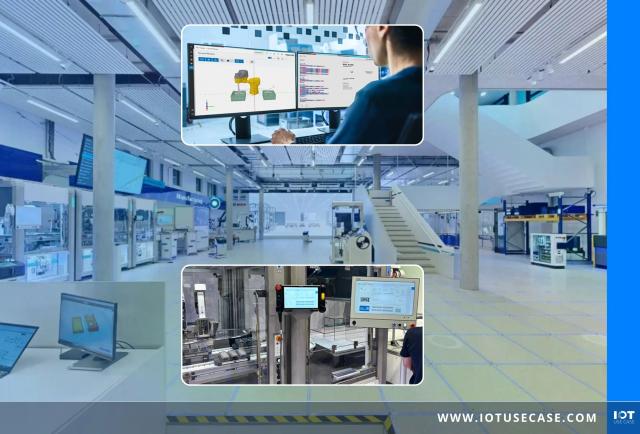
The starting point is a familiar problem: new machines are hard to integrate into existing lines, because line PLCs are rigidly programmed and data breaks across subsystems that use different semantics. The Asset Administration Shell acts as a standardized data interface – within the plant and across company boundaries. In the model factory, every machine and every module is given an Asset Administration Shell. Using an Asset Orchestration Platform, Bosch Rexroth models the line with business logic rather than fixed PLC programming, and reconfigures flexibly between AGVs and machines. XITASO supports the standardized creation of these shells; an early example is the digital nameplate at WITTENSTEIN. The Asset Administration Shell remains one technology alongside OPC UA and MQTT – what matters is choosing the right one for each use case. The biggest hurdle is creating the Asset Administration Shell itself. Krause advises starting small, at the presumed bottleneck machine, and establishing data transparency before orchestrating the line. Knoblich shifts the focus to OT/IT and a shared target vision: in the end, it is the people you have to bring along. What you'll take away The main barrier to entry is creating the Asset Administration Shell itself – for brownfield machines, XITASO offers a PLC function block for this purpose. Based on the Asset Administration Shell, a line can be modeled with business logic through an Asset Orchestration Platform instead of being rigidly programmed into the line PLC. The Asset Administration Shell is one technology among several; MQTT is suited to motion commands, OPC UA to sensor signals. To improve OEE, start at the presumed bottleneck machine: first make the losses transparent, then orchestrate.
Network anomaly detection: a security solution for the connected industry
The increasing interconnectivity of industrial plants is leading to a rising number of cyber attacks and security risks. To effectively address these threats and ensure production security, Rhebo and Bosch Rexroth AG have developed an integrated solution, which is comprehensively explained in this podcast episode. The focus is on a cybersecurity solution for the connected industry and how innovations in industrial automation can contribute to safeguarding businesses and valuable resources. Rhebo is a leading provider of solutions for monitoring industrial control systems and detecting anomalies in real-time. Cybersecurity, as well as the availability and stability of production processes, are central topics for this hardware-independent security specialist. Bosch Rexroth AG is a global provider of drive and control technology, specializing in factory automation. They assist machine engineering customers in engineering machines faster and help machine operators minimize production risks and achieve higher availabilities. Additionally, their goal is to reduce energy consumption and environmental impact. The partnership between Rhebo and Bosch Rexroth AG offers companies an integrated solution that combines the benefits of both technologies. The cybersecurity from Rhebo and the stability of Bosch Rexroth AG’s industrial control systems ensure optimal protection and efficient monitoring of production processes.